



Antique Turn Over Table
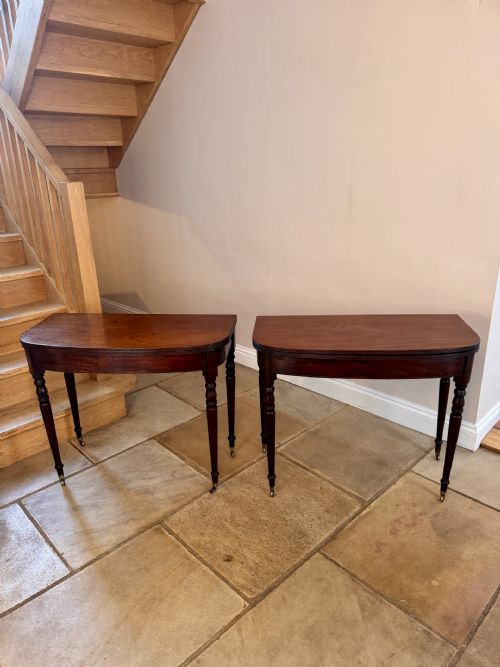
An antique turn over table offers ingenious dual purpose design, transforming from a compact side piece into a generous card or tea surface.
Antique Turn Over Table
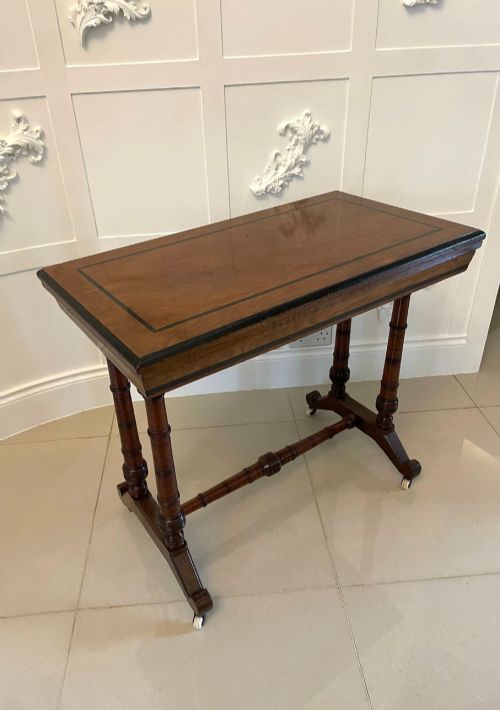
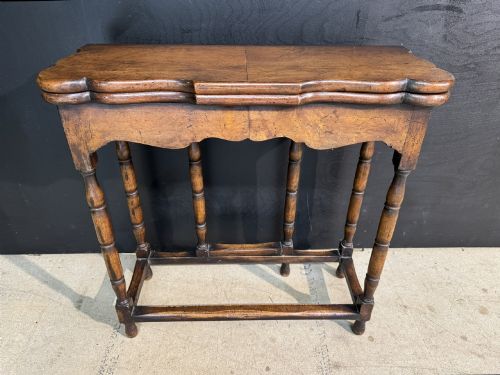
An antique turn over table operates through a hinged top that folds flat to double the surface area or swings open to reveal a hidden compartment. Buyers searching for an antique turn over table typically encounter versatile forms designed for dining, playing cards, or serving tea.
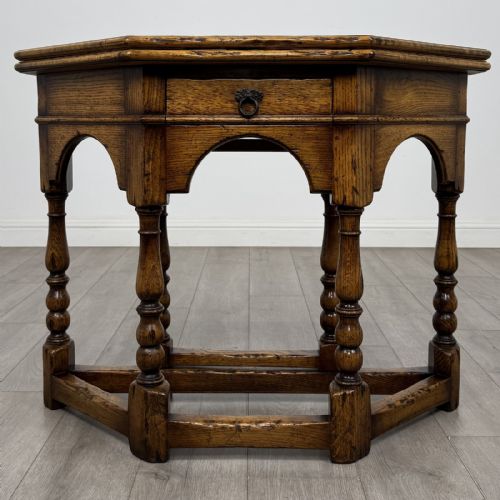
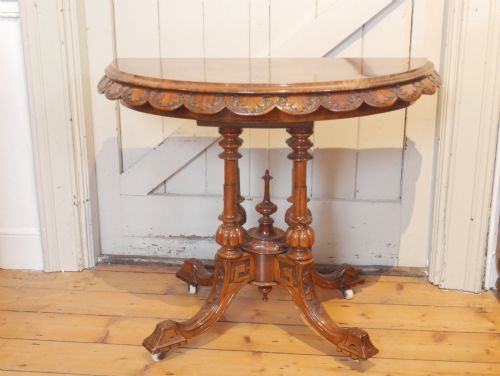
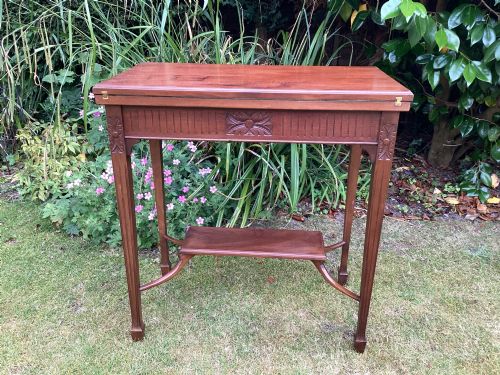
The selection spans several distinct eras, with pieces originating from the Georgian, Regency, and Victorian periods. Most examples employ mahogany, walnut, or oak, taking the form of card tables, games tables, and tea tables with folding leaves.
Makers adapted these pieces for domestic entertaining, producing D-end consoles, demi-lune shapes, and occasional tables that sat neatly against a wall when closed. The surviving examples demonstrate how households maximised living space before the twentieth century.
How they were made
Cabinetmakers constructed these tables using dense hardwoods such as mahogany, rosewood, and walnut, frequently applying burr walnut or satinwood veneers to the primary surfaces. Internal framing often relied on secondary timbers like oak or pine to provide structural stability for the pivoting mechanisms.
Decoration involved intricate techniques including brass inlay, Tunbridge ware mosaics, hand painting, and ebony stringing to define the borders of the folding tops. Joinery methods ensured the heavy leaves balanced securely on folding rear legs or pivoting swing frames when opened.
Antique Turn Over Table Retail Price Guide 2026
Typical asking prices for turn over table among the pieces listed under this phrase on Sellingantiques today, from the lower quarter to the upper quarter. They describe what is for sale here now, not the wider market.
Listings feature woods spanning mahogany, walnut, burr walnut, ebony, satinwood, rosewood, and oak across multiple eras.
What varies in quality
The standard of timber selection and veneer matching dictates the visual impact of the piece, with heavily figured burr walnut or select satinwood marking the upper tiers of production. Superior examples display seamless grain alignment across the fold, ensuring the pattern flows continuously when the top opens.
The integrity of the pivoting mechanism and hinge placement separates workshop standards, as finer tables operate smoothly without sagging under the weight of the leaf. Subtle details like precise brass inlay and crisp hand carving on the pedestal base distinguish ambitious cabinet work from standard production.
Gregory and Co Regent Street·W.F. Greenwood and Sons York
The Antique Turn Over Table Glossary
- Turn over top
- A hinged surface that folds back upon itself to double the usable area of the table. This clever mechanism allows a compact side piece to function as a full-sized gaming or dining surface.
- Card table
- A specialised small table designed for evening gaming, featuring a baize or leather lined interior to protect playing cards. These surfaces often include small corner wells for counters or coins.
- Tea table
- A domestic table intended for serving tea, featuring a hinged top that opened to receive the tea service. They became essential items of furniture during the eighteenth century as tea drinking grew in popularity.
- Tunbridge ware
- A meticulous form of woodwork involving thousands of tiny tinted wood blocks assembled to create mosaic pictures. It appears on Victorian table tops as geometric or floral banding.
- Demi-lune
- A half-moon shape used for table tops and console formats designed to stand flush against a wall. When opened, the turn over leaf forms a complete circle or oval.
Antique Turn Over Table: Frequently Asked Questions
How did people use an antique turn over table?
These tables served multiple functions in period homes, operating primarily as decorative side or console pieces against a parlor wall during the day. When guests arrived, the hinged top flipped open to create a sturdy surface for card games, tea service, or writing.
The internal wells often stored playing cards, dice, or counters, keeping entertainment equipment close at hand without cluttering the room. This dual capability made them indispensable in drawing rooms where space economy mattered.
How do I tell Georgian tables from Victorian ones?
Georgian examples tend to feature straight lines, understated mahogany or satinwood veneers, and subtle string inlay, prioritizing architectural restraint. Victorian versions embrace heavier proportions, employing figured burr walnut, rosewood, and elaborate decorative techniques like Tunbridge ware.
Leg styles also shift across the centuries, moving from simple square tapered supports in the eighteenth century to carved cabriole legs and platform bases by the nineteenth century. Examining the secondary timbers inside the frame helps confirm the period of construction.
What woods were used for these tables?
Cabinetmakers relied heavily on mahogany throughout the Georgian and Regency periods, valuing its strength and deep reddish hue. Walnut gained immense popularity during the Victorian era, particularly highly figured burr walnut that added striking visual texture to the folding top.
Secondary decorative woods included satinwood, ebony, and amboyna, which were deployed for contrasting borders, banding, and marquetry details. Structural internal framing frequently utilised sturdy oak or pine to support the weight of the pivoting leaf.