
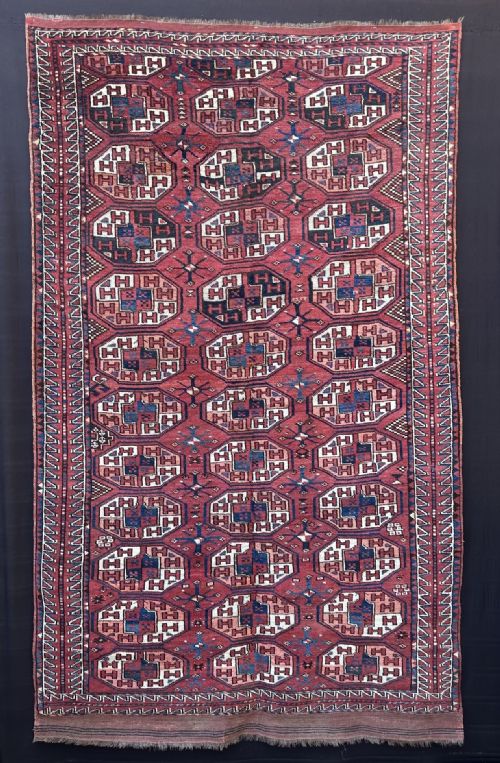
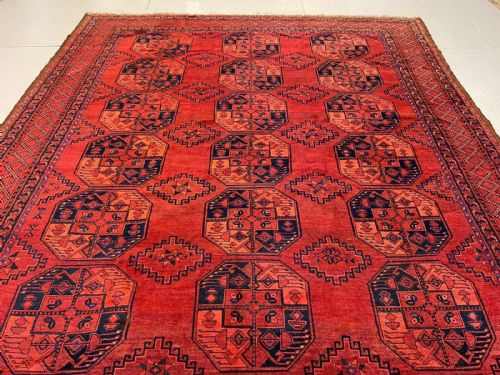
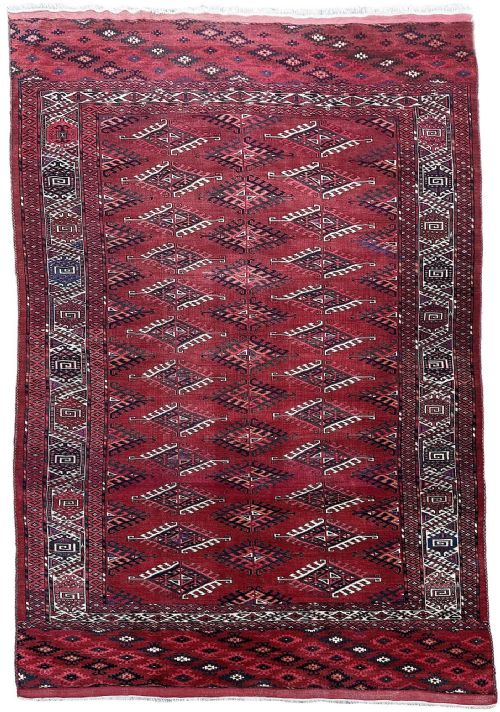
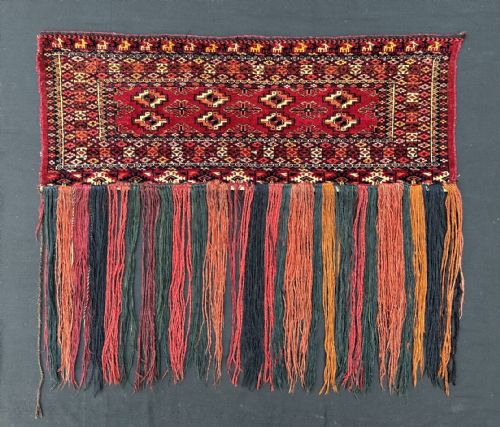


Antique Turkmenistan Rug
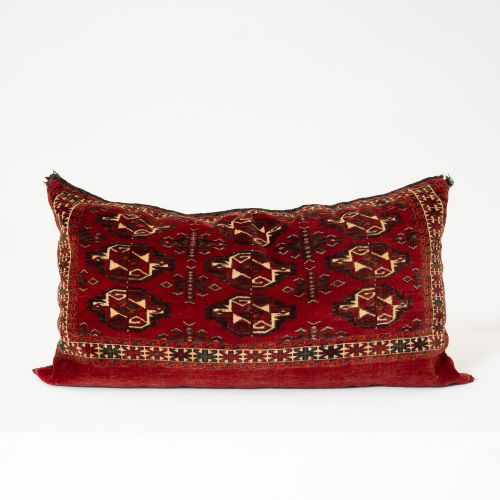
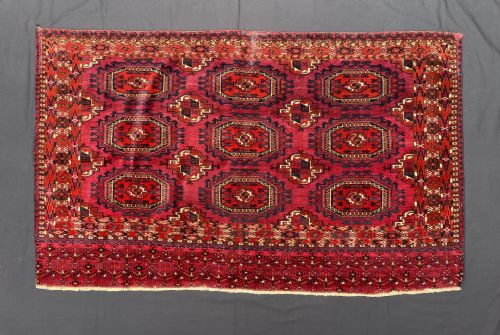
These antique turkmenistan rug pieces encompass tribal carpets, wedding trappings and nomadic bags woven across Central Asia.
Antique Turkmenistan Rug
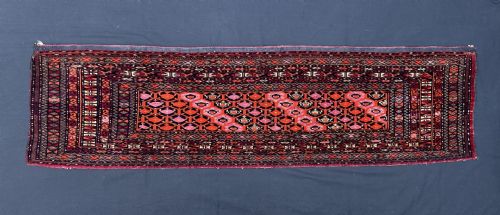
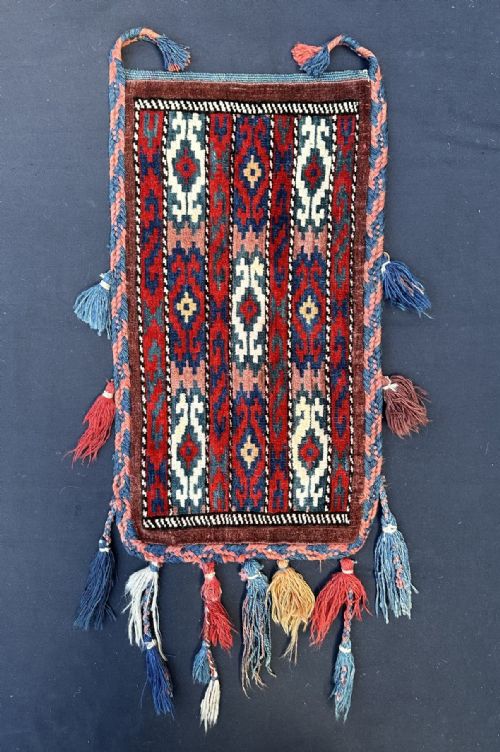
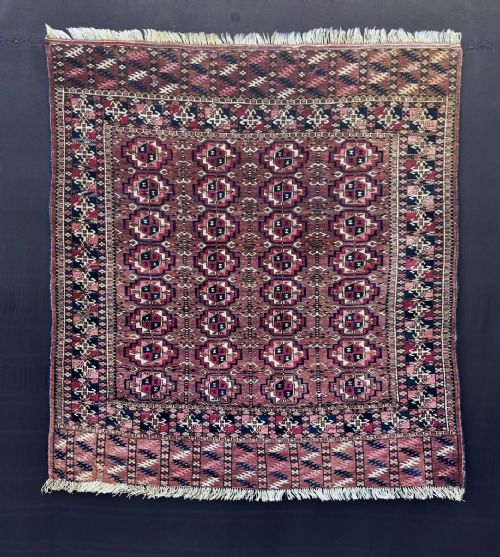
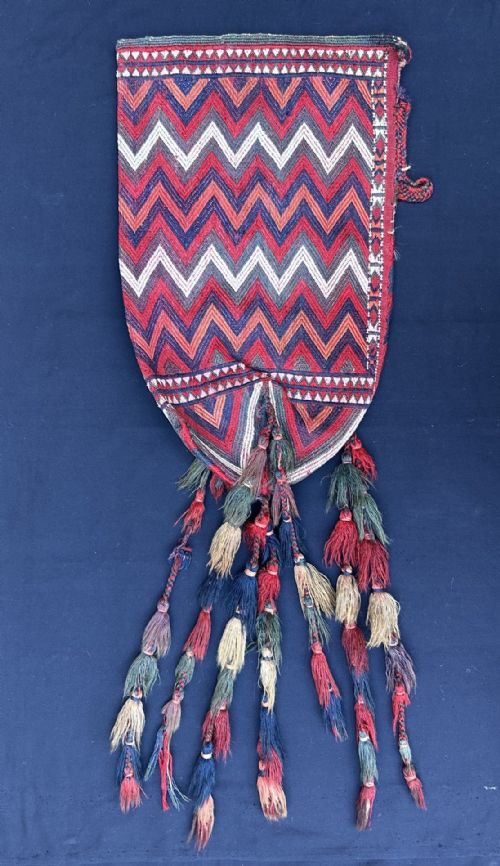
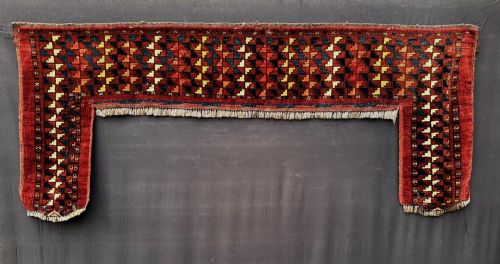
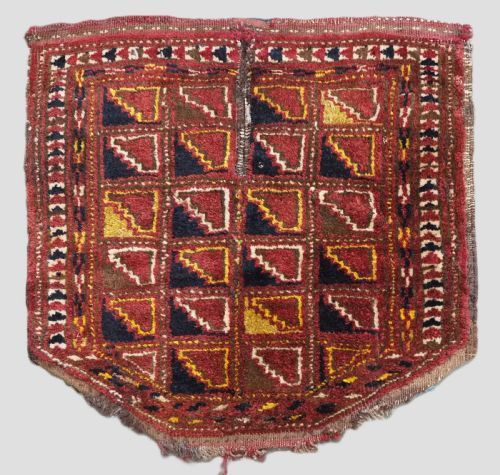
An antique turkmenistan rug encompasses woven items produced by nomadic and tribal groups across Central Asia, including major carpets, tent door hangings and domestic storage bags. Collectors encounter main carpets alongside smaller utilitarian items such as chuvals, torbas and asmalyks created for tribal life and ceremonies.
The material record spans the nineteenth and early twentieth centuries, alongside occasional eighteenth-century fragments. Pieces originate from distinct regional groups including the Yomut, Teke, Ersary, Kizyl Ayak, Sariq and Karadashli tribes situated in locales like the Trans-Caspian Steppes and the Merv Oasis.
What Varies in Quality
Quality rests upon the fineness of the knotting, the precision of the tribal guls and the depth achieved through natural dyes. Superior examples exhibit exceptional colour saturation and tight, uniform weaves across both large carpets and small tent bags.
The handle and condition of the wool further distinguish exceptional survivals, alongside the completeness of original borders, tassels and flatweave backs. Pieces demonstrating crisp tribal motifs and structural integrity command stronger interest among collectors.
Listings feature wool, natural dyes, cotton and hand-spun wool across pieces dated from the eighteenth century through the early twentieth century.
Yomut Tribes·Teke Tribes·Ersary Tribes·Sariq Tribe·Karadashli Tribe
The Antique Turkmenistan Rug Glossary
- Gul
- A repeating octagonal medallion motif characteristic of Central Asian tribal weaving. Different tribes utilised distinct gul patterns to signal lineage and identity.
- Chuval
- A large tent storage bag used by nomads for bedding and household possessions. These face panels frequently survive as independent collector items.
- Asmalyk
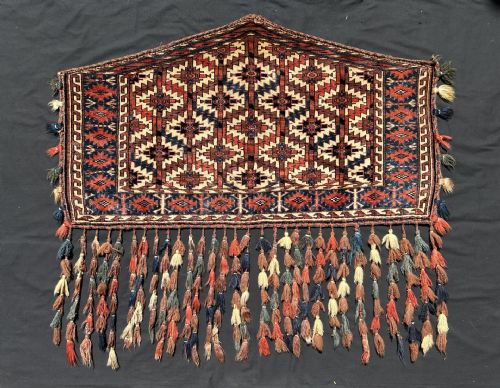
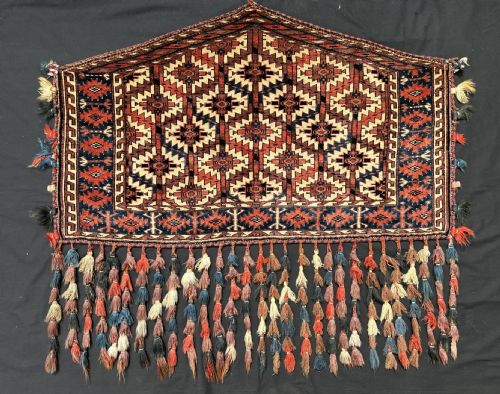
- A large pentagonal trapping hung on the flanks of a bride's camel during wedding processions. They represent some of the most elaborate nomadic textile artistry.
- Engsi
- A specialised rug hung over the wooden doorway of a yurt. They feature a distinct cross-panel design dividing the field into four sections.
- Torba
- A smaller wall-hanging storage bag utilised inside nomadic tents. They display characteristic tribal motifs across their rectangular face panels.
Antique Turkmenistan Rug: Frequently Asked Questions
What is an antique turkmenistan rug?
An antique turkmenistan rug is a hand-woven textile created by nomadic tribes in Central Asia during the nineteenth and early twentieth centuries. These pieces encompass large carpets, wedding trappings and storage bags.
Weavers utilised native wool and natural dyes to produce dense pile and flatweave objects decorated with characteristic tribal guls. Each item reflects the specific heritage of regional groups such as the Yomut and Teke.
How were these rugs used?
Nomadic families utilised these textiles for daily domestic functions inside circular felt tents, known as gurt or yurts. Large carpets covered earthen floors, while smaller bags stored bedding, clothing and household goods.
Specialised trappings served ceremonial roles during tribal weddings, including camel decorations and doorway hangings. Every functional item integrated protective tribal symbols into daily living.
How do I identify tribal origins?
Tribal attribution relies upon specific design motifs, colour palettes and structural characteristics unique to each regional group. The recurring octagonal gul varies perceptibly between Yomut, Teke and Ersary weavers.
Format and weaving technique also provide clues, as certain tribes favored specific bag shapes or flatweave structures like soumak and cicim. Comparing structural details against documented tribal corpuses clarifies provenance.
How should I live with these textiles?
Living with these textiles involves placing them in low-traffic areas or mounting smaller bag faces and trappings on walls to minimise wear. Protecting them from direct sunlight preserves the saturated natural dyes.
Regular gentle vacuuming without a beater bar removes trapped dust from the dense wool pile. Proper padding underneath floor rugs prevents sliding and reduces fibre stress.