
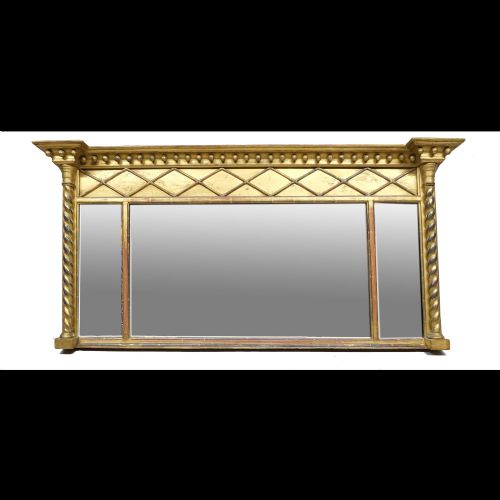


Antique Triple Wall Mirror
An antique triple wall mirror brings remarkable depth and light to a room, offering three distinct panels that divide reflections across wide expanses.
Antique Triple Wall Mirror
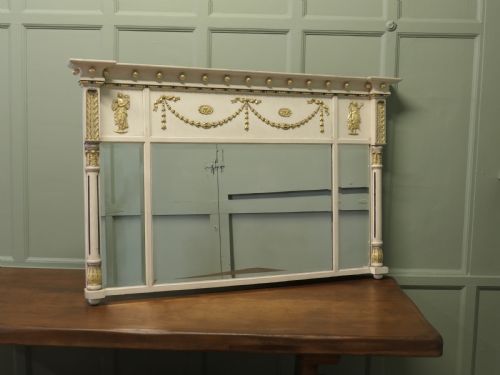
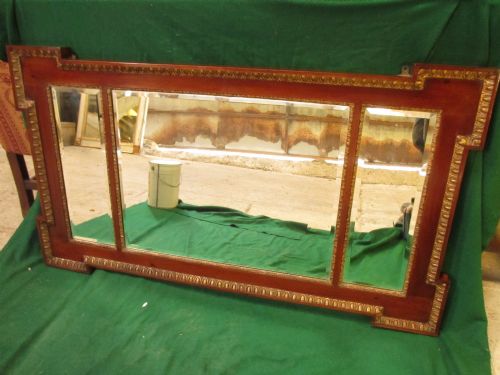
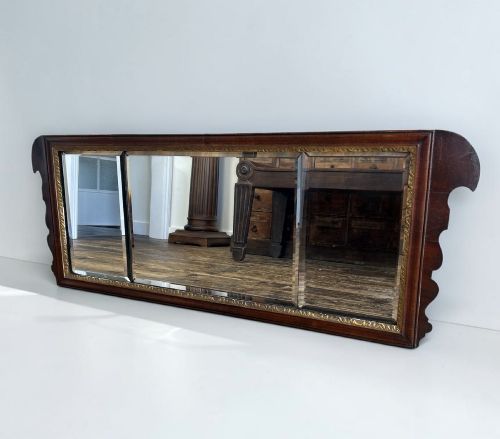
An antique triple wall mirror divides the reflection across three distinct glass plates held within a single unified frame. These pieces frequently appear as horizontal landscape formats designed to hang above a fireplace or a sideboard, functioning as substantial overmantel mirrors.
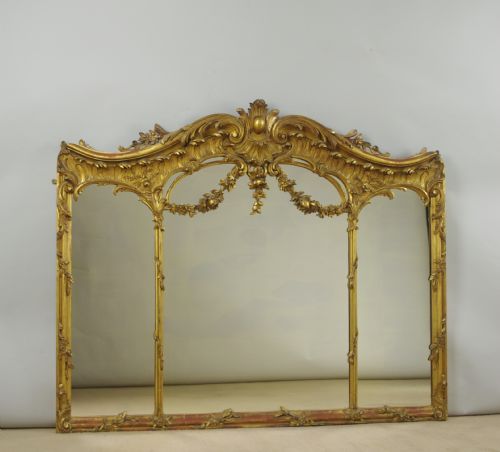
The materials and styles span from the clean lines of the Regency period through to ornate Victorian pieces and earlier Georgian designs. Walnut, mahogany, and giltwood provide the primary framing structures, often finished with gesso to hold intricate mouldings.
Makers utilised architectural elements such as friezes and carved crests to anchor the three plates. These mirrors combine practical room illumination with a strong decorative presence that dominates the wall space it occupies.
Factors that distinguish quality
The crispness of the carved details upon the gesso and wood separates standard examples from exceptional ones. Deep, hand-carved ornamentation demonstrates superior craftsmanship compared to simpler moulded applications.
The preservation of the original gilding and the clarity of the multi-plate glass dictate the desirability of the piece. Uniformity in the division of the three plates and the structural integrity of the frame complete the assessment.
Some folding mirror variants provide adjustable side panels, allowing users to inspect their reflection from multiple angles simultaneously.
The Antique Triple Wall Mirror Glossary
- Triple plate mirror
- A mirror featuring three distinct glass sections mounted side by side within one frame. This arrangement widens the visual field and adds architectural rhythm to a wall.
- Overmantel mirror
- A large horizontal mirror designed specifically to hang on the wall directly above a fireplace mantelpiece. They often span the width of the fireplace opening.
- Giltwood
- Timber that has been coated with a thin layer of gold leaf or gold paint. This finish creates a reflective surface that catches and multiplies ambient room light.
- Gesso
- A plaster-like mixture applied to wood frames to create a smooth surface for carving and gilding. It allows artisans to shape intricate relief ornamentation.
- Triptych
- A piece divided into three panels or sections. In mirror design, this refers to the three separate glass plates sharing a single frame.
Antique Triple Wall Mirror: Frequently Asked Questions
Where should I hang an antique triple wall mirror?
These mirrors suit placement above a low sideboard, a sofa, or a fireplace mantelpiece where their horizontal width can balance the surrounding furniture.
The scale of the three plates requires a solid wall with appropriate fixings to support the considerable weight of the timber and glass.
How do I identify a Regency period mirror?
Regency examples often display classical motifs such as reeded frames, ball ornaments, and architectural friezes reflecting early nineteenth-century taste.
The proportions tend to balance geometric clarity with restrained decorative flourishes rather than heavy Victorian ornamentation.
What is the difference between a wall mirror and an overmantel mirror?
Overmantel mirrors are traditionally built in broader landscape formats to sit above fireplace openings, whereas standard wall mirrors hang independently.
Both types utilise multiple plates in these listings, but the overmantel variants generally occupy a more dominant architectural role in a room.
How do I care for antique mirror glass?
Gentle dusting with a dry microfibre cloth protects the fragile surface and prevents moisture from seeping behind the antique silvering.
Avoid harsh chemical cleaners that can damage the old glass and the surrounding gilt or painted frame finishes.