
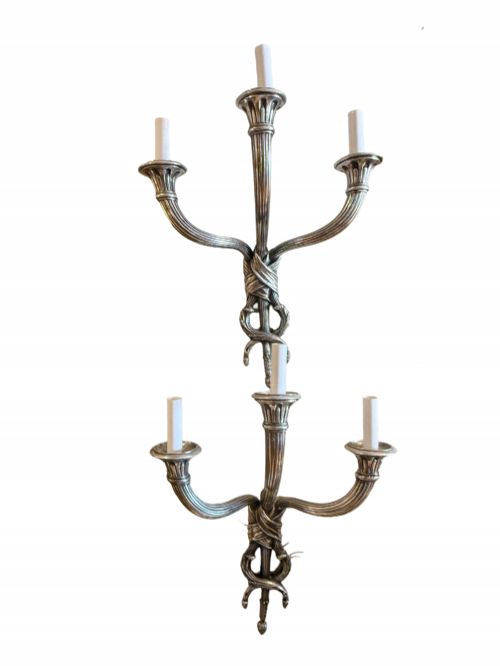
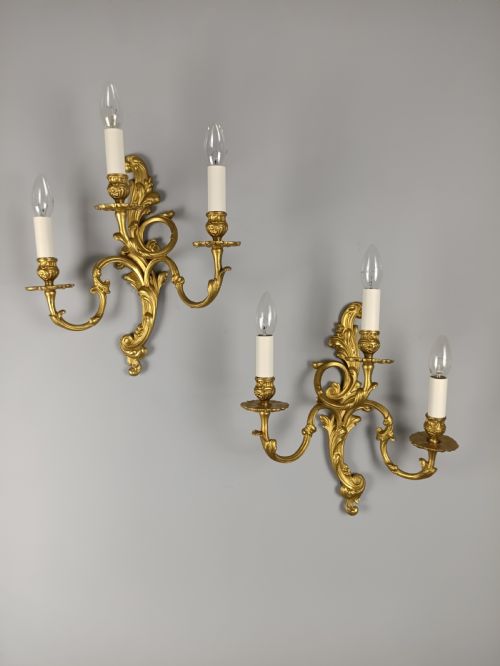
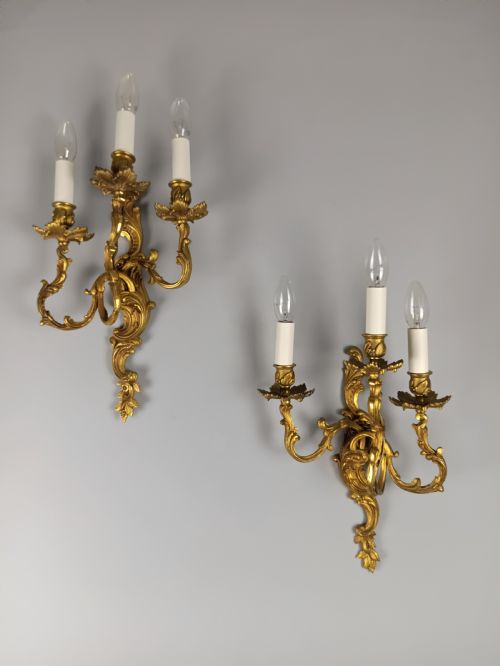
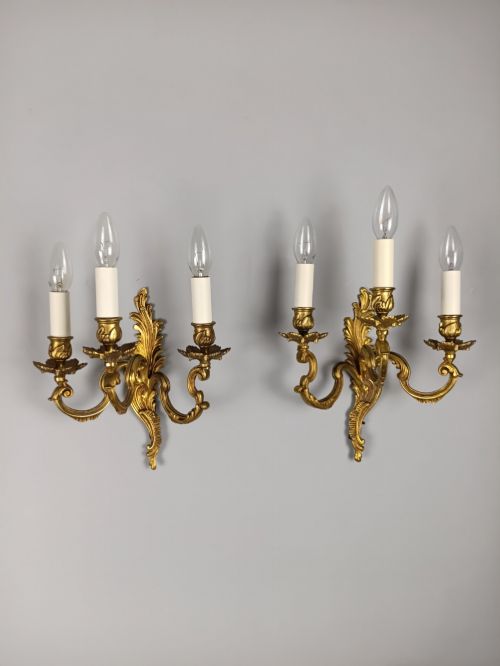

Antique Triple Sconces
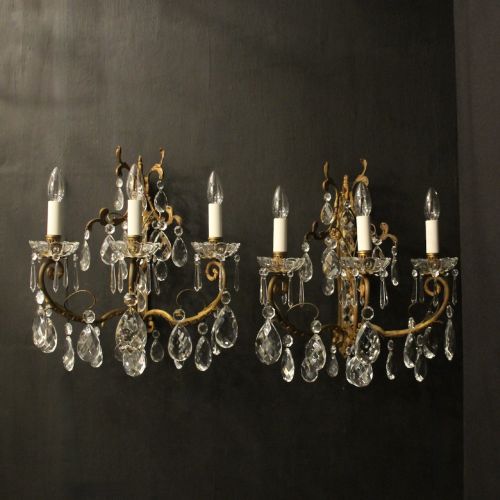
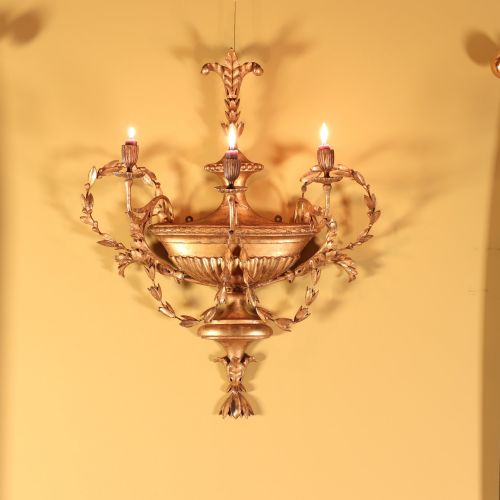
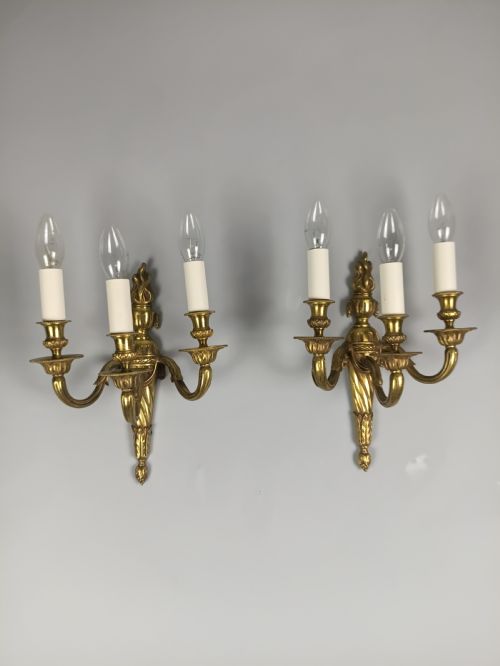
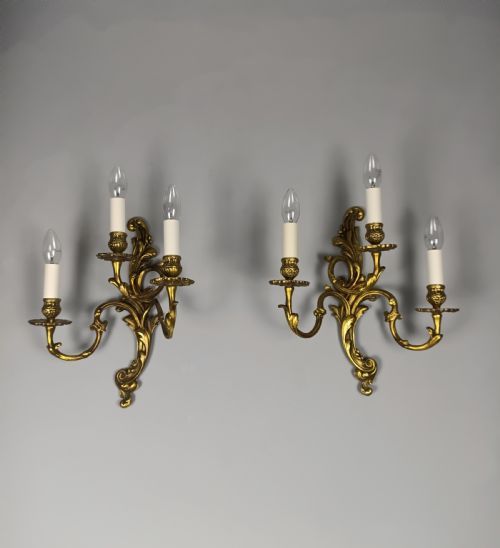
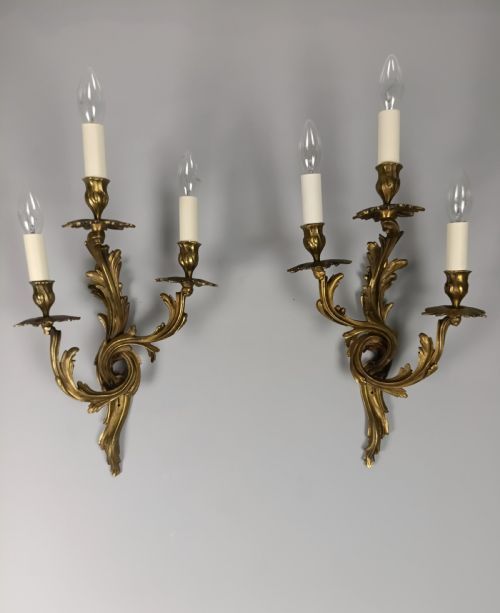
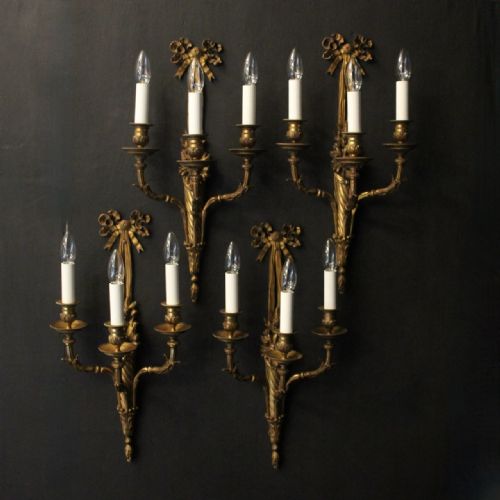
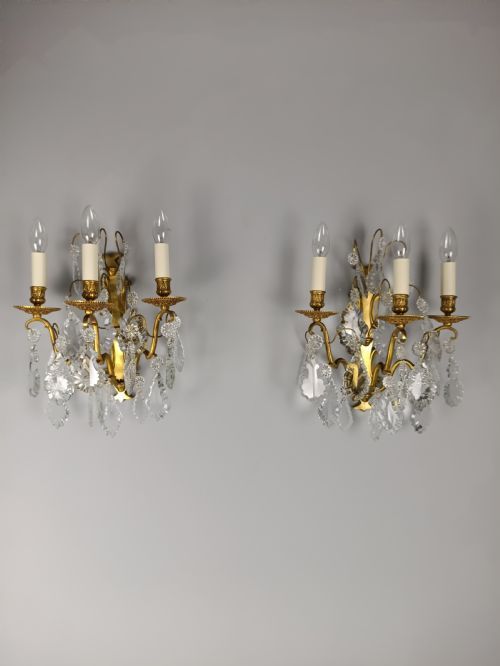
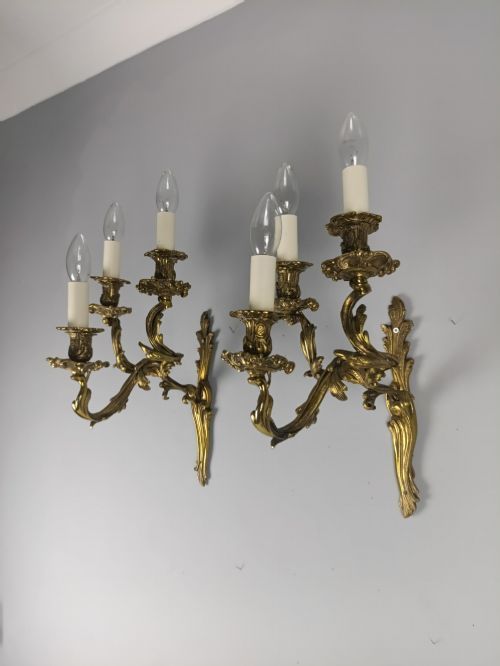
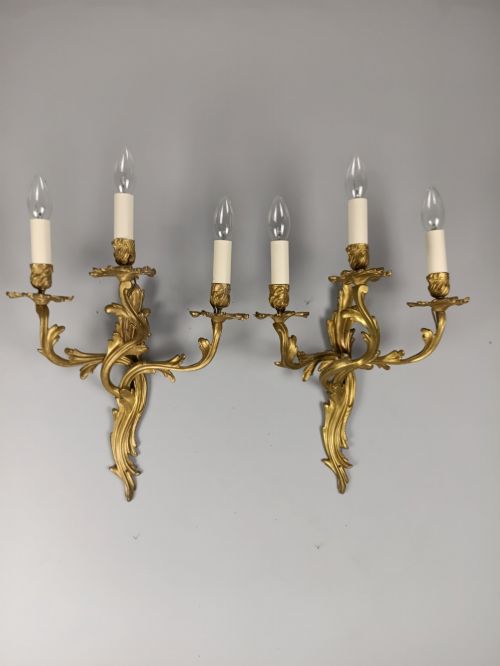
Antique triple sconces bring layered illumination to a room, offering three-branch wall lighting in styles from French Rococo to Florentine giltwood.

Antique Triple Sconces
Antique triple sconces comprise three-branch wall lights designed to mount directly onto interior surfaces and distribute candlelight or electric illumination. When exploring antique triple sconces, a buyer encounters predominantly French and Italian forms dating from the nineteenth and early twentieth centuries.
Materials and Construction
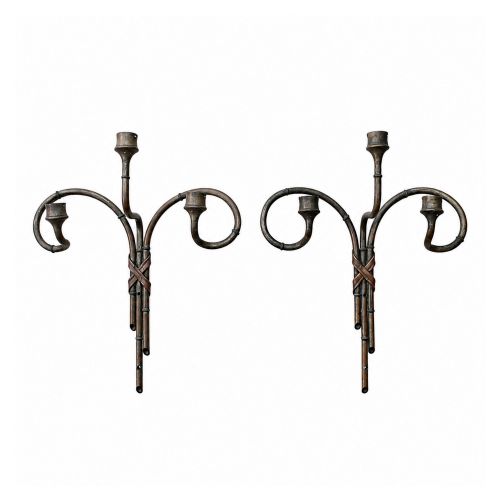
Makers utilised cast metals such as brass, bronze, and silvered bronze, frequently applying surface gilding to enhance reflection. Artisans also worked with wood and gesso, carving giltwood and Florentine frames by hand.
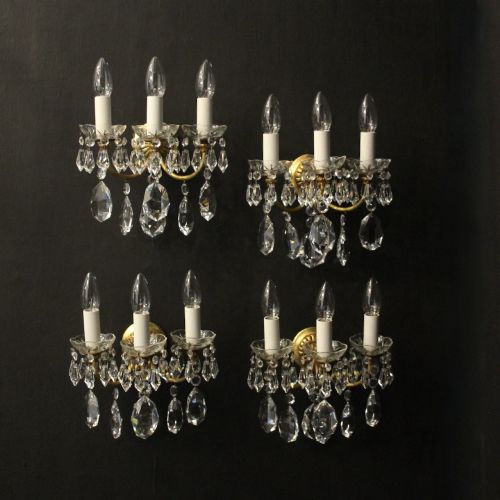
Many examples incorporate glass and crystal drops, pendants, or bobeches that catch and scatter the light. Construction methods rely on traditional casting, joining, and hand-carving appropriate to each period.
Bamboo-form wall lights from the early twentieth century prove that even period metalworkers occasionally fancied a stroll through the jungle.
Distinctions in Quality
Quality rests in the crispness of the casting and the depth of the hand-carving in wood or gesso. Finer examples display intricate chased details on bronze and brass surfaces rather than soft, simplified outlines.
The integration of original crystal components and the quality of the surviving gilding distinguish superior pieces. Structural integrity in the arms and backplates further separates standard production from exceptional work.
The Antique Triple Sconces Glossary
- Sconce
- A wall-mounted lighting fixture designed to hold candles or electric lamps. These pieces project outward to illuminate surrounding wall spaces.
- Gilding
- The application of a thin layer of gold leaf or gilt paint to metal, wood, or gesso surfaces. This technique creates a luminous finish characteristic of period lighting.
- Bobeche
- A small collar or disc fitted beneath the candle nozzle to catch dripping wax. In crystal-adorned pieces, prisms often hang directly from this element.
- Rococo
- An ornate design style marked by asymmetric scrolls, C-curves, and naturalistic plant motifs. This aesthetic heavily influences nineteenth-century French lighting.
- Giltwood
- Timber carved and subsequently covered in gold leaf. Florentine and Georgian workshops utilised this material extensively for decorative wall lights.
Antique Triple Sconces: Frequently Asked Questions
How were antique triple sconces originally used?
These fixtures served to illuminate hallways, drawing rooms, and formal dining spaces by holding three candles per unit. Placed strategically on walls, they multiplied the available light through reflection off mirrors and gilded surfaces.
Over time, many of these fixtures were adapted for electricity while retaining their original structural metalwork and decorative branches.
Are these wall lights safe to install today?
Many period sconces arrive rewired and ready for professional installation into modern domestic electrical circuits. Buyers should verify the internal wiring status before mounting.
Qualified electricians can easily integrate these vintage metal and crystal fixtures into standard wall junctions.
How do I identify French versus Florentine styles?
French pieces frequently exhibit cast bronze or brass with Rococo scrolls, asymmetrical foliage, and crystal drops. Florentine examples tend to rely on carved giltwood and silver-gilt finishes with distinct regional floral motifs.
Examining the underlying material separates cast metal work from carved wooden frames.
Can I find matching sets of four?
Sets comprising four matching wall lights appear periodically among nineteenth and early twentieth-century pieces. These larger configurations usually originate from grander salon installations.
Pairs remain the most common configuration encountered by collectors.