


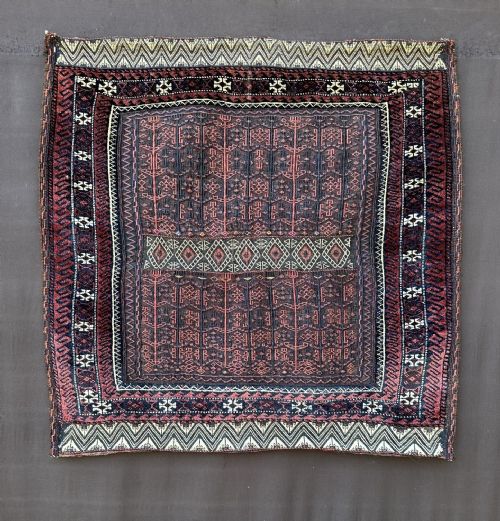
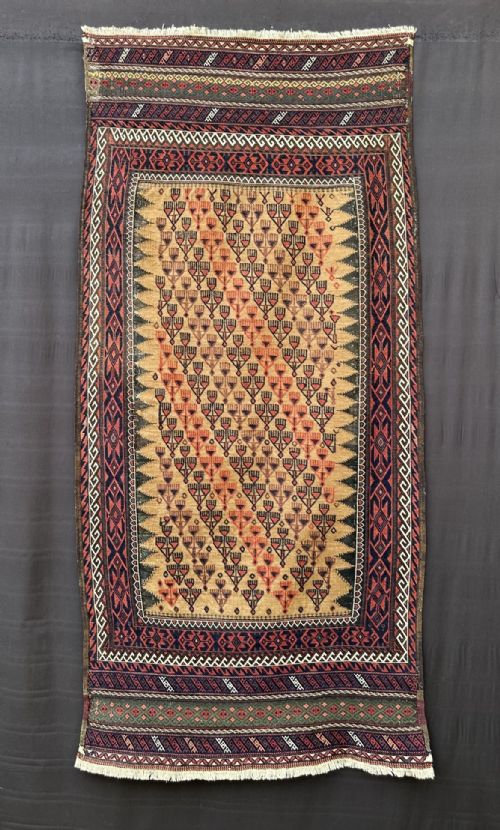
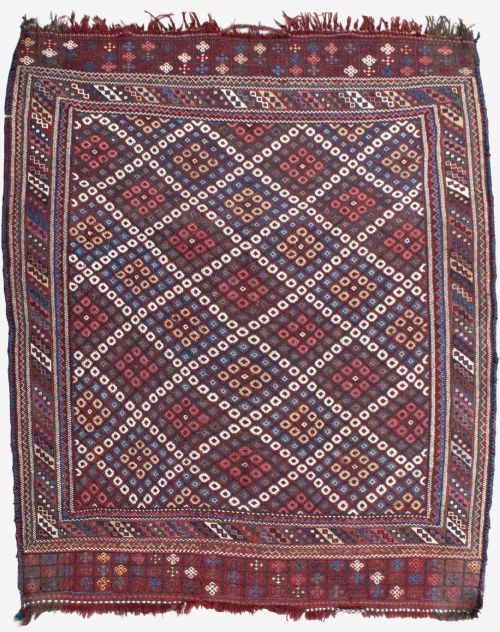


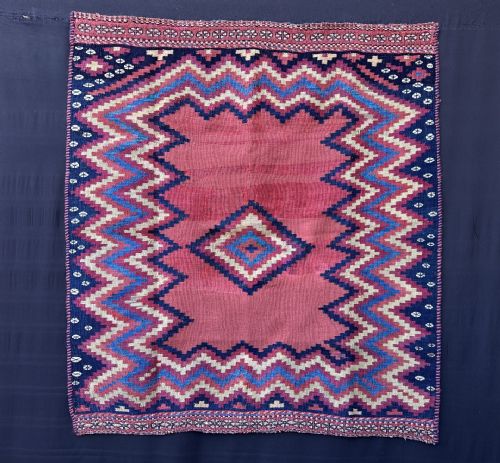


Antique Tribal Sofreh
An antique tribal sofreh is a woven cloth used for dining or bread preparation, prized for its raw nomadic geometry and utility.
Antique Tribal Sofreh
These textiles primarily function as eating cloths or bread-making mats. The forms seen here include square or rectangular flatweaves, kilims, and specialised rugs designed to sit on the floor during communal meals.
Originating across the borderlands of Persia and Afghanistan, these pieces embody the distinct tribal traditions of the late nineteenth and early twentieth centuries. Each weaving reflects the specific regional palette and tribal identity of its makers, from Kerman Province to Khorassan.
How they were made
Nomadic weavers construct the antique tribal sofreh using handspun wool, occasionally incorporating cotton and camel hair for structural contrast and texture. The reliance on natural dyes yields rich, earthy tones that patinate gracefully over time.
Technically, these pieces are predominantly flatweaves, kilims, and rugs produced on portable horizontal looms set up in camps. The tight weave structures ensure durability for daily domestic use as dining and bread cloths.
Antique Tribal Sofreh Retail Price Guide 2026
Typical asking prices for tribal sofreh among the pieces listed under this phrase on Sellingantiques today, from the lower quarter to the upper quarter. They describe what is for sale here now, not the wider market.
Listings feature pieces spanning from the late nineteenth century through the early twentieth century, originating from regions including Kerman, Khorassan, and Luristan.
What varies in quality
The sophistication of the tribal iconography and the handling of natural dye palettes distinguish exceptional examples from simpler utility pieces. Finer wool preparation and tighter flatweave construction indicate a higher tier of nomadic craftsmanship.
Rarity of specific tribal attributions, such as named subtribes like the Sangtshuli or Salar Khani, adds depth to a piece. The crispness of the geometric layout and the preservation of the original outer borders determine the overall visual command of the textile.
The Antique Tribal Sofreh Glossary
- Sofreh
- A spread or cloth used for sharing meals or kneading bread within nomadic households. It forms the core category of these tribal flatweaves.
- Kilim
- A tapestry-woven flatweave textile produced without a pile. This technique allows for sharp geometric patterns visible from both sides.
- Flatweave
- A rug or textile constructed by interweaving warp and weft threads rather than knotting pile yarn. These structures lie thin and flat on the floor.
- Natural Dyes
- Colourants derived from plants, insects, and minerals rather than synthetic compounds. They produce the variegated and harmonious tones characteristic of older tribal pieces.
- Camel Hair
- Undyed fibre sourced from camels, utilised in tribal weavings for its natural warm brown hue and durability. It provides a distinct textural contrast against dyed wool.
Antique Tribal Sofreh: Frequently Asked Questions
What is a tribal sofreh used for?
A tribal sofreh serves as a cloth spread upon the ground for communal dining or for the preparation of bread. Families gather around these textiles to share meals in nomadic and village settings.
Beyond dining, these cloths play a central role in domestic rituals and daily hospitality. Their robust flatweave construction ensures they withstand the practical demands of food preparation.
How do I tell different tribal sofreh types apart?
Distinguishing between types relies on observing the specific wool quality, regional palette, and geometric vocabulary unique to each group. Afshar pieces from Kerman often display distinct medallion or field arrangements, whereas Timuri and Baluch examples utilise contrasting dark hues and border motifs.
Geographic origins provide further clues, as weavers from Khorassan or Luristan integrated local dye traditions and weaving structures. Examining the specific tribal attribution helps place the textile within its cultural landscape.
How should I care for an antique sofreh?
Care requires gentle treatment, starting with regular light vacuuming without a rotating brush to remove dust from the flatweave structure. Keeping the textile out of direct sunlight prevents the natural dyes from fading over time.
For deeper cleaning, professional textile conservation is advised rather than domestic washing. Using a breathable underlay helps protect the wool and maintains the flat lay of the piece.
Can I hang a sofreh on the wall?
Hanging a sofreh on the wall is a common method for displaying these graphic flatweaves safely. Proper installation involves distributing the weight evenly across a supporting sleeve or specialised padded mounting system rather than piercing the textile directly.
Displaying the piece vertically protects it from floor traffic while showcasing the intricate geometry of the weave. This method transforms a domestic nomadic utility item into a focal point of interior design.