






Antique Treen Spice
These antique treen spice containers, towers, and graters are functional turned wood items designed for domestic use that collectors prize for their tactile warmth and age.
Antique Treen Spice
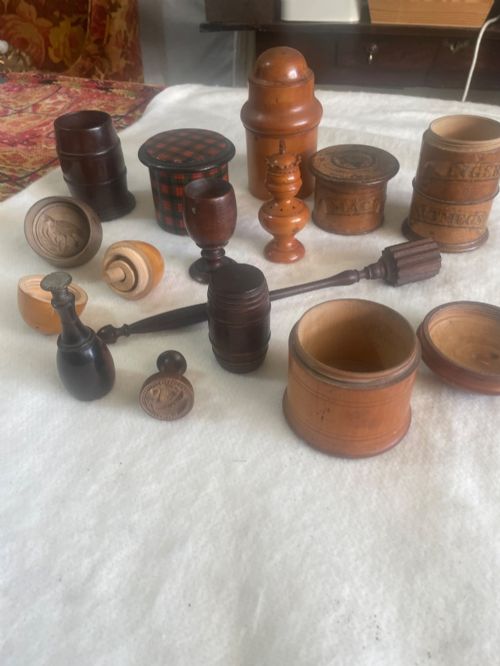
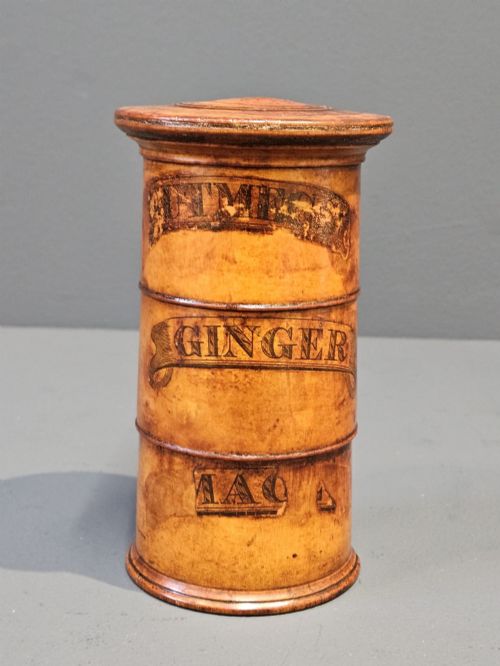
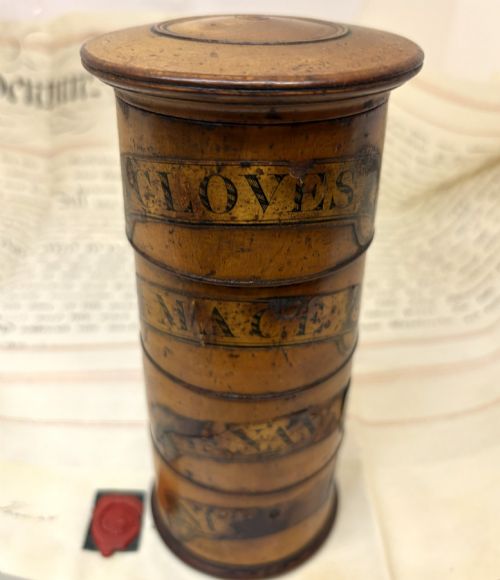
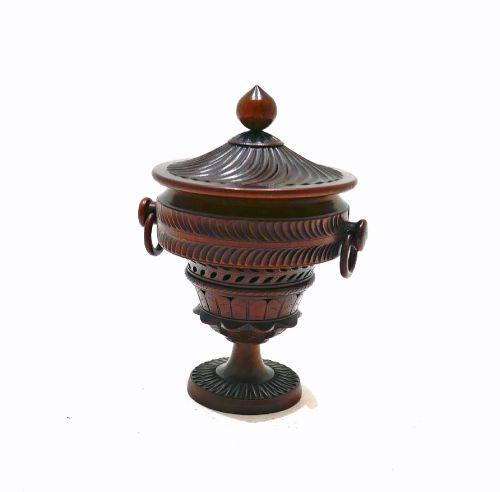
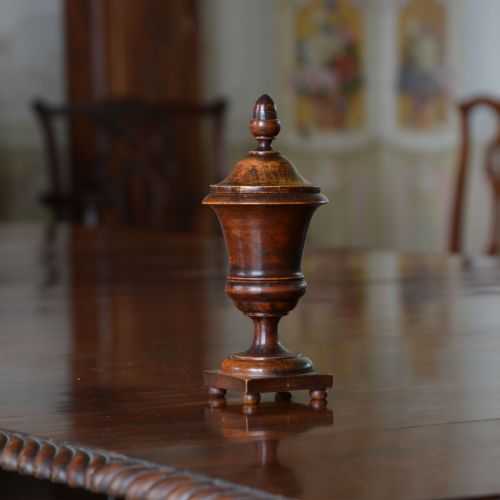
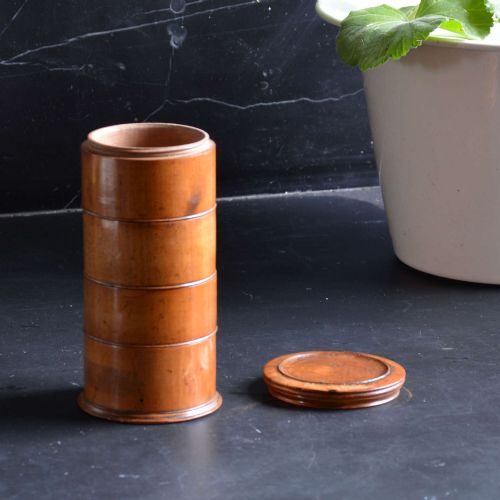
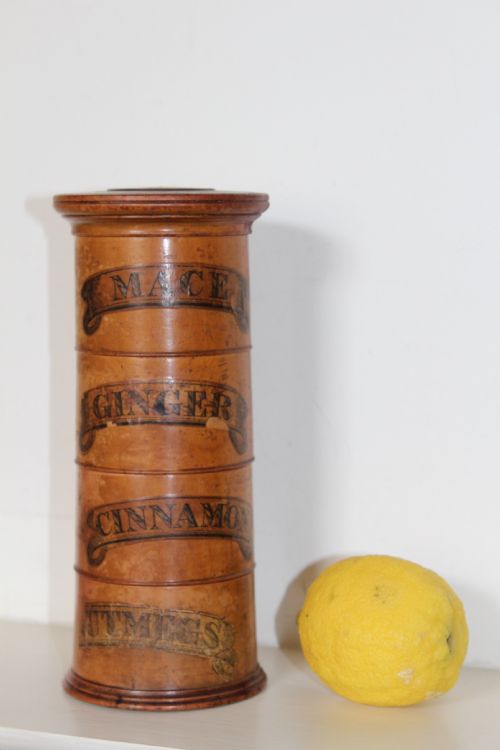
When you search for antique treen spice items, you encounter domestic wooden objects fashioned for grating, storing, and grinding aromatics in the kitchen or parlour. The form most commonly met on this page is the multi-tiered spice tower, which stacks several sections together to hold different flavourings.
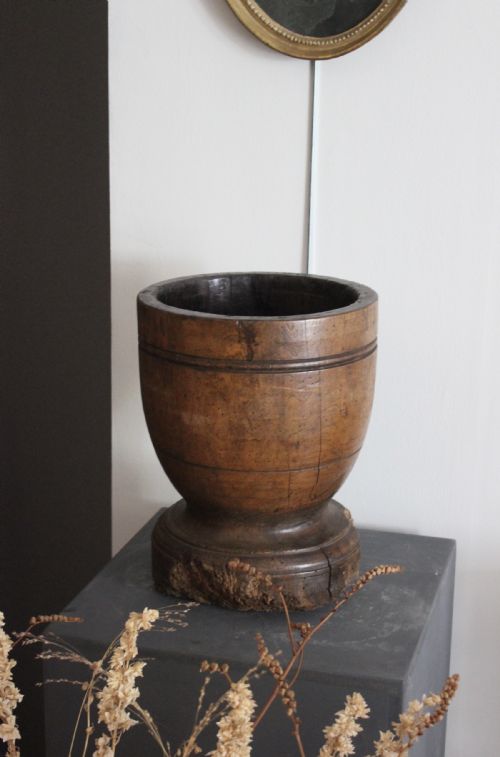
The objects span multiple centuries, ranging from seventeenth-century folk art mortars to Georgian and Victorian boxes, jars, and nutmeg graters shaped like wine bottles. These pieces reflect the historical importance of spices in domestic life, serving both practical culinary roles and ornamental functions.
Makers utilised various native and exotic timbers to construct vessels that vary from simple utility jars to sophisticated turned containers with matching covers. Each surviving piece demonstrates the ingenuity of historical turners working in fruitwood, boxwood, and sycamore.
Materials and turning methods
Craftsmen shaped these objects using a lathe, working with dense timbers such as fruitwood, boxwood, sycamore, and yew wood to achieve precise cylindrical forms and tight-fitting lids. The turning process allowed artisans to create hollow vessels, threaded sections, and intricate mouldings on towers and jars.
Makers selected close-grained hardwoods that resisted splitting and absorbed handling well, often finishing the bare wood with simple friction polishes or letting natural patina develop through decades of use. Iron and steel components were occasionally integrated into graters and mills alongside the turned wooden bodies.
Antique Treen Spice Retail Price Guide 2026
Typical asking prices for treen spice among the pieces listed under this phrase on Sellingantiques today, from the lower quarter to the upper quarter. They describe what is for sale here now, not the wider market.
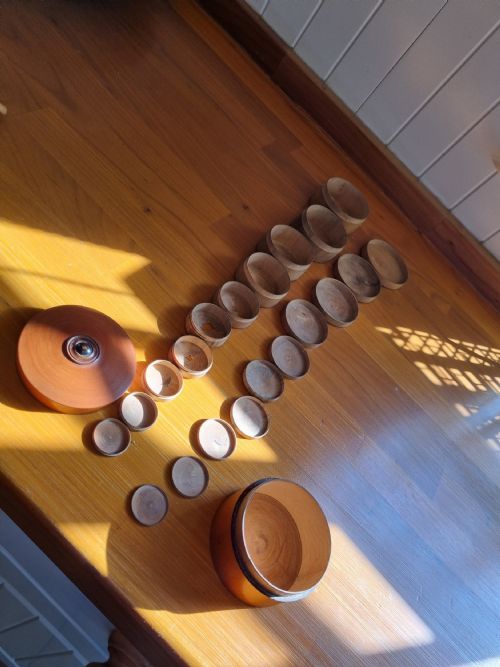
One exceptional boxwood container ingeniously holds ten smaller matching containers inside itself like a wooden Russian doll.
Distinctions in quality and execution
Quality rests upon the crispness of the original turning, the snugness of fit between stacked tiers or lids and bases, and the preservation of the surface texture. Pieces that retain distinct tool marks and well-defined profiles stand apart from worn or heavily sanded examples.
The graduation of proportion in multi-tiered towers and the cleverness of specialised designs, such as nested containers or bottle-shaped nutmeg graters, indicate the maker's skill. Fine ageing manifests as a warm, undisturbed surface patina rather than heavy alterations.
The Antique Treen Spice Glossary
- Treen
- Small handmade functional wooden domestic objects. The term derives from the Middle English word for tree.
- Spice tower
- A multi-sectioned turned wooden container that unscrews or separates to reveal stacked compartments for different spices. These objects date primarily from the Georgian and Victorian eras.
- Fruitwood
- A generic term for timber sourced from fruit-bearing trees such as pear, apple, or cherry. Artisans favoured these woods for their fine, even grain and suitability for detailed turning.
- Nutmeg grater
- A small handheld device used to grate hard nutmeg nuts before culinary use. Examples often take imaginative miniature forms like bottles or urns.
- Mortar and pestle
- A bowl and club-shaped tool used for grinding and crushing spices or herbs. Seventeenth-century examples typically display robust, thick-walled turned timber construction.
Antique Treen Spice: Frequently Asked Questions
What are antique treen spice towers?
Spice towers are stacked turned wooden containers featuring multiple compartments that thread or fit together snugly. They were kept in domestic spaces to organise various culinary powders.
Each tier held a different aromatic substance, allowing cooks or hosts to dispense seasonings conveniently from a single compact object.
How were treen nutmeg graters used?
Nutmeg was historically purchased whole as a hard seed because pre-ground powder lost its flavour quickly. People used these small wooden graters at the table or in the kitchen to shave fresh spice directly into food or drink.
Many surviving examples take amusing miniature shapes, such as wine bottles or decorative urns, concealing the metal rasp inside.
How do you date wooden spice containers?
Dating relies on observing the turning style, timber choice, and construction methods characteristic of different centuries. Seventeenth-century pieces often display heavier proportions and simpler folk art characteristics, while Georgian and Victorian items show finer mouldings and more complex multi-tiered engineering.
Paper labels and general wear patterns also help establish the chronological context of individual items.
What woods did makers use?
Makers selected dense, tight-grained hardwoods that could withstand the friction of the lathe and daily domestic handling. Common choices include boxwood, sycamore, fruitwood, and yew wood.
These timbers provided stable foundations that aged gracefully and developed rich patinas over centuries of use.