






Antique Travel Timekeeper
An antique travel timekeeper is a portable clock built for journeys, bringing mechanical precision and brass or gilt metal housing to the road.
Antique Travel Timekeeper
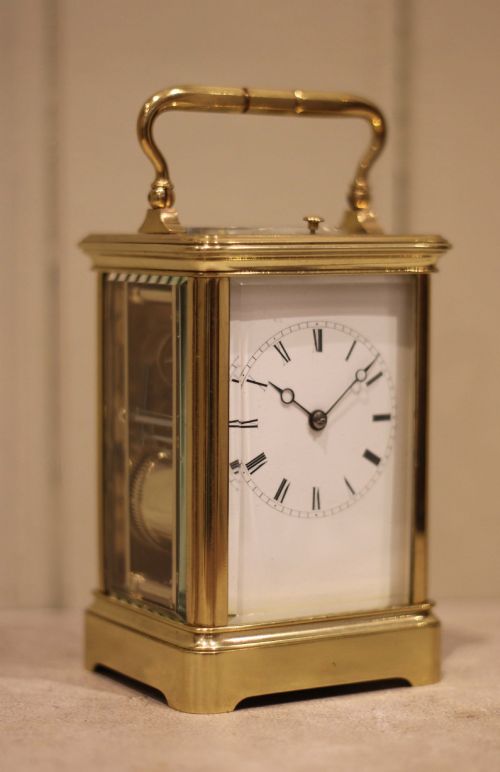
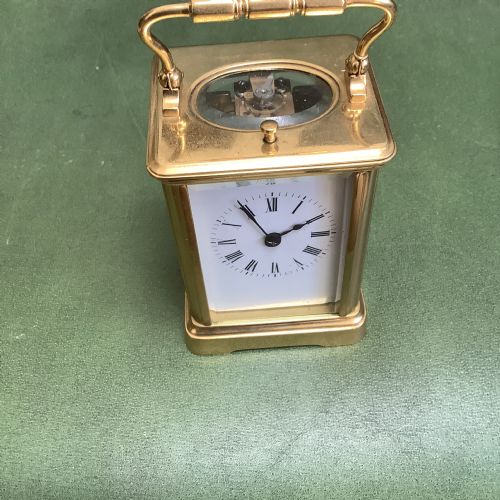
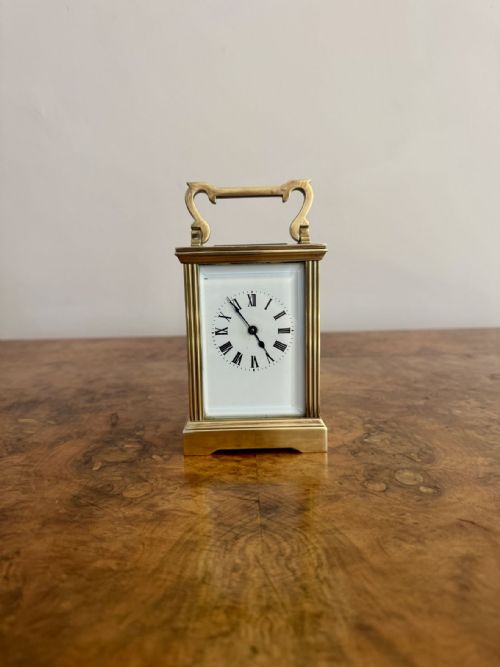
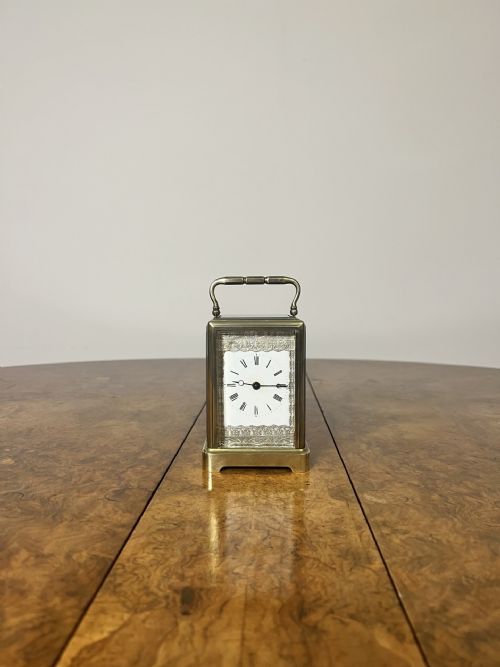
An antique travel timekeeper most commonly takes the form of a brass carriage clock, designed during the nineteenth and early twentieth centuries for movement. These pieces originate predominantly from French workshops and English retailers, spanning periods from the Victorian era through the Edwardian years and into Art Deco designs.
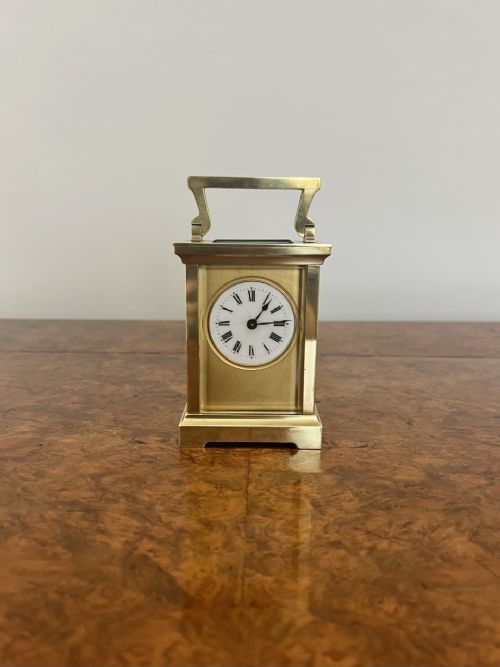
Buyers encounter standard rectangular models, miniature versions, and larger travelling mantel clocks housed in glass panels and metal frames. Cases range from plain corniche designs to heavily engraved gilt bronze and silver-mounted housings.
Materials and construction
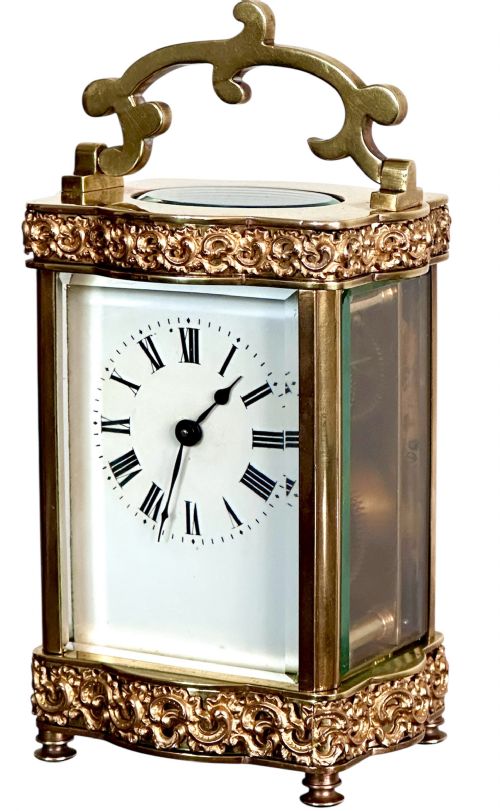
Maker construction relies heavily on brass, gilt brass, and gilt bronze frameworks fitted with bevelled glass panels to protect the internal movement while allowing visibility. Metal components are frequently cast, polished, and hand-engraved with floral or geometric motifs.
Dials incorporate white enamel with Roman or Arabic numerals, often accented by painted banding or set within masked gilt surrounds. Silver, silvered metal, and leather outer cases appear alongside filigree decoration on select Victorian and Edwardian examples.
Object forms include standard carriage clocks, miniatures, and large travelling mantel variants.
Distinctions in quality
Superior quality in an antique travel timekeeper is evident in the complexity of the movement, such as striking and repeating mechanisms or alarm functions. Master makers signed their plates, indicating superior horological standards.
Case execution separates ordinary production from finer work, seen in heavy cast bronze frames, deep hand-engraving across all sides, and undamaged enamel dials. Original leather travelling cases also elevate the completeness of a piece.
Pickford of London·Drocourt Paris·Margaine Of France·Brunelot·Duverdrey and Bloquel·J Batson and Son·Bourdin Paris·Richard and Co Paris·Garrard and Co
The Antique Travel Timekeeper Glossary
- Carriage clock
- A portable spring-driven timepiece developed for travel, featuring a glazed brass case and a swing handle on top. These clocks were originally carried by gentlemen on journeys.
- Repeater
- A mechanism that sounds the hours and quarters on demand when a pendant on the top is pushed. This complication allowed time checks in the dark.
- Corniche case
- A rectangular brass case design with rounded pillars at the corners and a flat top supporting the handle. It represents a standard architectural style for French travel clocks.
- Gorge case
- A stepped architectural brass case profile with indented mouldings beneath the top plate. This form provides a heavier, more ornate housing than plain corniche models.
Antique Travel Timekeeper: Frequently Asked Questions
How do I wind a travel timekeeper?
Most antique travel timekeepers use a matching key inserted into arbours on the back plate to tension the mainsprings for time, striking, and alarm functions. Care must be taken not to overwind the springs.
Moving the hands should be done gently in the direction indicated by the maker to avoid damaging the delicate escapement inside.
Why do some clocks have striking mechanisms?
Striking mechanisms allow the timekeeper to sound the hours automatically as they pass, providing an audible reference without the need to view the dial. Some advanced movements include repeating functions that sound the last hour upon command.
These added complications required greater skill from the horologist and were housed in larger, heavier gilt brass cases.
Where were these clocks made?
The majority of these portable timepieces originated in French horological centres such as Paris, produced by specialist makers and exported to retailers across Britain. English makers and retailers also retailed or manufactured pieces during the Victorian and Edwardian periods.
Signatures on the enamel dials or brass back plates frequently record the retailer or the Parisian workshop responsible for the assembly.
How are miniature versions different?
Miniature carriage clocks scale down the standard mechanical movement and brass case to fit smaller domestic spaces or lighter luggage. They retain the glass panels and swing handles of their larger counterparts.
Despite their reduced size, crafting a reliable miniature movement demanded high precision from the horologist.