


Antique Travel Glass
These antique travel glass pieces offer portable utility and craftsmanship, prized for rugged protection and handsome housing on the move.
Antique Travel Glass
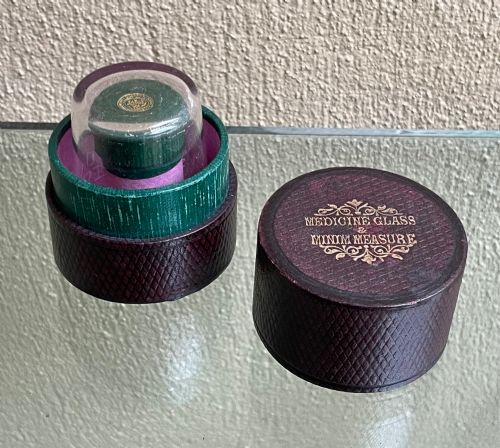
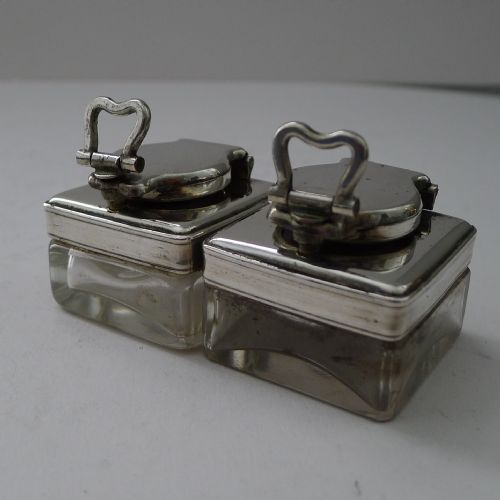
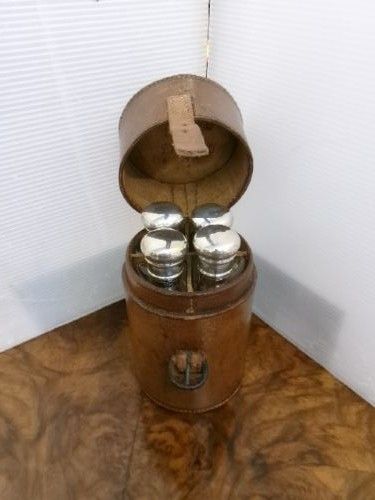
When searching for antique travel glass, you encounter portable vessels and fitted containers designed to journey safely across distances during the nineteenth and early twentieth centuries. The selection on this page consists predominantly of medicine glasses, spirit flasks, inkwells, and perfume bottles housed in protective leather, wood, or metal cases.
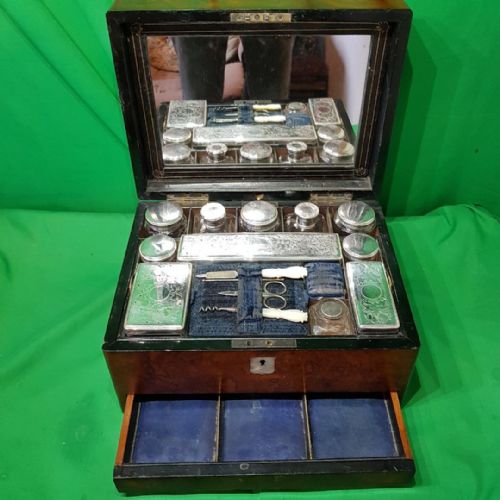
These items originate from the Victorian, Edwardian, and nineteenth-century periods, spanning both British workshops and French makers. You will find fitted dressing boxes, campaign sets, and medical kits alongside individual glass pieces enclosed in fitted sleeves.
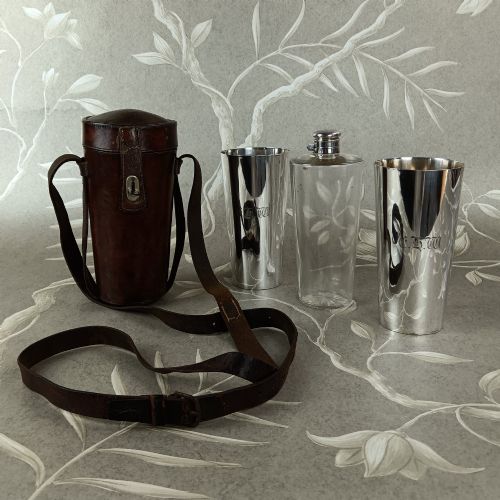
The primary forms include cylindrical glass bottles with silver or metal tops, medicine tumblers within leather cases, and spirit flasks designed for field or mountain expeditions. Each piece reflects the nineteenth-century preoccupation with portable luxury and personal organisation while travelling.
Materials and construction
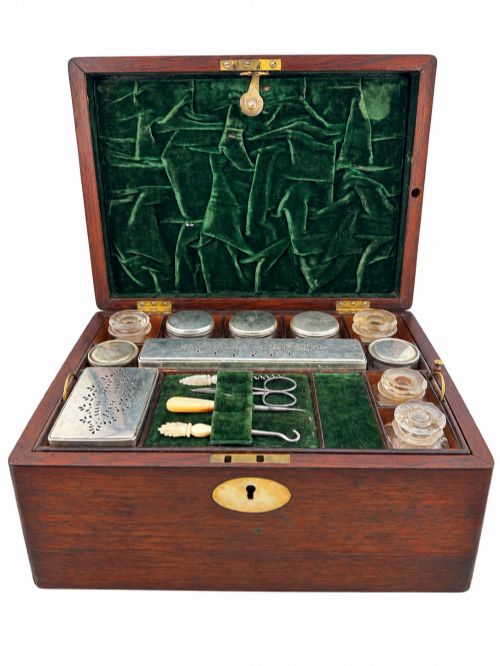
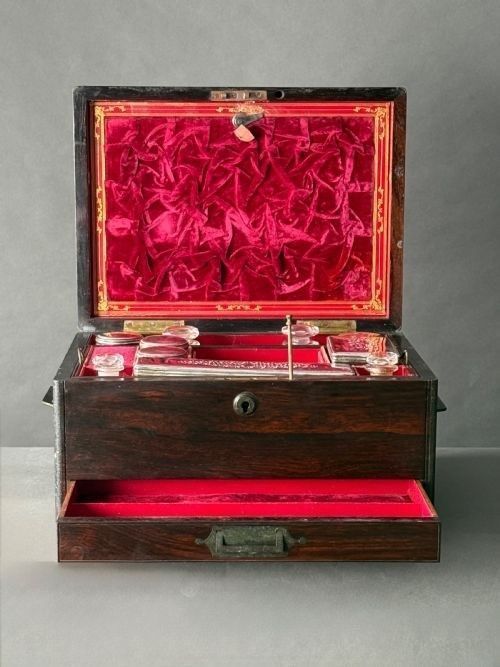
Makers combined blown or moulded glass with robust protective exteriors such as grained leather, polished mahogany, burr walnut, and brass. Glass vessels were often thick-walled to withstand transit, paired with snug fitted interiors lined in velvet or silk.
Metal components involved cast and chased brass, sterling silver, and silver plate, frequently utilised for screw caps, hinged lids, and protective frames. Leather cases featured hand-stitching, damp-resistant treatments, and secure brass clasps or locks.
Antique Travel Glass Retail Price Guide 2026
Typical asking prices for travel glass among the pieces listed under this phrase on Sellingantiques today, from the lower quarter to the upper quarter. They describe what is for sale here now, not the wider market.
One recorded mountaineer hauled Walker's whisky bottles up rocky ascents inside a robust leather case.
Distinctions in quality
Quality rests in the precision of the fitted housing and the integrity of the materials. Superior pieces feature heavy-gauge glass, solid silver mounts, and fine timbers like burr walnut rather than thin veneers and plated base metals.
The sophistication of the internal fittings defines the tier of the object, where custom-carved wood partitions and original leather straps outclass generic interiors. Completeness matters greatly, with full sets retaining every original bottle, flask, and stopper showing higher merit.
James Dixon & Sons·Goldsmiths Alliance Ltd·Duverdrey & Bloquel·L Epee
The Antique Travel Glass Glossary
- Campaign set
- A portable collection of glass and metalware designed for military officers or travellers on active duty. These sets usually fit tightly inside wooden or leather cases fitted with drop handles.
- Vanity box
- A fitted wooden box containing glass perfume bottles, jars, and mirrors for personal grooming during transit. They frequently employ fine veneers such as burr walnut or mahogany.
- Apothecary case
- A specialised wooden box housing medical glass bottles, scales, and mixing equipment for administering remedies away from home. These pieces date largely from the nineteenth century.
- Silver plate
- A thin layer of silver fused to a base metal such as copper or brass, commonly utilised for bottle caps and travel mounts. It provided the lustre of solid silver at a lower cost.
Antique Travel Glass: Frequently Asked Questions
What is antique travel glass?
Antique travel glass encompasses portable glass bottles, flasks, and medicine tumblers made to withstand journeys during the nineteenth and early twentieth centuries. These items usually feature dedicated protective housing.
They appear in various forms, from single spirit flasks to comprehensive medical kits and vanity sets enclosed in leather or timber cases.
How were these items used?
Travellers utilised these glass vessels to carry medicines, spirits, perfumes, and ink safely while navigating rugged terrain or long voyages. The protective cases ensured the glass remained intact during transit.
Officers, explorers, and well-to-do tourists relied on these fitted sets to maintain personal hygiene and comforts away from permanent residences.
How do I care for travel glass?
Handle glass components gently and clean them with mild, non-abrasive solutions to preserve the original surface. Leather and wooden exterior cases benefit from occasional conditioning to prevent drying.
Keep the pieces away from direct sunlight and excessive moisture to protect internal velvet linings and metal mounts from deterioration.
How do I identify the period?
Dating relies on material combinations, case styles, and any accompanying hallmarks on silver mounts or fitted locks. Victorian pieces often display rich burr walnut or heavy leather work.
Edwardian items tend toward streamlined Edwardian manufacture, while early nineteenth-century examples show characteristic mahogany apothecary construction and hand-blown glass.