
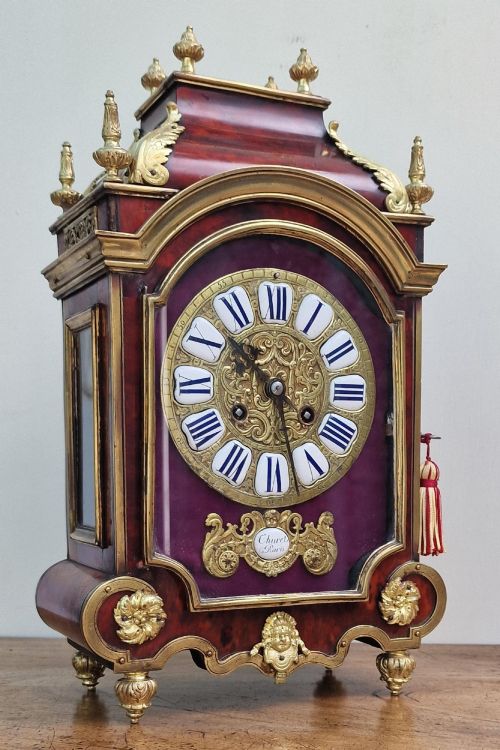
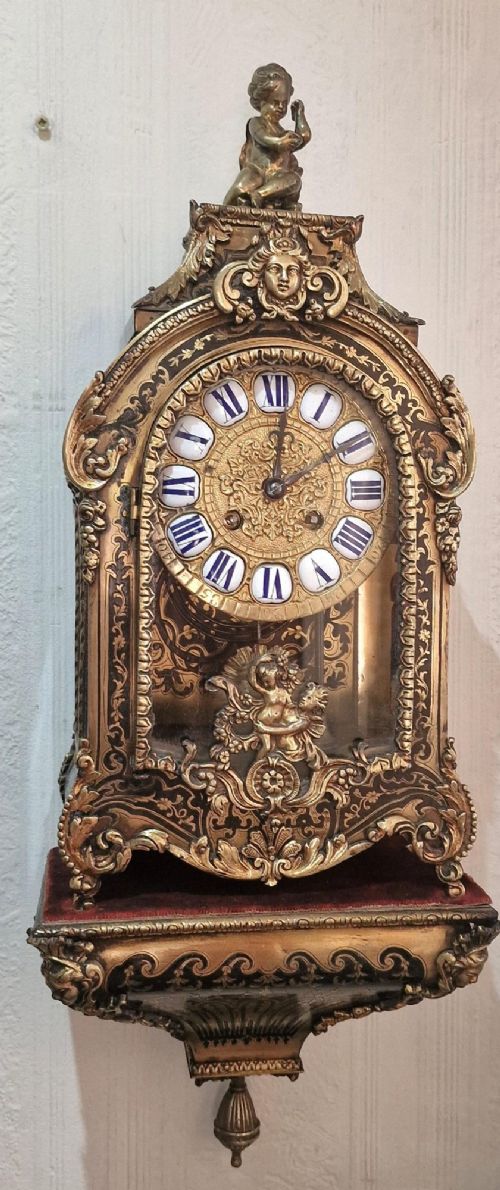
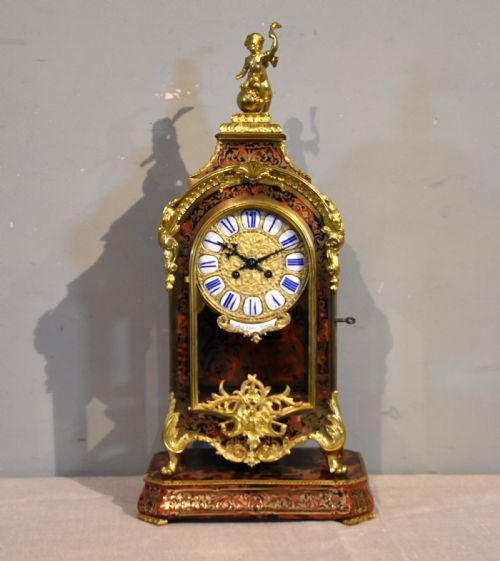


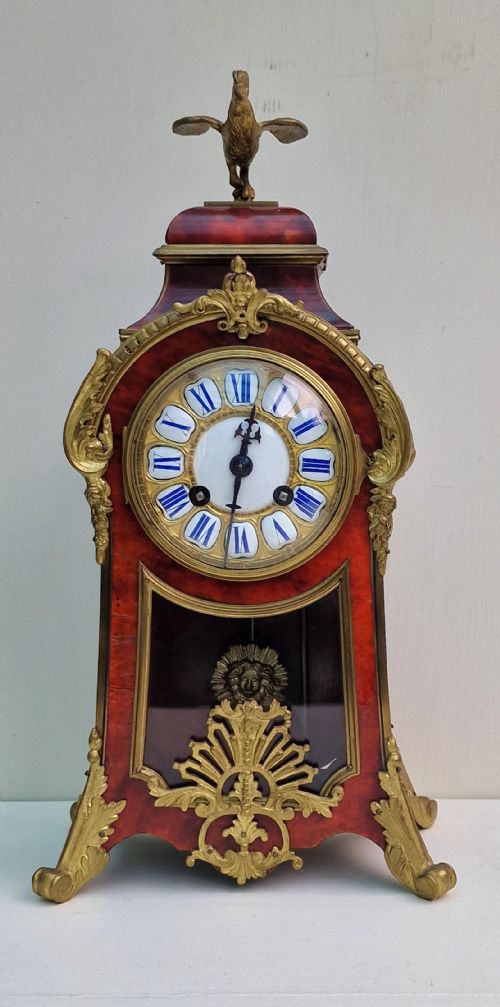
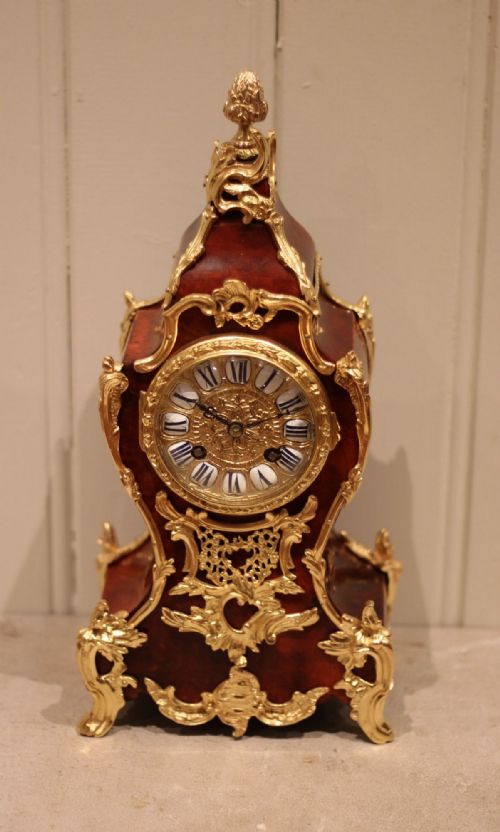


Antique Tortoiseshell Clock
An antique tortoiseshell clock brings rich dark pattern and gilt bronze mountings into a room, combining French style with intricate mechanical movement.
Antique Tortoiseshell Clock
An antique tortoiseshell clock combines a functional timepiece with decorative shell veneer, brass inlay, and cast metal mounts. These objects appear in several distinct formats, including mantel clocks, wall clocks, bracket clocks with matching wall supports, and taller longcase variations.
Most pieces seen here belong to the nineteenth century, spanning Victorian and Edwardian periods as well as Napoleon III reigns. French workshops produced a high proportion of these items, drawing heavily on Louis XIV, Louis XV, and Rococo revival aesthetics.
Buyers will encounter genuine tortoiseshell alongside faux tortoiseshell finishes, red tortoiseshell variations, and green boulle examples. Forms range from miniature carriage clocks and desk timepieces up to large floor-standing longcase designs.
How they were made
Craftsmen applied thin plates of tortoiseshell veneer over a wooden carcase, frequently combining them with brass marquetry in the boulle technique. Ormolu, gilt bronze, and brass mounts provided structural borders, feet, and figural ornaments.
Enamel dials with delicate numerals sat behind glass panels, driven by eight-day or single fusee movements enclosed within the case. Gilded brass details and cast bronze angel mounts completed the exterior decoration.
Some tortoiseshell clocks keep precise track of time while quietly observing the room with cast bronze angel mounts.
What varies in quality
The precision of the brass inlay work against the dark shell sets finer examples apart from simpler productions. Crisp chasing on the ormolu mounts and the integration of matching wall brackets or pedestals indicate higher workshop standards.
The sophistication of the clock movement, from standard timepieces to quarter-striking mechanisms by known makers, determines the mechanical standing of each piece.
Thuret Paris·Henri Marc·J Batson And Son·Samuel Marti·William Hardy London·Payne London·Vincenti
The Antique Tortoiseshell Clock Glossary
- Boulle
- A method of marquetry using brass and tortoiseshell inlaid together, named after the cabinetmaker André-Charles Boulle. It creates a rich patterned surface across the clock case.
- Ormolu
- Gilded bronze used for decorative mounts and feet on nineteenth-century clock cases. This material adds metallic contrast to the dark shell veneer.
- Fusee
- A conical pulley used in clock movements to equalize the drive of the mainspring as it winds down. It ensures steady timekeeping over the running period.
- Bracket clock
- A portable clock designed to sit on a dedicated wall bracket or shelf. Many examples retain their original matching wall supports.
- Longcase clock
- A tall floor-standing timepiece housed in a wooden trunk with a weighted pendulum. These substantial pieces often feature marquetry inlay and ornate brass dials.
Antique Tortoiseshell Clock: Frequently Asked Questions
How do I wind an antique clock?
Use the appropriate key to turn the winding arbors gently until resistance is felt, taking care not to over-wind the spring.
Most nineteenth-century movements run for eight days and require consistent handling to maintain accurate time.
Where should I place a mantel clock?
Position the clock on a stable, level surface away from direct sunlight, drafts, and sudden temperature fluctuations.
Mantel and bracket clocks require solid support to ensure the pendulum swings evenly.
How do I distinguish faux tortoiseshell?
Faux versions substitute painted or treated materials for genuine shell, often revealing brushwork or uniform patterns under close inspection.
Genuine tortoiseshell displays natural depth, mottling, and organic tonal variations.
What is a single fusee movement?
A single fusee mechanism uses a chain and cone-shaped pulley to regulate power delivery from the mainspring.
This system provides even tension to the gear train, improving the timekeeping precision of the timepiece.