
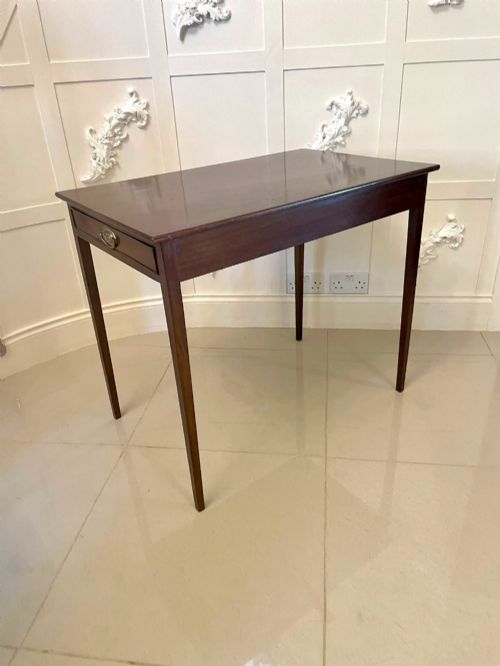

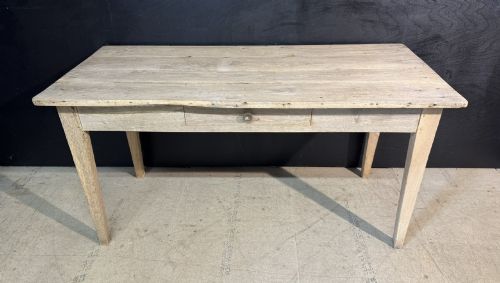
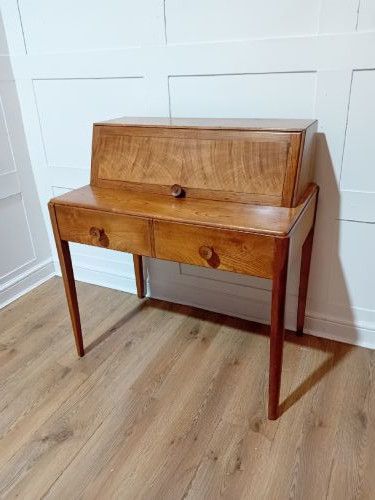
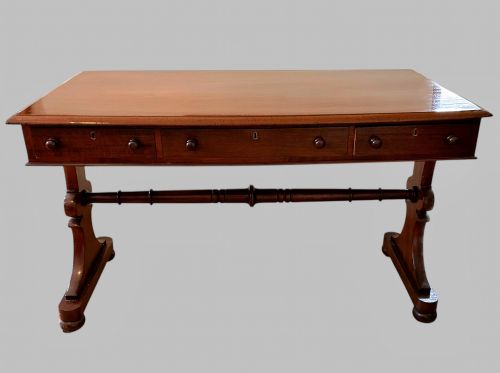

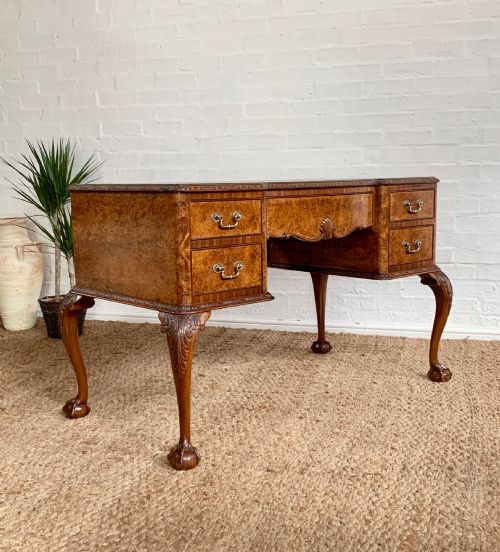
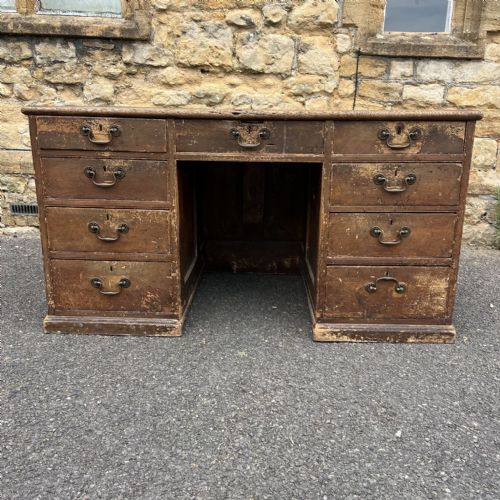
Antique Timber Writing Desk
An antique timber writing desk brings traditional workspace utility and rich cabinetmaker craftsmanship into a modern room.
Antique Timber Writing Desk
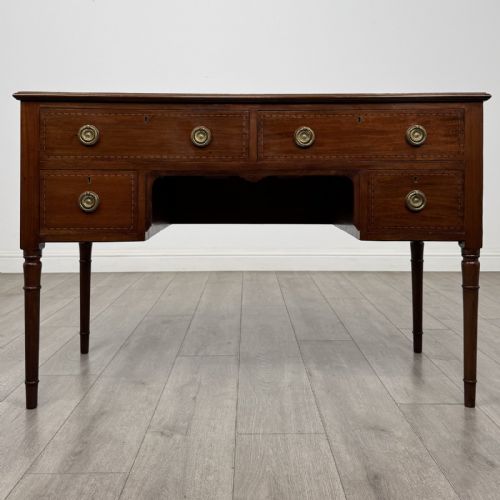
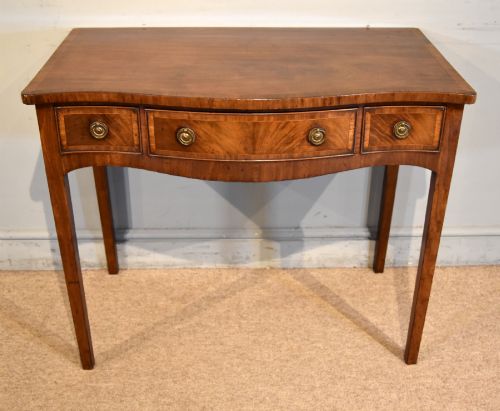
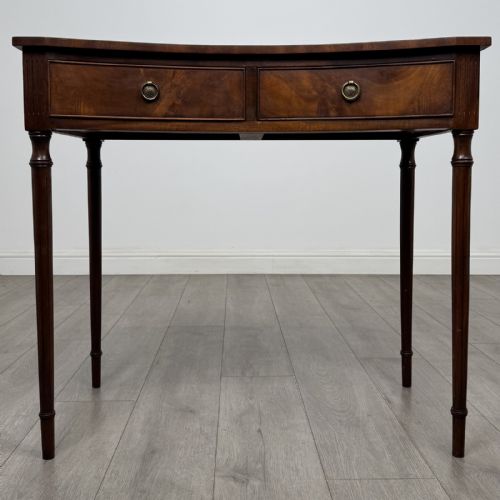
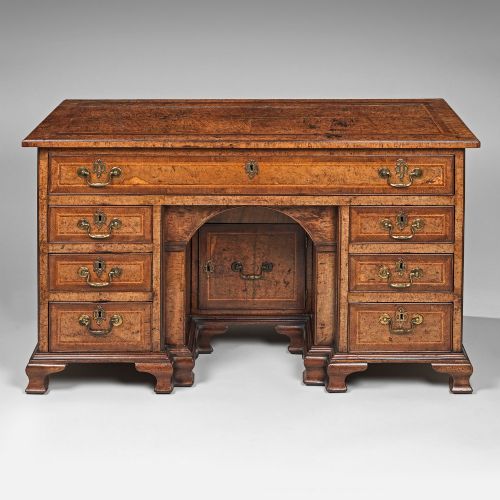
An antique timber writing desk is a dedicated surface designed for correspondence and paperwork, emerging in various forms across the 18th and 19th centuries. Buyers searching for an antique timber writing desk encounter pieces ranging from compact Georgian kneehole desks and walnut bureaus to substantial Victorian library tables and pedestal desks.
The selection on this page spans simple pine and oak estate pieces to finely figured mahogany and satinwood writing tables. Styles shift from the restrained lines of the Georgian period and the architectural balance of the Regency era to the carved ornamentation of Victorian examples and the handcrafted ethos of the Arts and Crafts movement.
Materials and Construction Methods
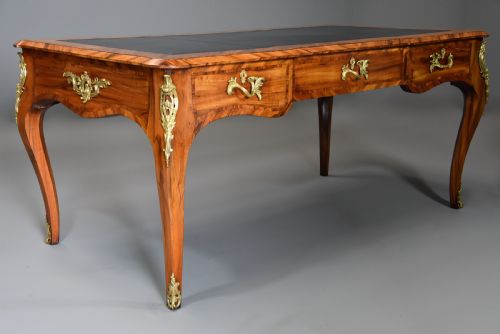
Cabinetmakers built these desks primarily using dense hardwoods like mahogany, walnut, oak, and satinwood, occasionally employing fruitwood, elm, or pine for secondary framing and simpler country pieces. Surfaces frequently incorporate inset panels of green tooled leather to provide a smooth, durable writing plane.
Joinery methods relied on hand-cut dovetails for drawer construction and sturdy mortise and tenon joints for the main frames. Brass handles, key escutcheons, and occasional gallery rails finished the construction, while surface treatments included French polishing and wax to protect the timber grain.
Materials represented include mahogany, walnut, oak, satinwood, pine, brass, and leather.
Distinctions in Quality and Execution
Quality in these desks rests upon the choice of timber and the precision of the cabinetmaker's hand. Superior examples display carefully matched timber veneers, such as burr walnut or figured mahogany, and retain original brass hardware and fitted interior compartments.
Finer desks show meticulous attention to secondary details like smooth-sliding drawer interiors with solid oak or mahogany linings. Structural integrity, clean lines, and minimal later alterations separate exceptional workshop production from everyday utility furniture.
Trollope & sons·ARTHUR BASIL REYNOLDS·Heal and son
The Antique Timber Writing Desk Glossary
- Kneehole desk
- A compact desk featuring a central recess for the user's legs, flanked by pedestals of small drawers. This form became popular during the Georgian period.
- Bureau plat
- A freestanding French writing table, typically with a rectangular top and one or more drawers in the frieze. These pieces sit comfortably in the middle of a room.
- Partners desk
- A large double-sided desk designed for two people to work opposite one another, featuring drawers and cupboards on both faces. They often date from the 19th century.
- Lowboy
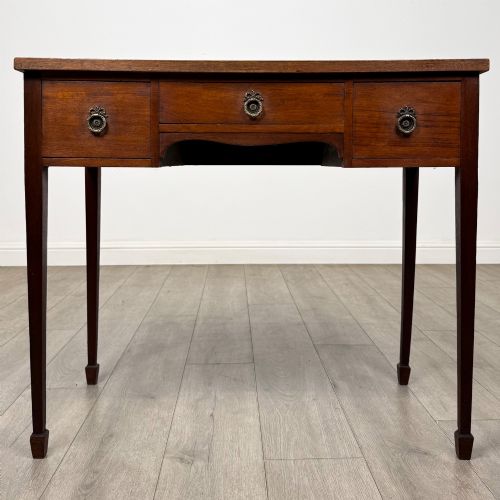
- A small side table with one or more rows of drawers beneath the working surface, frequently functioning as a writing table or dressing table in 18th-century homes.
- Pedestal desk
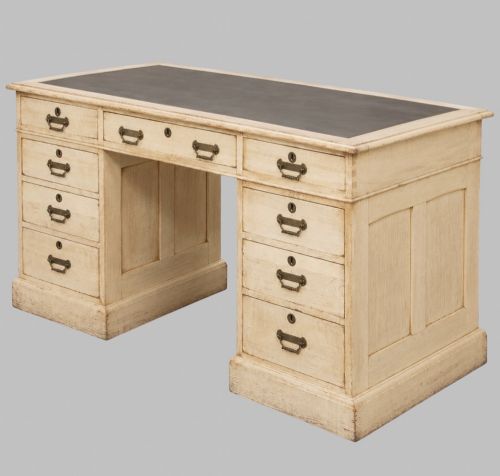
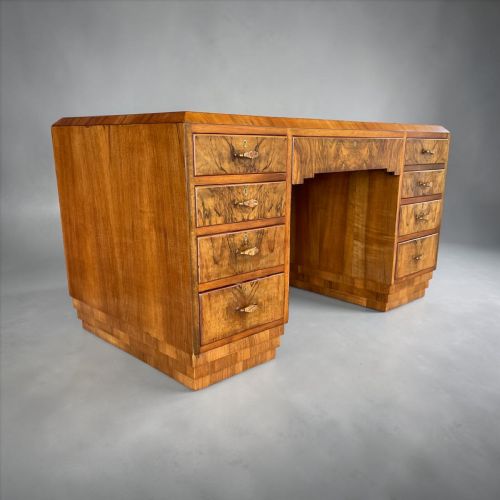
- A heavy writing desk supported by two vertical columns of drawers with a central opening for the chair. They appear frequently in Victorian library settings.
Antique Timber Writing Desk: Frequently Asked Questions
How do I spot a Georgian desk?
Georgian desks typically display restrained classical proportions, simple bracket feet or straight legs, and rich mahogany or walnut timbers. They prioritize functional elegance without heavy Victorian ornamentation.
Examine the drawer linings and internal dividers to check for hand-cut dovetails and solid secondary woods consistent with 18th-century workshop practices.
What is a partners desk?
A partners desk is built with drawers and storage cupboards on both sides so two people can sit opposite each other and work simultaneously. These substantial tables usually demand a central position in a room.
They appeared frequently in 19th-century offices and grand libraries where shared administrative space was necessary.
How do I care for leather writing surfaces?
The leather top requires gentle cleaning with a slightly damp cloth followed by a specialised leather cream or neutral wax to maintain suppleness. Avoid harsh chemical cleaners and excessive moisture.
Keeping the room humidity stable prevents the leather from drying out and cracking around the gold-tooled borders.
Are these desks suitable for daily laptop use?
Most antique writing desks accommodate modern laptops easily, though internal clearance in older kneehole spaces or shallow drawers should be checked first. Their solid timber construction provides a stable and enduring workspace.
Using a matching blotter helps protect the historic timber and leather surfaces from daily wear and scratches.