




.jpg)
Antique Timber Corner Cabinet
An antique timber corner cabinet makes clever use of overlooked room geometry while offering handsome storage for glassware or china.
Antique Timber Corner Cabinet
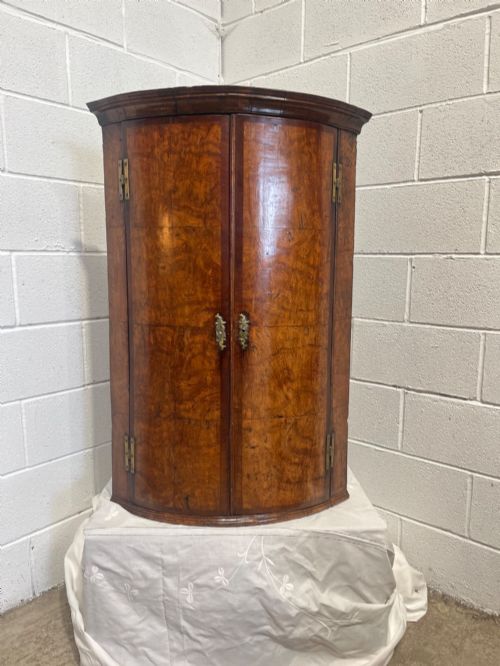
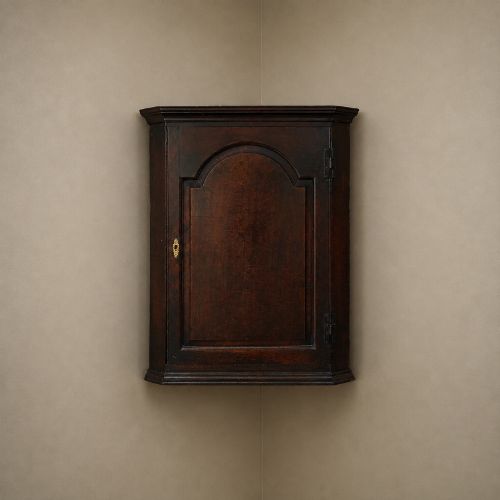
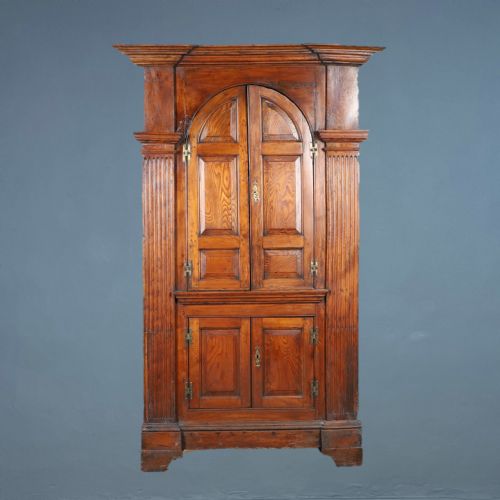
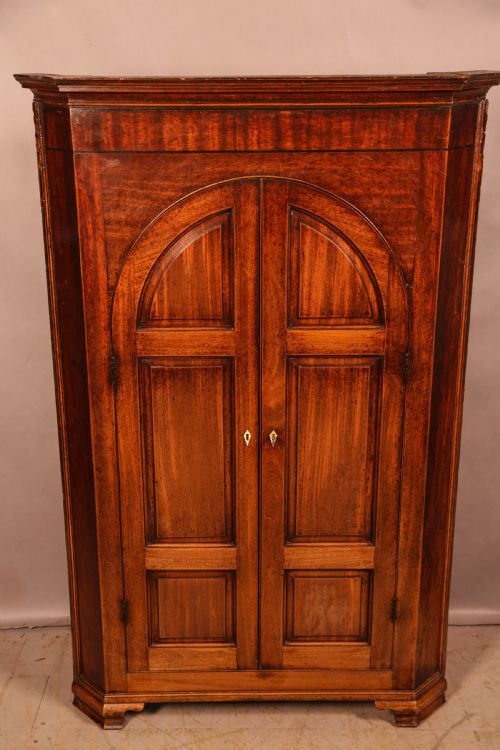
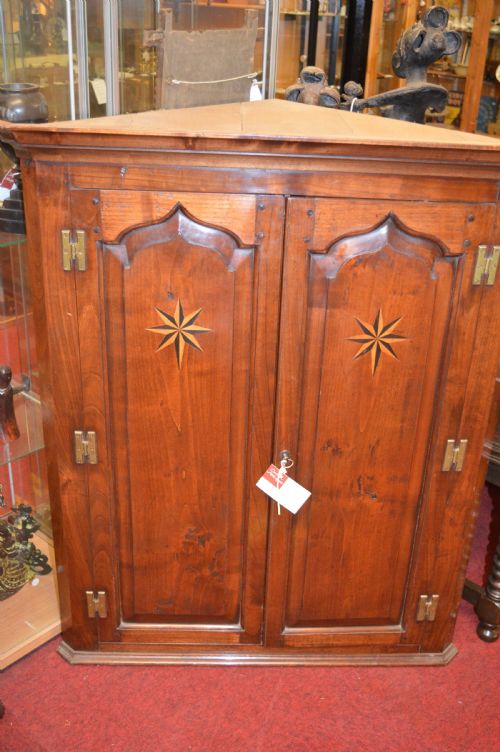
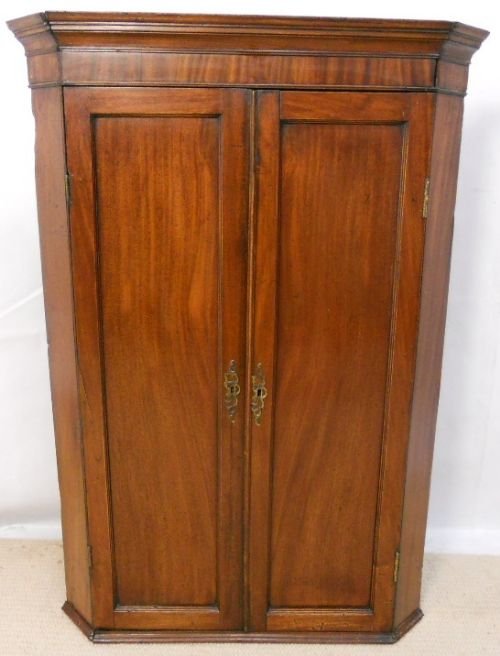
An antique timber corner cabinet is a specialised storage piece designed to fit neatly into the ninety-degree angle of a room. The selections available on this page span several distinct eras, notably the Georgian period, the nineteenth century, and the early twentieth century.
Buyers will encounter both wall-hanging models and taller freestanding floor-standing cupboards. These pieces utilise solid woods and decorative veneers to turn awkward dead space into a focal point within a dining room, hallway, or drawing room.
Origin variations range from traditional English workshop pieces in mahogany and oak to painted Scandinavian country cupboards and elm architectural designs. Each iteration serves the practical purpose of keeping domestic provisions or display items secure behind timber or glazed doors.
How they were made
Joiners constructed these cabinets using sturdy timbers such as mahogany, oak, elm, fruitwood, and burr oak, often mounting doors on brass hinges. Many eighteenth-century examples incorporate pegged joints and solid framing to withstand the seasonal movement of timber.
Surface treatments vary from polished mahogany and figured burr veneers to painted finishes on Scandinavian country pieces and delicate satinwood inlay work. Glazed upper sections utilise individual glass panes held in wooden glazing bars, whilst hanging versions feature robust internal brackets for secure wall mounting.
Listings feature eighteenth and nineteenth-century pieces alongside early twentieth-century examples, utilising mahogany, oak, elm, pine, and burr oak.
What varies in quality
Quality rests primarily on the choice of timber and the ambition of the cabinet maker's design. Finer Georgian examples display carefully selected mahogany or burr oak veneers, elegant architectural cornices, and precise crossbanding or satinwood inlay.
Simpler country cupboards, whilst equally charming, rely on honest construction in native woods like elm, fruitwood, or painted pine. The sophistication of the door mouldings, the crispness of the carving, and the retention of original brass hardware elevate certain pieces above standard utility furniture.
The Antique Timber Corner Cabinet Glossary
- George III
- A stylistic and historical period spanning from seventeen sixty to eighteen twenty, known for refined cabinet making. Pieces from this era often feature balanced proportions and fine timber selections.
- Hanging corner cupboard
- A wall-mounted storage unit designed to utilise upper room space without occupying the floor. These usually feature a single hinged door and internal shelving.
- Standing corner cupboard
- A tall floor-standing piece of furniture that occupies a room corner from base to top. They frequently divide into upper and lower cabinet sections.
- Satinwood inlay
- A decorative technique using contrasting light-toned wood veneers inserted into mahogany surfaces. This work was particularly popular during the Sheraton revival and late eighteenth century.
- Glazed door
- A door fitted with glass panes to display contents inside the cabinet rather than conceal them. Georgian and later makers used timber glazing bars to create multi-pane fronts.
Antique Timber Corner Cabinet: Frequently Asked Questions
What is the difference between hanging and standing cupboards?
Hanging corner cupboards attach directly to walls to save floor space, making them suitable for smaller dining areas or kitchens. Standing floor cupboards rest on the ground and often provide significantly more storage capacity.
Freestanding versions frequently feature lower cupboard doors in addition to the upper display area. Both types serve the primary function of utilising room angles effectively.
How do I clean and polish antique timber?
Maintain timber surfaces by dusting regularly with a soft, dry cloth to prevent grit accumulation. Apply traditional beeswax periodically to nourish the wood and preserve the lustre of older finishes.
Avoid modern silicone-based sprays, which can penetrate porous historical finishes and damage the patina. Keep timber pieces away from direct heat sources and strong sunlight to prevent warping.
Are these cabinets suitable for modern homes?
Corner cabinets solve modern spatial dilemmas by utilising awkward room angles that standard rectangular furniture cannot occupy. They provide practical storage for glassware, books, or collections while adding period character to contemporary interiors.
The modest footprint of a hanging cupboard allows it to sit comfortably above sideboards or desks. Their traditional utility translates seamlessly into modern living spaces.