


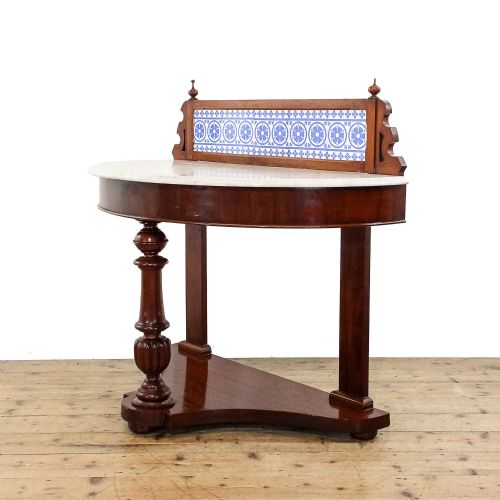


Antique Tiled Splashback
An antique tiled splashback brings period character to a washstand, protecting walls with decorative ceramic and marble whilst anchoring a Victorian or Edwardian bedroom scheme.
Antique Tiled Splashback
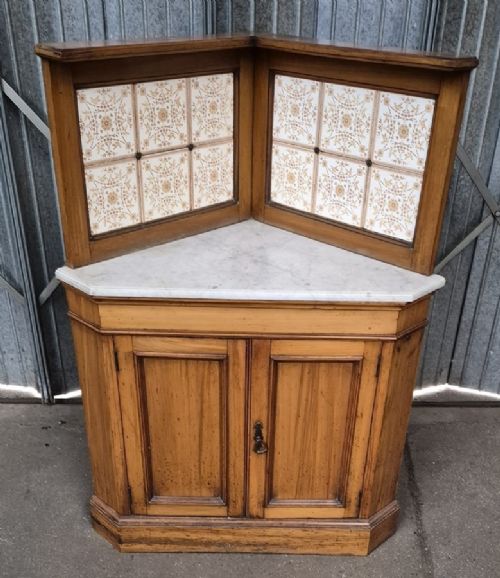
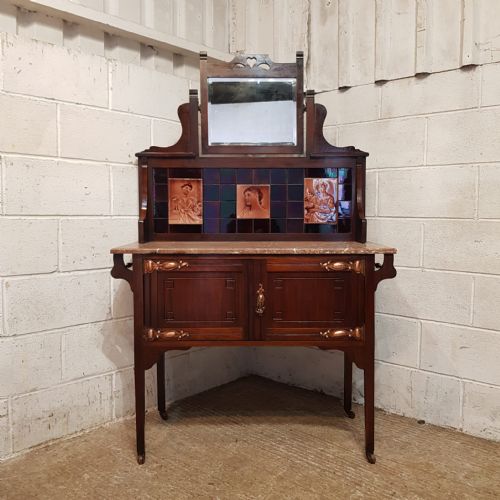
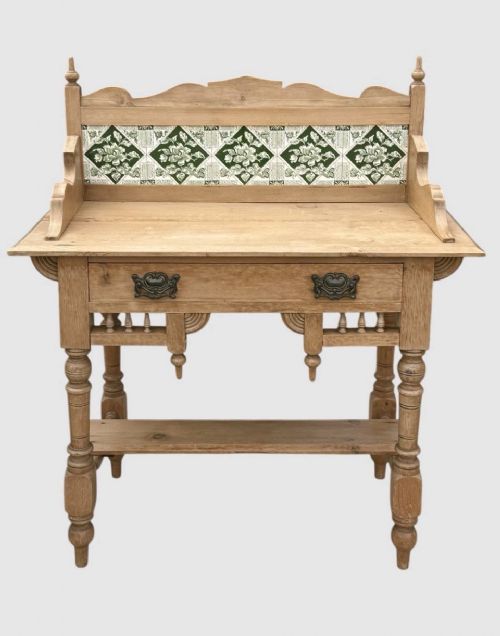
When you search for an antique tiled splashback, you are looking at the decorative ceramic panel assemblies integrated into washstands and bedroom furniture from the Victorian, Edwardian, and late nineteenth-century periods. These fixtures served a practical domestic purpose in bedrooms before plumbed bathrooms became standard, combining a protective back panel with a functional basin surface.
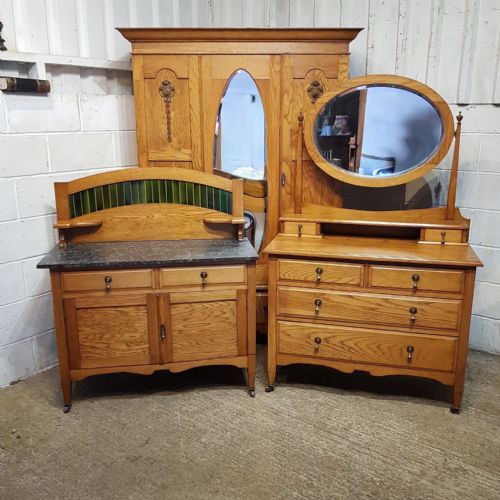
The pieces you encounter on this page typically form part of washstands and bedroom suites constructed from woods such as mahogany, walnut, oak, pine, and marble. They reflect design movements including Arts and Crafts, Art Nouveau, and the Aesthetic Movement, showing how domestic utility met skilled cabinet making.
Most examples date between eighteen-eighty and nineteen-ten, spanning late Victorian and Edwardian manufacturing traditions. They survive as standalone furniture pieces or integrated sections of larger bedroom suites, retaining their original ceramic tiles and stone tops.
How they were made
Makers built these pieces using solid timbers like mahogany, walnut, oak, and pine for the main frames, often pairing them with heavy marble tops to resist water damage. The splashback structures typically incorporate a wooden or brass gallery frame to secure the decorative ceramic tiles firmly in place behind the basin.
The tiles themselves utilise nineteenth-century ceramic techniques, featuring glazed floral, geometric, or pictorial designs characteristic of the Arts and Crafts and Art Nouveau styles. Wood surfaces received traditional finishes such as polish, paint, or wax, depending on whether the piece formed part of a polite townhouse suite or a simpler rustic bedroom setting.
Listings feature pieces spanning the Victorian and Edwardian periods, utilising marble, ceramic, glass, mahogany, walnut, oak, pine, and brass.
What varies in quality
Quality in these pieces depends upon the selection of timber and the integration of the marble and tile components within the frame. Finer examples display well-figured walnut or mahogany, substantial carved woodwork, and hand-painted or tube-lined ceramic tiles that sit flush within secure galleries.
Simpler pieces constructed from pine or standard oak show more utilitarian construction methods, often relying on simpler printed tile designs and straightforward joinery. The weight and thickness of the marble top and the complexity of the wood framing also distinguish standard bedroom utility furniture from more ambitious cabinet maker outputs.
Walker & Sons
The Antique Tiled Splashback Glossary
- Splashback
- A protective panel rising behind a basin to shield walls from water splashes. In antique furniture, this feature incorporates decorative tiles and wood framing.
- Gallery
- A raised wooden or metal rail running along the back or sides of a furniture top. It often holds the ceramic tiles in place on a washstand.
- Arts and Crafts
- A design movement valuing handcraftsmanship and traditional materials. Pieces from this era often feature simple lines and nature-inspired ceramic tiles.
- Art Nouveau
- A style characterised by flowing, organic lines and asymmetrical plant motifs. This aesthetic frequently appears in the tile patterns of late nineteenth-century washstands.
- Aesthetic Movement
- A nineteenth-century design trend prioritising beauty and artistic expression over strict utility. It influenced the decorative ceramic panels found on period washstands.
Antique Tiled Splashback: Frequently Asked Questions
What is an antique tiled splashback?
An antique tiled splashback is the decorative ceramic and stone panel assembly attached to the rear of a Victorian or Edwardian washstand. It protected bedroom walls from water during daily washing.
These panels form an integral part of the washstand structure, combining wood framing, marble surfaces, and glazed tiles into a single decorative furniture element.
How were washstands used?
Victorian and Edwardian households used washstands in bedrooms for morning and evening washing before houses had plumbed bathrooms. A ceramic basin and jug sat on the marble top.
The tiled splashback caught stray water droplets, while the lower cabinet or shelf stored washing jugs, basins, and chamber pots out of sight.
How do I date a splashback?
Dating relies on the combination of wood types, tile aesthetics, and overall furniture style. Pieces spanning the late nineteenth century show Aesthetic Movement or early Arts and Crafts influences.
Edwardian examples often feature lighter mahogany or walnut frames with distinct art nouveau ceramic motifs, whereas earlier Victorian pieces frequently utilise heavier mahogany or pine.
Can I use them in modern bathrooms?
Many people repurpose antique washstands and their splashbacks in modern bathrooms or kitchens as vanity units. The marble tops and glazed tiles remain practical water-resistant surfaces.
Care must be taken to seal wooden frames against modern moisture levels and protect antique ceramic tiles from harsh chemical cleaners.