

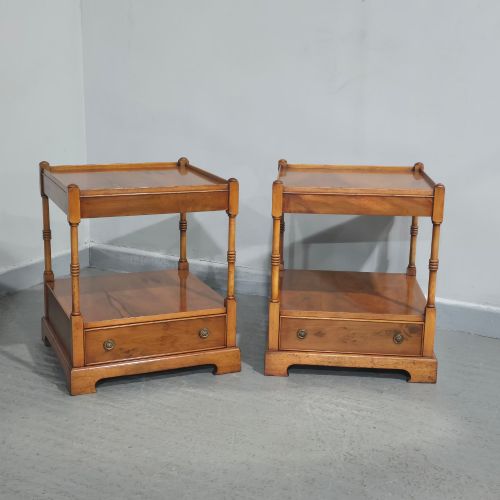
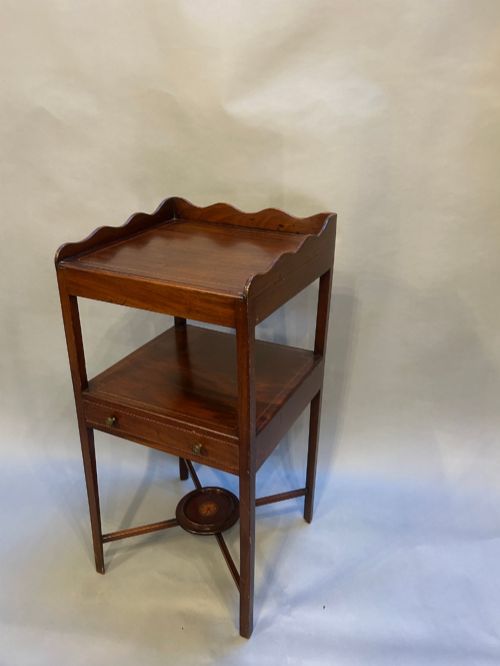
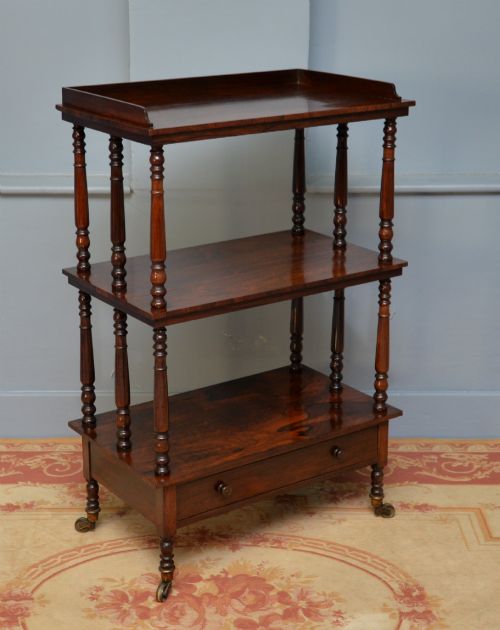
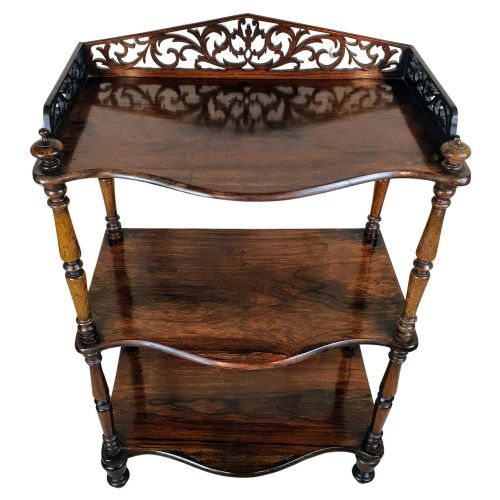
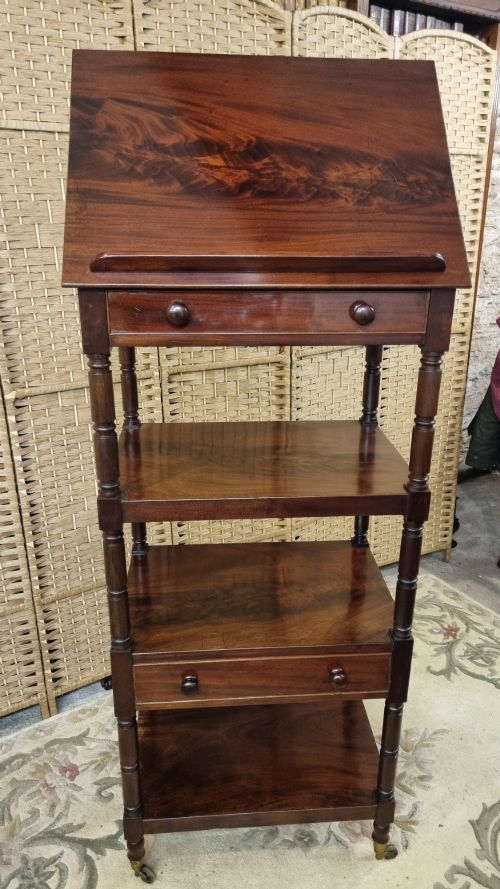
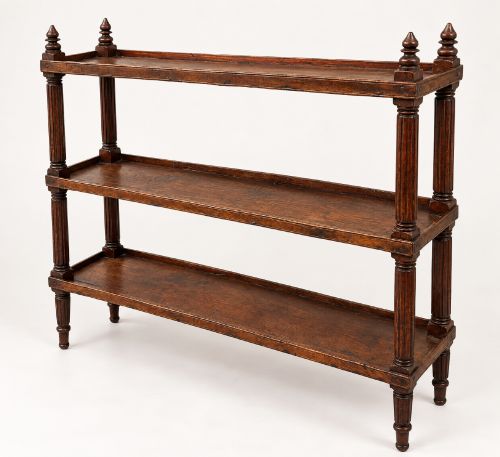
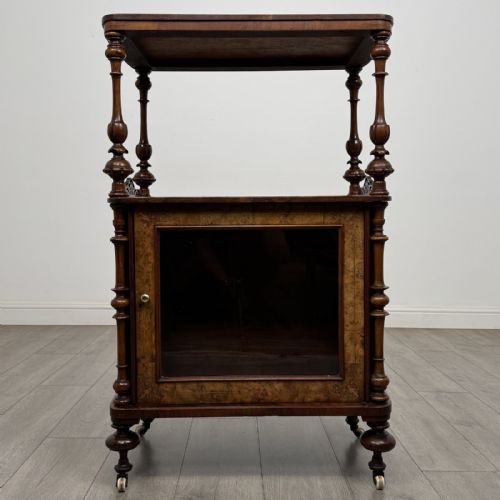
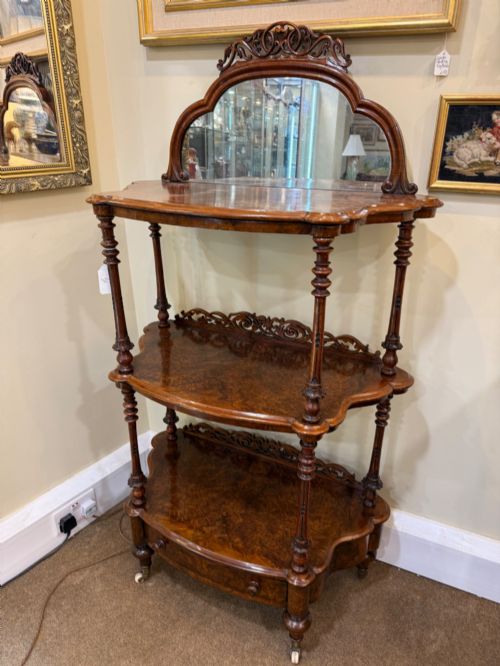
Antique Tier Whatnot
An antique tier whatnot brings tiered shelving into a room, offering display space for books and decorative objects with open elegance.
Antique Tier Whatnot
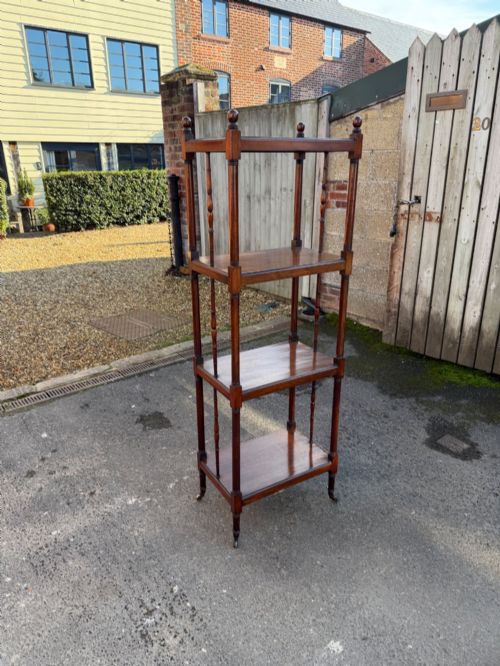
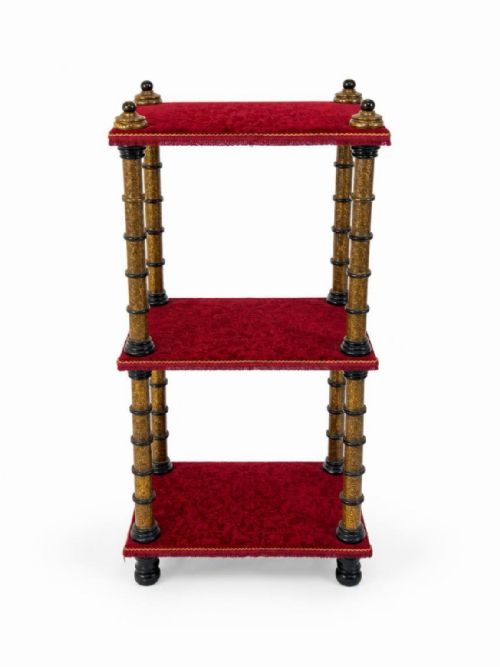
When you search for an antique tier whatnot, you encounter open tiered furniture designed for display and storage in nineteenth-century interiors. These pieces range from compact corner units to multi-tiered reading stands and freestanding etageres.
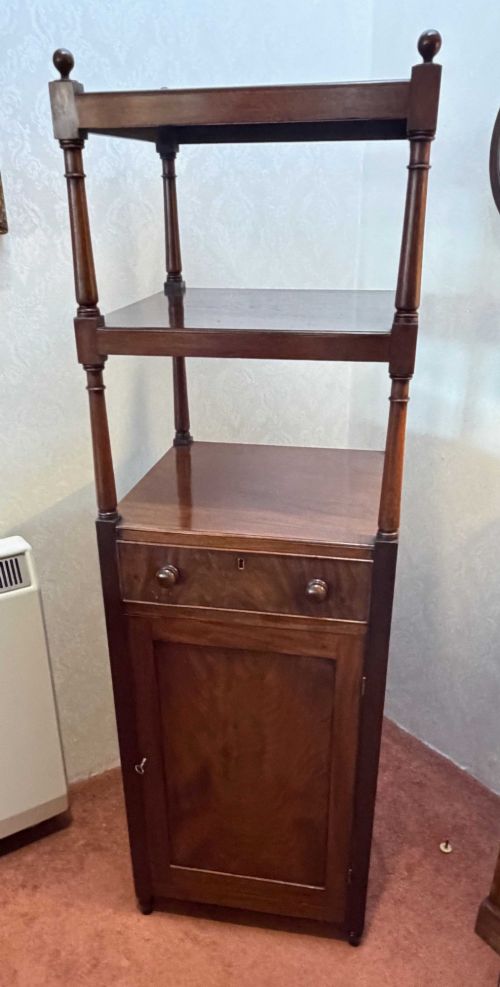
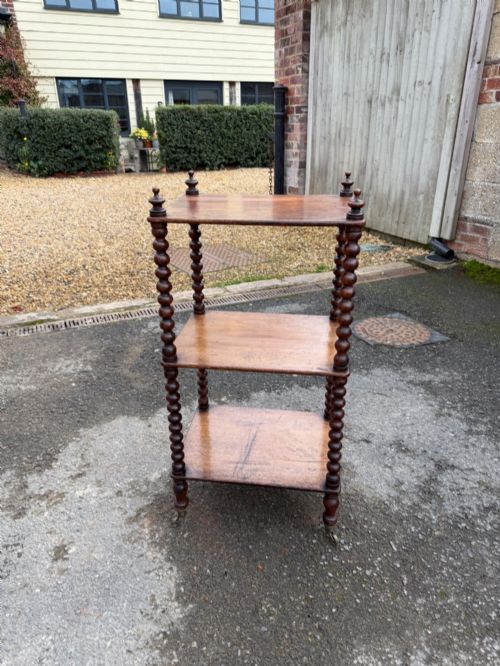
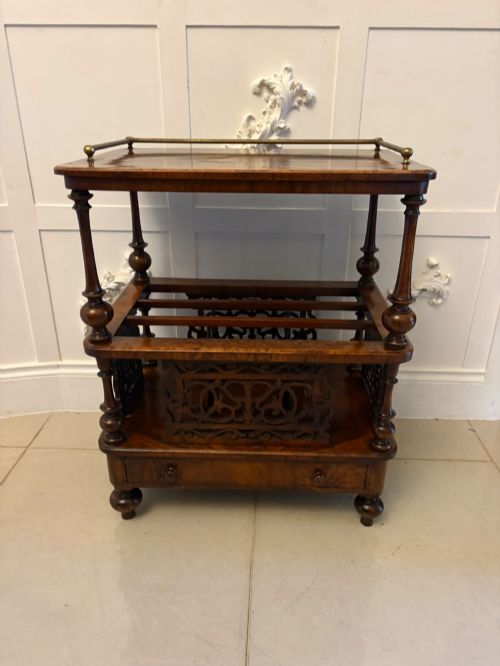
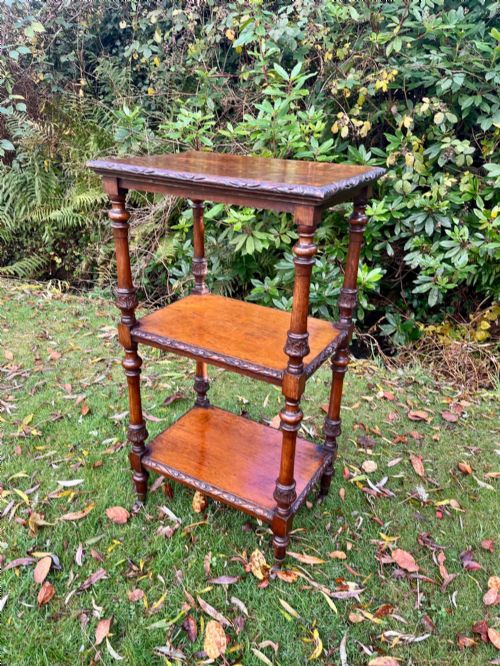
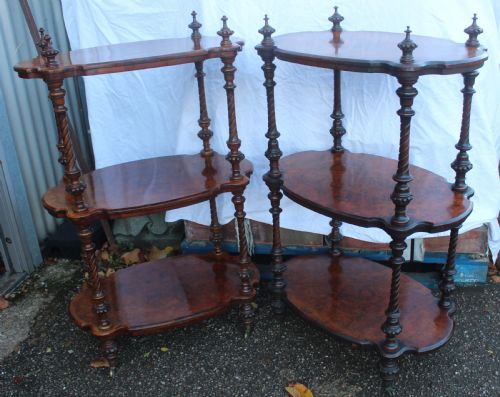
The version you most frequently meet on this page is the Victorian burr walnut or mahogany whatnot, often featuring turned supports, open shelves, and sometimes a lower cupboard or drawer. They bridge the gap between functional shelving and decorative display tables.
Originating in the Georgian and Regency periods and flourishing through the Victorian era, these pieces utilise vertical space efficiently. They appear in various forms, including wall-hanging shelves, music cabinets, and canterburys.
Materials and construction
Cabinet makers utilised dense hardwoods such as mahogany, walnut, burr walnut, and rosewood to construct the structural tiers and uprights. Inlaid satinwood, ebonised wood, and gilt wood frequently accent these primary timbers.
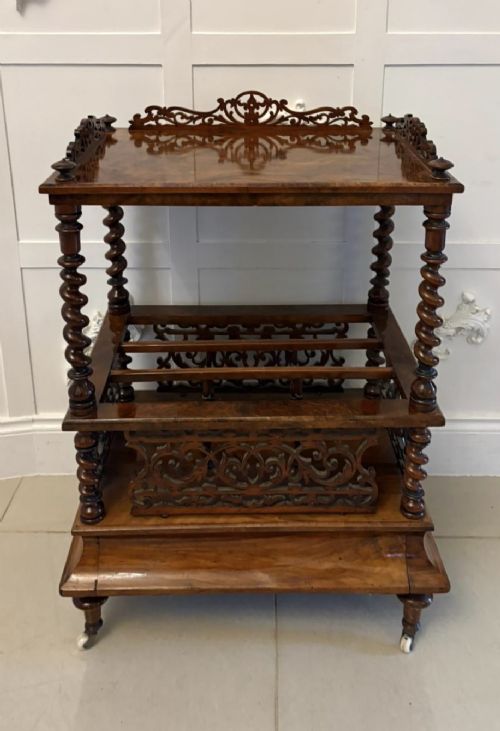
Turned wooden supports, barley twist columns, and bobbin turned members hold the tiers apart, whilst brass galleries sometimes secure the uppermost shelf. Pierced fretwork and fine marquetry inlay decorate the panels and friezes of finer examples.
Antique Tier Whatnot Retail Price Guide 2026
Typical asking prices for tier whatnot among the pieces listed under this phrase on Sellingantiques today, from the lower quarter to the upper quarter. They describe what is for sale here now, not the wider market.
Listings feature pieces spanning from the George III and Regency eras through the height of the Victorian period, constructed in mahogany, walnut, and rosewood.
Indicators of quality
The choice of timber creates the primary distinction between pieces, with highly figured burr walnut and richly grained rosewood marking out superior examples. Plain mahogany versions represent the more utilitarian end of the range.
Joinery detail and decorative flourishes elevate certain pieces above standard production. The presence of hand-cut pierced fretwork, fine satinwood inlay, and substantial brass hardware distinguishes exhibition quality pieces from simpler constructions.
Edwards & Roberts
The Antique Tier Whatnot Glossary
- Whatnot
- An open piece of furniture with multiple shelves for displaying ornaments or books. It developed in the late eighteenth century and remained popular throughout the Victorian period.
- Etagere
- A French term for a piece of furniture consisting of a set of open shelves for displaying small objects. They share similarities with whatnots but lean towards lighter, highly decorative forms.
- Canterbury
- A low, open-framed piece of furniture fitted with partitions to hold sheet music, magazines, or books. Many examples combine these partitions with lower drawers or upper whatnot tiers.
- Burr walnut
- A veneer sliced from the knotty growths of walnut trees, yielding a swirling, highly decorative grain pattern. Cabinet makers utilised it on prominent surfaces of Victorian furniture.
- Pierced fretwork
- Wood cut through in ornamental patterns to create openwork panels or galleries. It lightened the visual weight of heavy timber structures.
Antique Tier Whatnot: Frequently Asked Questions
What is an antique tier whatnot used for?
These pieces served primarily as display furniture in nineteenth-century drawing rooms and parlours. Households placed ceramics, books, and decorative objects upon the open shelves.
Over time, specific variants also functioned as music stands, reading units, or small side tables. Their tiered design maximised vertical display space without dominating the room.
How do I tell a Victorian whatnot from a Regency one?
Regency and George III examples typically exhibit cleaner architectural lines, denser mahogany timbers, and restrained classical proportions. They often date from the early nineteenth century.
Victorian pieces, by contrast, frequently showcase figured burr walnut, elaborate barley twist or bobbin turned columns, and intricate inlaid satinwood decoration. They lean towards heavier ornamentation.
Where should I place a whatnot in my home?
Corner whatnots fit neatly into unused angles of a room, making them practical for smaller spaces. Freestanding etageres work well against plain walls where their open shelves create visual lightness.
They function effectively in living rooms or studies as display surfaces for collections, books, or lamps. Avoid placing them in areas with direct sunlight to protect polished rosewood and walnut veneers.
What is the difference between a whatnot and an etagere?
While both terms describe multi-tiered shelving units, a whatnot is traditionally an English form with structural utility for books and objects. An etagere derives from French furniture traditions and emphasises ornamental display.
In practice, nineteenth-century makers and modern dealers often use the terms interchangeably. The physical construction remains largely similar across both designations.