




Antique Three Piece Clock
An antique three piece clock set brings together a striking central mantel timekeeper and a matching pair of side pieces.
Antique Three Piece Clock
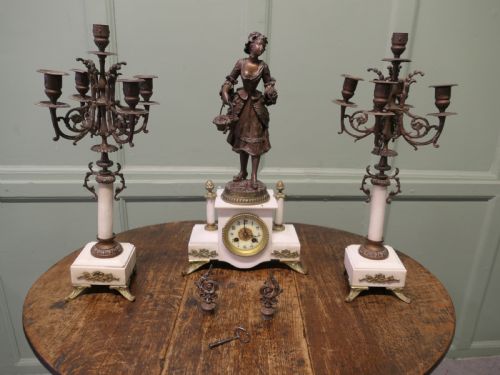
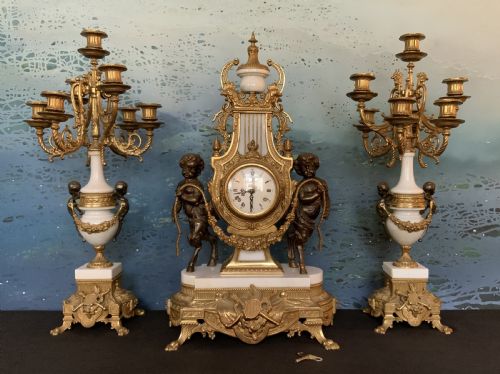
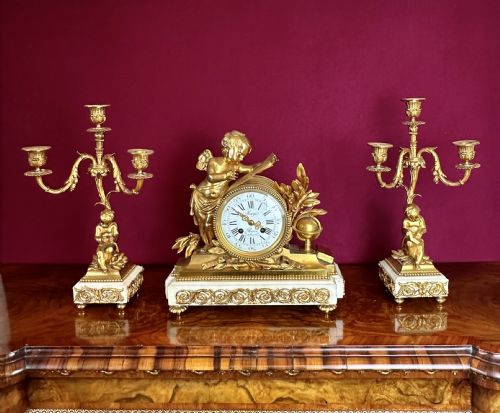
When searching for an antique three piece clock, collectors encounter matching table ensembles designed to create visual balance on a mantelpiece or sideboard. These sets typically consist of a central clock flanked by a pair of candelabras, urns, or vases.
The dominant style found in these ensembles is French in origin, spanning the nineteenth century up through the Art Deco period. Pieces take the form of clock garnitures or garniture sets that share uniform materials and decorative motifs.
Makers paired the central clock with matching side ornaments to dress a grand interior fireplace surround. This format became popular during the Victorian era and continued into the early twentieth century with refined geometric designs.
Materials and construction methods
These decorative sets rely on heavy structural materials such as marble, slate, onyx, and alabaster to form the architectural bodies of the clock and matching garnitures. Metal components are cast in bronze, brass, spelter, or gilt metal, often finished with ormolu or silver plating.
Many examples incorporate delicate decorative elements like hand-painted Paris porcelain, Imari porcelain, and white enamel dials. Artisans combined these fragile ceramic faces and panels with heavy stone bases to achieve a balanced, ornate presentation.
Distinguishing quality across the range
Quality in these clock sets rests on the crispness of the cast metal ornamentation and the selection of the stone body. Finer examples feature deeply chased gilt bronze or ormolu mounts and substantial marble or onyx cases rather than lighter plated alloys.
The integration of the side pieces with the central clock determines the coherence of the set. Superior suites maintain identical decorative programs across all three elements, executed by skilled foundries or signed horologists.
Ferdinand Berthoud·Japy Freres
The Antique Three Piece Clock Glossary
- Garniture
- A set of matching decorative ornaments designed to be displayed together on a mantel or furniture top. In these listings, it refers to a clock accompanied by side pieces such as candelabra or urns.
- Ormolu
- A method of applying finely ground high-carat gold to a bronze object using a mercury amalgam. This technique gives the metal mountings a rich, warm golden lustre.
- Candelabra
- Branched candlesticks designed to hold multiple taper candles. They form the matching side pieces in many clock garniture sets.
- Breccia marble
- A composite stone made of broken fragments of minerals cemented together by a fine-grained matrix. It creates a mottled, multi-coloured surface pattern on the clock case.
Antique Three Piece Clock: Frequently Asked Questions
What is an antique three piece clock?
An antique three piece clock is a decorative mantel set consisting of a central clock and two matching side ornaments, such as urns or candelabras. These ensembles were created to sit together on a fireplace mantel or large piece of furniture.
The matching side pieces balance the central timekeeper, creating a symmetrical display that was popular in formal nineteenth and early twentieth century interiors.
How do you style a clock garniture?
Styling a clock garniture involves placing the central clock in the exact centre of a mantelpiece, sideboard, or console table. The matching side pieces are then positioned symmetrically on either side to frame the timekeeper.
Because these sets are visually heavy and ornate, they work best in rooms with high ceilings and traditional or transitional decor where the ensemble can serve as a focal point.
What materials were used in these clock sets?
These clock sets were constructed using a variety of heavy stone and metal materials. Common structural bases include marble, slate, onyx, and alabaster, which support decorative mounts made from bronze, brass, and gilt metal.
Finer examples often incorporate painted porcelain panels, enamel dials, and ormolu finishes to add colour and texture to the overall composition.
How do I identify the period of a clock set?
Identifying the period of a clock set requires looking at the stylistic influences, such as French Empire, Louis XVI, or Art Deco, combined with the materials used. For instance, heavy use of black slate points to the later nineteenth century, while geometric lines indicate the 1920s.
Signatures on the movement, dial, or bronze mounts can also help trace the piece to specific makers and active decades.