




Antique Thames Paintings
These antique thames paintings capture centuries of river life, offering a glimpse into historic London and its bustling waters through period oils and watercolours.
Antique Thames Paintings
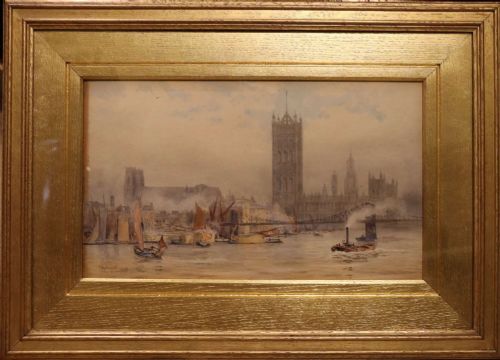
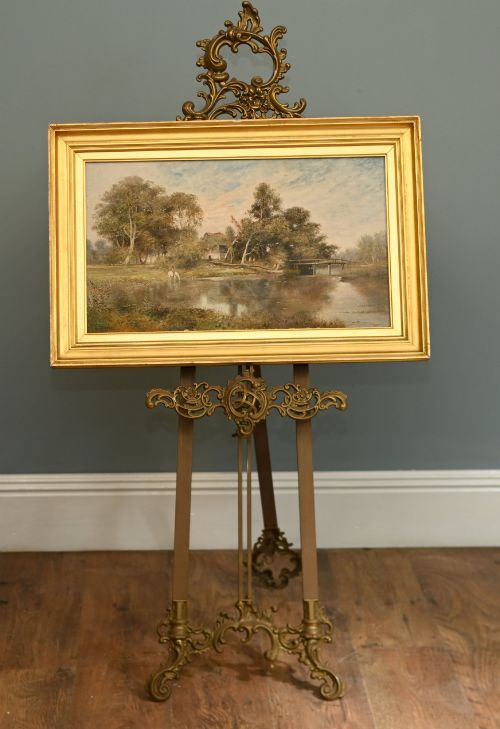
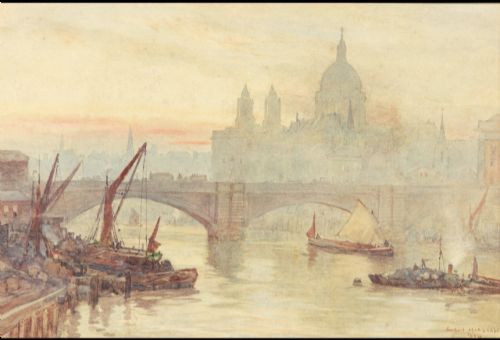
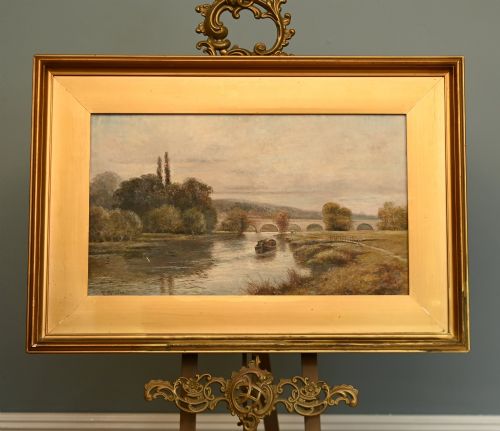
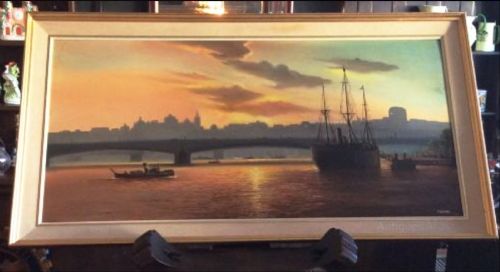
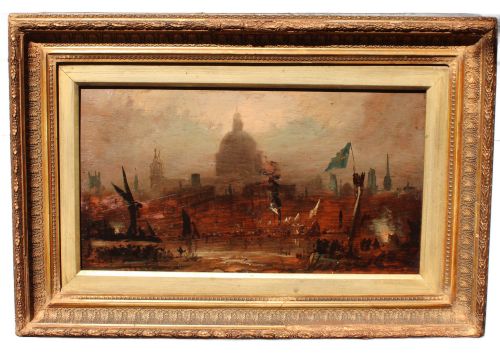
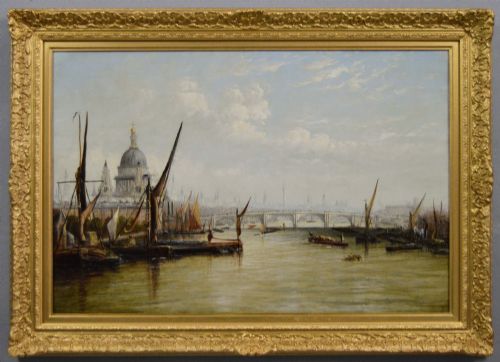
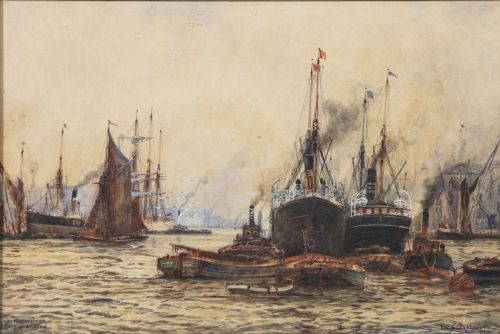
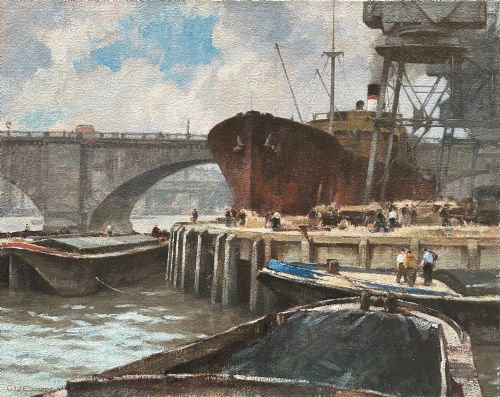
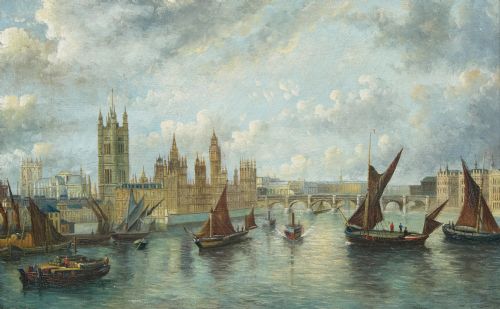
When you search for antique thames paintings, you encounter topographical scenes, maritime views, and river landscapes centered on the River Thames. These works span the Victorian, Edwardian, and early twentieth-century periods, capturing everything from misty London bridges to quiet pastoral reaches upstream.
The versions most commonly met on this page include finely worked watercolours on paper and textured oil paintings on canvas or board. Artists focused their attention on iconic landmarks like the Houses of Parliament, St Paul's Cathedral, Windsor Castle, and the Pool of London, alongside everyday river traffic such as Thames barges and tug boats.
How They Were Made
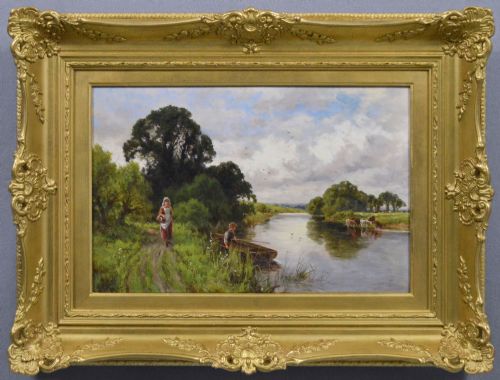
The physical build of these works relies fundamentally on traditional painterly foundations, utilising oil paint applied to canvas, board, or wood, alongside watercolour pigment brushed onto paper. Many surviving examples are framed under glass to protect delicate watercolours, while oil paintings frequently incorporate gold leaf detailing within their original frames.
Artists captured atmospheric effects by balancing fluid washes of watercolour or building heavy impasto in oils. The hand of the maker remains visible through swift brushstrokes that record changing light on the water, smoke over the industrial pool, and precise architectural details of bridges and historic buildings.
Antique Thames Paintings Retail Price Guide 2026
Typical asking prices for thames paintings among the pieces listed under this phrase on Sellingantiques today, from the lower quarter to the upper quarter. They describe what is for sale here now, not the wider market.
Listings feature works spanning the nineteenth century, the Victorian period, the Edwardian era, and into the twentieth century, executed in oil and watercolour.
What Varies in Quality
The distinction between a standard topographical record and a superior painting lies in the artist's command of atmospheric depth and light. Finer works successfully convey the murky haze of the capital or the serene reflections of rural locks, integrating figures and shipping seamlessly into the wider landscape.
Quality also rests on the handling of scale and perspective, particularly when mapping complex urban architecture like bridges and cathedrals alongside active river craft. The relationship between the painted surface and its period frame further elevates the standing of an individual piece.
Charles Edward Dixon·Francis Moltino·Henry H Parker·Charles William Wyllie·Edward Henry Eugene Fletcher·Frank William Scarbrough·Herbert John Finn
The Antique Thames Paintings Glossary
- Watercolour pigment
- A water-soluble medium applied in transparent washes to paper, allowing light to reflect from the white sheet beneath. This technique creates luminous skies and translucent river surfaces.
- Oil on canvas
- Pigments bound in a drying oil and spread across stretched fabric, providing rich texture and depth. This medium allowed artists to build heavy layers for dramatic skies and dark waters.
- Topographical art
- Accurate representation of specific places and landscapes, recording buildings, bridges, and river bends as they appeared in the nineteenth and early twentieth centuries.
- Maritime art
- Works focusing primarily on ships, boats, barges, and port activities along tidal waterways. It encompasses both bustling commercial docks and quiet rural anchorages.
- Impasto
- A technique where paint is laid thickly on the surface, standing out from the canvas and catching real light to suggest movement in water or heavy smoke in the air.
Antique Thames Paintings: Frequently Asked Questions
What periods do these paintings cover?
The works span from the early nineteenth century through the Victorian and Edwardian eras up to the mid-twentieth century. This broad timeframe records the transformation of the river from rural stretches to industrial docks.
Most surviving pieces cluster around the later nineteenth and early twentieth centuries, reflecting a peak in British watercolour and landscape production.
Where were these river scenes painted?
Artists worked both in the heart of London, capturing bridges, the Pool of London, and St Paul's Cathedral, and further upstream. Rural locations like Windsor, Goring, Marlow, and Wargrave also feature prominently.
Urban views emphasise commerce and architecture, whereas upstream compositions focus on locks, eyots, and quiet figures fishing from the banks.
How do I care for antique watercolours?
Watercolours are sensitive to light and require careful placement away from direct sun to prevent fading of the pigments. Keeping them in stable humidity protects both the paper support and the surrounding mount.
Original framing should be preserved where possible, as it often provides valuable historical context regarding the age and provenance of the piece.
How do I distinguish oils from watercolours?
Oil paintings are executed on canvas or wooden board, presenting a textured surface that often lacks glass protection. They allow for thick impasto and deep, layered colour application.
Watercolours are painted on paper, displayed under glass, and rely on thin washes that let the bright white of the paper illuminate the scene.