




Vintage English Countryside Oils
Vintage english countryside oils capture rural fields and rivers through the brush of artists working from the Victorian era into the mid-twentieth century.
Vintage English Countryside Oils
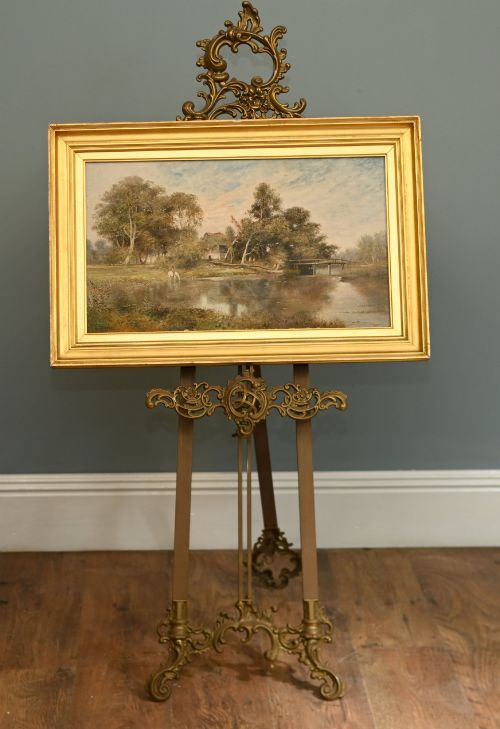
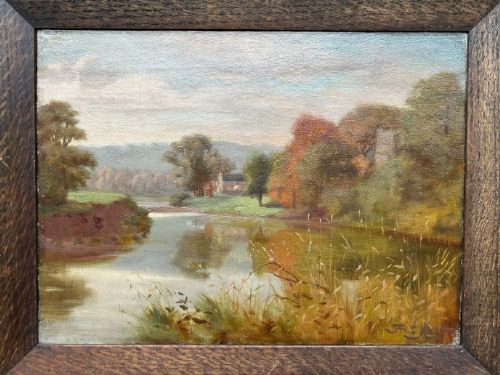
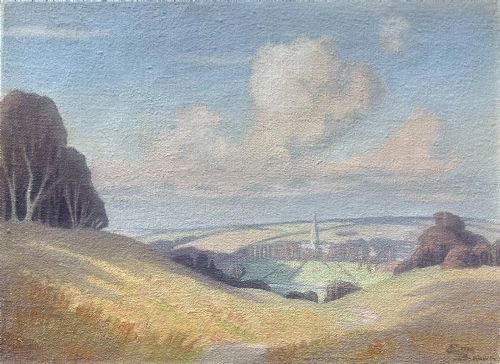
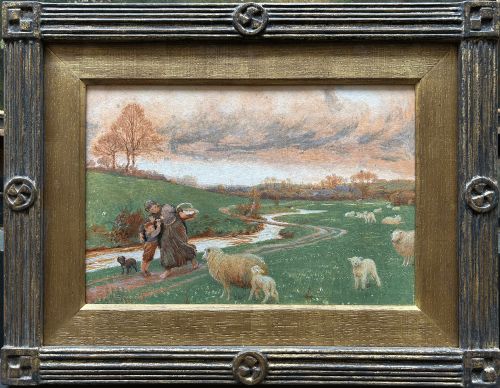
When searching for vintage english countryside oils, buyers encounter framed paintings depicting pastoral scenes, river landscapes, and farming valleys across Britain. These works record rural life, agricultural land, and familiar waterways from the nineteenth century up to the nineteen-sixties.
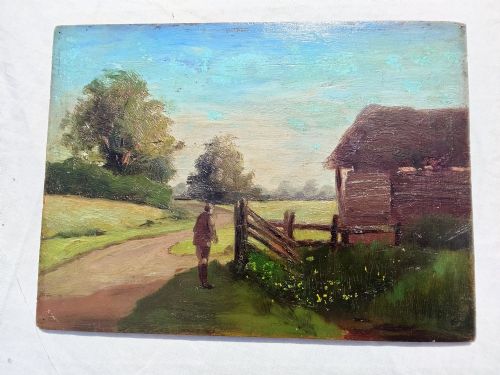
The most common formats on this page are oil paintings executed on canvas or wooden panel, often housed in period gilt frames. Subjects range from Yorkshire moors and Devon ponies to thatched cottages and harvest fields.
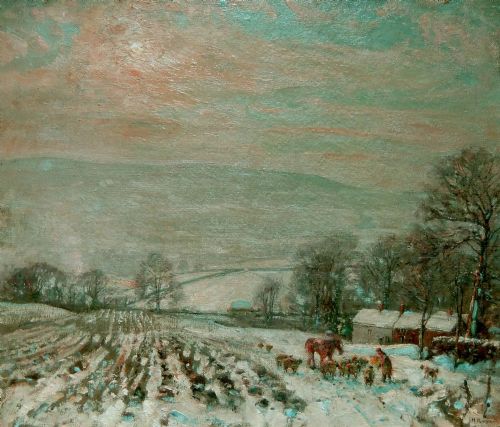
Makers and painters represented span from the Victorian Naturalism school and British Impressionism through to twentieth-century regional artists. Works capture seasonal changes, from winter feeding near Nesfield to summer light across estuaries.
Materials and methods
Artists painted primarily with oil paint applied to stretched canvas, wooden board, or wood panels. Pigments were worked with brushes or palette knives, occasionally creating textured impasto surfaces.
Support frames of wood frequently accompanied the paintings, while many works retain period gilt surrounds that complement the pastoral subjects.
Vintage English Countryside Oils Retail Price Guide 2026
Typical asking prices for vintage english countryside oils among the pieces listed under this phrase on Sellingantiques today, from the lower quarter to the upper quarter. They describe what is for sale here now, not the wider market.
Several canvases record local sheep quietly feeding through harsh northern winters.
Judging quality in rural scenes
Quality rests upon the artist's handling of light, atmosphere, and spatial depth within the rural landscape. Stronger examples demonstrate confident brushwork and accurate colour harmony rather than rigid formulaic composition.
The condition of the pigment layer, the stability of the canvas or wooden panel, and the preservation of the original gilt frame influence the standing of any individual painting.
George Graham·Frederick Marriott·Herbert Royle·Eric Brown·Florence Adelina Hess·Hubert Wellington·Joseph Edward Hennah·Charles Walter Simpson·Helen Layfield Bradley·John Sanderson Wells·Reginald Grange Brundrit·J Phipps·M C Hider·William Greaves·Frank Percy Wild·Charles Vickers·Benjamin Williams Leader·Owen Bowen·Harry Pennell·Jane Maria Bowkett·John Frederic Greenwood·Walter Williams·Kershaw Schofield·Abraham Hulk Junior·Charles Henry Harrison Burleigh
The Vintage English Countryside Oils Glossary
- Canvas
- A heavy woven fabric stretched across a wooden stretcher frame to serve as a support for oil painting. It provides a slightly textured surface that holds layered pigment.
- Impasto
- Paint applied thickly to a canvas or panel, standing proud of the surface so that the marks of the brush or palette knife remain visible. This technique adds tactile dimension to elements like snow or water.
- Panel
- A flat piece of wood used as a rigid support for painting in oils. Panels provide a firm, stable ground that resists the flexing associated with stretched fabrics.
- Gilt
- A thin layer of gold leaf or metallic coating applied to the surface of a wooden picture frame. It adds decorative warmth and protects the underlying wood.
- British Impressionism
- A painting style developed in the late nineteenth and early twentieth centuries focusing on everyday subjects and natural light. Artists used visible brushstrokes to capture fleeting atmospheric effects in the countryside.
Vintage English Countryside Oils: Frequently Asked Questions
What subjects do these paintings feature?
These works typically depict rural English scenery, including rivers, farms, cottages, and moorland views across regions like Yorkshire and Devon.
Scenes often incorporate agricultural activities, livestock, figures on pathways, and seasonal weather conditions.
How do I identify the date of a painting?
Dates can be inferred from the artist's working period, stylistic influences such as Victorian naturalism or British impressionism, and framing materials.
Signatures, inscriptions on the reverse, and the type of canvas or wooden board also provide chronological clues.
Where should I hang an oil painting?
Paintings look best on neutral walls away from direct sunlight and fluctuating heat sources that could damage the canvas or wood.
Ensure the wall can support the weight of the framed artwork securely at eye level.
How do I care for a vintage oil painting?
Dust the surface and frame gently with a soft, dry cloth without applying liquid cleaners or pressure to the paint.
Keep the painting in a stable indoor environment with moderate humidity to protect the wood and canvas.