



Antique Teaspoons
These antique teaspoons span Georgian bright-cut sets to Art Deco enamelled designs, offering refined silver craftsmanship for daily use or display.
Antique Teaspoons
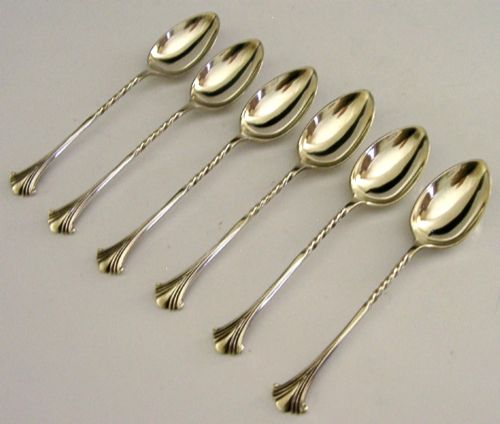
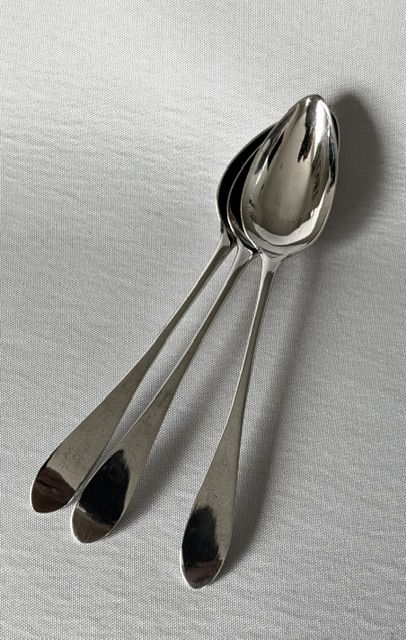
Antique teaspoons encompass individual pieces and matched sets spanning the Georgian, Victorian, Edwardian, and Art Deco periods, alongside later mid-century examples. Buyers encounter everything from plain provincial silver to ornate apostle spoons, sugar tongs, and demi-tasse sets.
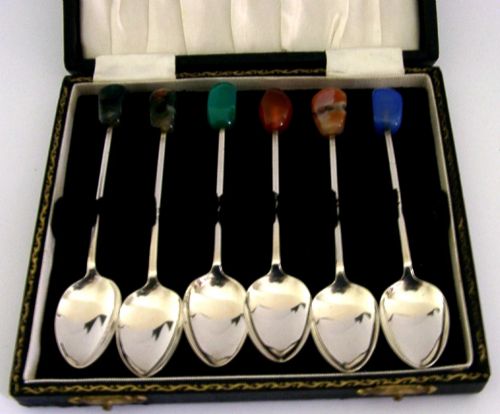
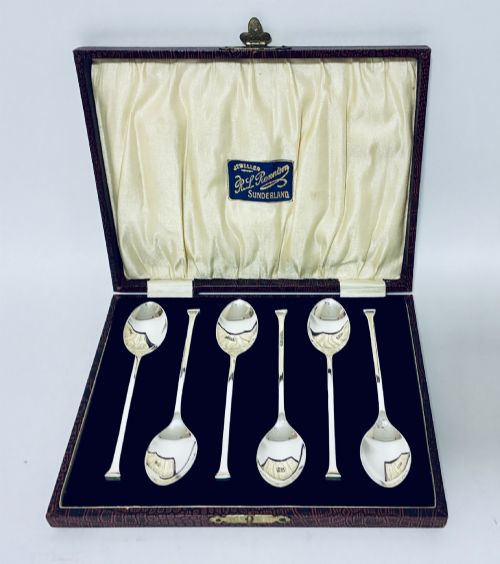
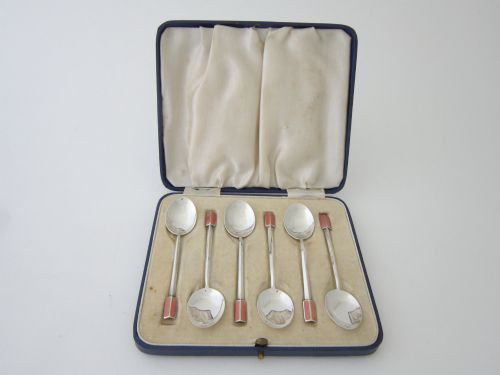
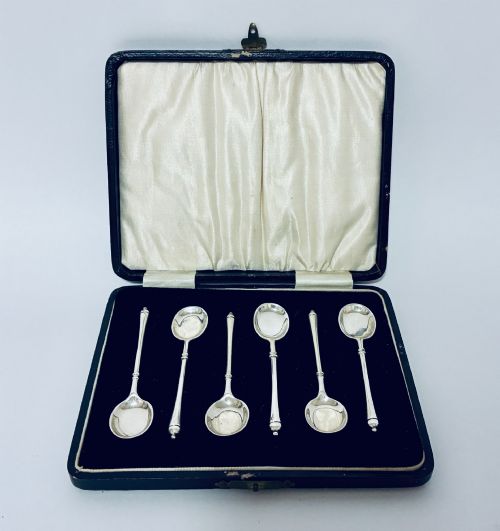
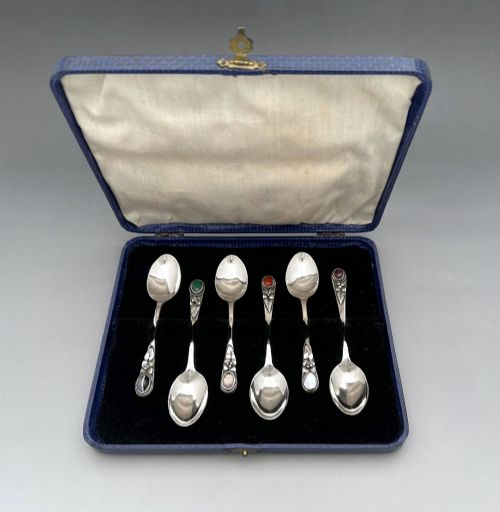
Cased sets frequently appear, housed in fitted boxes lined with velvet, satin, silk, or leatherette to protect the delicate metalwork and any added enamel or semi-precious stones. Individual spoons and matched sets of four, six, or twelve form the majority of the available flatware.
Origins range across English assay offices such as London, Birmingham, Sheffield, Chester, and Exeter, alongside continental workshops from Russia, Germany, Norway, and Denmark. These pieces reflect shifting domestic habits from formal tea service to specialised coffee consumption.
Materials and technique
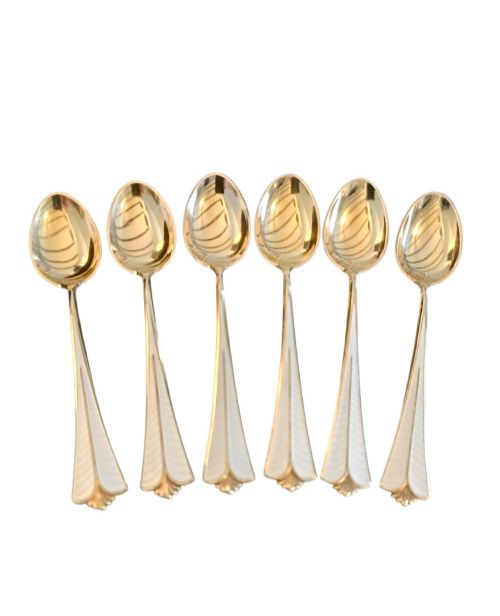
Makers shaped these items primarily from sterling silver and solid silver, occasionally applying silver gilt to create a rich gold-toned surface on the bowl and stem. Enamel work provides vibrant colour highlights, particularly on Art Deco, Art Nouveau, and Scandinavian designs.
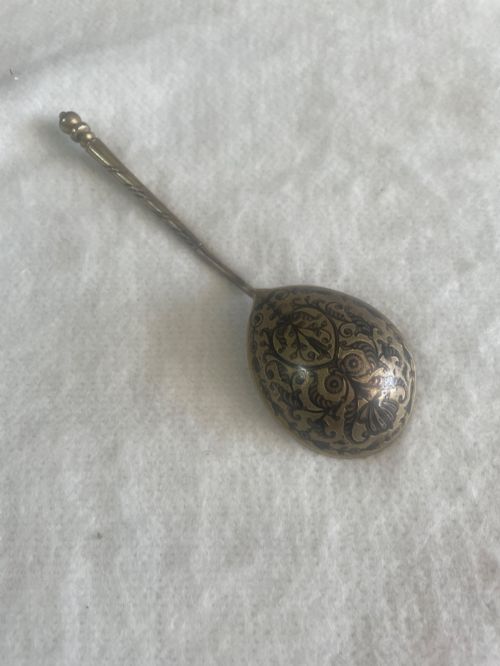
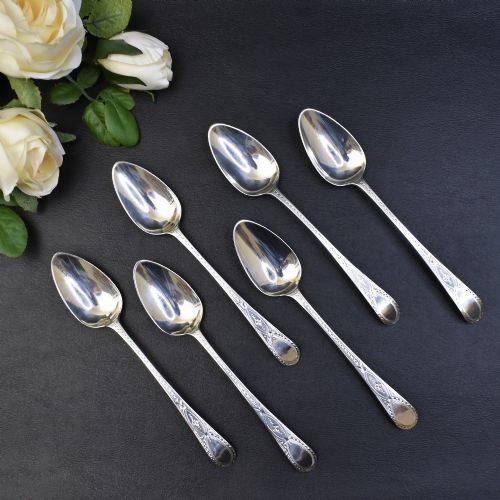
Specialist techniques include bright-cut engraving found on Georgian examples and cloisonné enamel seen on Imperial Russian and Norwegian pieces. Workshops utilised fitted presentation cases lined with satin or velvet to house complete sets alongside matching sugar tongs.
Antique Teaspoons Retail Price Guide 2026
Typical asking prices for teaspoons among the pieces listed under this phrase on Sellingantiques today, from the lower quarter to the upper quarter. They describe what is for sale here now, not the wider market.
Card suits carved into silver spoons prove that tea tables occasionally hosted high-stakes gamblers.
Quality and craftsmanship
Superior examples display crisp hallmarks from notable assay offices and makers, indicating precise regional provenance and accountability. The crispness of bright-cut engraving or the flawless application of coloured enamel separates standard utility flatware from exceptional collector pieces.
Completeness dictates much of the desirability, with original fitted cases containing matching sets of spoons and tongs retaining higher integrity than assembled groups. The weight of the sterling silver and the retention of original gilding further distinguish the finer pieces.
Georg Jensen·Dmitrii Nikolaevich Nikolaev·Vasily Agafonov·Evald Nielsen·Liberty and Co·Walker and Hall·Robert Stebbings·Cooper Brothers and Sons·David Andersen
The Antique Teaspoons Glossary
- Sterling silver
- A silver alloy containing 92.5 percent pure silver and 7.5 percent other metals, usually copper, ensuring durability for cutlery.
- Silver gilt
- Silver that has been coated with a thin layer of gold on its surface, creating a warm, golden finish.
- Bright-cut
- An engraving technique utilising faceted angular cuts to reflect light and create a sparkling decorative pattern on the silver surface.
- Demi-tasse
- A small spoon designed specifically for serving after-dinner coffee or espresso, smaller than a standard teaspoon.
- Cloisonné
- An enamelwork technique where decorative compartments are created by soldering metal wires to the silver base before filling with vitreous paste.
Antique Teaspoons: Frequently Asked Questions
How are antique teaspoons usually sold?
They appear as individual spoons, pairs, or matched sets ranging from four to twelve pieces. Many complete sets include matching sugar tongs.
Complete sets often arrive in their original fitted presentation cases lined with silk, satin, or velvet.
What materials were used for these spoons?
The primary material is sterling silver or solid silver, sometimes finished with silver gilt. Enamel and semi-precious stones decorate specific styles.
Presentation boxes feature protective linings of leatherette, velvet, or satin to cushion the metalwork.
How do I identify the period of a spoon?
Hallmarks stamped into the silver indicate the assay office, city, and year of manufacture. Stylistic markers also point to specific eras.
Georgian pieces often show bright-cut engraving, while 1920s and 1930s examples frequently display colourful enamel work.
Can I use antique teaspoons every day?
Sterling silver teaspoons are durable enough for regular use, provided they are washed by hand rather than in a dishwasher. Enamelled pieces require more careful handling.
Staging them in original cases preserves the fabric linings and protects the delicate surfaces when not in use.