



Antique Tea Strainer
An antique tea strainer catches loose leaves before they reach the cup, bringing silver and wooden craft to the daily ritual.
Antique Tea Strainer
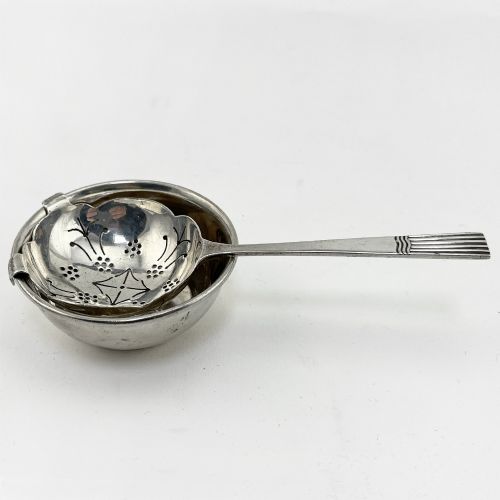
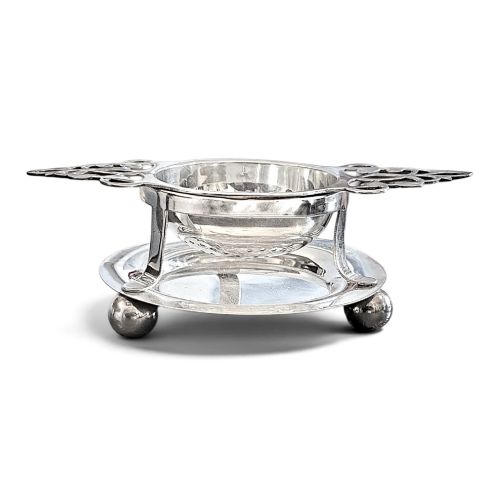
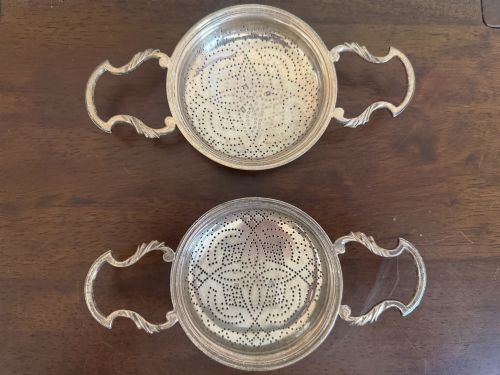
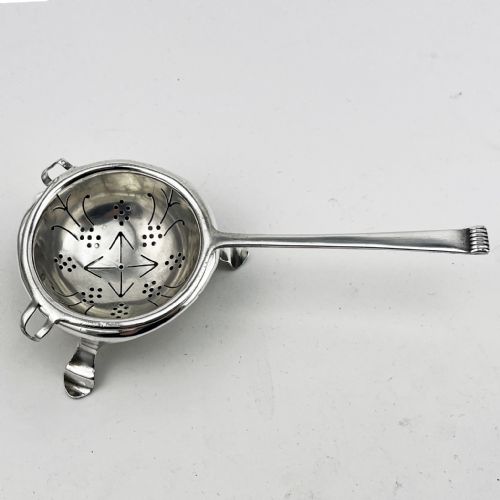
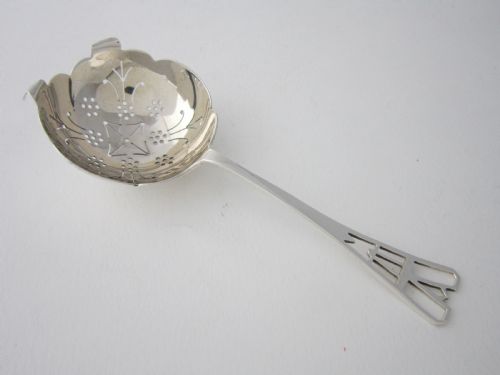
An antique tea strainer serves to catch loose leaves when pouring tea from pot to cup, appearing across various centuries in domestic collections. The items on this page span forms such as tea accessories, flatware, strainers, and spoons, originating from periods including the eighteenth century and the Victorian era.
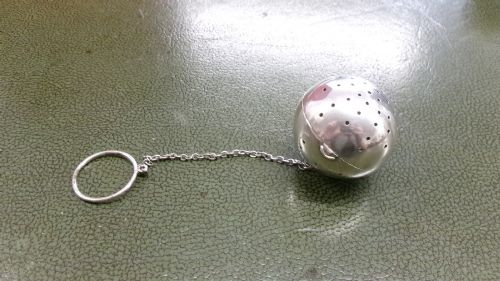
Mote spoons and infusers also appear within this group, alongside pieces accompanied by drip bowls or stands. Styles range from Georgian and George III to Art Deco and Edwardian, reflecting shifting domestic habits.
Silver and Wood Construction
Makers fashioned these pieces primarily from sterling silver, silver plate, and solid silver, sometimes employing silver gilt vermeil. Metalwork often includes pierced bowls and decorative handles cast in distinct styles.
Wooden elements also occur, utilising fruitwood, hardwood, and treen for turned handles or specific searce and negus strainer forms. Continental and domestic workshops combined these materials to produce durable utensils for daily tea service.
Antique Tea Strainer Retail Price Guide 2026
Typical asking prices for tea strainer among the pieces listed under this phrase on Sellingantiques today, from the lower quarter to the upper quarter. They describe what is for sale here now, not the wider market.
Tiny silver cherubs peek out from nineteenth-century handles, watching over the afternoon brew.
Distinctions in Quality
Quality rests upon the crispness of the piercing in the bowl and the integrity of the maker marks stamped into the silver. Subtleties in handle turning, such as fitted wooden grips or cast cherub motifs, distinguish finer workshops from standard production.
The presence of matching elements, like original drip bowls or stands, elevates a piece within its period. Heavier gauge silver and well-preserved gilt finishes indicate superior initial manufacture.
David Hennell·Jeremiah Lee·Magnus Aase·Philippe Berthier·Asprey
The Antique Tea Strainer Glossary
- Mote spoon
- A slender Georgian spoon featuring a pierced bowl used for clearing tea leaves from the surface of a cup. The tapered stem often terminates in a point for clearing the spout of a teapot.
- Searce
- A historical term for a sieve or strainer used in food and drink preparation. These wooden or metal implements served to refine liquids before consumption.
- Negus strainer
- A specialised utensil designed for straining spiced wine drinks made from port, lemon, and sugar. These pieces share forms with tea strainers but relate to alcoholic punch preparation.
- Infuser
- A device placed directly into a vessel to steep loose leaves, taking forms such as balls or eggs attached to chains. They allow water to circulate through the tea while containing the leaves.
- Drip bowl
- A small matching receptacle designed to hold a strainer after use, catching residual liquid. These vessels complete a set and protect table linens.
Antique Tea Strainer: Frequently Asked Questions
How do I use an antique tea strainer?
Hold the strainer over the teacup and pour the brewed tea directly through the pierced bowl to catch loose leaves. Place the wet strainer onto its matching drip bowl or stand once finished.
Traditional mote spoons require skimming the surface of the tea with the bowl while utilising the pointed stem to clear blocked teapot spouts. These methods reflect historical domestic practices rather than modern machine filtration.
How do I date an antique silver tea strainer?
Examine the stamped hallmarks on the silver, which typically reveal the assay office, city, and date letter corresponding to specific monarch reigns or years. Makers' marks also point to active workshop decades.
Stylistic indicators such as Art Deco geometric lines, Edwardian delicacy, or Georgian fancy-back engraving help narrow the period when hallmarks are absent or worn.
Are wooden treen strainers rare?
Wooden treen strainers and searces represent earlier domestic survival, often dating to the eighteenth century or the Georgian period. Their organic material makes them less common than silver counterparts.
These pieces relied on turned hardwood or fruitwood construction to filter liquids before metal versions became standard on tea tables.