
Antique Tea and Coffee Set
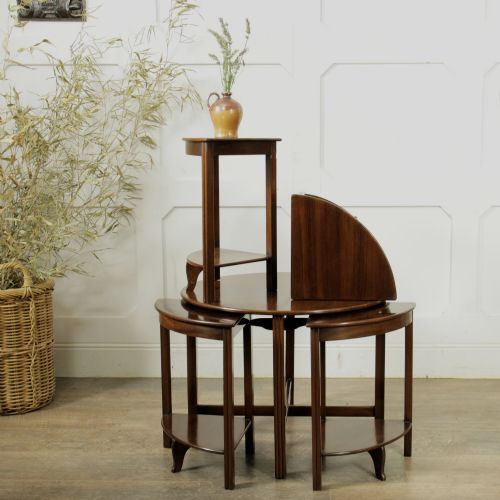
When you search for an antique tea and coffee set, you enter a world of matched porcelain and gleaming silver service designed for the formal parlour.
Antique Tea and Coffee Set
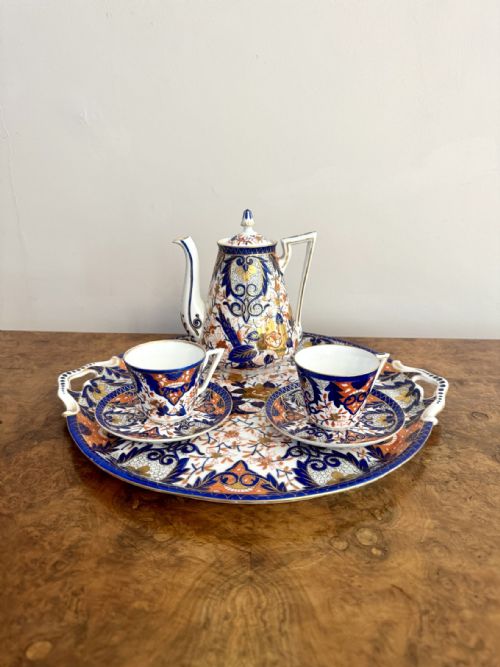
An antique tea and coffee set spans coordinated ceramic trios for individuals as well as large multi-piece metal services for the table.
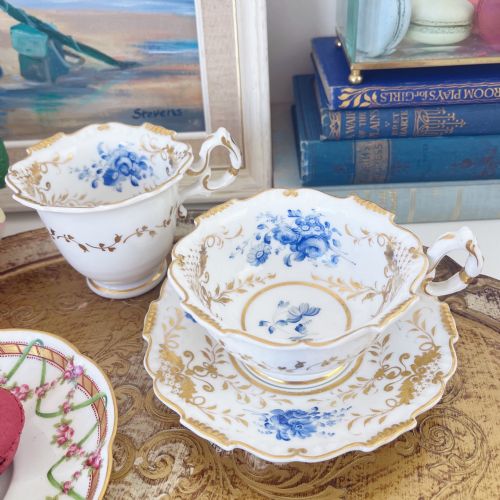
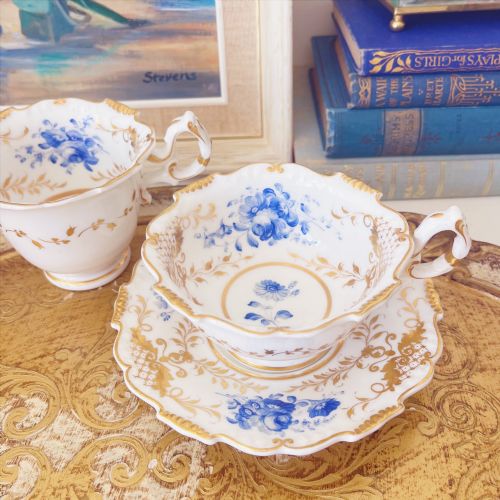
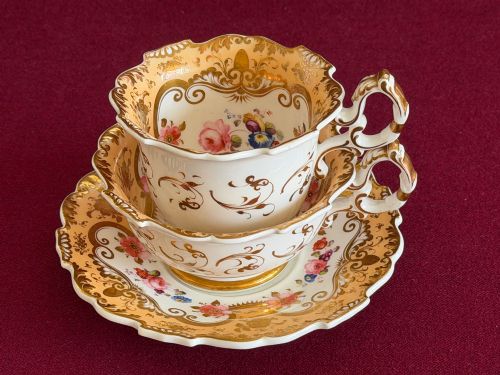
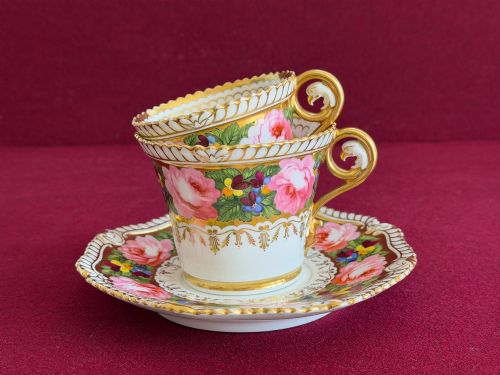
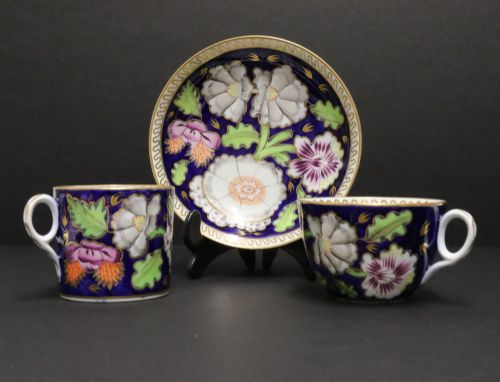
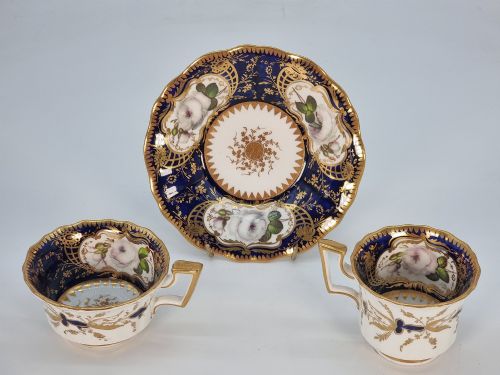
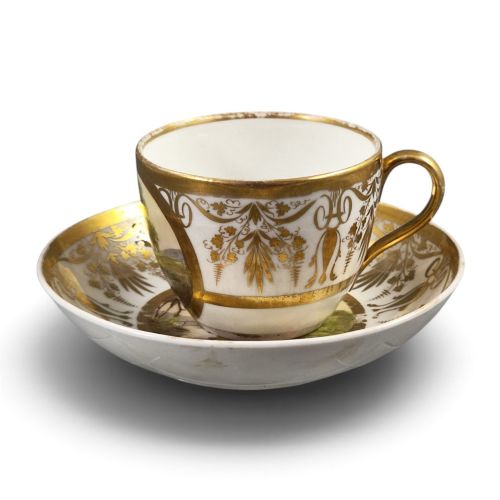
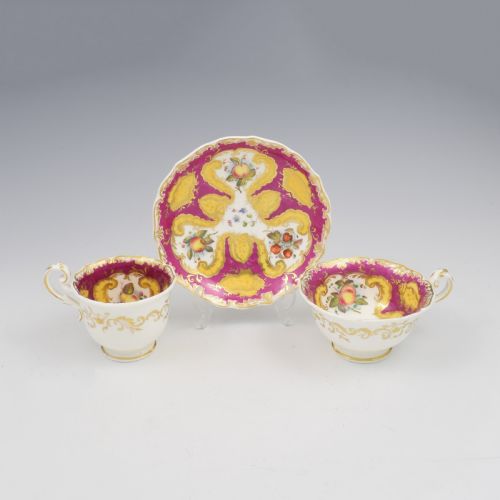
The ceramic examples often appear as cabinet trios comprising a teacup, coffee cup and saucer, frequently originating from the Regency and nineteenth-century periods.
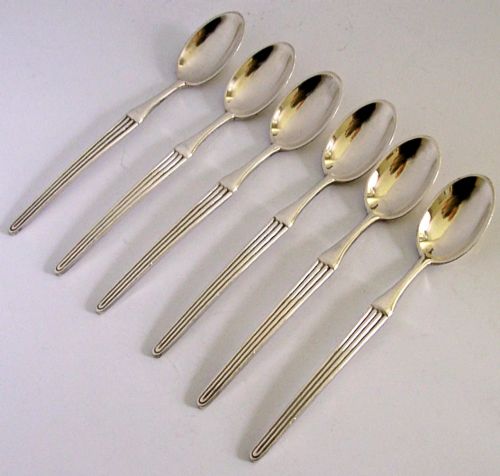
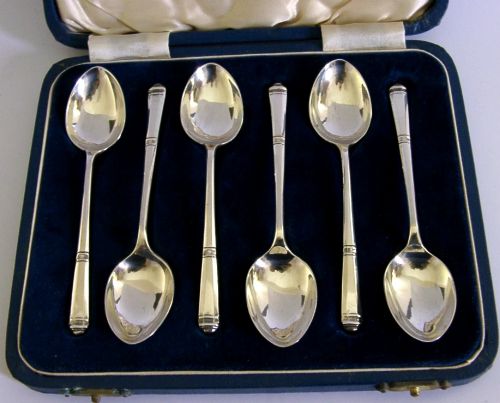
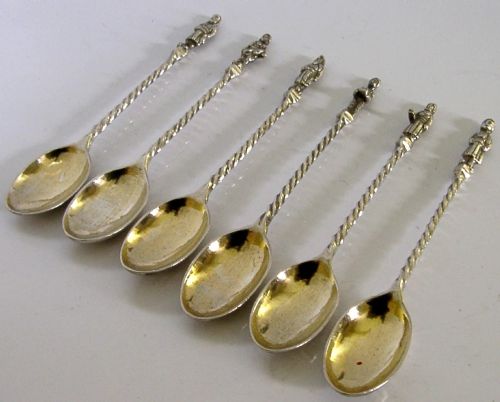
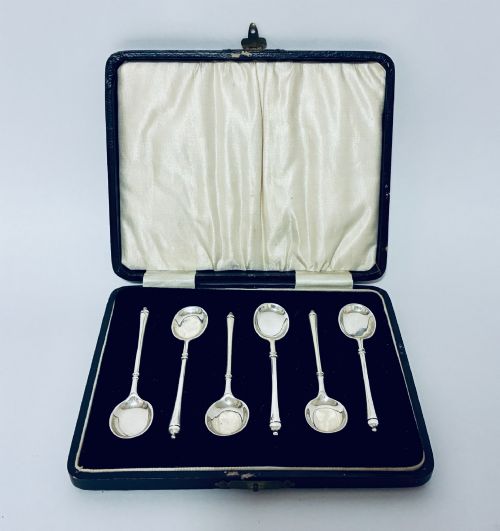
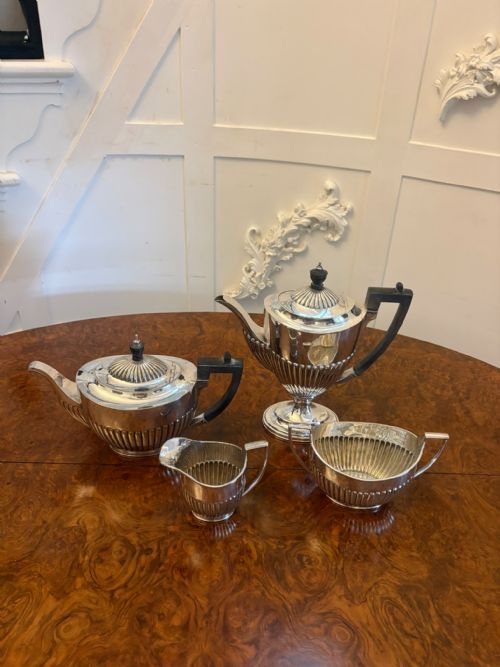
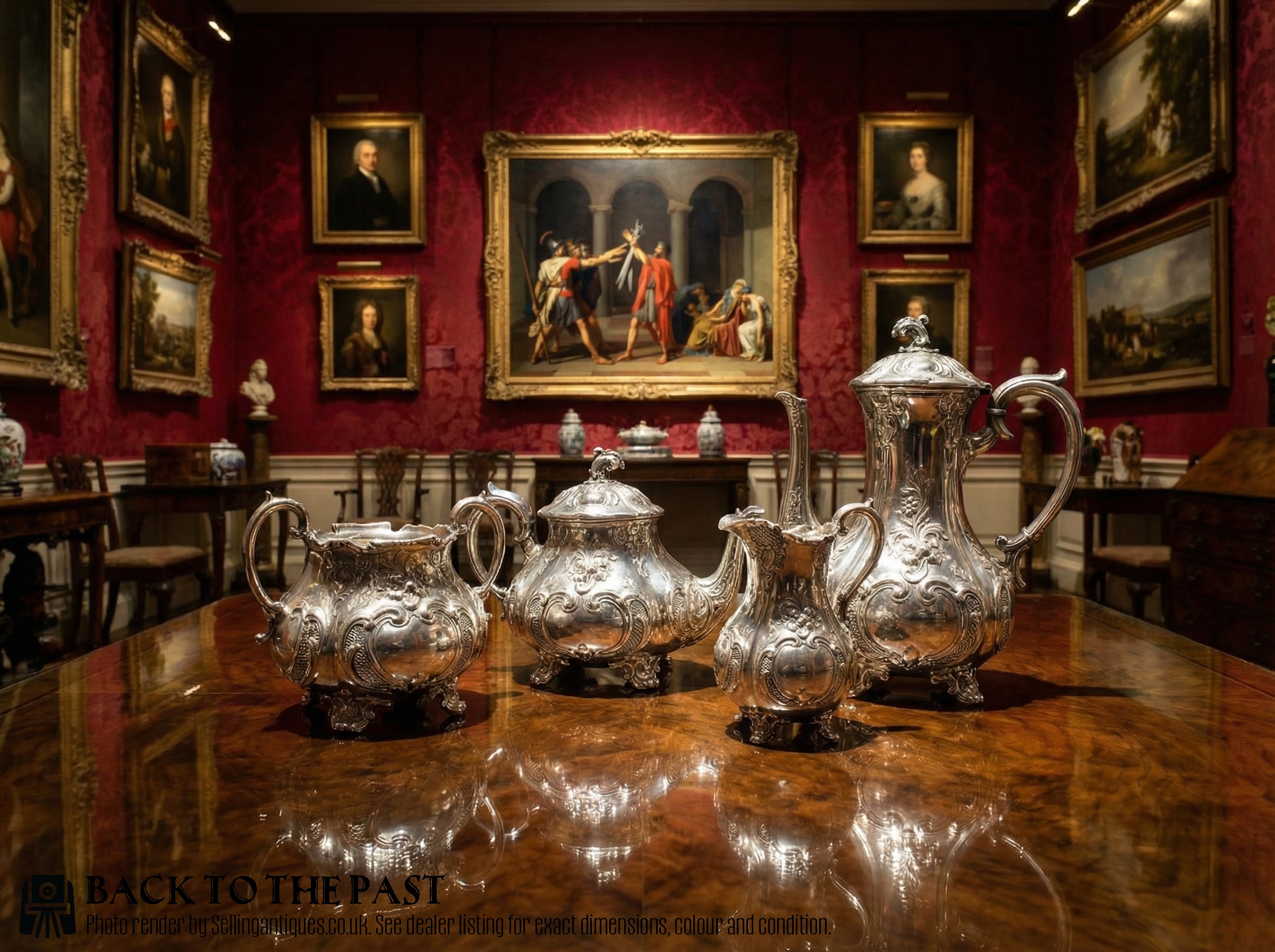
Metal services from the Edwardian era and later bring together matching pots, cream jugs and sugar basins in silver plate and sterling silver.
How they were made
Ceramic pieces rely on fine porcelain decorated with handpainted motifs, enamel and gilding.
Metal services utilise sterling silver and silver plate, sometimes enriched with gold leaf and elaborate engraved details.
Listings feature porcelain, sterling silver and silver plate across the Regency, Victorian and Edwardian periods.
What varies in quality
The distinction lies in the crispness of the handpainting on porcelain trios and the weight and balance of metal pots.
Maker attribution and the complexity of decorative work, such as figural elements or grapevine detailing, elevate certain services above standard production.
H & R Daniel·Chamberlain Worcester·Coalport·KPM Berlin·Walker and Hall·Joseph Craddock·Ahrenfeldt & Asalvary
The Antique Tea and Coffee Set Glossary
- Cabinet trio
- A matched set consisting of a teacup, a coffee cup and a saucer intended for display rather than daily service.
- Silver plate
- A base metal foundation coated with a thin layer of silver to provide the appearance of solid metal.
- Gilding
- The application of gold leaf or gold powder to ceramic surfaces or metalwork for decorative accent.
- Sterling silver
- An alloy comprising a high proportion of pure silver combined with other metals for durability.
Antique Tea and Coffee Set: Frequently Asked Questions
What is included in a tea and coffee set?
Complete metal services typically comprise a teapot, coffee pot, cream jug and sugar basin.
Ceramic equivalents often take the form of cabinet trios pairing a teacup and coffee cup with a matching saucer.
How do I care for antique porcelain?
Hand wash delicate porcelain gently in warm water without harsh detergents to protect the handpainted enamel and gilding.
Avoid soaking pieces for extended periods, particularly those with nineteenth-century or Regency-era decoration.
How do I distinguish Edwardian silver plate from sterling silver?
Examine the pieces for official hallmarks stamped into the metal, which indicate sterling standard.
Silver-plated items generally feature maker marks or descriptive stamps rather than standard assay office punches.
Can I use these antique sets for daily dining?
While metal services can handle careful use, early porcelain cabinet trios are delicate and better suited for display.
Thermal shock from boiling water can risk old ceramics, so warm them gently before pouring.