


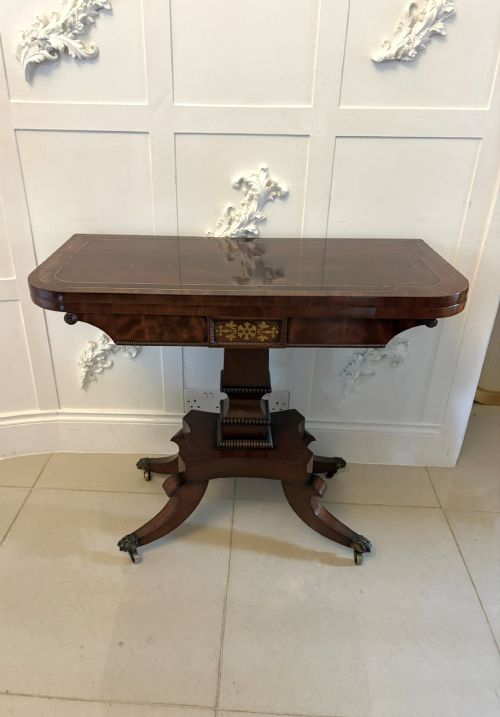
Antique Tea and Card Table
An antique tea and card table is a versatile dual-purpose piece designed for evening entertainment and tea service, combining ingenious folding mechanisms with fine cabinet-making.
Antique Tea and Card Table
An antique tea and card table serves a double purpose in a domestic interior, functioning as a compact side table or a folded console before opening to accommodate social gatherings, card games, or tea service. These pieces emerge predominantly from the Georgian, Regency, and Victorian periods, reflecting the shifting social habits of the eighteenth and nineteenth centuries.
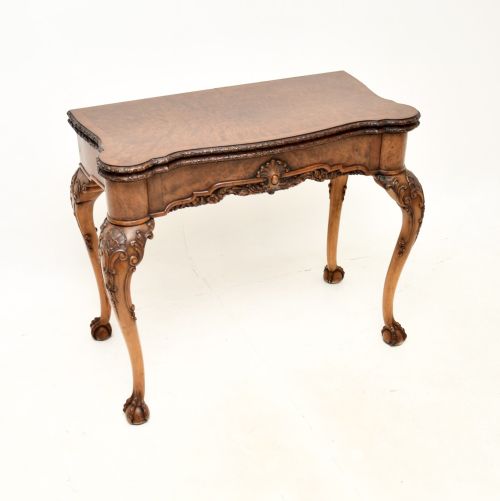
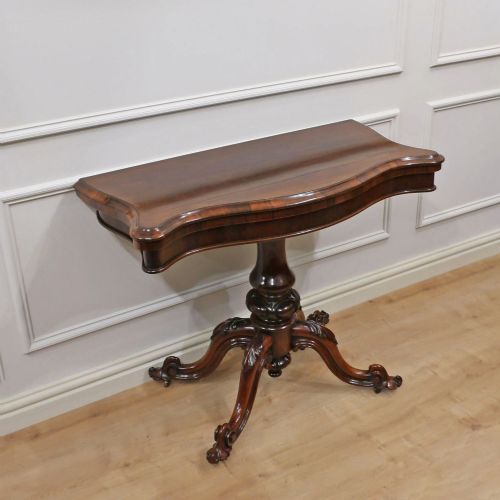
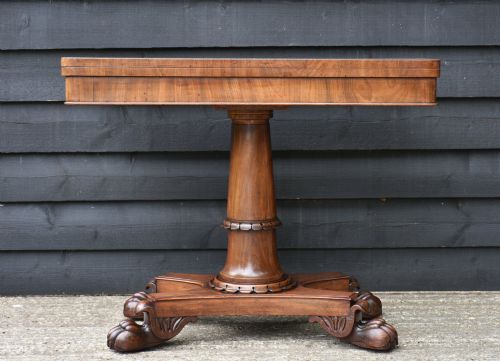
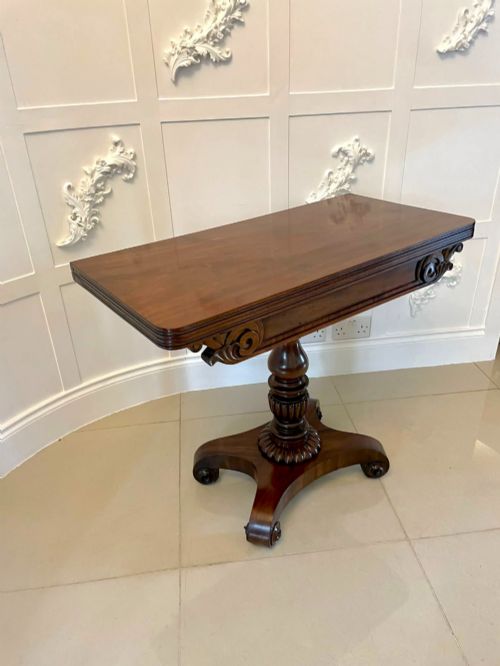
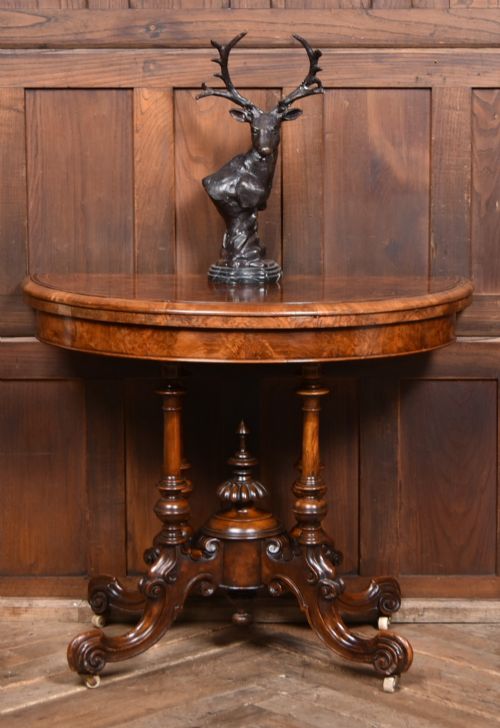
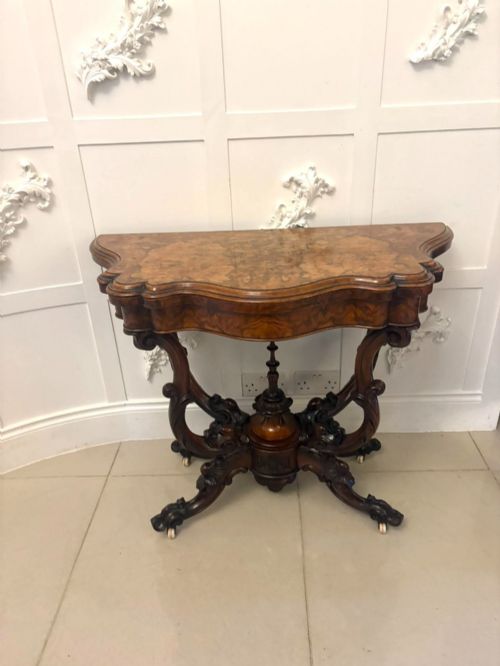
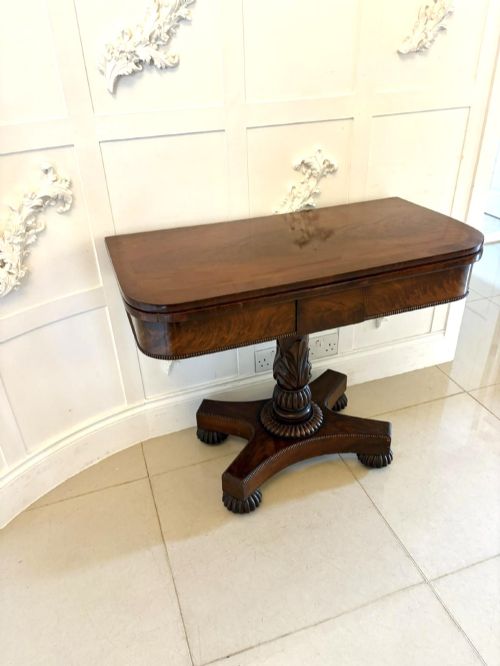
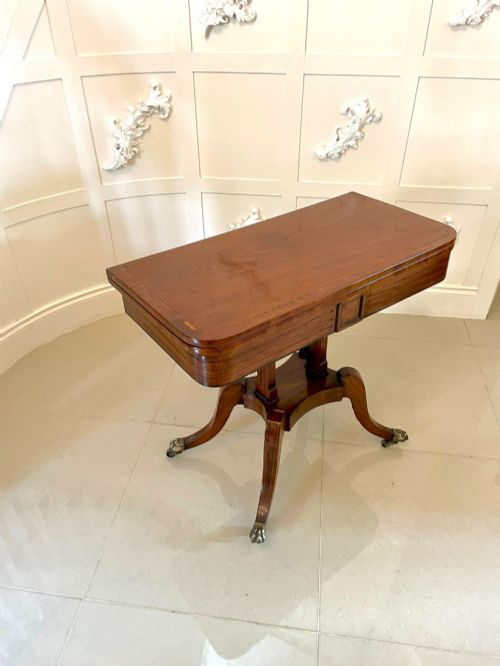
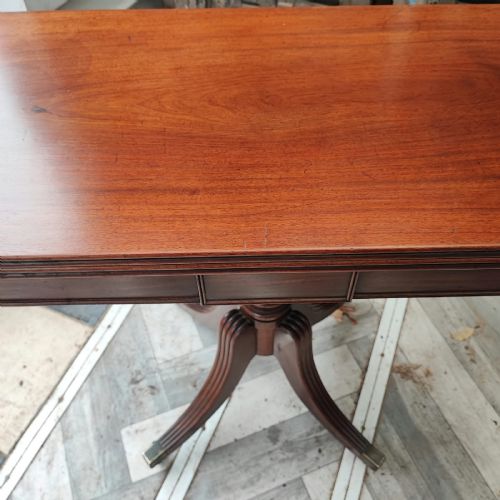
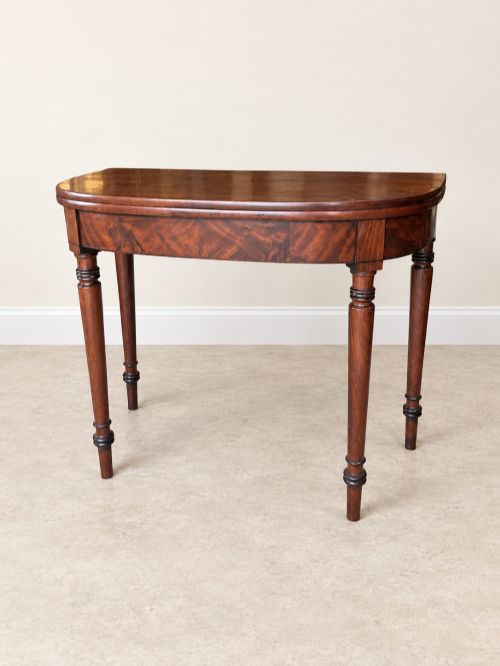
The versions most commonly met on this page are mahogany and rosewood fold-over tables, alongside burr walnut examples from the Victorian era. Shoppers encounter forms ranging from simple demi-lune tea tables to sophisticated concertina-action card tables and swivel-top games tables.
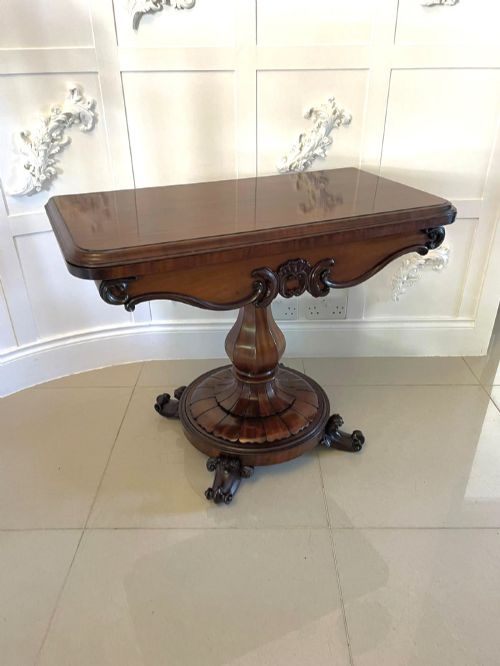
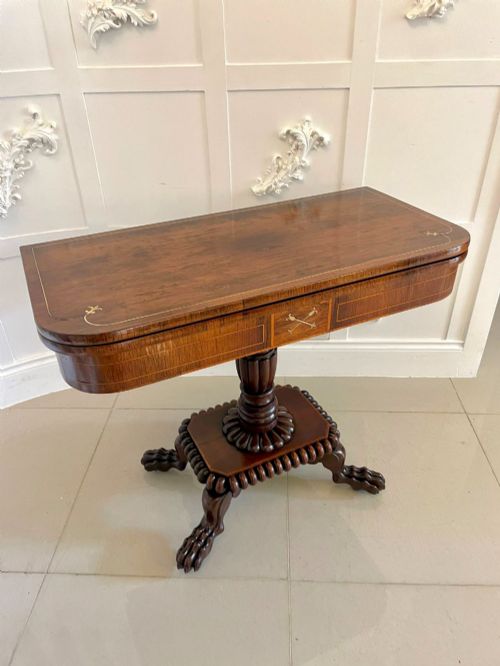
Makers adapted these forms to suit drawing rooms and parlours, incorporating brass inlay, satinwood banding, and carved pedestal bases. The survival of these dual-function tables relies on the durability of their hinges, rotating tops, and folding leaves.
Materials and construction methods
Cabinet-makers relied heavily on solid mahogany and exotic veneers such as rosewood, burr walnut, and flame mahogany, often applied over stable secondary timbers. Brass inlay and delicate boxwood stringing frequently embellished the tops of Regency and George III examples to catch the candlelight.
The structural ingenuity lies in the folding mechanisms, which include swivel tops, concertina actions, and swing legs that support the opened leaf safely. Joints were typically secured with traditional cabinet-making techniques, ensuring the heavy timber tops remained level when open.
Listings feature woods including flame mahogany, rosewood, burr walnut, and satinwood across George III, Regency, and Victorian periods.
Assessing quality and execution
The distinction between standard and exceptional pieces rests upon the choice of timber figure, the crispness of carved details like sabre legs or basket bases, and the precision of brass inlay. Finer examples display symmetrical grain patterns, such as matched flame mahogany or carefully cut burr walnut veneers across the folding top.
Superior execution is further demonstrated by the seamless operation of the concertina action or swivel mechanism, where hinges sit flush and the leaf aligns perfectly when closed. The depth of the timber's patina and the restraint applied to decorative brass or stringing separate workshops of high repute from mass production.
George Bullock·Giles Grendey·Gillows
The Antique Tea and Card Table Glossary
- Concertina action
- A table frame that expands outwards on a hinged accordion-like wooden framework to support all four corners of a folded top when opened. This sophisticated mechanism distributes weight evenly without relying on a single swing leg.
- Demi-lune
- A half-moon shape used for table tops and frames designed to sit flat against a wall when closed. When opened out, they form a full circle for tea or card playing.
- Swivel top
- A table top construction where the upper leaf pivots ninety degrees on the frieze to reveal a concealed compartment beneath. This pivot allows the leaf to be turned and supported safely over the open space.
- Crossbanding
- A narrow strip of veneer applied across the grain of the primary timber around the border of a table top. It creates a contrasting frame that highlights the central wood selection.
- Sabre leg
- A concave tapering furniture leg that curves outwards in a profile reminiscent of a cavalry sabre. This form appears frequently on Regency and early nineteenth-century tables.
Antique Tea and Card Table: Frequently Asked Questions
How do I use an antique tea and card table?
These tables function well as console or side pieces against a wall when closed, keeping hallways and living rooms uncluttered.
When guests arrive, the top unfolds or pivots to reveal a baize-lined playing surface or a polished timber tea top.
Did they use baize inside card tables?
Many card tables feature lined interiors specifically intended to muffle the sound of dice and protect wooden counters during games.
While some surfaces retain their early woollen baize, others have been relined over the centuries to maintain their utility.
How do I tell a Regency table apart from a Victorian one?
Regency tables generally display cleaner classical lines, architectural rosewood veneers, and brass inlay inspired by antique motifs.
Victorian examples tend towards heavier proportions, darker walnut timbers, and more exuberant carved bases.
What is the difference between a tea table and a card table?
Tea tables were constructed primarily to hold porcelain tea services during afternoon visits, sometimes featuring raised edges or simpler folding tops.
Card tables incorporated specialised internal compartments for counters and decks, paired with sturdy folding supports for evening gaming.