






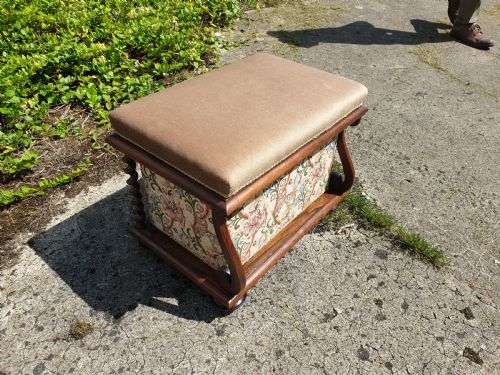
Antique Tapestry Box
An antique tapestry box is a textile-topped seat or chest designed to store small household goods while adding texture to a room.
Antique Tapestry Box
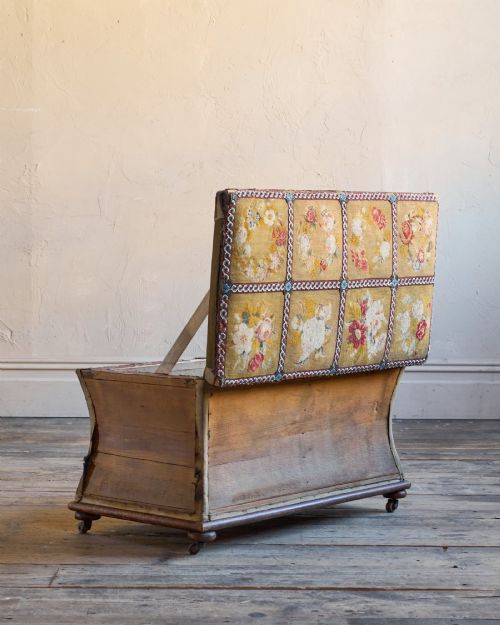
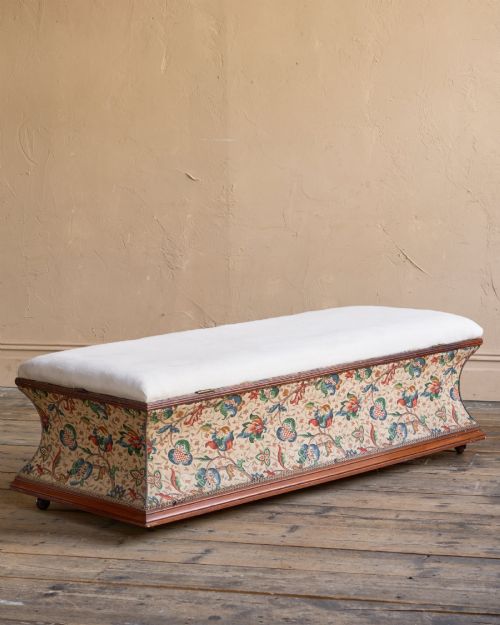
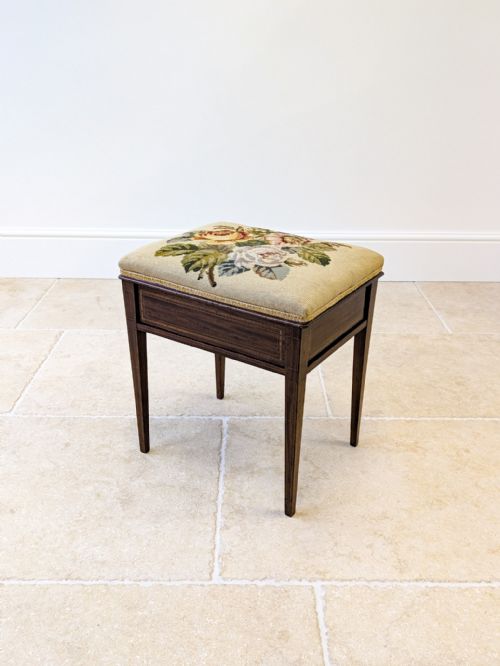
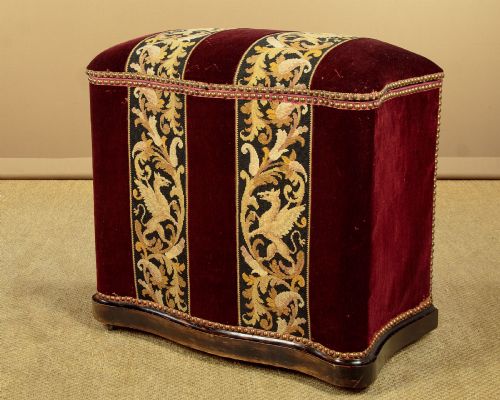
An antique tapestry box combines a functional wooden storage compartment with an upholstered needlework or textile lid, taking forms such as piano stools, footstools, and storage chests. These pieces emerge from the nineteenth and early twentieth centuries, spanning the Regency, Victorian, and Edwardian periods.
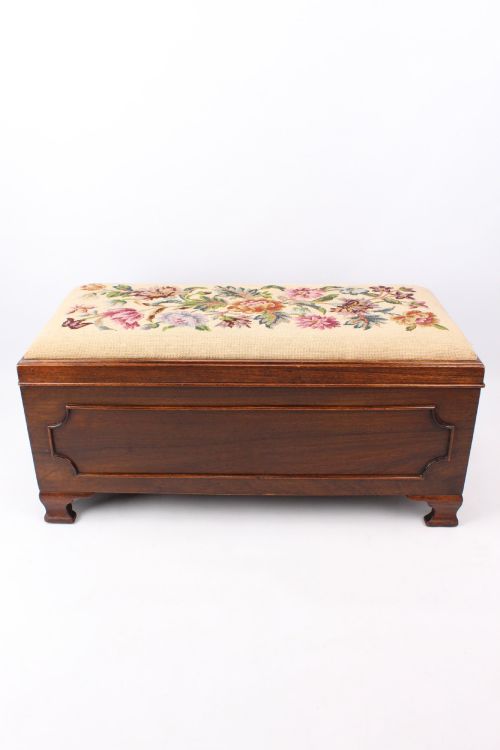
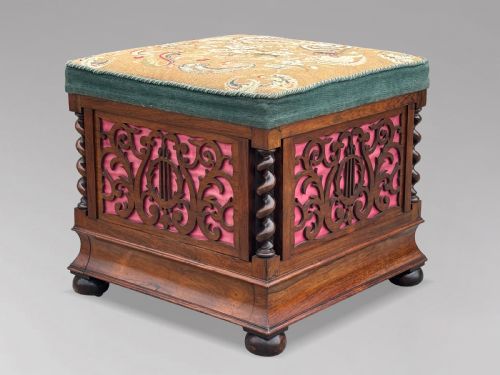
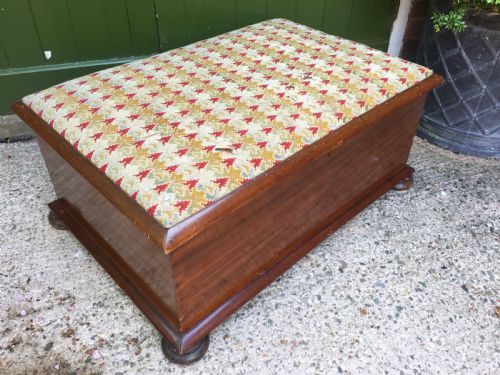
The version most commonly met on this page is a nineteenth-century upholstered ottoman or box seat framed in mahogany, rosewood, or pine, topped with gros-point or other needlework fabric.
Buyers also encounter related seating and storage hybrids, including sewing tables, log boxes, and South Caucasian or Shahsavan mafrash storage bags that utilise traditional woven textiles.
How they were made
Makers constructed the structural carcases of these boxes using dense timbers such as mahogany, rosewood, walnut, and pine, often framing them to support heavy upholstery.
The lids and seats feature textile panels of wool, velvet, and fabric, frequently worked in gros-point needlepoint, while brass details occasionally appear on hinges, mounts, and fittings.
Antique Tapestry Box Retail Price Guide 2026
Typical asking prices for tapestry box among the pieces listed under this phrase on Sellingantiques today, from the lower quarter to the upper quarter. They describe what is for sale here now, not the wider market.
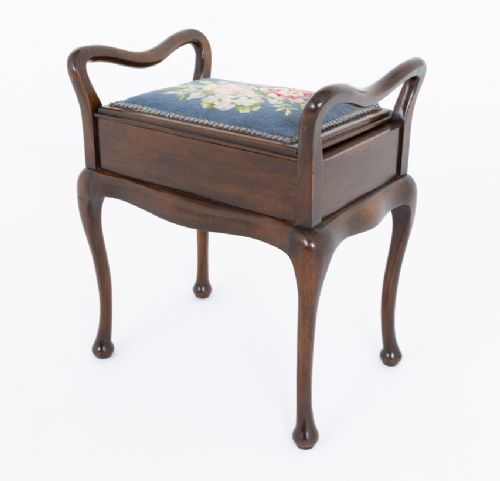
Some nineteenth-century makers hid sewing compartments inside piano stools so musicians could store their darnedest secrets beneath the bench.
What varies in quality
The distinction between a standard box and a superior example lies in the choice of cabinet timber, such as figured mahogany or burr walnut, and the tightness and complexity of the needlework panel on the seat.
Finer pieces display robust framing joints, original textile covers, and integrated internal compartments designed for sewing or storage, whereas lesser items rely on plain pine and replacement fabrics.
Hallett & Sons
The Antique Tapestry Box Glossary
- Gros-point
- A heavy needlepoint stitch worked on canvas, commonly used for the durable tapestry seats found on nineteenth-century ottomans.
- Mafrash
- A long, rectangular storage bag woven in the Caucasus, often utilised for bedding and structured with flat-woven or pile textiles.
- Ottoman
- A low, upholstered seat or box with a hinged lid, designed to serve as both furniture and internal storage.
- Rosewood
- A dense, dark timber prized for its rich grain, frequently utilised in Victorian piano stools and work boxes.
- Burr walnut
- A decorative wood veneer showing intricate swirling patterns, applied to high-status nineteenth-century occasional tables and sewing boxes.
Antique Tapestry Box: Frequently Asked Questions
What is an antique tapestry box used for?
These pieces served nineteenth-century households as functional storage chests, sewing repositories, and seating furniture for parlours and music rooms. Their hinged lids allowed owners to conceal textiles, linens, or small accessories inside.
Today, they function well in modern interiors as occasional tables, hallway seats, or living room storage for blankets and books.
How do I date an antique tapestry box?
Dating relies on identifying the underlying timber, framing style, and textile technique used in the piece. Victorian examples often feature rosewood or mahogany with dense gros-point needlework, while later Edwardian versions present lighter woods and simpler forms.
Earlier Regency and William IV pieces display distinct classical proportions and heavier architectural carcases compared to late nineteenth-century ottomans.
Are tapestry boxes comfortable to sit on?
Most of these pieces were built with firm, sprung, or stuffed padding beneath the needlework top to provide a supportive seat rather than a soft lounge cushion. They function best as piano stools, end-of-bed benches, or occasional seats.
If the original internal padding has compressed over the decades, a restorer can rebuild the interior while preserving the exterior textile.
What is the difference between an ottoman and a mafrash?
An ottoman is a Western upholstered box seat framed in timber, typically featuring a hinged lid and fabric or needlework upholstery. A mafrash is a traditional South Caucasian or Shahsavan woven storage bag constructed as a rigid panel container.
While both serve to store household items, the mafrash relies on tribal textile techniques rather than European cabinet-making methods.