







Antique Tapestry Bench
An antique tapestry bench brings heavy period textiles and sturdy timber frames together, offering practical low seating that grounds a room.
Antique Tapestry Bench
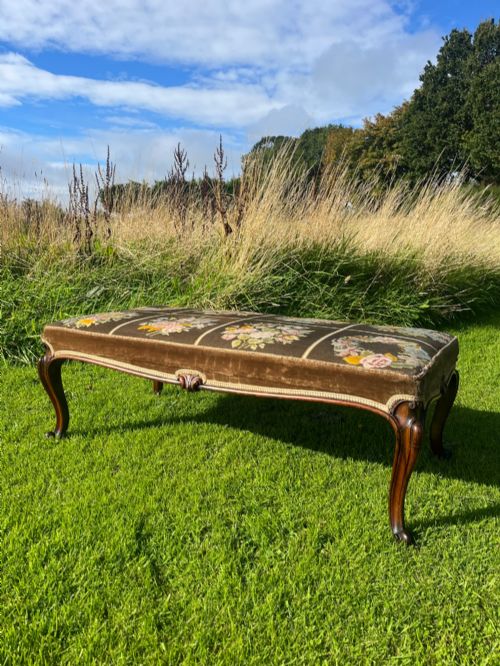
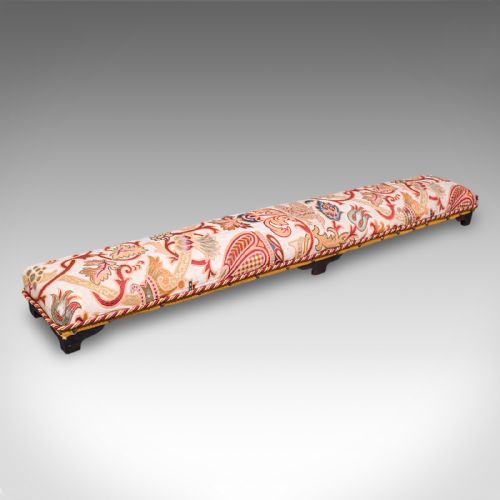
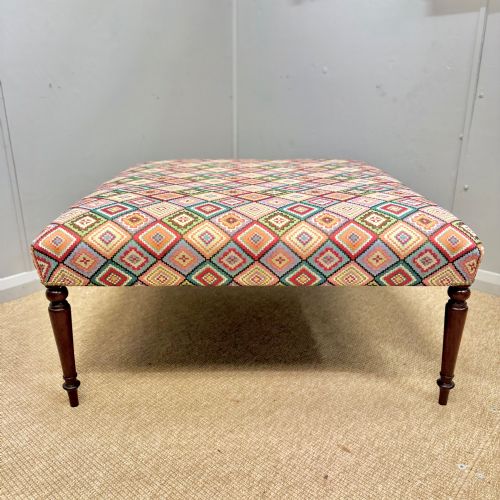
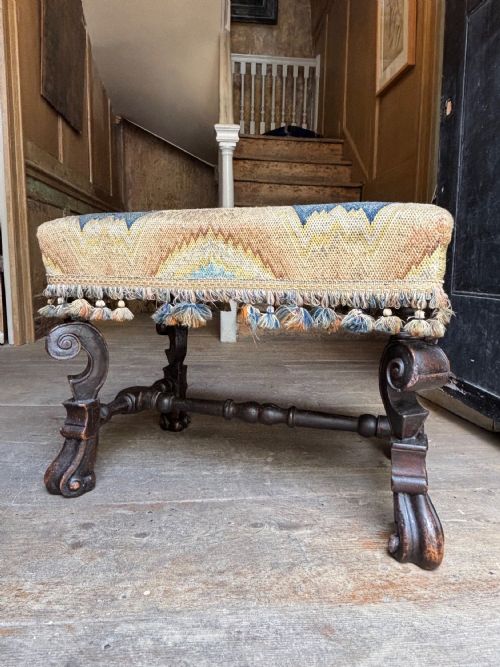
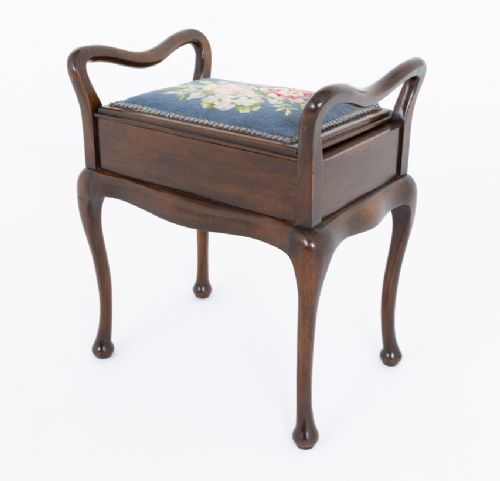
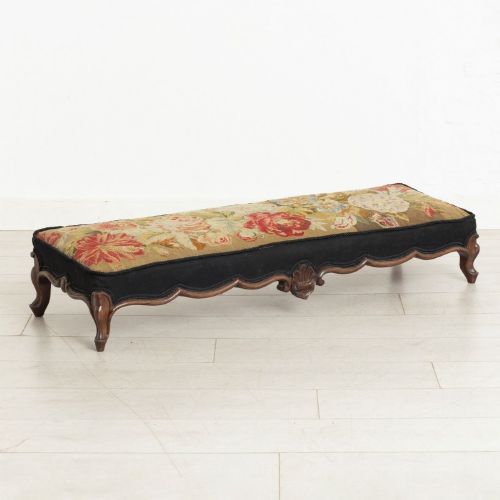
When you search for an antique tapestry bench, you encounter a mix of low stools, long footstools, window seats and ottomans spanning the nineteenth century up to nineteen-twenty. These pieces range from compact dressing table stools to substantial country house furniture intended for firesides or bedrooms.
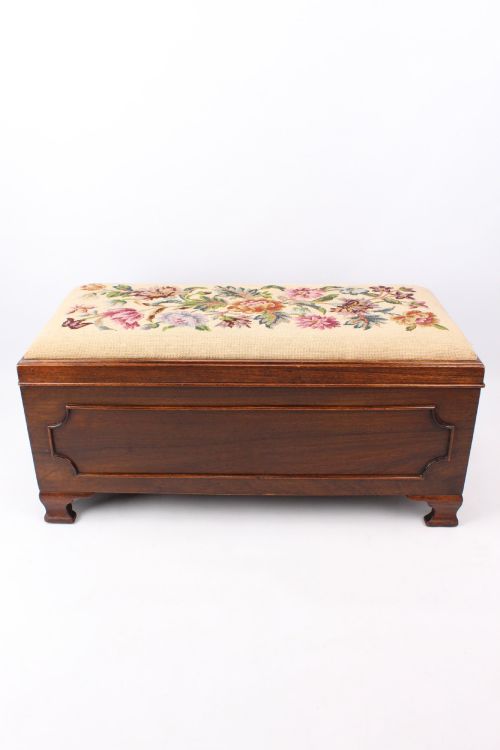
The versions most common on this page pair sturdy wooden frames with textile tops, utilising needlework, crewelwork, wool or tapestry covers. Styles stretch across Victorian, Edwardian and various revival aesthetics, reflecting the decorative tastes of past decades.
Materials and construction
Makers built the structural frames of these benches using hardwoods such as mahogany, walnut, rosewood and oak, often shaping the timber into cabriole legs, x-frames or stretcher bases. Brass details and painted finishes occasionally appear alongside carved woodwork.
The upholstery side relies on heavy textiles, incorporating wool needlepoint, tapestry, fabric and velvet. Needlework seats are hand-worked, while timber frames feature traditional joinery suited to daily weight-bearing.
Antique Tapestry Bench Retail Price Guide 2026
Typical asking prices for tapestry bench among the pieces listed under this phrase on Sellingantiques today, from the lower quarter to the upper quarter. They describe what is for sale here now, not the wider market.
Judging quality in construction and textile work
Quality rests in the firmness of the timber frame and the precision of any carved ornamentation, from plain turned legs to elaborate baroque or rococo motifs. Heavier woods and solid structural joints separate substantial pieces from lighter, purely decorative items.
The needlework or tapestry seat forms the other half of the judgement, where density of stitch work and preservation of the textile dictate the standard. Original fabric and intricate needlepoint elevate a piece above later replacements.
Hallett & Sons·Jas Shoolbred
The Antique Tapestry Bench Glossary
- Needlepoint
- A type of canvas work embroidery executed with wool or yarn. It provides the patterned decorative surface seen on many period seat covers.
- X-frame
- A furniture base formed by intersecting diagonal timber members. This structural layout appears on several nineteenth-century stools and window seats.
- Stretcher
- A horizontal timber connecting the legs of a piece to add stability. Cross stretchers reinforce dressing table stools and larger benches.
- Crewelwork
- Embroidery using wool yarn on a heavy linen or cotton foundation. It appears on traditional English carriage stools and fireside rests.
Antique Tapestry Bench: Frequently Asked Questions
Where do I put an antique tapestry bench?
These low benches fit naturally at the foot of a bed, beneath a window as a seat, or beside a fireplace as a foot rest. Their compact height also suits dressing tables and hallways.
Because they take up minimal floor space, you can tuck long footstools under tables or place smaller stools beside larger armchairs without cluttering the room layout.
How do I clean an old tapestry seat?
Gentle surface cleaning with a soft brush removes dust from wool and textile covers without damaging the fibres. Avoid harsh liquids and modern chemical detergents on antique needlework.
If the textile requires deeper restoration, specialist textile conservators should handle the piece to protect fragile stitching and aged backing materials.
Are these benches sturdy enough to sit on?
Most hardwood frames in mahogany, walnut and oak remain solid and capable of daily use. Traditional joinery provides genuine structural strength for regular seating.
Heavier pieces like country house ottomans and long carriage stools were built to bear significant weight, though delicate decorative window seats benefit from sensible treatment.
What is the difference between a footstool and an ottoman?
Footstools generally offer a smaller, lower surface specifically designed for resting feet while seated in an armchair. They often feature exposed wooden legs and compact needlepoint tops.
Ottomans tend to be larger, sometimes incorporating internal storage space or functioning as daybeds and extended benches for multiple people.