






Antique Tantalus Lock
An antique tantalus lock secures fine spirits behind a clever metal bar, keeping decanters safe from uninvited guests.
Antique Tantalus Lock
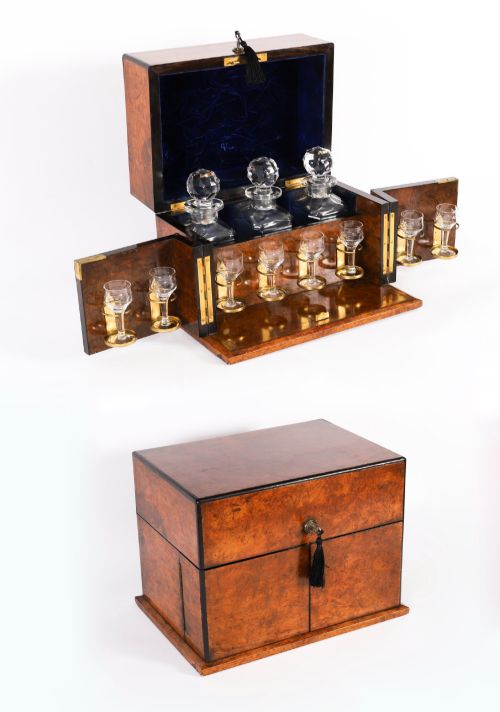
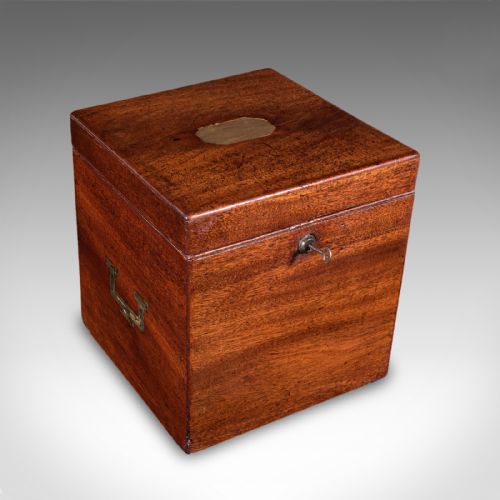
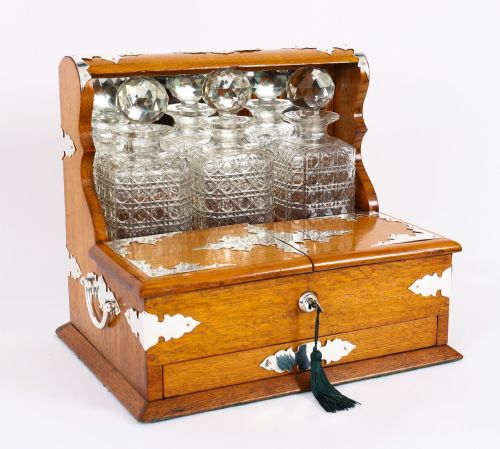
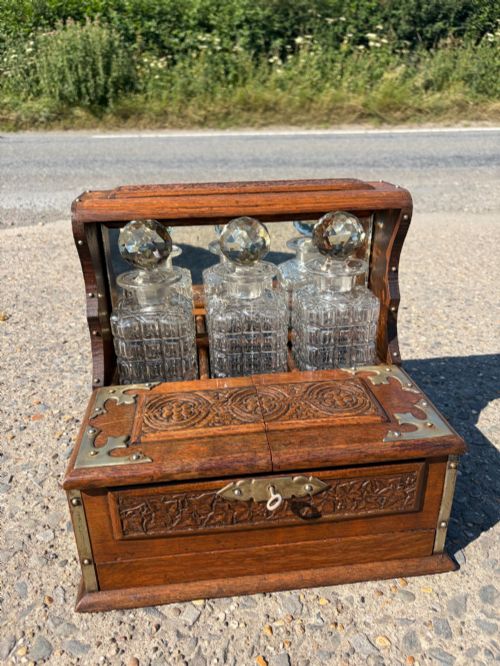
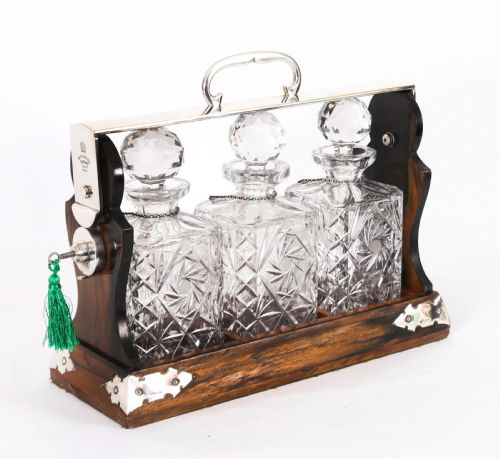
An antique tantalus lock secures a set of decanters within a wooden frame, preventing thirsty guests from helping themselves while leaving the amber contents in plain sight. Most examples found here date from the Victorian and Edwardian periods, constructed to hold one, two, or three bottles alongside fitted games compendiums and humidors.
The mechanism typically involves a hinged wooden or metal top bar that engages with a secure metal locking upright. When the key turns, the bar lifts or swings clear to release the crystal decanters for pouring after dinner.
Materials and construction
Cabinetmakers built these locking frames using sturdy timbers including oak, pollard oak, walnut, and exotic coromandel wood. Brass mounts, carrying handles, and silver-plated or sterling silver hardware reinforced the corners and housed the intricate locking mechanisms.
The accompanying vessels consist of cut glass and cut crystal decanters, often matched with stopper sets. Many pieces integrate folding cabinet doors or drop-front drawers lined for cards and cigars.
Antique Tantalus Lock Retail Price Guide 2026
Typical asking prices for tantalus lock among the pieces listed under this phrase on Sellingantiques today, from the lower quarter to the upper quarter. They describe what is for sale here now, not the wider market.
The name borrows from Greek mythology, ensuring guests suffered eternal temptation staring at whiskey they could not reach.
Judging quality and craftsmanship
The distinction between standard and superior pieces rests on the complexity of the cabinetwork and the refinement of the metalwork. Elaborate models incorporate games compendiums, secret drawers, and substantial coromandel veneers rather than plain oak.
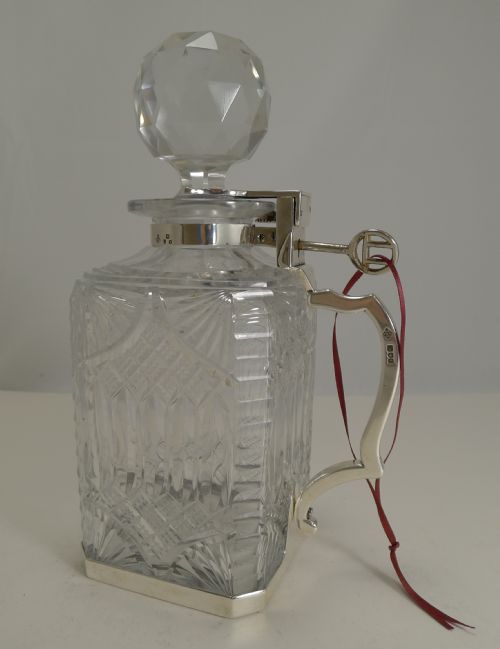
The grade of the hardware matters significantly, with maker-stamped locks and heavy sterling silver collars elevating an ordinary barware accessory into an exceptional piece of social furniture.
Betjemann·Betjemann Brothers·Hukin and Heath·Fenton Bros
The Antique Tantalus Lock Glossary
- Coromandel wood
- A dense, heavily figured tropical Asian timber with dark brown and black grain patterns. Cabinetmakers utilised it for luxury Victorian games compendiums and deluxe bottle cases.
- Games compendium
- A multi-use box containing equipment for pastimes such as cards, chess, and backgammon, frequently built into the base of larger three-bottle frames.
- Sterling silver hallmarks
- Official stamps struck into precious metal components indicating purity, assay office, and date. They help date the metal mounts independently of the timber frame.
- Pollard oak
- Oak timber taken from pollarded trees, noted for its clustered knot formations and swirling grain patterns. It provided a highly decorative surface for high-end Victorian barware.
Antique Tantalus Lock: Frequently Asked Questions
Were these used in homes?
Wealthy Victorians and Edwardians placed these locking cabinets in dining rooms, libraries, and smoking dens after dinner. They prevented domestic staff or casual visitors from helping themselves to expensive spirits.
While the primary purpose was practical security, the polished wood and cut crystal served as a decorative display of hospitality. Many versions combined the spirit carrier with a humidor or card table components for evening entertainment.
How do you date an antique tantalus?
Dating relies on a combination of timber choice, hardware style, and any metal hallmarks present on the silver collars or lock plates. Victorian examples often feature heavy oak and ornate brass, while later Edwardian and Art Deco pieces show sleeker lines.
Patent numbers stamped onto the metalwork provide precise timelines, as inventors registered improvements throughout the nineteenth and early twentieth centuries.
Can you replace missing decanters?
Finding exact replacement decanters requires matching the precise height, base diameter, and neck configuration dictated by the wooden frame openings. Cut crystal vessels from the same era can sometimes be adapted to fit.
Many collectors prefer finding an incomplete case and hunting for period-correct matching bottles, though this demands patience given the variations in individual cabinet dimensions.