

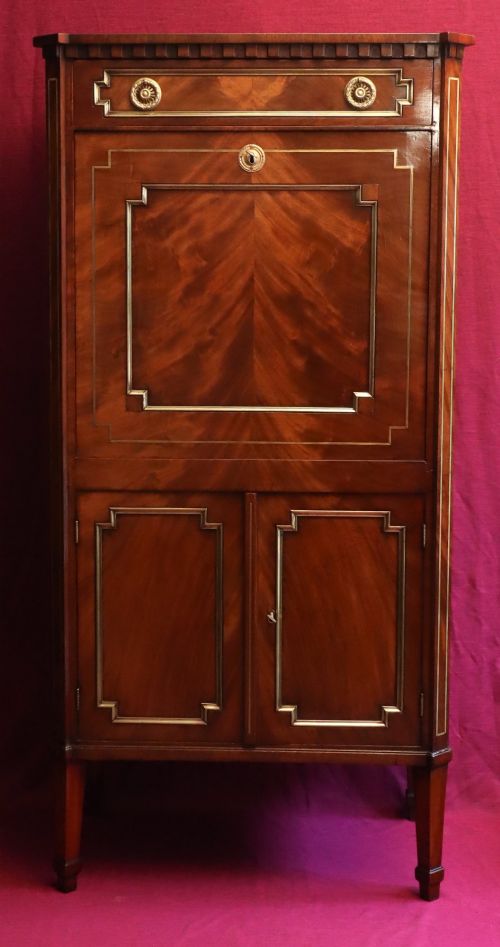
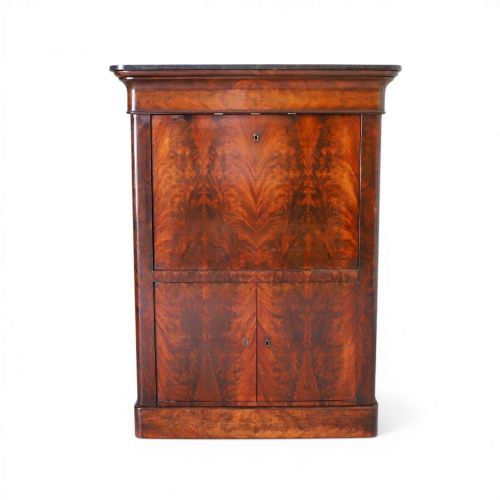
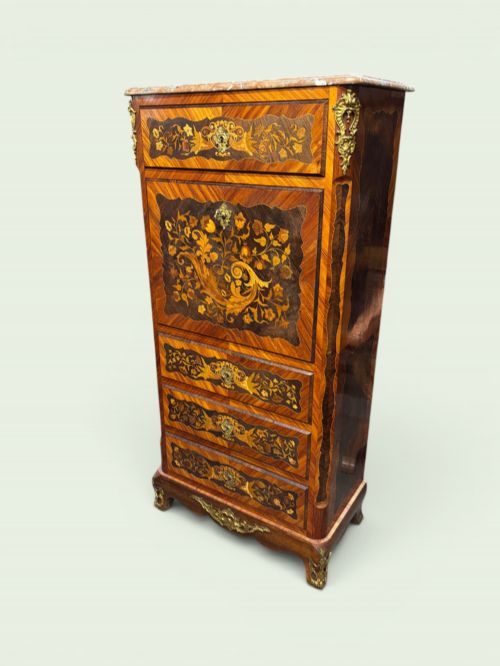
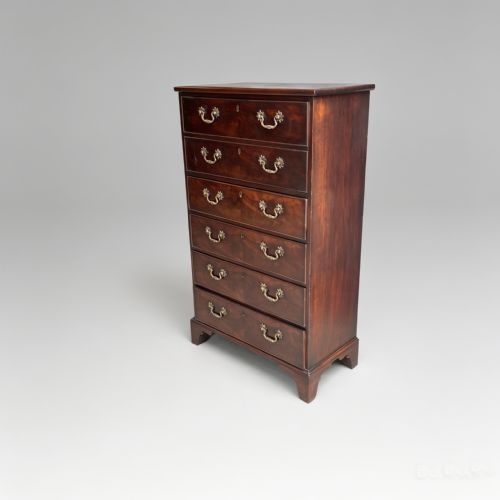
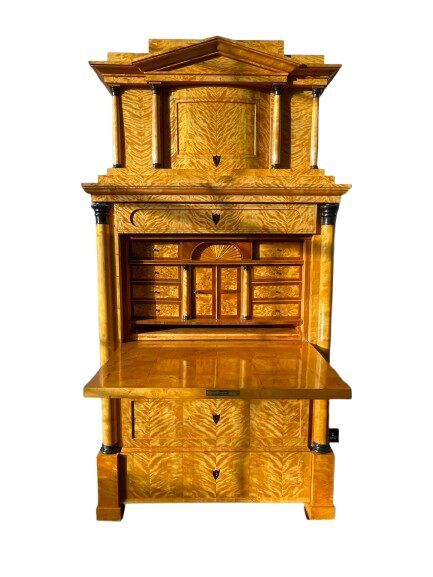
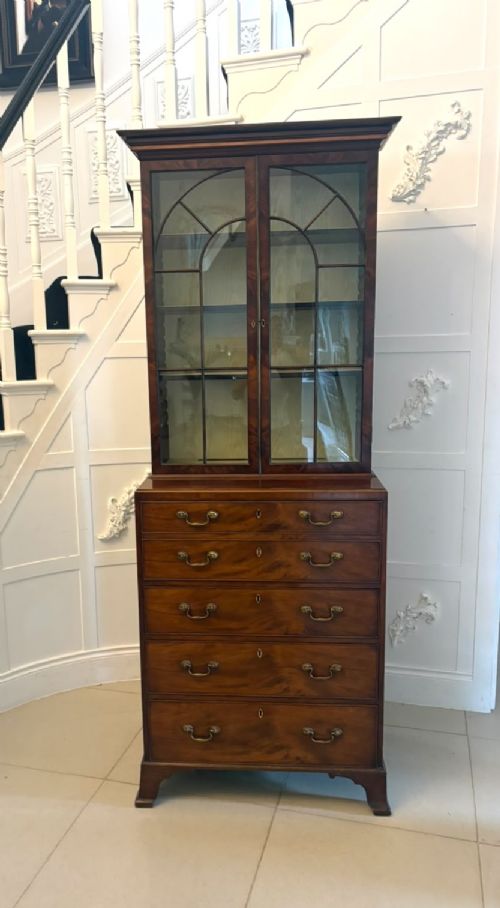
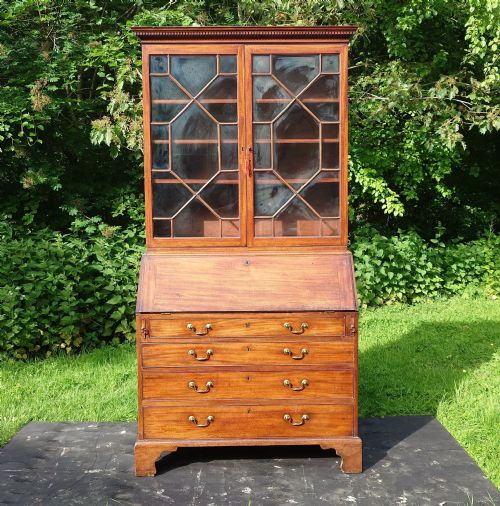
Antique Tall Writing Desk
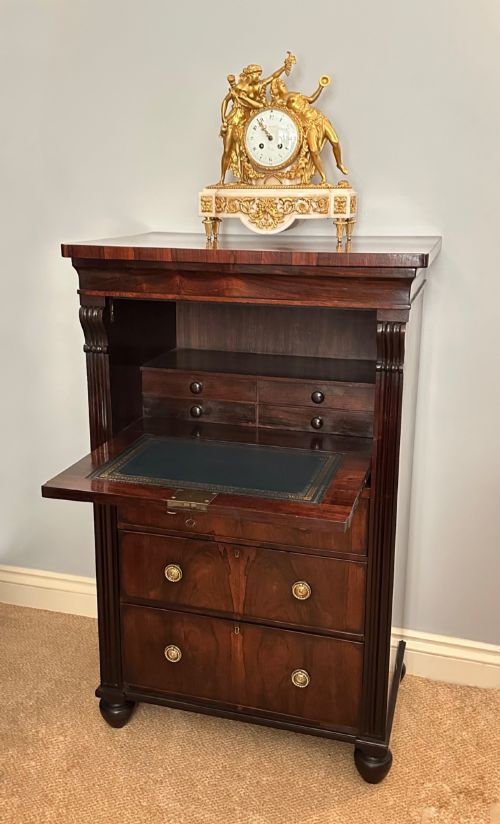
An antique tall writing desk offers a soaring vertical workspace that conceals a fitted fall front for correspondence.
Antique Tall Writing Desk
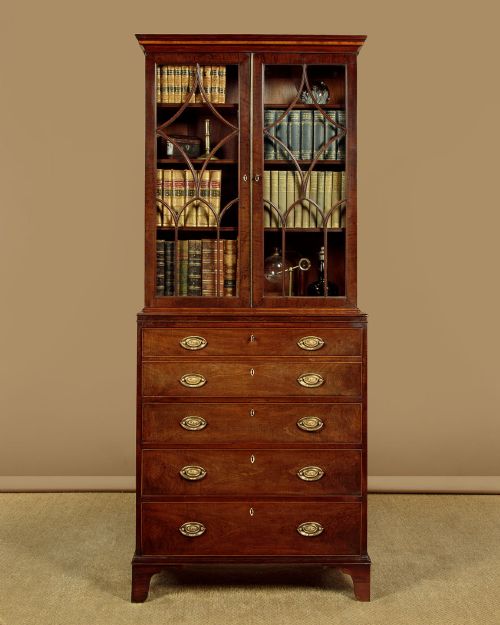
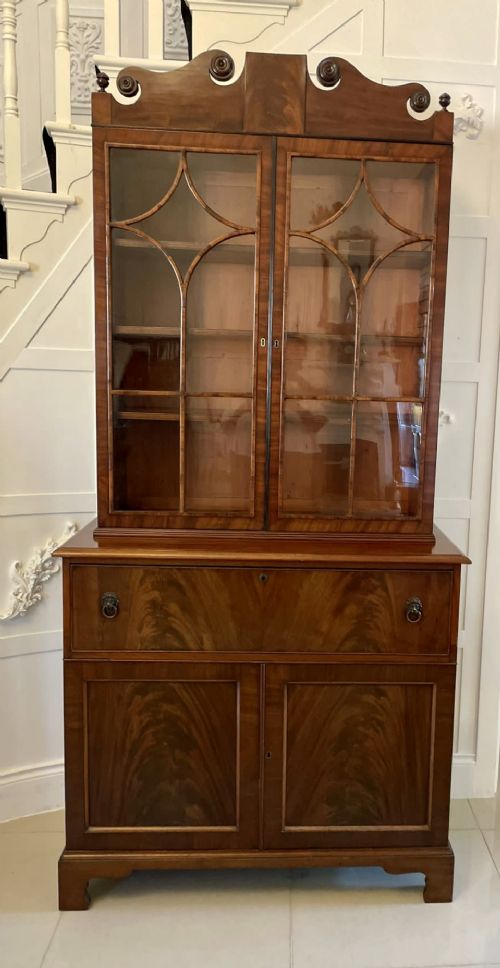
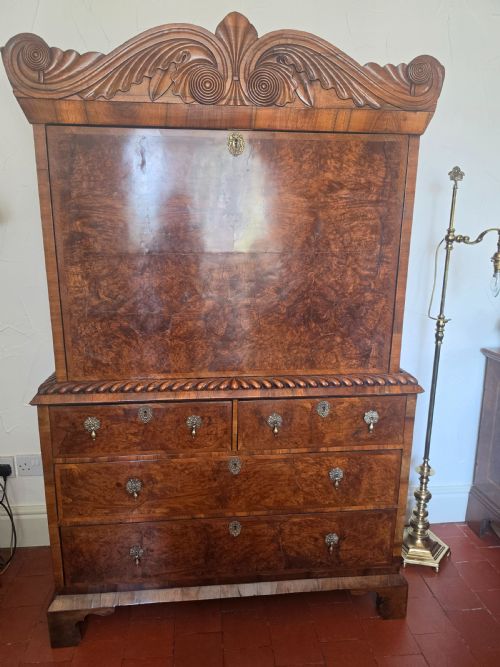
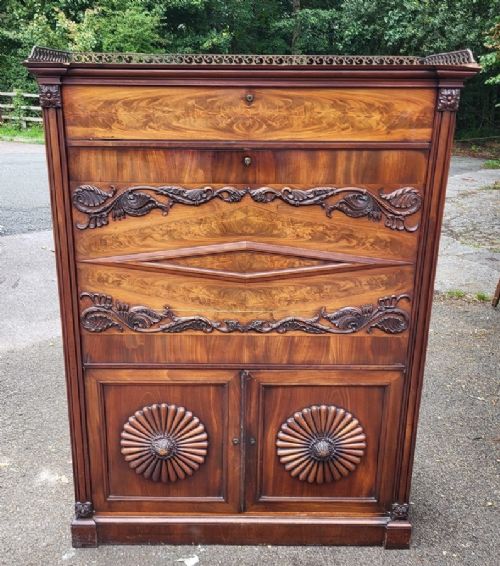
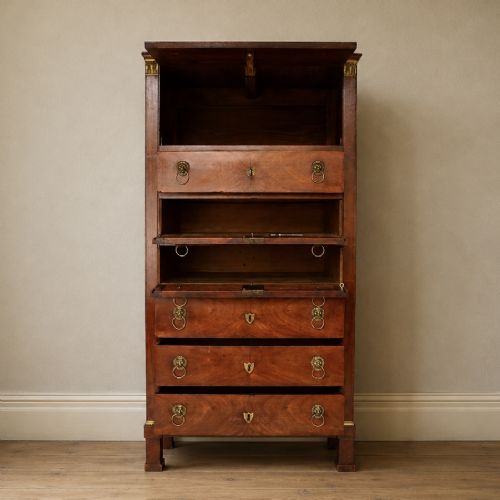
When you search for an antique tall writing desk, you encounter substantial vertical furniture designed for correspondence and storage across several centuries. These pieces combine a vertical case structure with a dedicated writing surface, often rising into tall bureau bookcases, secretaire cabinets, or upright chests.
The selections span significant historical periods from the 1700s through the Victorian and Edwardian eras, encompassing English and Continental workshops. Common configurations include drop-front writing compartments, glazed upper bookcase sections, and concealed internal drawers.
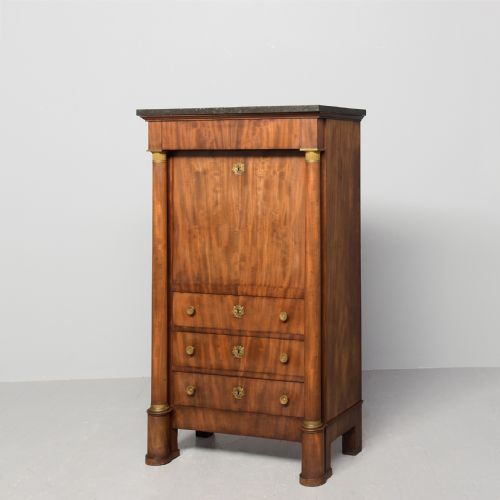
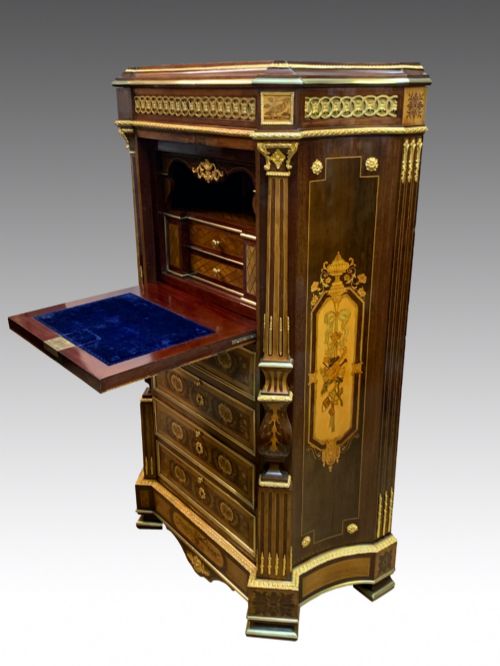
Makers utilised various regional forms, ranging from English mahogany secretaire chests on chests to French walnut secretaire abattants topped with marble. Each variation serves the fundamental requirement of vertical storage paired with a fold-down or pull-out desk surface.
How they were made
Cabinetmakers constructed these tall desks using solid timber frames faced with figured wood veneers such as flame mahogany, walnut, kingwood, amboyna, and yew wood. Structural carcases relied on sturdy domestic timbers like oak and pine to support the heavy vertical load of books and drawers.
Decorative surface techniques included intricate marquetry inlays, brass hardware, ormolu mounts, and polished leather writing inserts. Upper sections frequently incorporated glass panels held within wooden astragal glazing bars.
Interior mechanisms required precise joinery to create secret drawers, fall-front supports, and pigeonhole compartments within the writing cabinet.
Listings feature woods including mahogany, walnut, oak, kingwood, amboyna, yew wood, and rosewood across Georgian and Victorian periods.
What varies in quality
The visual appeal of the timber grain heavily dictates the standing of an antique tall writing desk, particularly the symmetry and depth of flame mahogany or figured walnut veneers. Master cabinetmakers selected matched veneers that wrapped continuously across drawer fronts and fall surfaces.
Structural integrity and the retention of original interior fittings, such as small secret drawers and leather writing surfaces, separate standard utility pieces from exceptional examples. The finesse of the exterior hardware, including brass handles, working locks, and cast ormolu mounts, reflects the workshop standard.
Proportion and scale also define finer pieces, where towering bureau bookcases or secretaire abattants maintain a slender, balanced silhouette rather than a heavy, boxy presence.
Maison Krieger·Gillows
The Antique Tall Writing Desk Glossary
- Secretaire abattant
- A tall, upright cabinet featuring a drop-front writing flap that conceals a fitted interior of small drawers and pigeonholes.
- Escritoire
- An antique writing cabinet or desk, often tall and upright, designed for correspondence and manuscript storage.
- Bureau bookcase
- A tall two-part furniture form combining a lower writing desk with an upper enclosed shelving or library cabinet.
- Ormolu
- Gilt-bronze decorative mounts applied to the exterior angles and friezes of fine Continental furniture cabinets.
- Astragal glazed
- A glass door divided into smaller window panes by delicate wooden framework strips, common on taller bookcase sections.
Antique Tall Writing Desk: Frequently Asked Questions
What is a secretaire abattant?
A secretaire abattant is an upright cabinet featuring a hinged fall-front panel that drops down to form a writing surface.
Behind this flap lie numerous small compartments and secret drawers designed for stationery and valuables.
How do I use a tall writing desk in a modern room?
These tall pieces provide vertical storage while occupying minimal floor space in a study, hallway, or living area.
The fall-front surface pulls down when needed for writing or laptop use, then closes away to hide clutter.
How do I tell an 18th-century desk from a 19th-century one?
Eighteenth-century examples often exhibit simpler, robust oak linings, hand-cut dovetails, and understated cockbeading around drawer edges.
Nineteenth-century pieces frequently introduce exotic veneers like amboyna, elaborate marquetry, and heavier classical revival proportions.
What woods were commonly used?
Cabinetmakers primarily used mahogany, walnut, and oak, frequently applying highly figured veneers across the primary exterior surfaces.
Secondary woods such as pine and oak typically formed the internal drawer linings and structural carcase frames.