



Antique Table Cover
An antique table cover brings warmth and textile history to a room, spanning delicate embroidered panels and practical domestic textiles.
Antique Table Cover
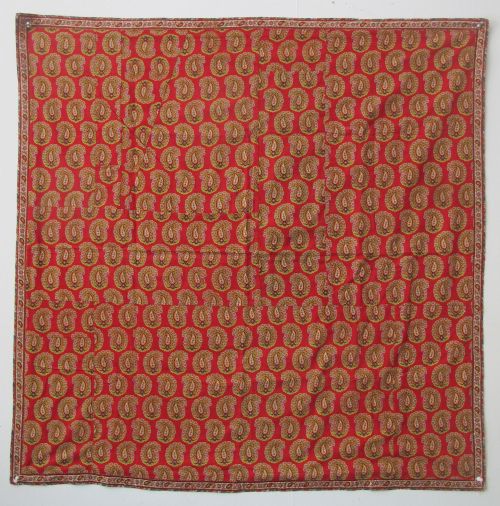
When searching for an antique table cover, buyers encounter a mix of decorative textiles including Indian blockprint panels and silk embroideries on felt grounds.
The selection ranges from late nineteenth-century Persian Rasht embroidery pieces to early twentieth-century examples, reflecting diverse global textile traditions.
These covers often double as wall panels or decorative throws, adapting well to contemporary interiors while retaining their historical character.
Materials and Technique
Makers utilised natural fibres such as silk thread applied directly onto wool felt or velvet grounds, often employing intricate applique work.
Blockprinting techniques created repeat patterns on cotton panels, requiring precise alignment by hand.
The combination of durable backing materials with fine surface stitching ensured these decorative items survived decades of domestic use.
Antique Table Cover Retail Price Guide 2026
Typical asking prices for table cover among the pieces listed under this phrase on Sellingantiques today, from the lower quarter to the upper quarter. They describe what is for sale here now, not the wider market.
Stitchers occasionally hid small intentional flaws in symmetry, believing perfection belonged solely to the divine.
Judging Quality
Quality rests upon the tightness and complexity of the embroidery stitches, where denser needlework denotes a finer piece.
The preservation of the ground fabric matters greatly, with superior examples showing minimal moth damage or fading to the velvet and felt.
Clarity of design in the central medallions and symmetry in the border work separate standard domestic items from superior textile art.
Guild of Handicrafts·Flight Barr and Barr·Roberts Cadman·Henry Wilkinson·Daniel and Arter·Walker and Hall
The Antique Table Cover Glossary
- Applique
- A decorative technique where pieces of fabric are sewn onto a larger background to form a design. This method provides strong textural contrast in Persian embroideries.
- Medallion
- A central decorative motif, often circular or star-shaped, placed in the middle of a textile. It anchors the composition of the embroidery.
- Blockprint
- A method of printing patterns on fabric using carved wooden blocks. This technique creates repeating motifs on Indian cotton panels.
- Felt
- A non-woven textile produced by matting, condensing and pressing fibres together. It serves as a sturdy foundation for silk embroidery.
Antique Table Cover: Frequently Asked Questions
How do I care for an antique textile cover?
Keep textile covers out of direct sunlight to prevent the silk threads and felt grounds from fading. Gently vacuum them on a low setting using a mesh screen for protection.
Avoid washing them with water or chemical solvents, as historic dyes can run or weaken. Consult a specialist textile conservator for professional cleaning.
Can I use these covers on a dining table?
Most antique covers feature delicate silk embroidery or blockprinting on lighter fabrics like felt, making them unsuited for heavy daily dining use. Heat and moisture from plates can easily damage the vintage fibres.
Instead, use them on side tables, display surfaces, or hang them on the wall as decorative panels to preserve their condition.
How do I date an antique embroidery piece?
Dating relies on examining the type of ground fabric, the synthetic or natural nature of the dyes, and the style of the central medallion. Turn-of-the-century pieces often combine vibrant silk threads with heavy wool felt.
Comparing the stitching density and motif arrangement with documented examples from the same region helps narrow down the production decade.