




Antique Table Coaster
An antique table coaster protects the dining surface while holding a decanter, bottle, or cheese truckle.
Antique Table Coaster
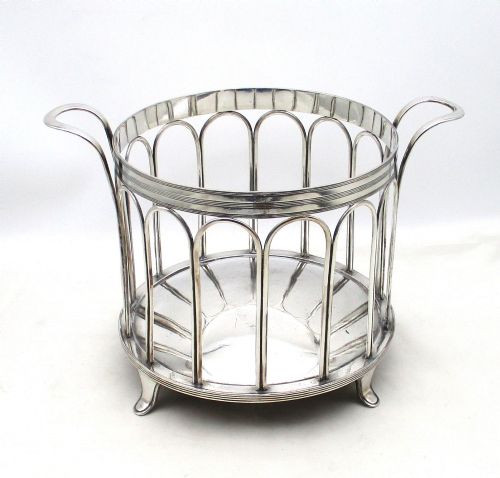
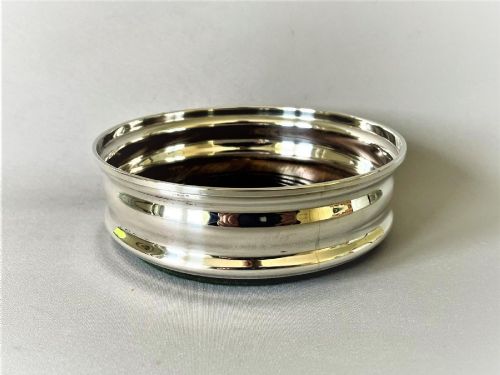
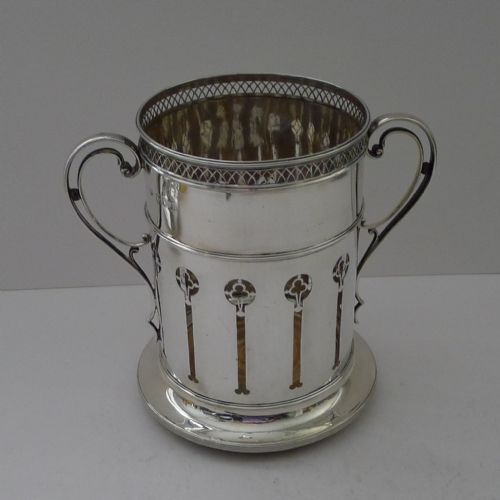
An antique table coaster serves primarily as a protective base for wine bottles, decanters, and cheese truckles on the dining table. The pieces available span periods from the eighteenth century through the Edwardian era and the twentieth century, reflecting shifting dining customs.
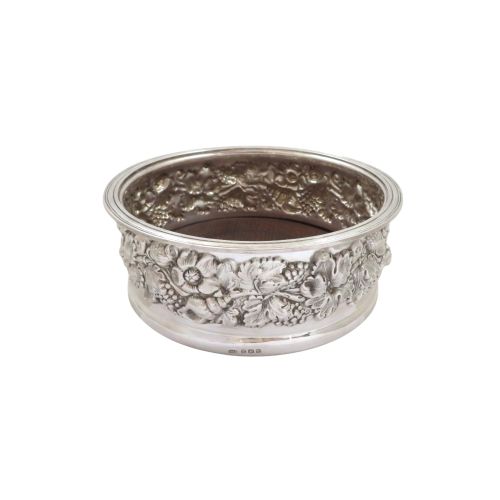
Wine coasters form the most common type encountered, often appearing in matched pairs or larger sets. Alongside these, form variations include larger cheese coasters, butter dishes, and rotating trays intended for practical use at the table.
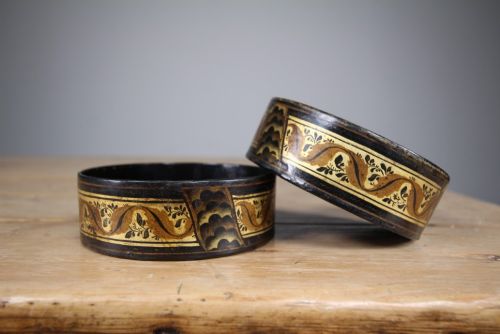
Origins range across English workshops, Scottish makers, and continental European output. Materials vary from silver and silver plate to turned timbers and papier-mâché, each suiting the formal or domestic dining settings of their respective decades.
Assessing Craftsmanship and Condition
Quality rests upon the crispness of the chased or pierced metalwork and the integrity of the fitted wooden base. Superior examples retain their original turned timber inserts and bear clear hallmarks or maker stamps.
Weight and balance distinguish the finer productions, particularly in silver and silver-plated wine holders where substantial metal gauge prevents warping. Wear to silver plating or shrinkage in old timber bases affects the overall integrity of the piece.
Brook & Son·Christofle·John and Thomas Settle·James Mein of Kelso·Asprey
The Antique Table Coaster Glossary
- Old Sheffield Plate
- A method of fusing a thin sheet of silver to a thicker copper base before rolling them into sheets. This technique predates modern electroplating and remains visible where the copper shows subtly through wear.
- Cheese Coaster
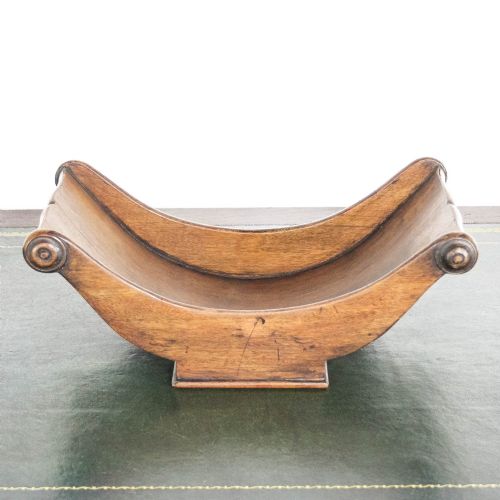
- A semicircular or crescent-shaped tray designed to hold a wedge of cheese or a Stilton truckle. These often feature wooden bodies and were sometimes fitted with small wheels.
- Treen
- Small handmade wooden household objects and tableware. In the context of tableware, this refers to turned wooden bottle stands and coasters.
- Pierced Gallery
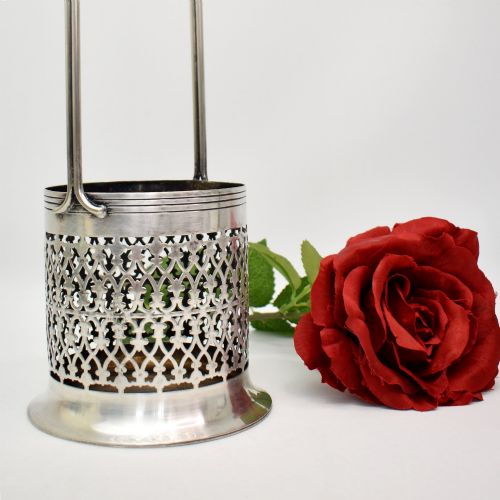
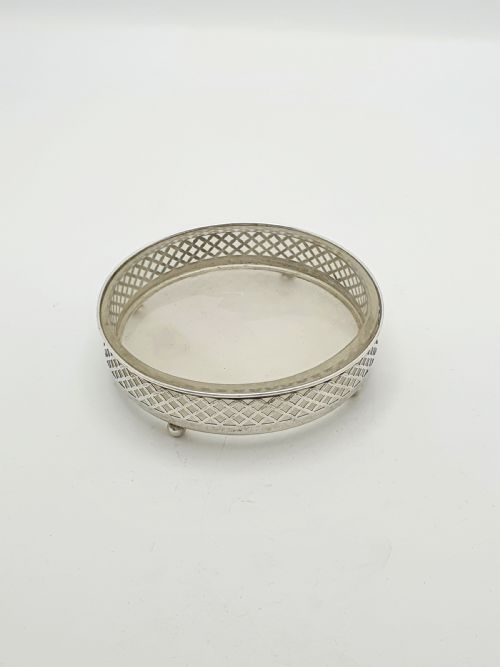
- An openwork decorative border pierced through the metal wall of a coaster. This technique lightens the visual weight of silver and silver-plated wine holders.
- Decanter Coaster
- A flat or slightly sunken base designed specifically to contain the flat bottom of a glass decanter. They frequently incorporate baize or felt on the underside to protect polished mahogany dining tables.
Antique Table Coaster: Frequently Asked Questions
What was the original purpose of a wine coaster?
Coasters were slid across the polished mahogany dining table between guests after the servants retired. This kept the wine bottles moving and protected the timber surface from drips and rings.
Heavier versions sometimes featured small wheels underneath to assist this movement along the length of the table.
How do I clean silver and plated coasters?
Silver and silver-plated examples require gentle cleaning with a specialised silver cloth or non-abrasive polish. Care must be taken to avoid harsh chemicals coming into contact with any fitted wooden base.
Wooden components benefit from occasional waxing with a neutral beeswax to nourish the timber and prevent drying.
Can I use antique coasters for modern bottles?
Most standard wine bottles and modern decanters fit comfortably inside Georgian and Victorian coaster diameters. However, exceptionally wide or tall modern bottles may exceed the interior dimensions of older pieces.
Checking the internal diameter before purchase ensures your preferred bottles will sit securely within the rim.
How do I tell Georgian coasters from Victorian ones?
Georgian coasters generally exhibit restrained neoclassical piercing, bright-cut engraving, and heavy turned mahogany bases. Victorian pieces often display heavier cast ornamentation, floral embossing, and extensive silver plating.
Maker marks and silver hallmarks, where present, provide the most reliable guide to the exact period of manufacture.