
Antique T Bar Chain
An antique t bar chain brings together solid silver, gold and thoughtful link geometry for practical daily wear.
Antique T Bar Chain
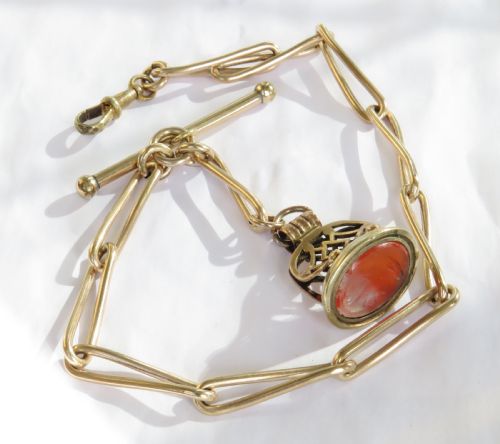
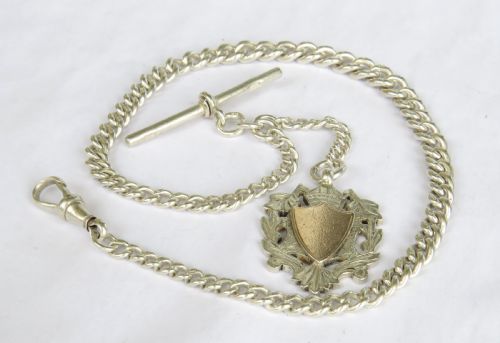
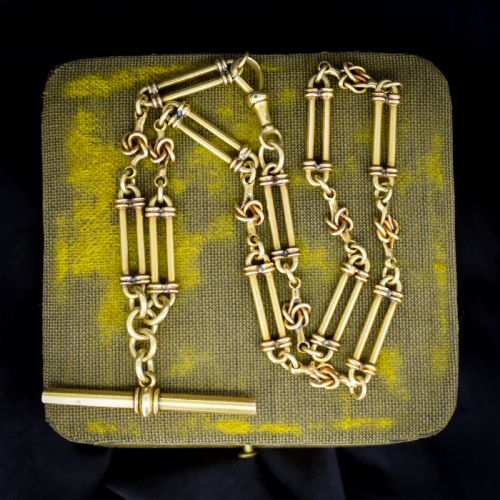
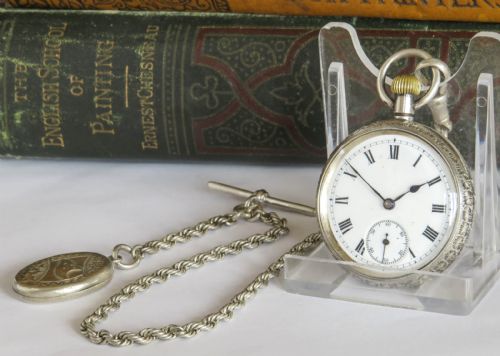
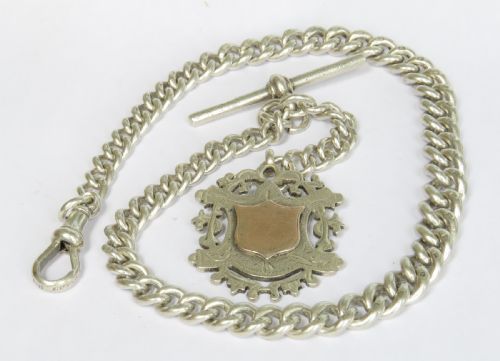
An antique t bar chain is a functional piece of Victorian or Edwardian pocket watch hardware designed to secure a timepiece in a waistcoat pocket via a transverse crossbar. These items span late nineteenth century styles through to the art deco period, predominantly manifesting as sterling silver or nine carat gold necklaces and bracelets.
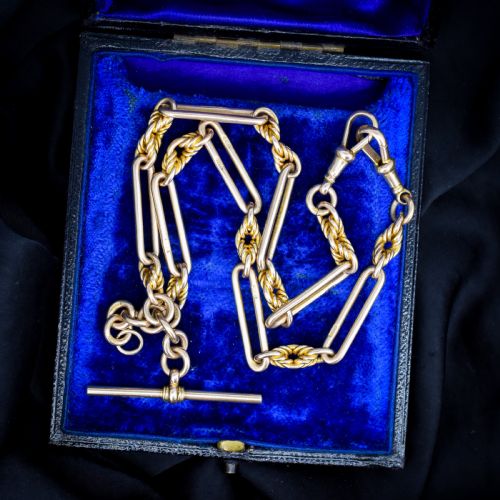
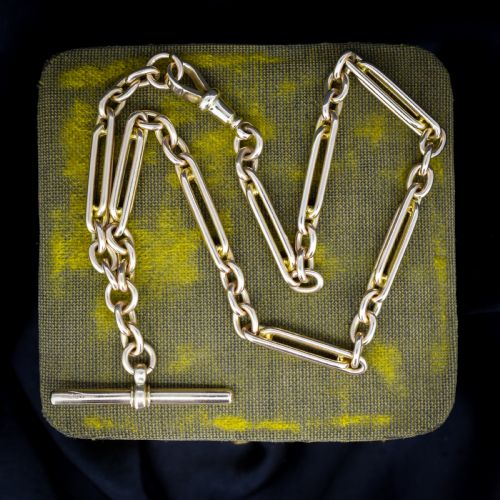
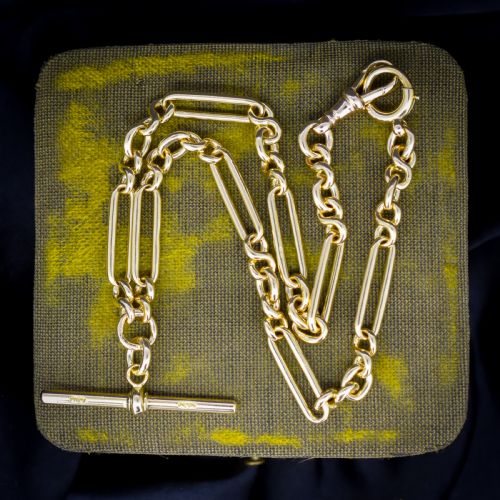
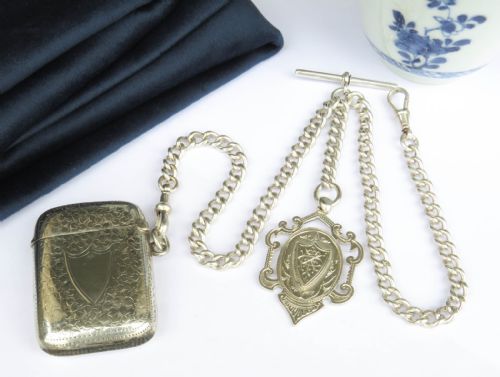
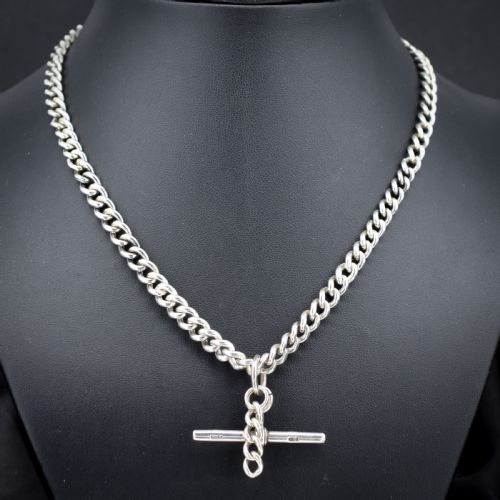
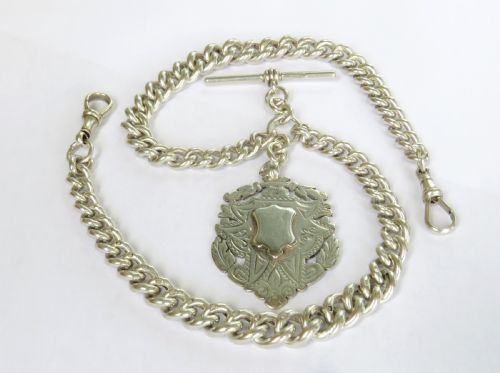
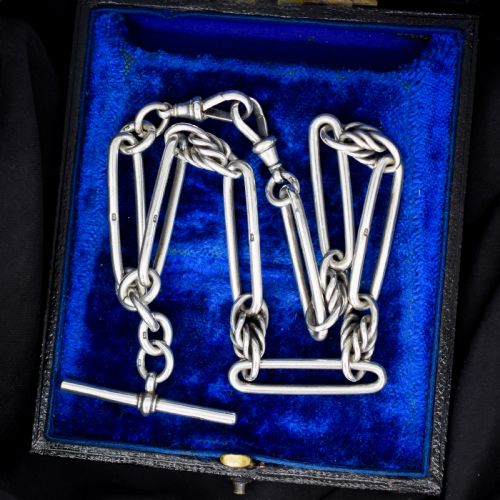
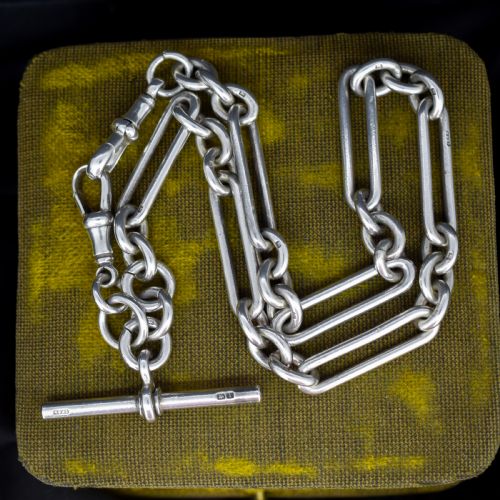
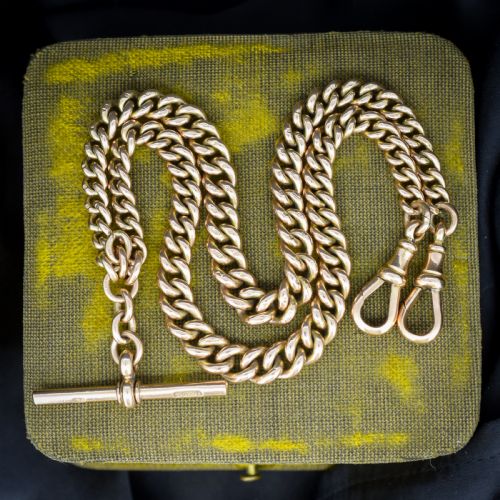
The primary forms met here include single and double albert chains, often complete with swivel dog clips, spinning fobs, or vestas. Trombone, curb, and love knot links dominate the surviving examples, reflecting the utility and craftsmanship of the era.
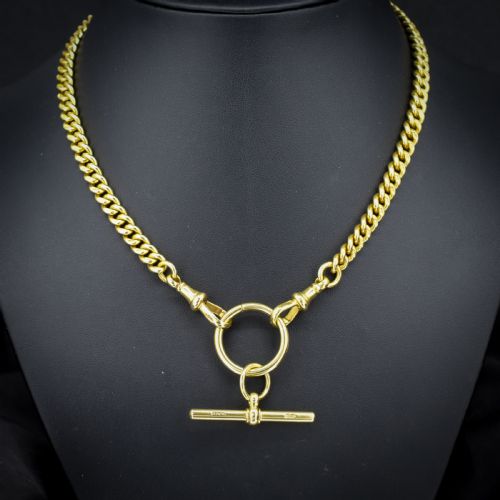
Originally worn across the front of a waistcoat, these lengths now find frequent service as contemporary necklaces or wrapped bracelets. The inclusion of the original t bar remains the defining characteristic that separates these historic lengths from standard jewellery chains.
Materials and construction
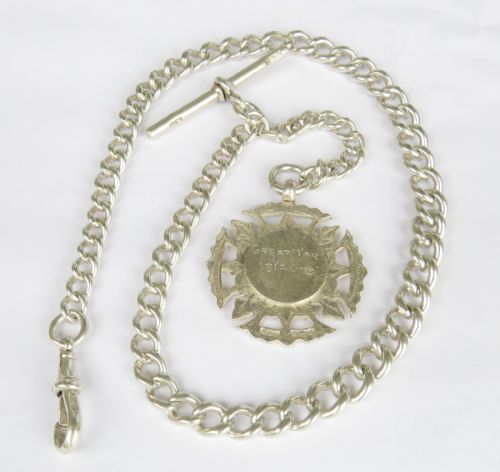
Metals employed span solid sterling silver and various shades of gold, including nine carat yellow and rose gold, alongside rolled gold alternatives. Hallmarks stamped onto individual links or the t bar itself frequently reveal assay offices such as Chester or Birmingham alongside precise production years.
Link configurations rely on durable hand assembly, utilising hollow or solid extruded wire shaped into uniform curb, trombone, or fancy patterns. Swivel dog clips and spring rings provide secure fastening points, soldered or linked directly to the main body of the chain.
Listings demonstrate a heavy concentration of sterling silver and nine carat rose gold, spanning the late nineteenth century into the nineteen twenties.
Evaluating the construction
Graduation of links sets superior examples apart, where individual sections decrease uniformly from the centre towards the ends. Heavier gram weights and fully stamped hallmarks on every component indicate higher original manufacture and better survival through decades of use.
Wear at the link pivot points dictates the structural integrity of the piece, separating tight, crisp metalwork from stretched or thin segments. Original components, including matching dog clips and unaltered t bars, preserve the historical completeness of the item.
The Antique T Bar Chain Glossary
- Albert chain
- A pocket watch chain named after Prince Albert, designed to pass through a waistcoat buttonhole.
- T bar
- The short transverse metal bar attached to the centre of an albert chain to anchor it securely in a pocket.
- Dog clip
- A spring loaded swivel clasp used to attach a pocket watch, charm, or fob to the chain.
- Trombone link
- An elongated rectangular metal link with rounded corners, frequently alternating with smaller connecting rings.
- Vesta case
- A small matchsafe often suspended from an albert chain alongside the pocket watch.
Antique T Bar Chain: Frequently Asked Questions
How do I wear an antique chain today?
These versatile pieces adapt readily to modern wardrobes when worn simply as short necklaces or doubled around the wrist as heavy bracelets. The integrated t bar can be left to drop as a decorative pendant feature at the front or back.
Securing the spring ring or dog clip to the desired link allows customisation of the overall length to suit different necklines.
What is the difference between single and double alberts?
A single albert chain consists of one continuous length running from the t bar anchored in a buttonhole to the pocket watch on the opposite side. Additional decorative drops or fobs often suspend from the centre point.
Double albert chains feature two distinct strands meeting at the central t bar, designed to loop across a waistcoat with a watch on one end and a fob on the other.
How can I date my watch chain?
Dating relies heavily upon the small stamped hallmarks found on individual links, the t bar, and the dog clip. Assay office symbols, date letters, and purity marks indicate the exact year and town of testing.
Stylistic elements like trombone links or specific engraving patterns also point towards Victorian or Edwardian periods when hallmarks are rubbed or absent.
Were these chains only made for men?
While originally designed for gentlemen's pocket watches within waistcoats, Victorian and Edwardian women frequently adopted shorter lengths or delicate albertinas for fob watches and chatelaines. The surviving lengths vary considerably, accommodating diverse historical fashions across both genders.
Heavier sterling silver examples typically served practical masculine roles, while lighter rose gold variations often crossed into feminine adornment.