




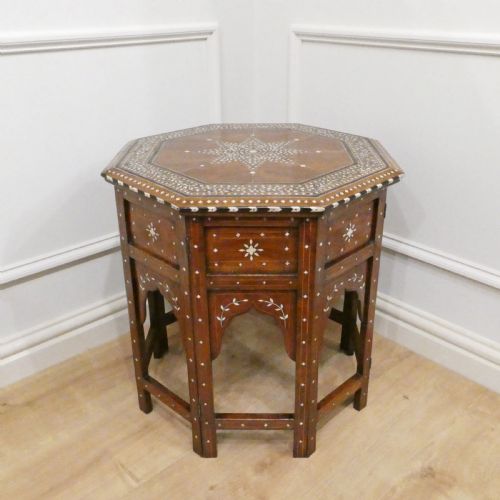
Antique Syrian Table
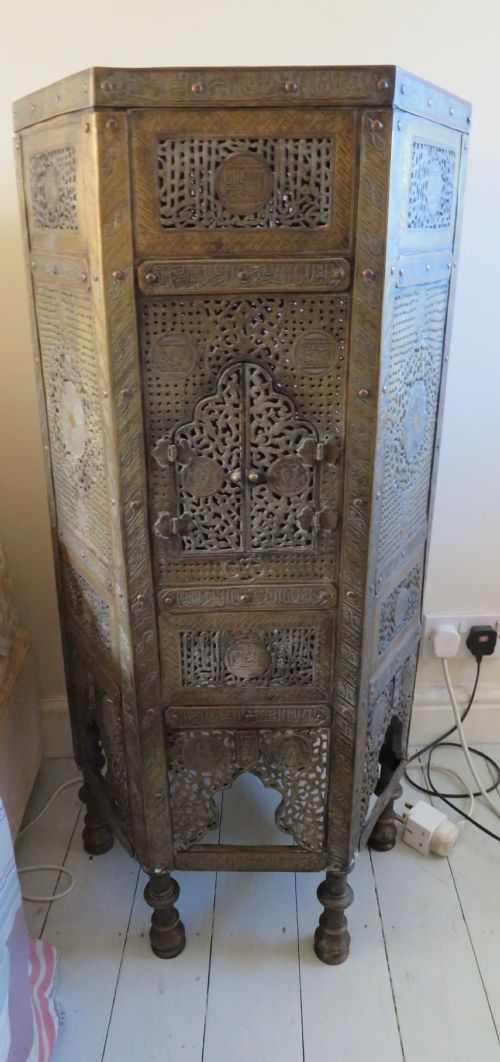
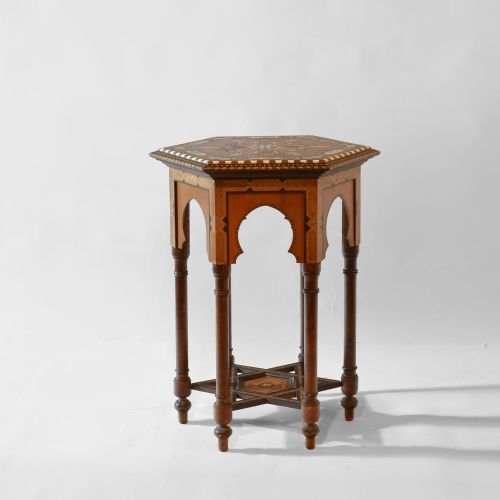
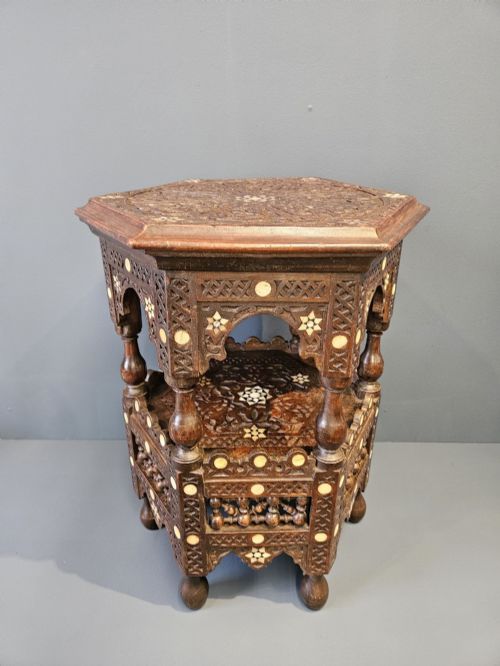
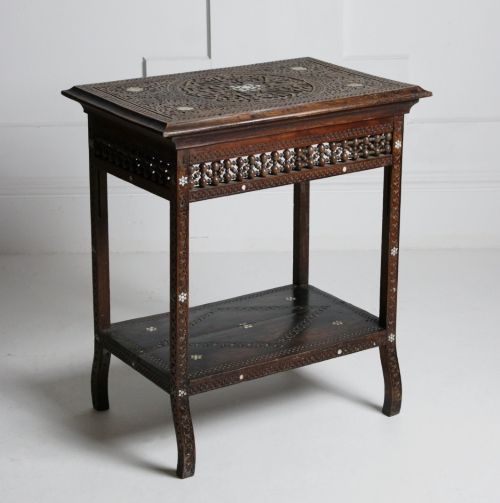
An antique syrian table brings geometric intricacy and rich marquetry into a room, offering both surface utility and decorative presence.
Antique Syrian Table
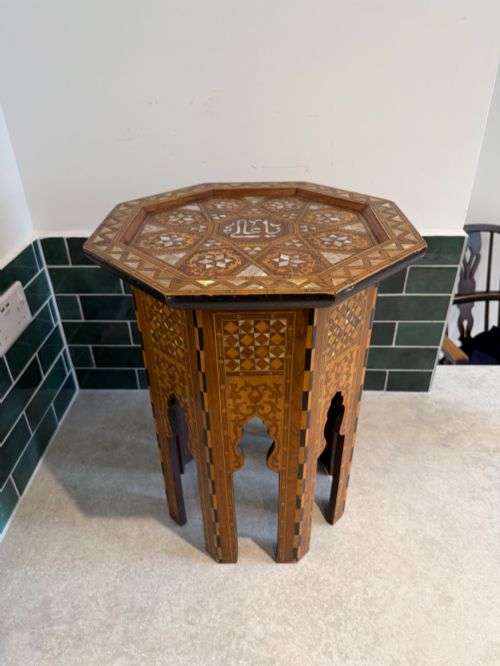
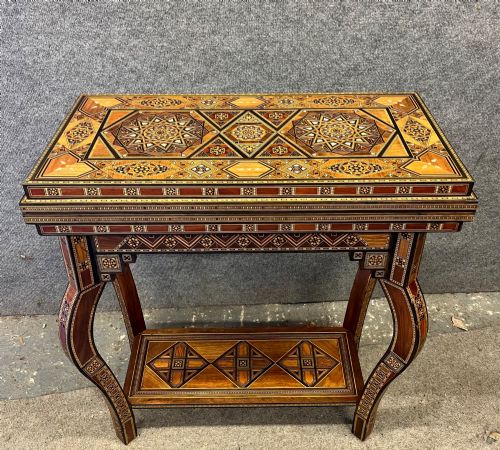
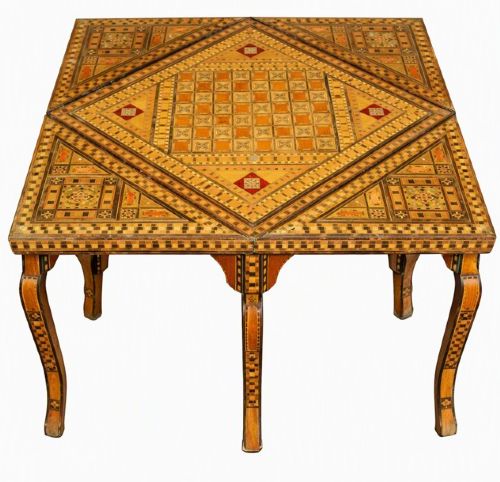
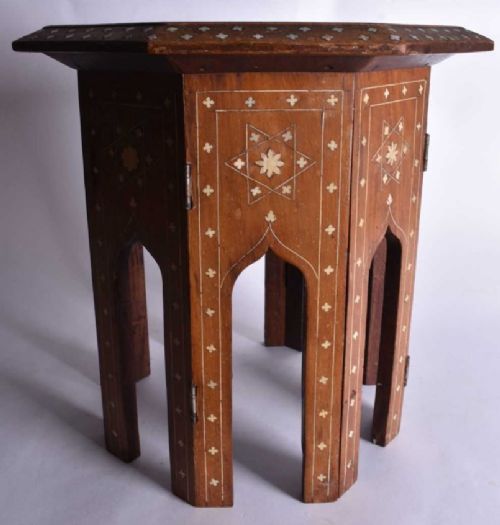
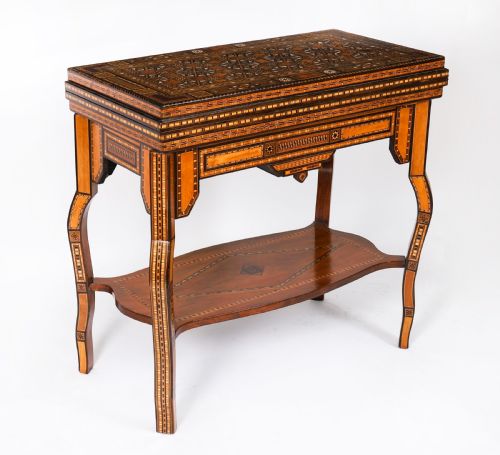
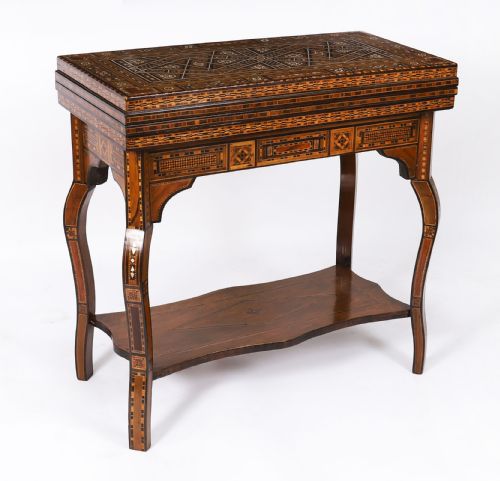
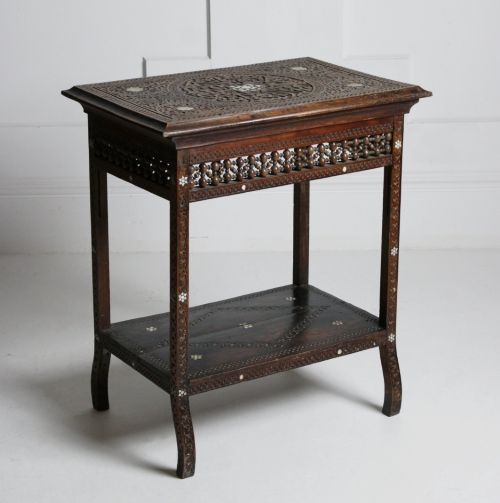
These items frequently display stylistic influences associated with Moorish Revival, Ottoman, and Levantine traditions. Alongside conventional side tables, the listings include envelope games tables, two-tier structures, and low stools reflecting diverse regional workshops.
The materials and geographic origins bridge Middle Eastern craftsmanship with European aesthetic tastes of the Victorian and Edwardian periods. Surviving examples demonstrate how these objects functioned both as functional furniture and as exotic showpieces in period interiors.
Assessing quality and craftsmanship
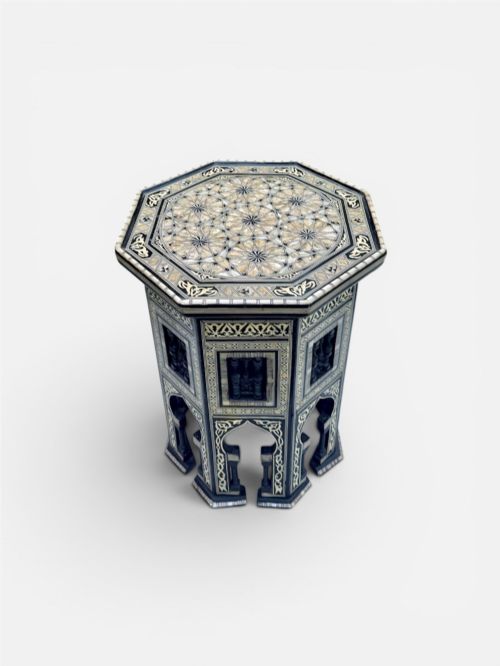
Quality in these pieces is fundamentally determined by the density and precision of the inlay work. Finer examples feature tight, perfectly fitted geometric tessellations of bone and mother-of-pearl with minimal filler between individual elements.
Structural execution separates standard production from superior workshop output. The best tables maintain rigid joints and well-aligned folding mechanisms that operate smoothly despite decades of timber movement.
The depth and clarity of hand-carving define the upper tier of the range. Crisp relief work on wooden surfaces and substantial material thickness indicate superior workshop standards compared to thinner, mass-produced export pieces.
Antique Syrian Table Retail Price Guide 2026
Typical asking prices for syrian table among the pieces listed under this phrase on Sellingantiques today, from the lower quarter to the upper quarter. They describe what is for sale here now, not the wider market.
Many folding tables were constructed using interlocking wooden hinges carved from a single piece of timber, requiring no metal pins at all.
Liberty & Co
The Antique Syrian Table Glossary
- Damascus table
- A term denoting inlaid furniture originating from or styled after the traditions of Damascus, frequently featuring intricate geometric wood and shell decoration.
- Envelope games table
- A multi-functional table with a folding top that opens diagonally to reveal a baize-lined playing surface for cards or chess.
- Mother-of-pearl
- The iridescent inner layer of mollusc shells, painstakingly cut into thin polygonal slivers and embedded into wooden matrices to form geometric patterns.
- Moorish Revival
- An architectural and decorative style popular in the nineteenth century that reinterpreted traditional Islamic design motifs for Western interiors.
- Octagonal
- Having eight sides, which represents the standard geometric plan for many Middle Eastern occasional and low tables.
Antique Syrian Table: Frequently Asked Questions
How do I care for an inlaid table?
Keep these pieces away from direct heat sources and strong sunlight to prevent the timber from shrinking and the delicate inlay from loosening. Dust gently with a dry, soft cloth and avoid liquid polishes that can seep into the micro-mosaic joints.
Applying a very light coat of microcrystalline wax occasionally helps protect the exposed wood and shell surfaces. Handle folding mechanisms with care to avoid stressing the original wooden hinges and pegged joints.
What rooms suit an octagonal occasional table?
An octagonal table fits easily beside a low sofa, armchair, or reading seat where its compact footprint provides accessible surface space. The distinctive silhouette also functions effectively as a lamp stand in a hallway or a display perch in a study.
Because the decoration covers all sides, these pieces look balanced when placed away from walls or near the centre of a room. Their rich texture contrasts well with simpler, neutral upholstery and plain architectural backgrounds.
How do I distinguish Syrian from Indian tables?
Syrian and regional Middle Eastern tables generally rely on dense geometric strapwork, contrasting bone inlay, and mother-of-pearl tesserae arranged in strict mathematical polygons. The underlying wood is often walnut, fruitwood, or ebonised timber.
By contrast, pieces attributed to centres such as Hoshiarpur frequently feature dense overall floral or figurative carved foliage using shesham or other local hardwoods. The carving style and choice of inlay material provide the clearest visual distinction between the traditions.
Can I use a games table for dining?
Most antique games and side tables are built for light decorative use, writing, or board games rather than heavy daily dining. Their folding structures and intricate inlaid tops are susceptible to surface damage from moisture, heavy plates, and heat.
If utilised in a living space, protect the surface with coasters or decorative trays when placing cups or objects upon it. Preserving the original shell and wood inlay requires avoiding heavy loads and rough daily contact.