





Antique Sumida Gawa
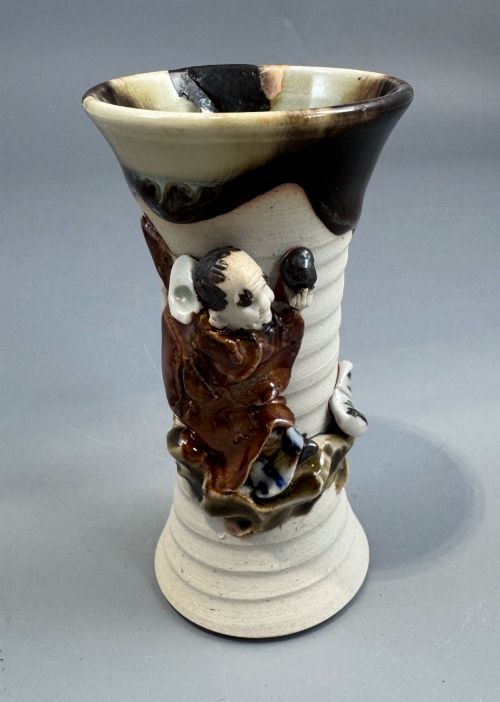
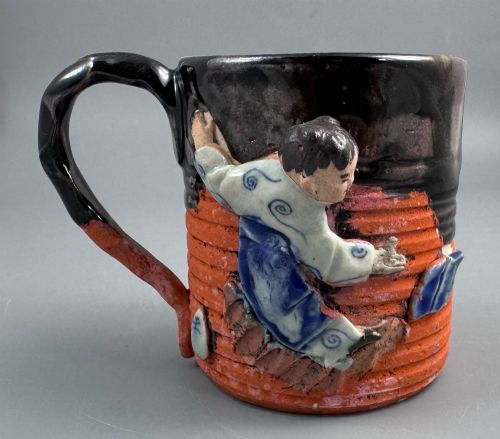
These pieces of antique sumida gawa display heavy glazes and applied figures, originating from Japan across the Meiji and Taishō periods.
Antique Sumida Gawa
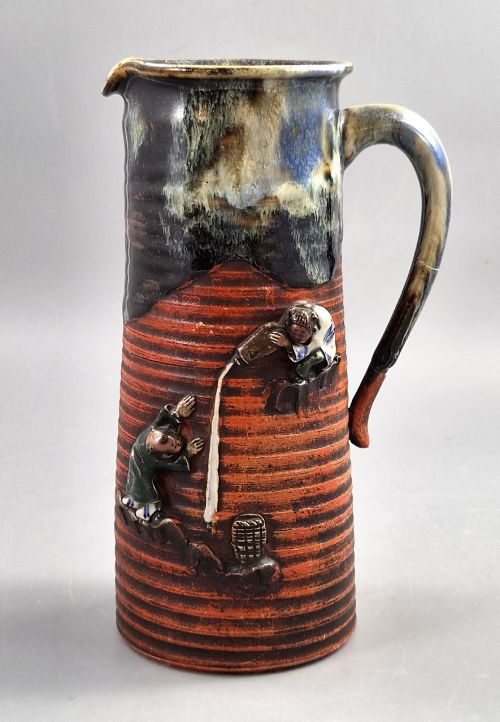
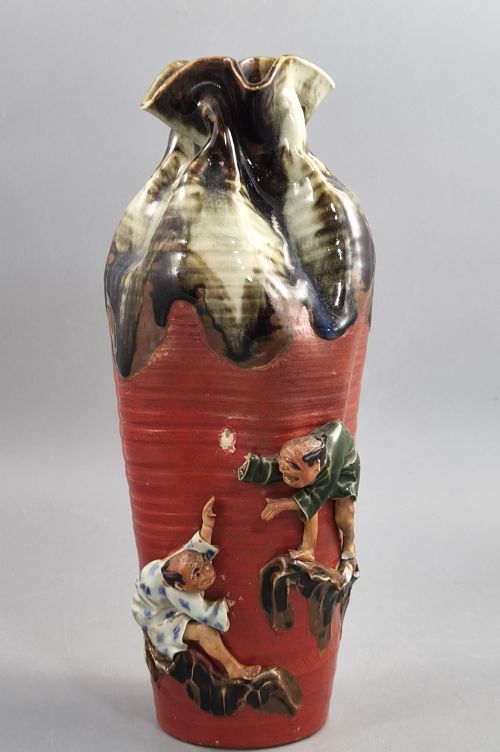
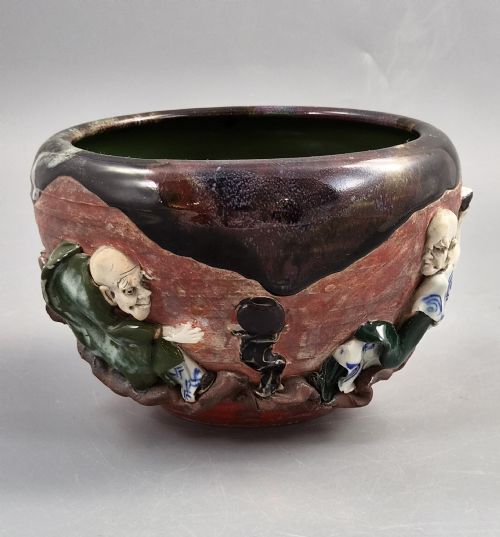
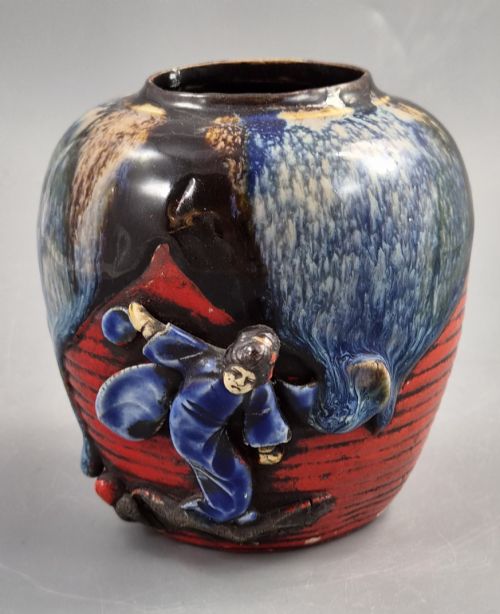
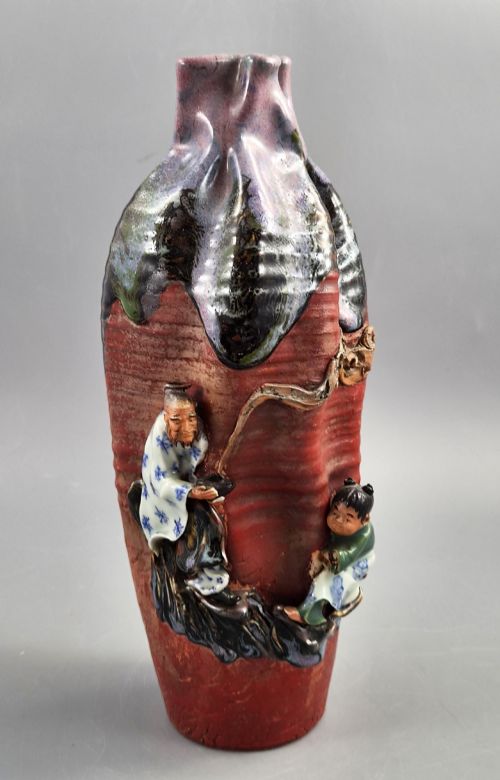
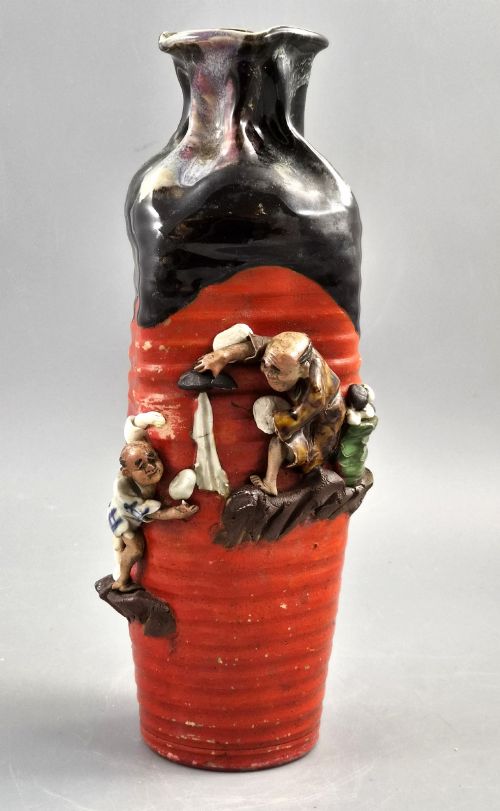
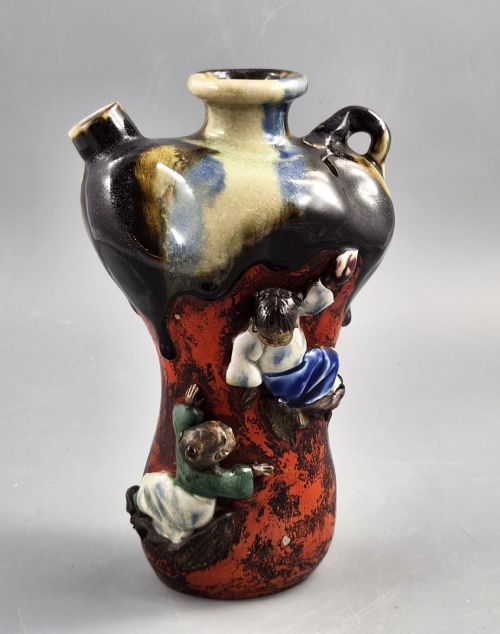
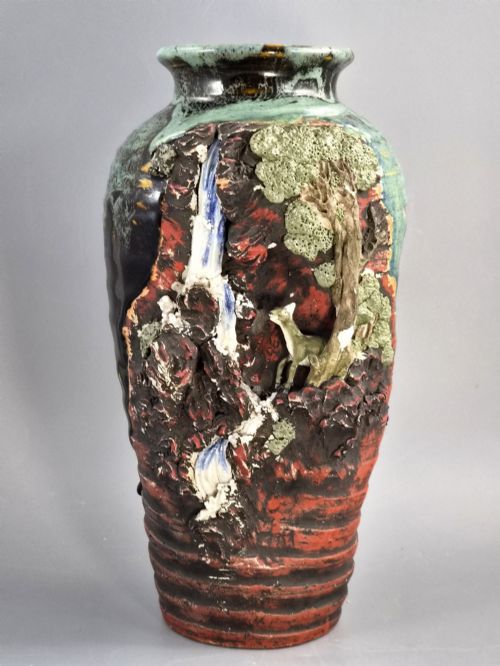
When searching for antique sumida gawa, buyers encounter distinct Japanese ceramics characterised by thick, dripping glazes and sculptural figures modelled in high relief. The forms on this page span decorative bowls, vases, pitchers, teapots, and mugs created during the Meiji and Taishō periods.
Most items you meet here date around nineteen hundred to nineteen twenty, reflecting the output of Tokyo potteries. These wares often feature sages, children, or climbing figures applied directly onto textured bodies of stoneware or earthenware.
Materials and construction
Potters built these vessels using earthenware or stoneware, applying tactile glazes such as flambe, lavender, blue, and oxblood over the body. The characteristic runny surfaces result from controlled glazing techniques that pool thickly around the base.
Makers formed individual figures separately before attaching them by hand to the exterior of the vases, jars, and mugs. Enamel details and incised lines frequently accent these applied elements, adding colour and depth to the scenes.
Listings feature items from the Meiji, Taisho, and early Showa periods, utilising stoneware, earthenware, and diverse glaze effects.
Factors of quality
Quality in these ceramics rests primarily on the expressiveness and crispness of the modelled figures. Well-executed pieces show careful detail in the faces and garments of the sages and children.
The control and distribution of the thick glaze also determine standard. Superior examples balance heavy drips with areas of the body left exposed or intentionally textured, rather than obscuring the entire form.
Inoue Ryosai·Ban ni·Hiroshi·Ishiguro Koko
The Antique Sumida Gawa Glossary
- Meiji period
- The era of Japanese history lasting from eighteen sixty-eight to nineteen twelve, during which many of these expressive wares were produced.
- Taisho period
- The historical period succeeding the Meiji era, spanning from nineteen twelve to nineteen twenty-six, represented in several listings here.
- Flambe glaze
- A streaked or mottled ceramic glaze that produces varied colour effects, often seen in blue, lavender, or red tones on these vessels.
- Rakan
- A Buddhist holy person or disciple, frequently depicted as an applied figure on Japanese pottery.
- Suiban
- A shallow basin or dish used for flower arrangement or as a brush washer, sometimes found in this ceramic style.
Antique Sumida Gawa: Frequently Asked Questions
What is antique sumida gawa pottery?
This category comprises Japanese ceramics featuring heavy glazes and three-dimensional figures applied to the surface of vases, bowls, and mugs.
Produced largely during the Meiji and Taisho periods around nineteen hundred, these wares are known for their distinct sculptural style.
How were these pieces used originally?
Many items served practical functions such as pitchers, teapots, mugs, and brush washers alongside purely decorative vases and bowls.
The applied figures often depict traditional figures from folklore, including sages, children, and holy men.
How should I display these in a home?
Place them where adequate lighting can highlight the varied textures of the flambe glazes and the depth of the applied figures.
Their robust stoneware and earthenware construction makes them suitable for shelves, sideboards, or display cabinets.
How can I tell the period of these wares?
Datings typically span the Meiji and Taisho periods, identified through stylistic traits, signatures, and known workshop practices.
Pieces from this era often combine traditional Japanese motifs with the unique glazing techniques developed in Tokyo potteries.