


Antique Style Writing Desk
An antique style writing desk brings craftsmanship and character into a study, offering a dedicated surface for correspondence and thought.
Antique Style Writing Desk
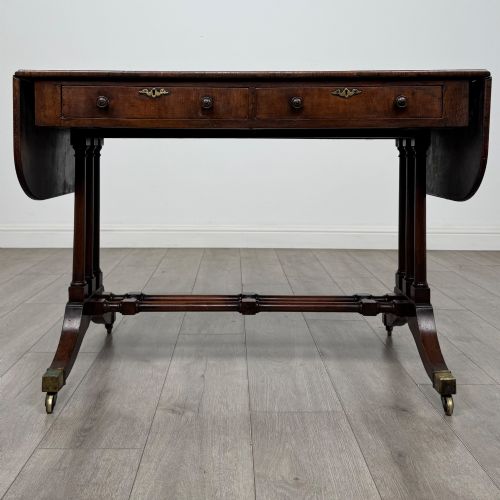
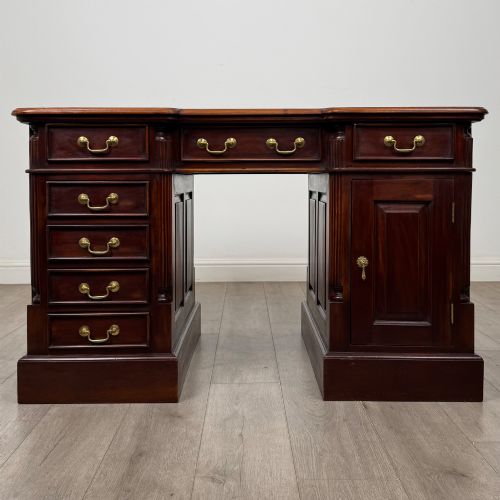
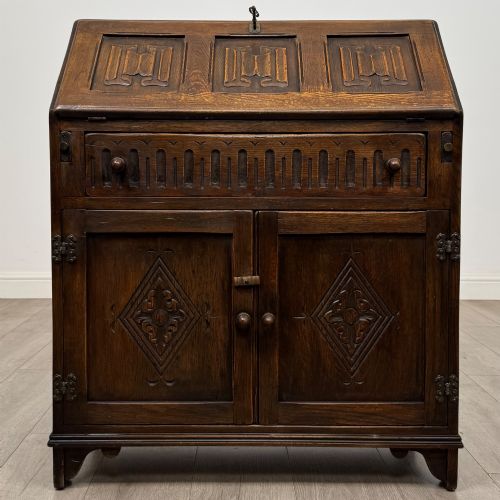
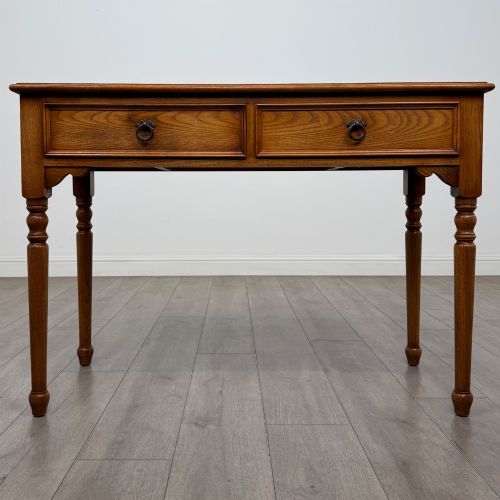
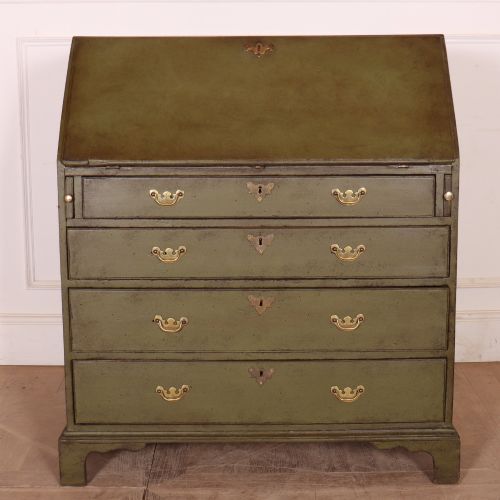
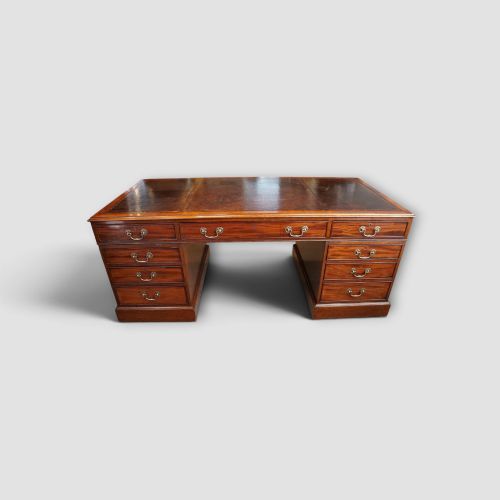
When you search for an antique style writing desk, you encounter pieces spanning from the Georgian and Victorian eras through to the Edwardian period and the 1920s. These pieces encompass writing tables, bureaux, pedestal desks, and bureau bookcases designed for functional home administration.
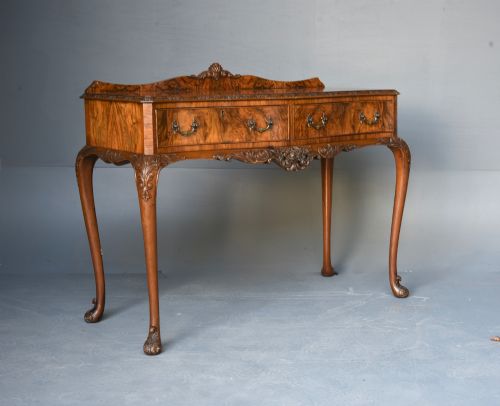
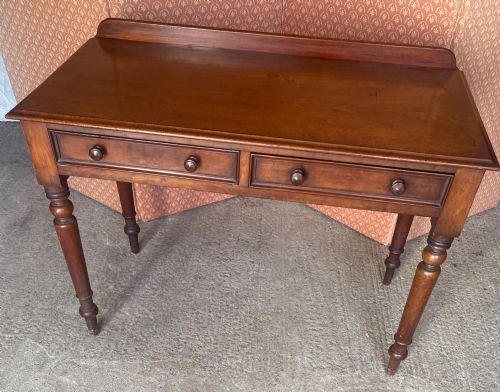
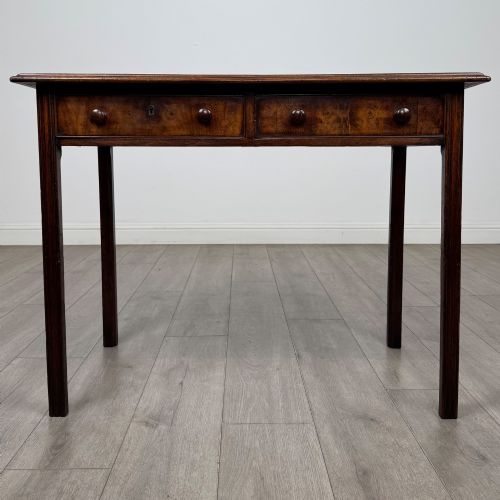
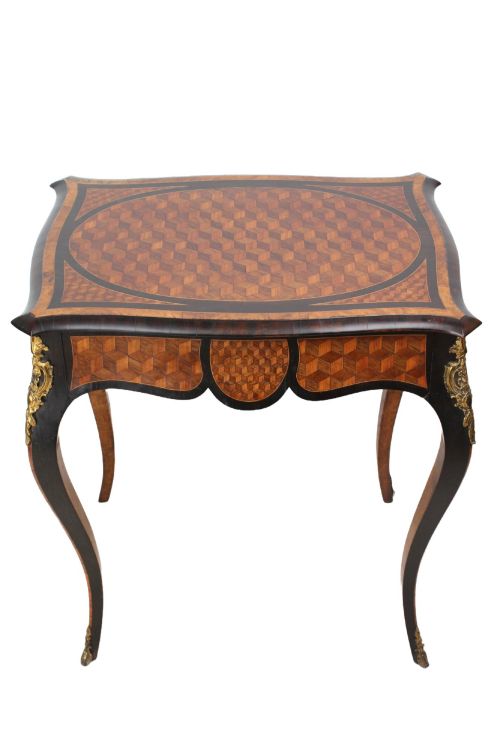
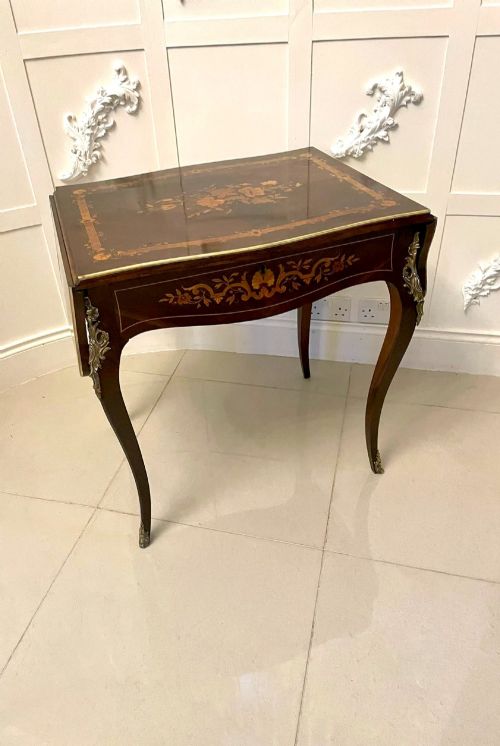
The versions you are most likely to meet on this page are mahogany, oak, and walnut writing tables and bureaux built in revival styles such as Louis XV, Georgian, and Edwardian. They combine traditional storage compartments, drop-front writing surfaces, and kneeholes.
Many of these tables and desks reflect historical revivals, adapting 18th-century forms like the bureau plat and partner's desk for later Victorian and Edwardian domestic interiors.
How they were made
Cabinetmakers utilised solid and veneered timbers such as mahogany, oak, walnut, burr walnut, satinwood, and kingwood over sturdy secondary woods. These timbers were selected for their grain pattern and stability.
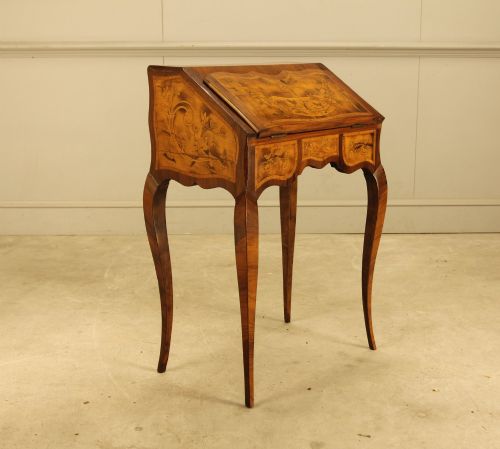
Decorative surfaces often incorporate marquetry, parquetry, and inlay using contrasting woods, alongside carved linenfold details and painted finishes. Brass handles, key escutcheons, and ormolu mounts provide structural and visual accents.
Leather inserts frequently line the writing surfaces of desks and tables, tooling or gilding the borders to create a durable and refined writing plane.
Some antique writing desks hide secret compartments behind miniature pigeonhole drawers, designed for private letters.
What varies in quality
The distinction between tiers of the market lies in the selection of timber veneers, the precision of marquetry and inlay work, and the weight of cast ormolu and brass mounts. Superior examples demonstrate meticulous hand-cut dovetailing in drawer construction and harmonious grain matching.
Maker attribution and design ambition elevate certain pieces above standard production models, particularly when works originate from notable cabinet-making firms or incorporate complex serpentine forms and fitted interior compartments.
JAS Shoolbred·Francois Linke·Edwards and Roberts·Wylie and Lochhead·S and H Jewell
The Antique Style Writing Desk Glossary
- Bureau
- A sloping writing cabinet with a hinged flap that opens to reveal fitted pigeonholes and small drawers. It often sits upon a chest of drawers or a stand.
- Marquetry
- Decorative patterns formed by the insertion of pieces of veneer into a fitted wood ground, creating pictorial or geometric designs. Craftsmen use various tinted and textured woods to achieve tonal depth.
- Ormolu
- Gilt bronze mounts applied to furniture for decorative effect. The technique involves gilding a mercury-bronze alloy.
- Partners Desk
- A large pedestal desk designed with drawers and cupboards on both sides so two people can sit opposite one another. These frequently feature leather-lined tops.
Antique Style Writing Desk: Frequently Asked Questions
What is a bureau plat?
A bureau plat is a freestanding French writing table featuring a flat top, typically lined with leather, and drawers set within the frieze.
These tables were designed to stand in the centre of a room rather than against a wall, displaying finished cabinetry on all sides.
How do I care for a leather writing surface?
Leather desk inserts require gentle cleaning with a slightly damp cloth and occasional treatment with appropriate leather balms to prevent drying.
Avoiding direct sunlight and excessive heat protects both the leather and the surrounding timber from warping and fading.
What distinguishes a partner's desk?
A partner's desk provides dual-sided workspace, incorporating drawers, cupboards, or kneeholes accessible from both the front and the back.
These substantial desks were originally built for offices, libraries, and large studies where two individuals needed to work simultaneously.