


Antique Style Walnut Chairs
When you search for antique style walnut chairs, you find seating shaped by centuries of revivalism, from Queen Anne curves to French Louis designs.
Antique Style Walnut Chairs
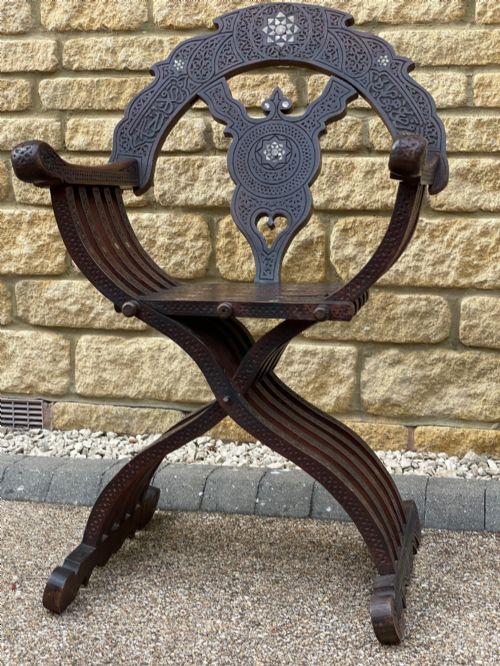
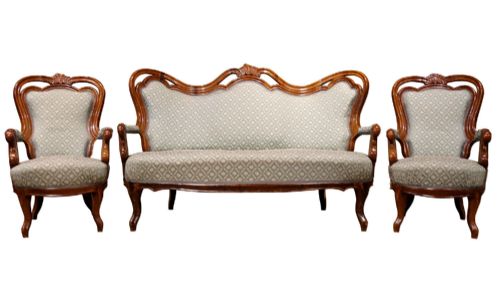
When buyers search for antique style walnut chairs, they encounter seating that spans formal dining sets, library armchairs, and French salon suites created across the nineteenth and early twentieth centuries. These pieces interpret earlier eras, particularly the seventeenth and eighteenth centuries, through the craftsmanship of later periods.
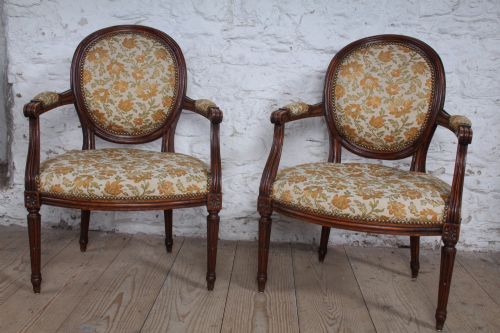
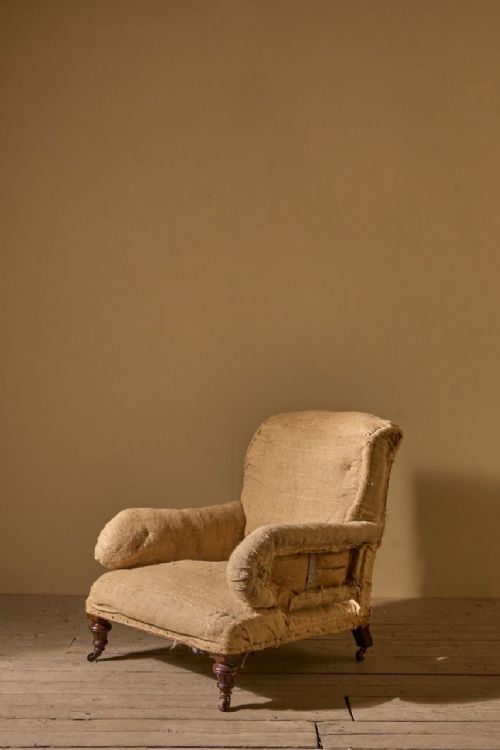
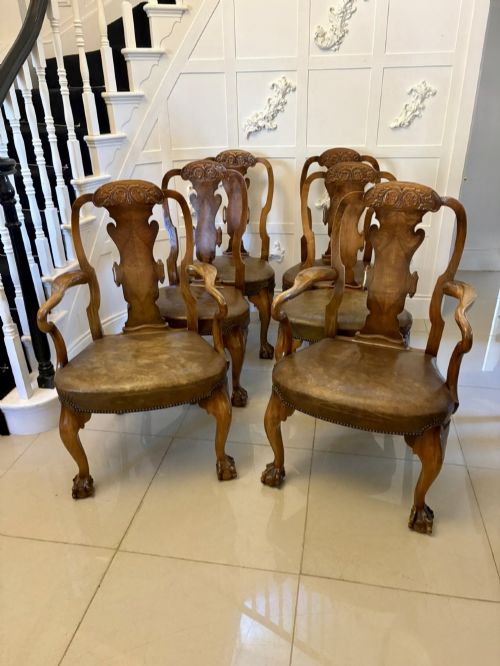
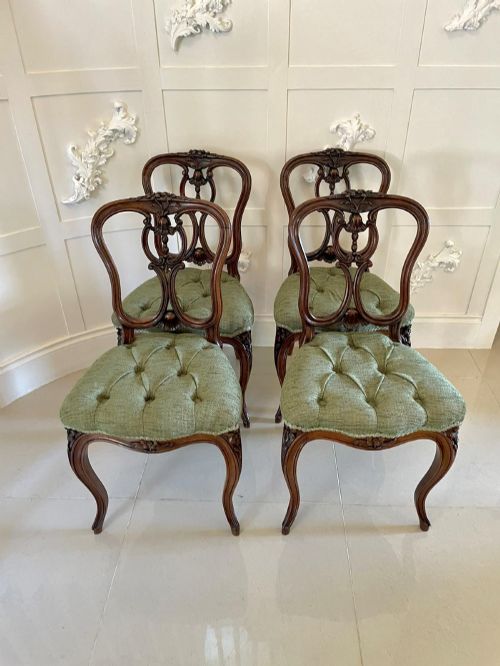
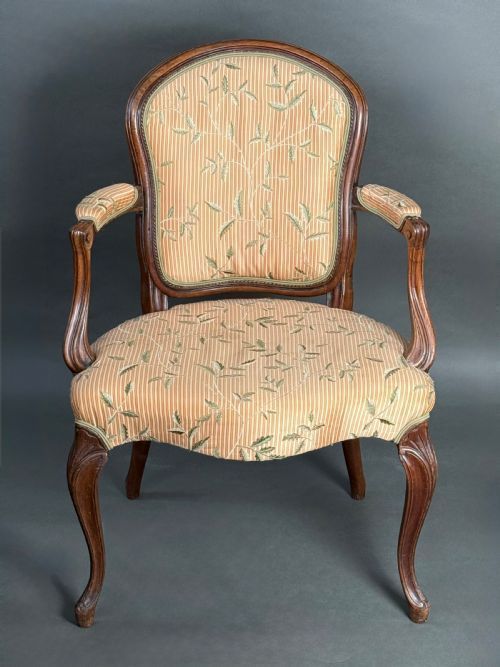
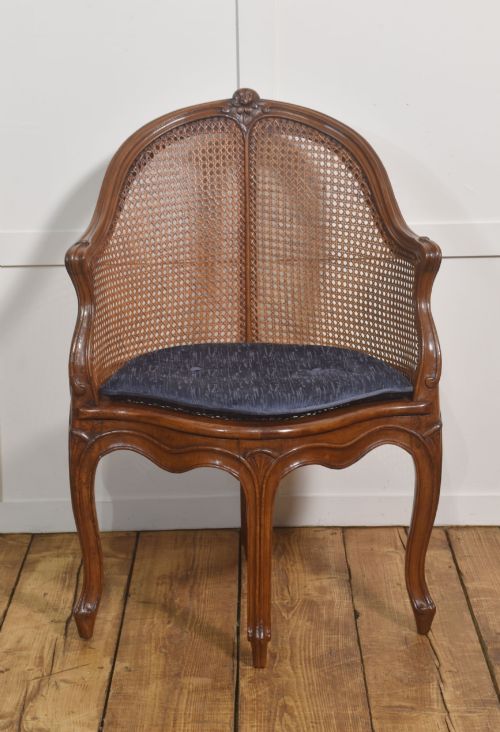
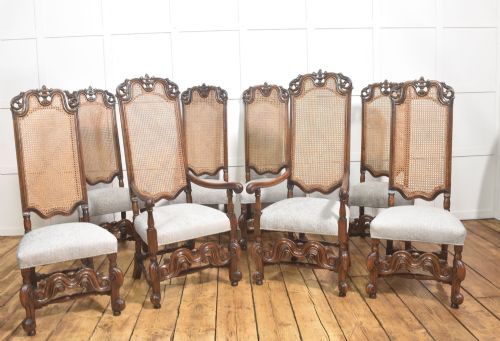
The most common examples on this page are dining chairs and armchairs executed in the Queen Anne and Louis XV styles. These range from single side chairs to large sets of eight or twelve, alongside pairs of open armchairs upholstered in silk, tapestry, or leather.
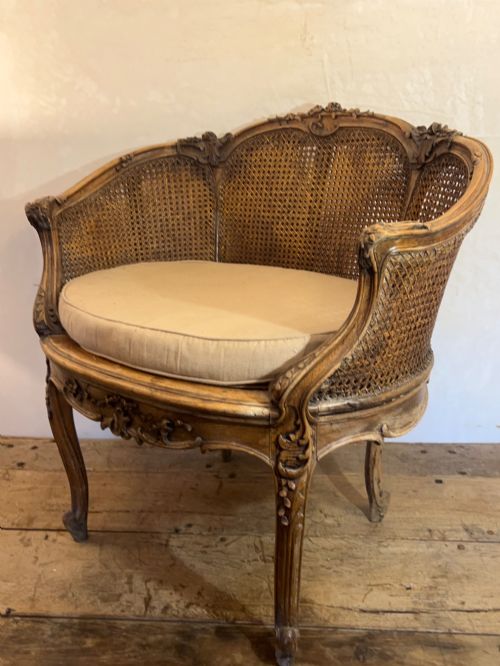
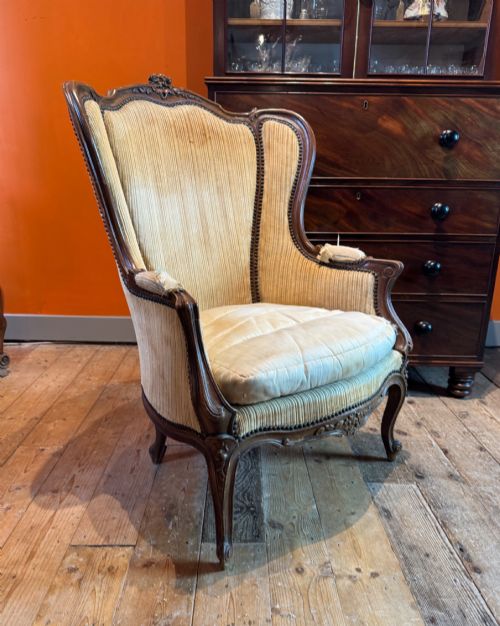
Origins vary between English workshops following traditional cabinet-making rules and continental makers producing carved French bergeres and fauteuils. Pieces often adopt specific regional interpretations, such as red walnut timbers or mother of pearl inlay work.
Assessing Quality and Execution
Quality in these chairs rests upon the crispness of the hand-carving on the knees, splats, and crest rails, where deeper relief work distinguishes finer workshop output from later commercial production. The selection of the walnut timber itself plays a major role, with figured grain patterns and symmetrical book-matching marking out superior examples.
Joinery execution dictates the longevity of the frame, showing in tight tenons and solid blocking beneath the seat rails rather than reliance on modern adhesives. The integrity of the original or period-appropriate upholstery materials, whether hand-stitched tapestry or fitted split cane, also establishes the standard of the piece.
Materials recorded on this page include solid walnut, burr walnut, velvet, silk, tapestry, leather, brass, and split cane.
Charles Tozer·Howard and Sons·Thomas Hope·Andrea Brustolon·SF Cullen
The Antique Style Walnut Chairs Glossary
- Cabriole leg
- A furniture leg that curves outward at the knee and tapers inward toward the foot, imitating an animal limb. This shape defines many Queen Anne and Louis XV style pieces.
- Bergere
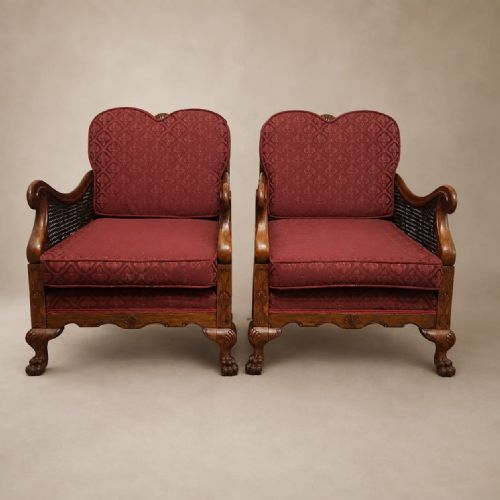
- An enclosed upholstered armchair with wooden framing and solid sides, often filled with cane panels. These seats date widely across French revival periods.
- Splat
- The central vertical strip of wood in the back of a chair. It receives shaped contours to support the sitter's spine.
- Fauteuil
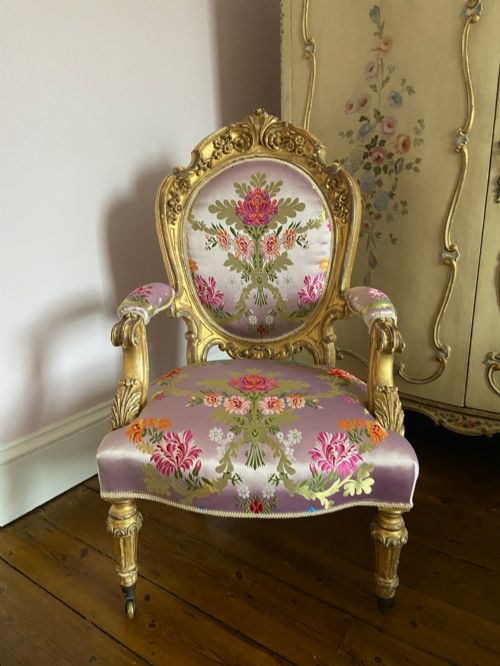
- An open-armed upholstered armchair with exposed wooden armrests and carved frames. They originate primarily in French salon suites.
- Monopodia
- A furniture support carved as a single lion leg and paw. This motif appears on nineteenth-century classically inspired armchairs.
Antique Style Walnut Chairs: Frequently Asked Questions
How do I date antique walnut chairs?
Dating relies on examining the secondary timbers, construction joints, and stylistic revival cues rather than relying solely on the stated period. Tool marks left by hand saws and older fastening methods offer clear indicators of age.
Cabinet-makers often combined contemporary upholstery methods with historical silhouettes, making it necessary to inspect the frame construction beneath the fabric to determine when the piece was assembled.
Are walnut chairs suitable for daily dining?
Most antique dining chairs constructed from solid walnut offer robust daily utility, provided the frame joints remain tight and secure. Regular checking of the under-framing ensures stability during everyday use.
Care should be taken with upholstered seats and cane panels, which benefit from gentle cleaning and protection from direct sunlight to preserve the historical textiles and natural materials.
What is the difference between Queen Anne and Louis XV styles?
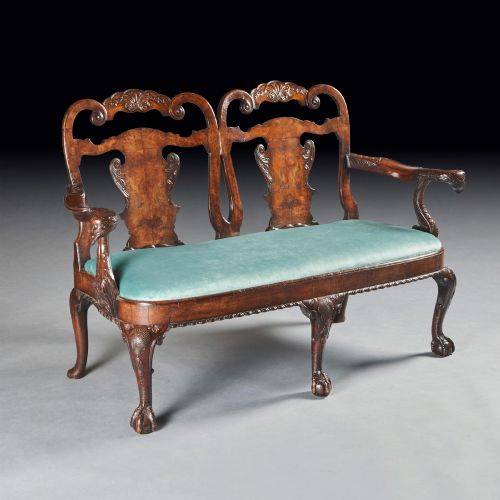
Queen Anne style walnut chairs feature restrained cabriole legs, pad feet, and vase-shaped splats that emphasise clean, curving lines. They prioritize understated domestic comfort and fluid wooden contours.
Louis XV style pieces display more exuberant carving, asymmetrical rococo motifs, scroll feet, and exposed upholstered frames designed for formal French salons.
How should I care for cane panels on chairs?
Cane seating requires occasional light dampening with a sponge on the underside to maintain humidity and prevent the natural fibres from becoming brittle. Keeping the chairs away from intense heat sources stops the material from drying out.
Weight distribution also matters, as antique cane is delicate and performs best when sat upon with care rather than subjected to sudden kneeling or heavy drops.