

Antique Style Wall Lights
These antique style wall lights bring period illumination and decorative metalwork into domestic spaces.
Antique Style Wall Lights
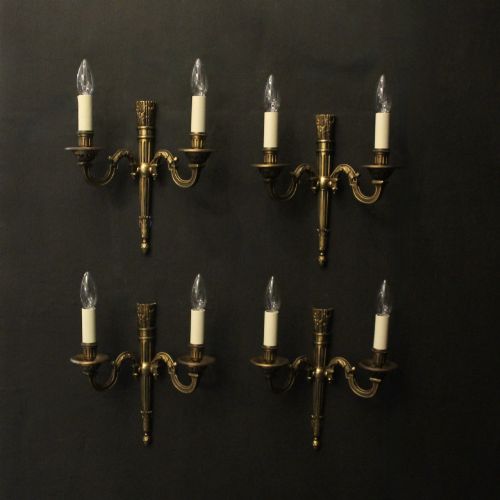
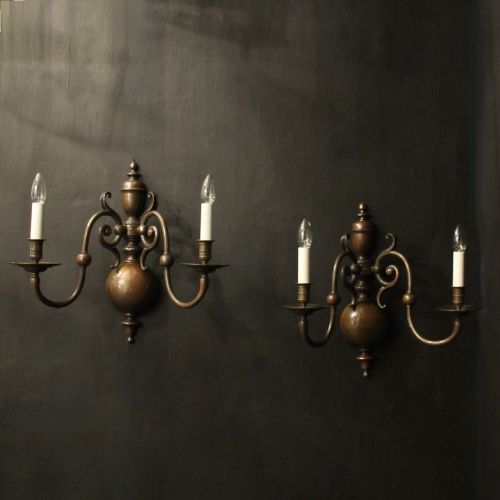
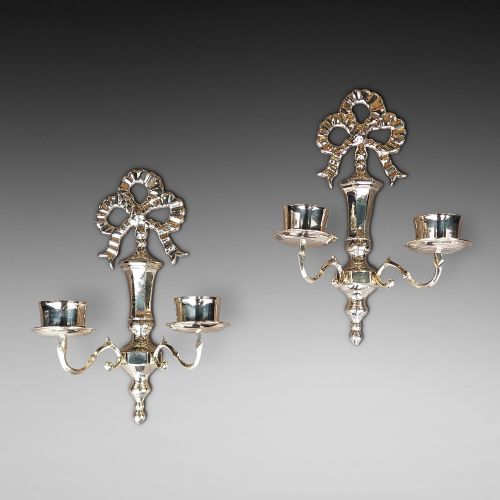
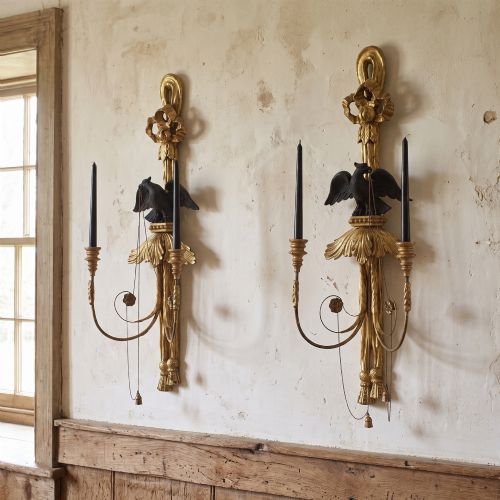
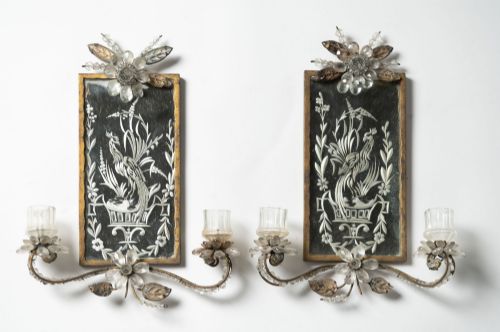
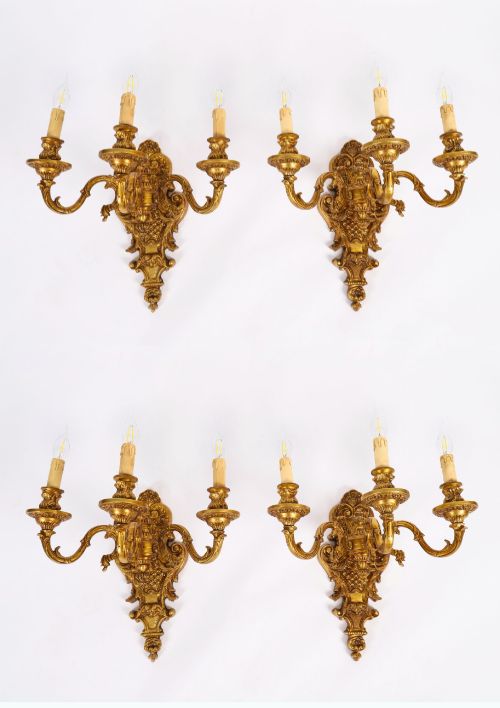
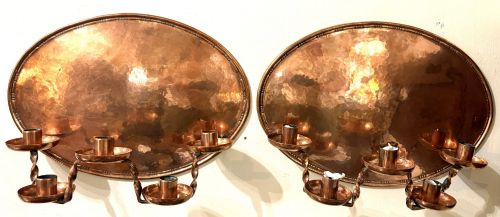
When you search for antique style wall lights, you encounter wall sconces, girandoles, wall lanterns and mirrors spanning the nineteenth and early twentieth centuries. These fixtures appear primarily as pairs or larger sets originating from French, English, and Italian workshops.
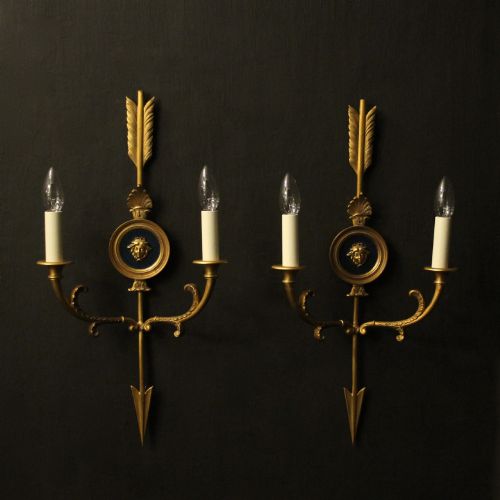
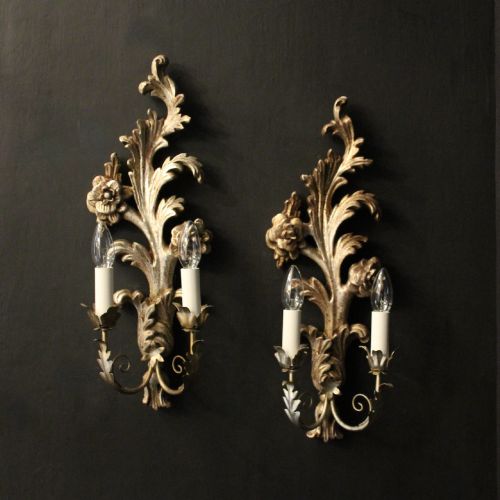
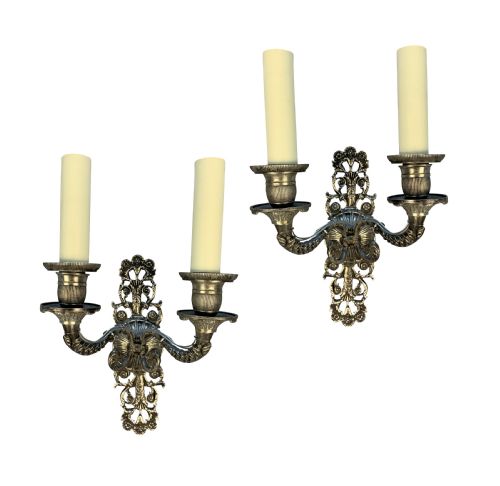
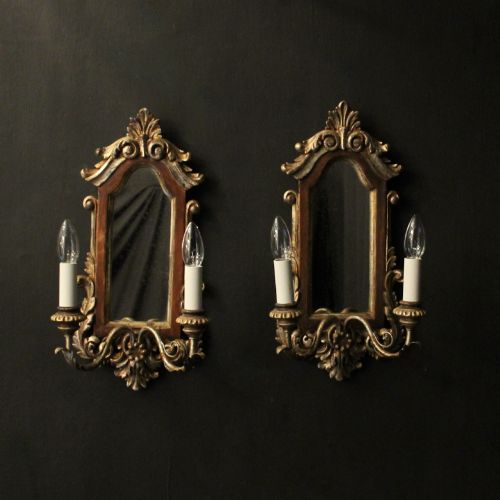
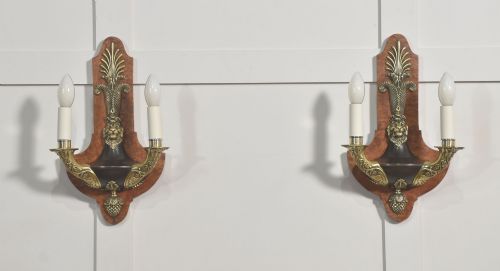
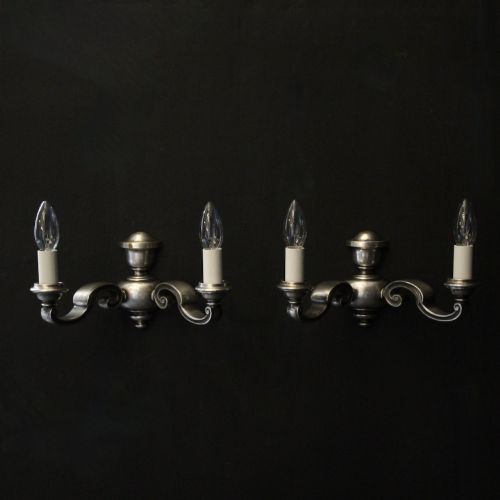
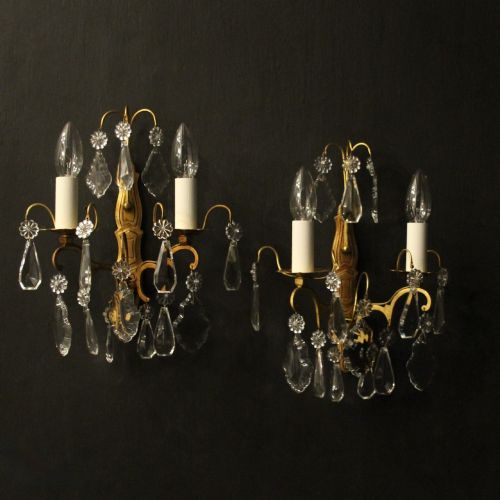
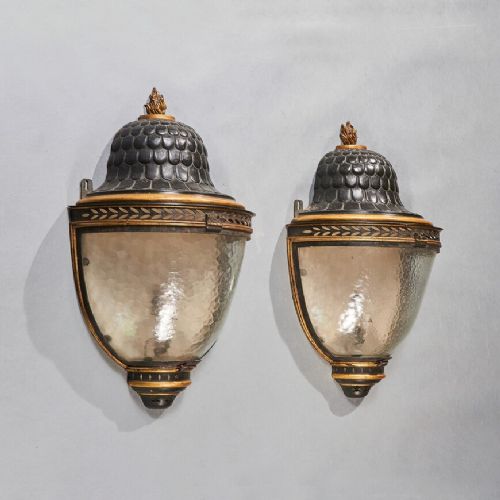
The most common examples on this page utilise gilded brass, bronze, or carved giltwood, reflecting classical revival styles such as French Empire, Louis XVI, and Rococo. Forms range from twin-arm candle sconces to multi-branch crystal fixtures and copper coach-house lanterns.
Materials and Technique
Makers utilised cast bronze, brass, copper, and carved wood, applying gilding, silver plating, or patination to achieve decorative finishes. Ormolu and gilt bronze components provide metallic lustre, while tole peinte incorporates painted sheet metal.
Assembly methods combine cast metal arms and backplates with hand-carved giltwood frames, Murano glass elements, and porcelain flower details. Wiring is frequently added later to adapt candle sconces and lanterns for electric lighting.
Materials span copper, brass, giltwood, burr walnut, and crystal, alongside cast bronze and ormolu.
Gradations in Execution
The distinction between tiers rests upon the crispness of the casting and the depth of the chasing in metals like ormolu and bronze. Superior examples display sharply defined ornamentation and substantial weight in the backplates and arms.
In carved wood pieces, quality depends upon the intricacy of the giltwood detailing and the preservation of the original gilded surface. Castings with softer definition or later, heavy-handed overpainting indicate a simpler level of production.
Maison Baguès·Casier·Villeroy & Boch
The Antique Style Wall Lights Glossary
- Ormolu
- Gilded bronze produced by applying a mercury and gold amalgam to a bronze casting and firing it. This technique creates a durable golden finish characteristic of French decorative objects.
- Girandole
- A branched wall light incorporating a mirror backplate to reflect and amplify candlelight. These pieces combine illumination with decorative glass or giltwood frames.
- Sconce
- A wall-mounted lighting fixture designed to hold candles or electric lamps. They frequently feature multiple branches and elaborate backplates.
- Tole Peinte
- Painted or enamelled sheet metal utilised for decorative lanterns and shades. It allows for applied colour and metallic highlights.
- Applique
- A wall-mounted light fixture or decorative wall ornament placed flat against a surface. The term is frequently applied to continental bronze and gilt metal pieces.
Antique Style Wall Lights: Frequently Asked Questions
How do I wire antique wall lights?
Many wall lights designed for candles or early gas were subsequently adapted for electricity by feeding internal wiring through the arms. A qualified electrician can inspect the existing channels and fit modern lamp holders safely.
Original backplates often retain mounting holes that align with standard wall junction boxes, though professional installation ensures the weight of heavy bronze or giltwood pieces is properly supported.
How do I clean gilded bronze and ormolu?
Dust surfaces gently with a soft, dry brush to prevent the accumulation of grit in the chased details of ormolu and gilt bronze. Avoid using chemical metal polishes, which can strip away thin layers of historical gilding.
Warm water applied sparingly with a soft cloth suffices for removing surface grime, provided the piece is dried thoroughly afterwards.
How do I distinguish French Empire style from Rococo?
French Empire style relies on classical symmetry, military motifs, and austere architectural lines influenced by antiquity. Ormolu mounts on these pieces feature acanthus leaves, urns, and geometric precision.
In contrast, Rococo revival designs embrace asymmetrical scrollwork, naturalistic floral elements, and flowing C-scrolls. The overall silhouette feels more organic and exuberant than the controlled symmetry of the Empire period.
Were these lights originally intended for candles?
Numerous nineteenth-century wall lights and sconces were manufactured specifically to burn wax or tallow candles before gas and electric lighting became widespread. Sockets and drip pans are typically sized for taper candles.
Later adaptations frequently insert faux candle sleeves housing small electric bulbs into these original drip pans to maintain the historical appearance.