


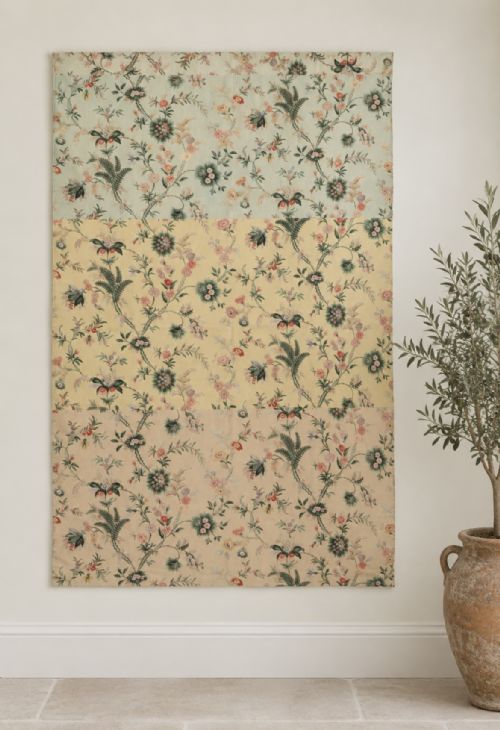
Antique Style Textile Hanging
These antique style textile hanging selections bring historic woven artistry and embroidery directly to your walls, transforming plain rooms with centuries of texture.
Antique Style Textile Hanging
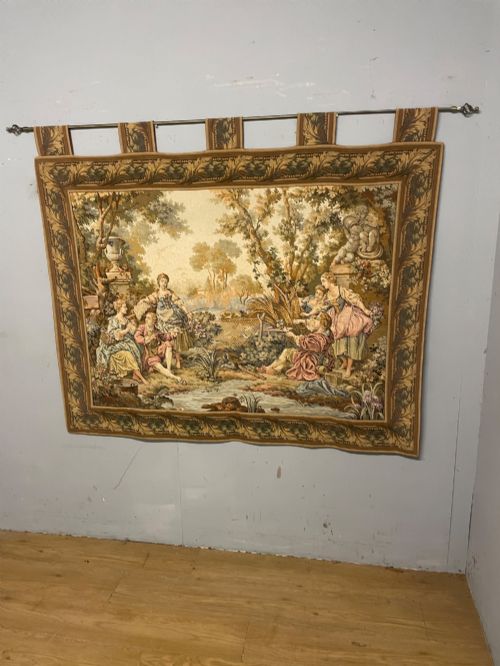
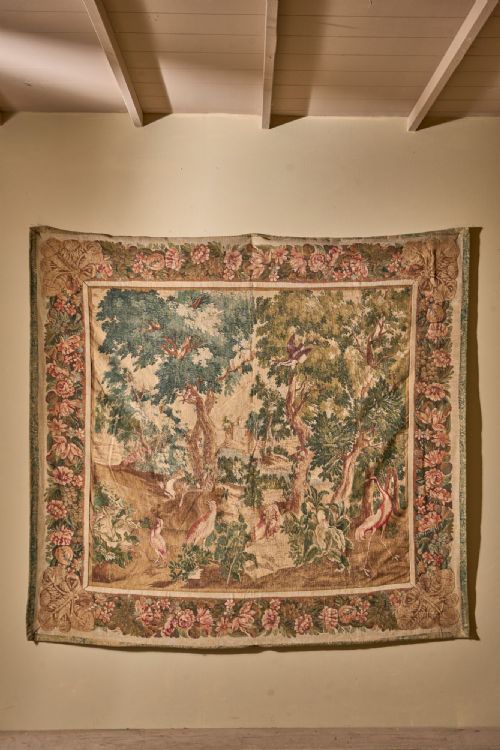
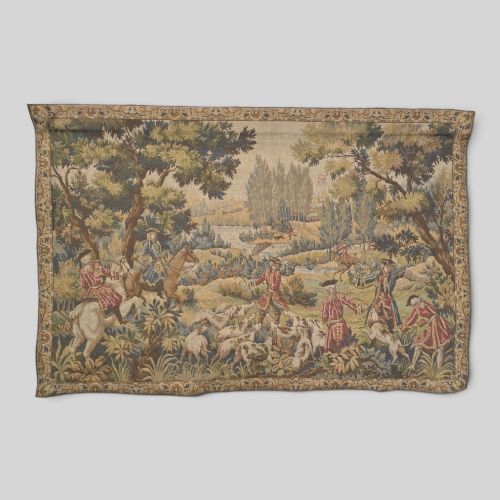
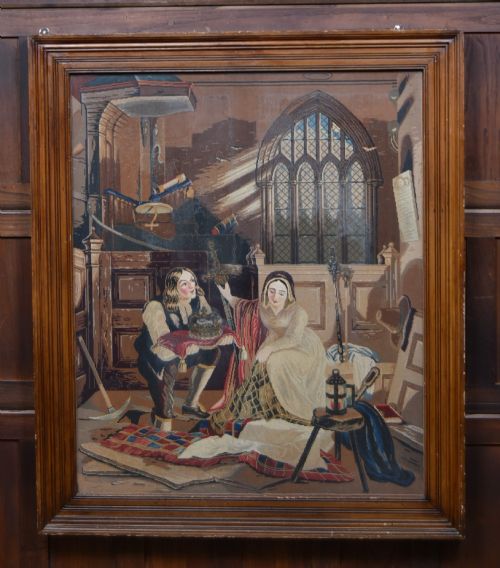
An antique style textile hanging encompasses woven wall tapestries, embroidered panels, and tribal bag faces that bring historical depth to interior spaces. When exploring this selection, buyers encounter large framed French tapestries, Flemish panels, needlework pieces, and detailed textile art ranging across multiple centuries.
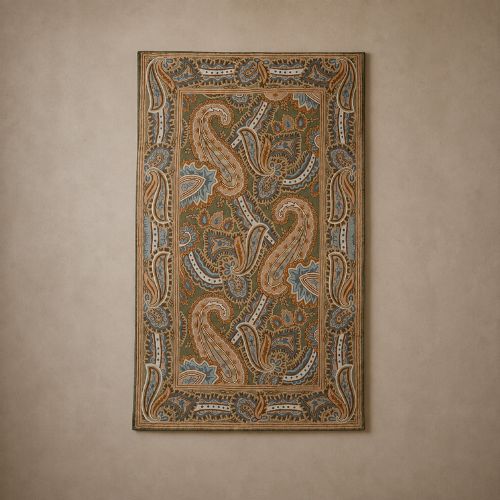
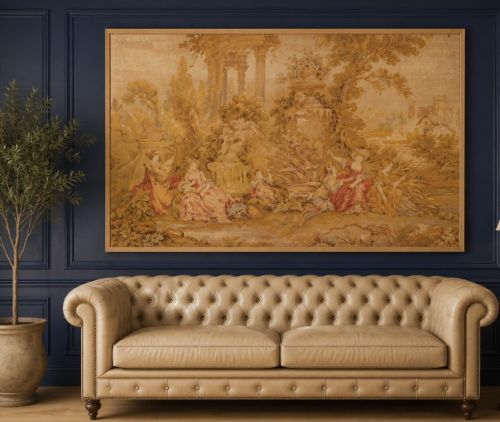
The assortment on this page leans heavily toward French pastoral and baroque wall coverings alongside Persian tribal weavings and embroidered Indian velvets. Pieces vary from room-sized wall art down to narrow pilaster hangings and smaller ceremonial horse covers.
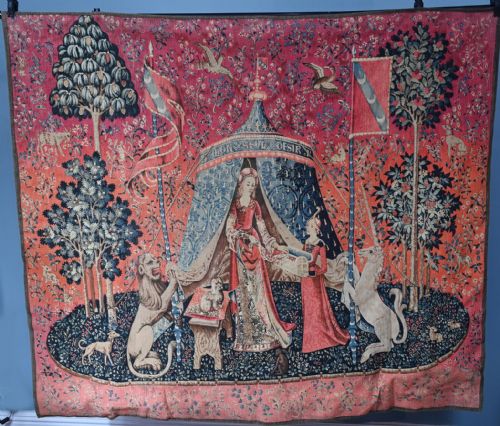
Originating from periods spanning the sixteenth century through the early twentieth century, these hangings reflect diverse regional workshops and traditions. Collectors find medieval-style mill-fleurs designs alongside Jacobean revivals, Gothic influences, and regional tribal compositions.
Materials and construction methods
These textiles utilise natural fibres including wool, cotton, silk, linen, and velvet, often supported by wooden frames or mounted on board. Many pieces incorporate dense embroidery, crewelwork, or traditional hand-weaving techniques executed across European and oriental workshops.
Structural elements occasionally include brass hardware or backing materials to support the heavy woven surfaces. Skilled makers combined these diverse materials to create durable wall coverings, cushions, and decorative panels designed to withstand generations of display.
Materials appearing across these textile listings include wool, cotton, silk, linen, velvet, wood, and brass.
Quality variations in historic textiles
Quality in these textiles depends heavily on the fineness of the weave, the complexity of the pictorial design, and the integrity of the base materials. Superior examples display tight, even knotting or precise needlework that maintains clear visual definition across large expanses.
The condition of the fibres and the retention of original natural dyes also separate standard decorative pieces from exceptional collector items. Superior framing and historical provenance further elevate certain wall panels above standard decorative furnishings.
The Antique Style Textile Hanging Glossary
- Tapestry
- A form of textile art woven on a vertical or horizontal loom using coloured weft threads to create a pictorial image. These wall hangings often depict pastoral scenes, historical events, or floral motifs.
- Crewelwork
- A type of surface embroidery utilising wool yarn to execute flowing floral and pictorial designs on a sturdy linen or cotton ground. This technique creates a heavily textured surface ideal for wall panels.
- Aubusson
- A style of hand-woven tapestry originating from the French town of Aubusson, typically featuring delicate pastoral or architectural scenes in muted tones. These pieces reflect classical French decorative arts.
- Bag Face
- The decorative front portion of a tribal storage sack, often preserved as a flat wall hanging or textile fragment. These items showcase traditional geometric and tribal motifs from regions such as Persia and Central Asia.
- Mille-Fleurs
- A background style characterised by a dense field of small flowers and plants scattered across the textile. This decorative convention is frequently seen in medieval and Renaissance-inspired tapestry designs.
Antique Style Textile Hanging: Frequently Asked Questions
How do I hang a heavy textile safely?
Large woven tapestries require even distribution of weight across the upper border to prevent distortion of the fibres. Many collectors utilise a custom fabric sleeve stitched to the reverse, supported by a wooden batten or metal rod fixed securely to the wall.
Smaller panels and framed textiles can be mounted using traditional picture-hanging wire attached to robust wooden frames. Ensure the chosen wall anchors are rated to support the combined weight of the textile and its wooden housing.
What is the difference between Flanders and French tapestries?
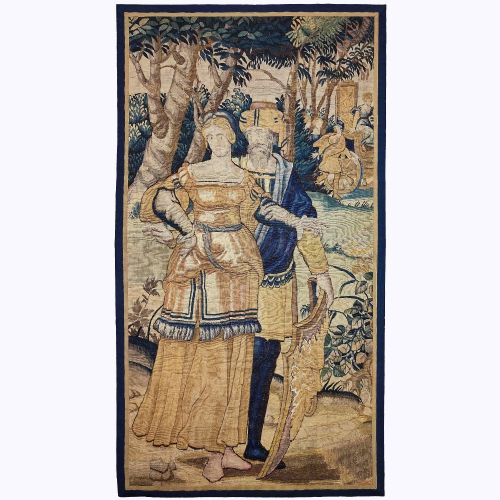
Flanders tapestries typically originate from northern European weaving centres active during the sixteenth and seventeenth centuries, often featuring dense architectural compositions or biblical narratives. The wool and silk used in these works tend to display deep, rich earth tones.
French tapestries, particularly those from later periods like the nineteenth century, often embrace lighter pastoral scenes, floral borders, or neoclassical styling. Workshops in regions like Aubusson developed distinct tonal palettes focused on elegance and decorative harmony.
What are tribal bag faces?
Tribal bag faces are the surviving decorative fronts of nomadic storage sacks created by groups such as the Yomut Turkmen, Jaf, and Lakai tribes. These pieces were originally utilised for practical storage within tents or during migration before being preserved as decorative wall hangings.
They are characterised by distinctive geometric patterns, symbolic tribal motifs, and saturated natural dyes. Their compact size makes them accessible examples of nomadic textile art for modern interiors.