
Antique Style Table Clock
An antique style table clock brings mechanical precision and period character to a mantelpiece, offering decorative presence alongside traditional timekeeping.
Antique Style Table Clock
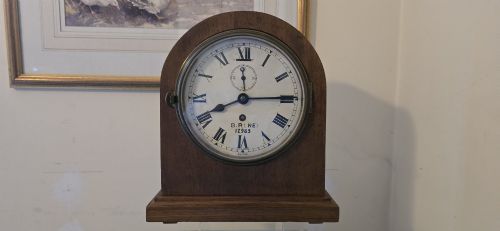
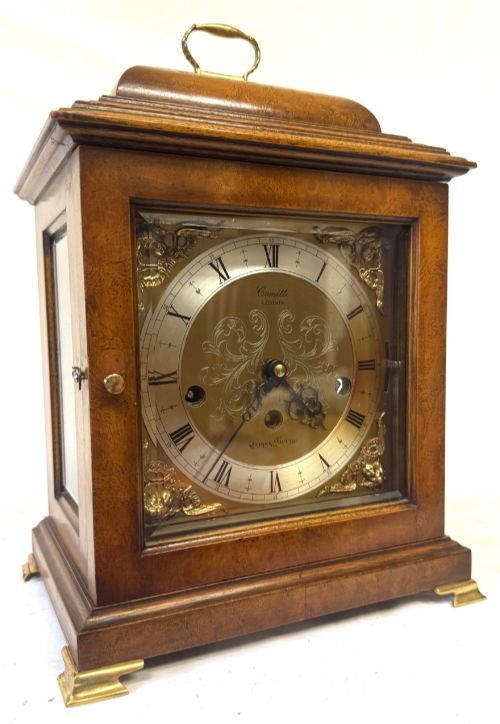
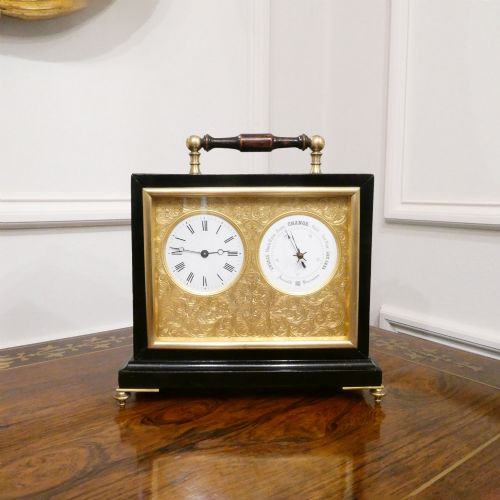
When searching for an antique style table clock, buyers encounter a diverse selection of nineteenth and early twentieth century horology designed for domestic interiors. These timepieces encompass mantel clocks, carriage clocks, and miniature bracket clocks originating primarily from French and English workshops.
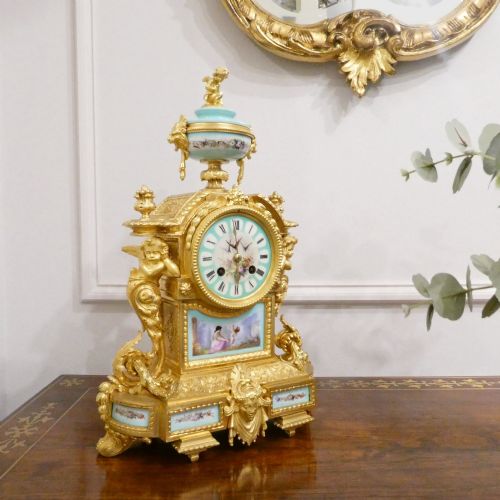
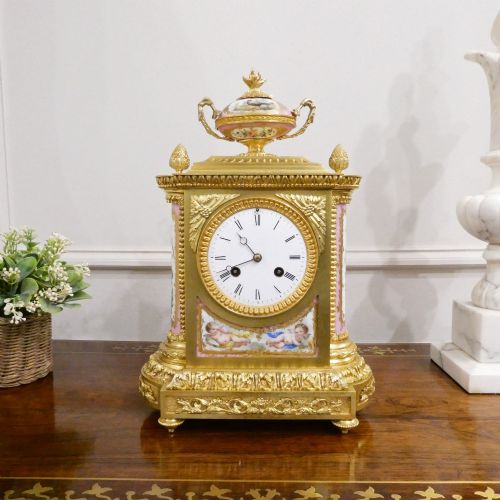
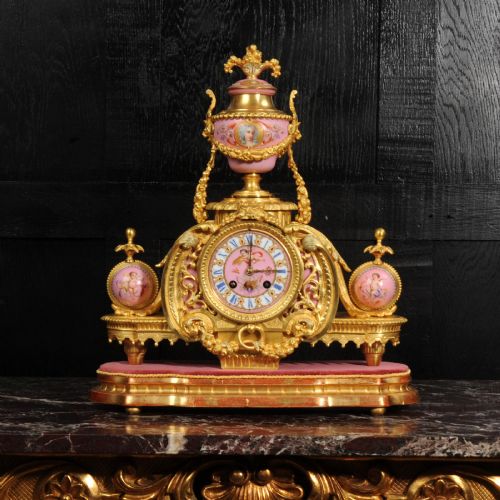
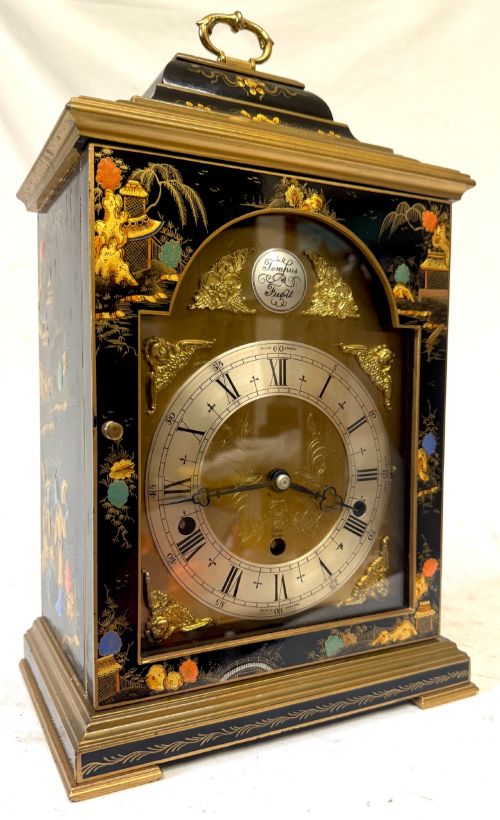
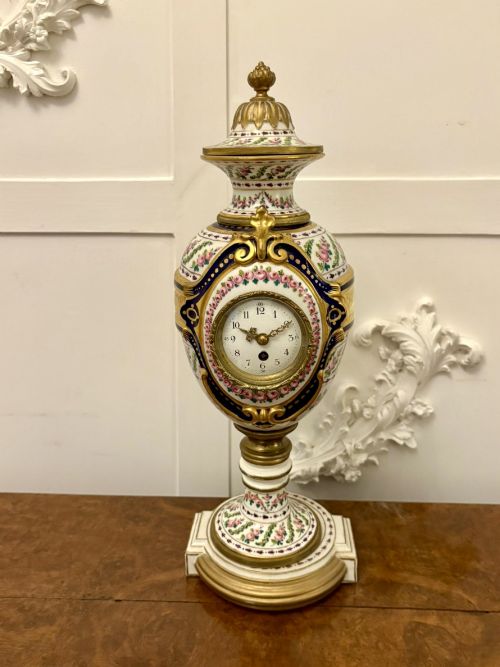
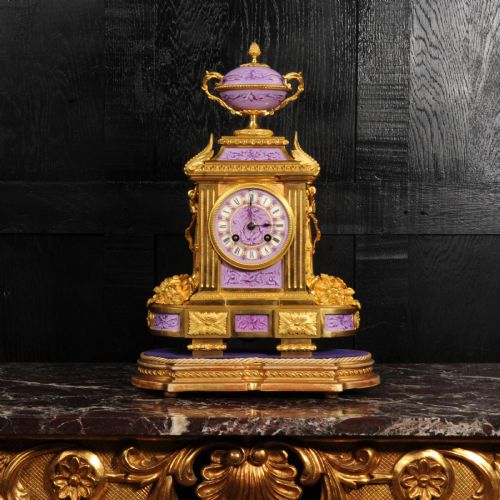
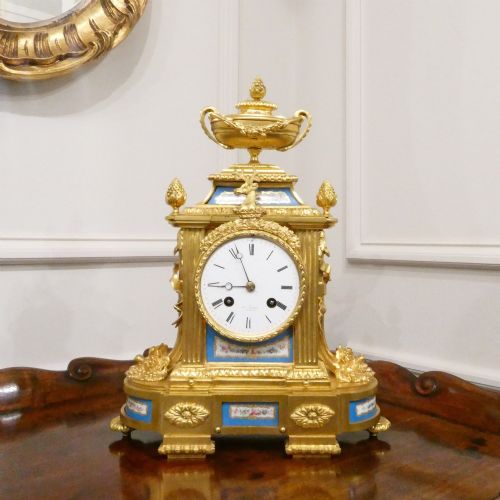
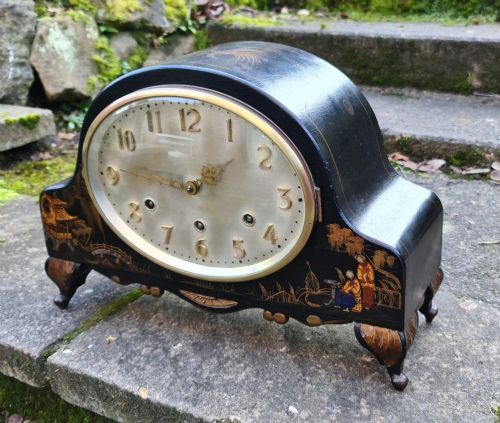
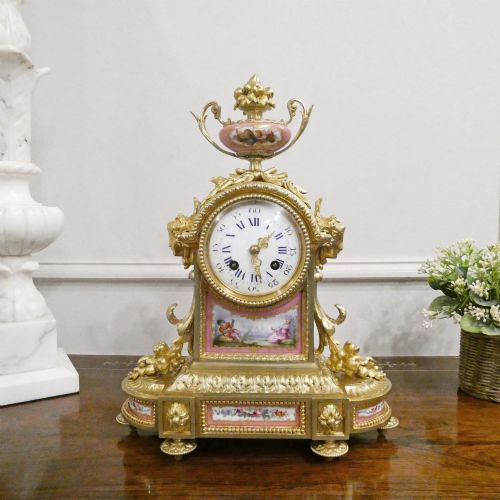
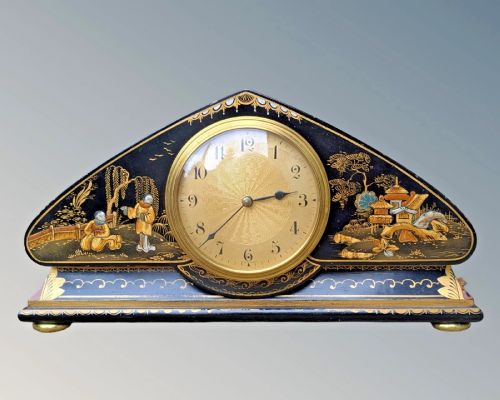
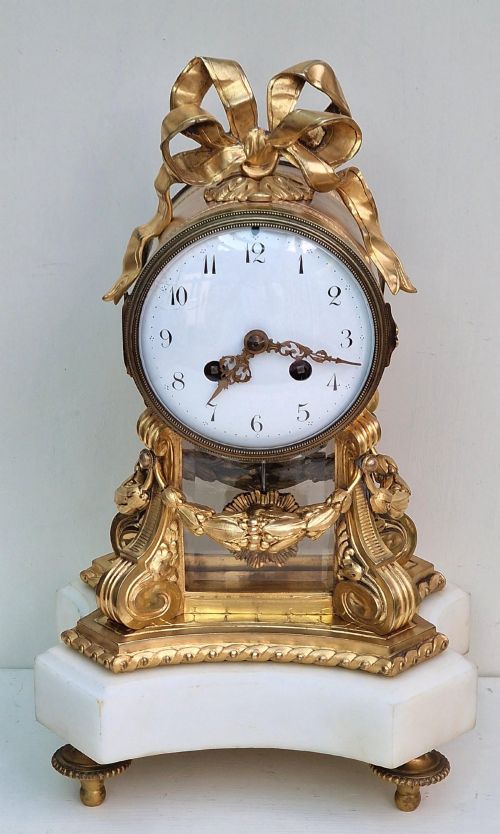
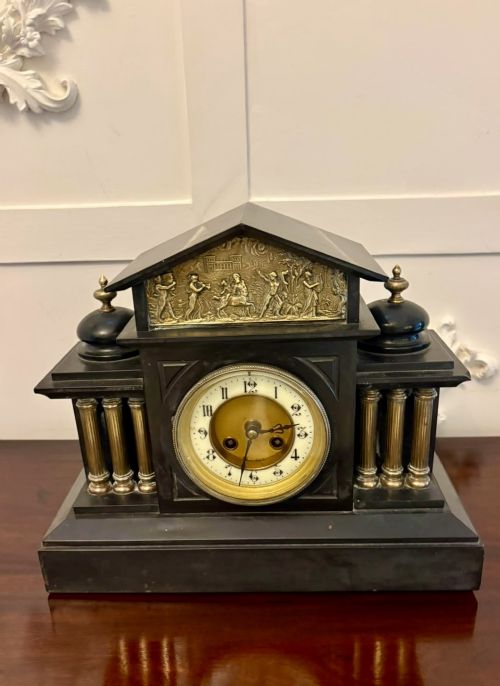
The dominant forms on this page include nineteenth-century French mantel clocks decorated with porcelain panels, alongside architectural marble pieces and inlaid mahogany or rosewood Edwardian designs. Makers utilised decorative styles ranging from French Rococo Revival and Louis XVI to Chinoiserie and Egyptian Revival.
Objects often appear as single mantel pieces or accompanied by matching garnitures such as urns or candelabra. Buyers select these works for their decorative housing and historical association with Victorian, Edwardian, and earlier aesthetic movements.
Distinctions in Quality
The distinction between standard production and superior craftsmanship rests in the weight of the bronze castings, the crispness of the chasing on ormolu mounts, and the fidelity of hand-painted porcelain details. Maker signatures on movements and dials elevate a piece, reflecting the reputation of established horological houses.
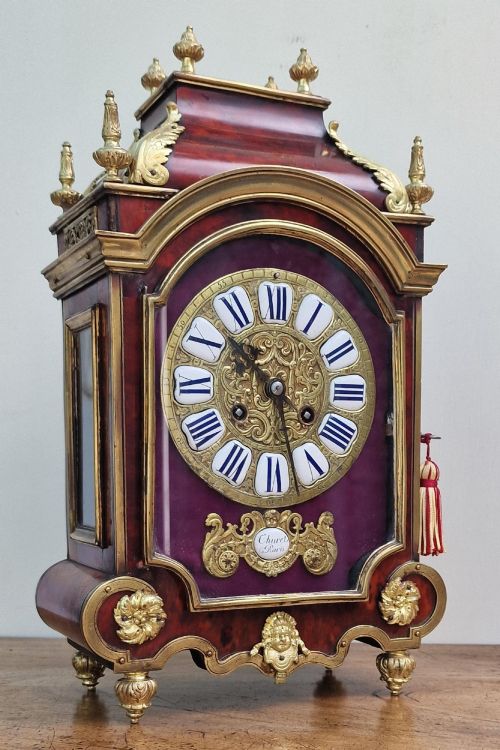
The integration of the clock case with its decorative elements determines overall refinement, where matched marble housings, intact mercurial gilding, and original tortoiseshell veneers demonstrate superior original manufacture.
Elephants occasionally support the time, as seen in nineteenth-century French bronze and ormolu clocks fashioned in whimsical animal forms.
Achille Brocot·Henry Marc·Japy Freres·Thuret·Mappin and Webb·Vincenti·Etienne Lenoir·Richard Winter·Baetens London·Rodier
The Antique Style Table Clock Glossary
- Ormolu
- A technique of applying finely ground, high-carat gold to a bronze base using mercury amalgamation. This produces a rich, durable golden finish characteristic of decorative French clock cases.
- Boulle
- A form of marquetry developed in France utilising tortoiseshell and brass inlaid in intricate floral or scroll patterns. It decorates the wooden cases of high-status period mantel clocks.
- Garniture
- A set consisting of a central clock flanked by matching decorative objects such as vases, urns, or candelabra. These sets were designed to sit harmoniously on a mantelpiece.
- Carriage clock
- A small, portable spring-driven timepiece equipped with a carrying handle and glass panels. They were originally designed for travel during the nineteenth century.
Antique Style Table Clock: Frequently Asked Questions
What is an antique style table clock?
An antique style table clock is a spring or weight-driven timepiece designed to sit on a flat surface like a mantel, shelf, or bracket. These pieces combine functional movement with decorative cases made from marble, metal, or wood.
Such clocks reflect the aesthetic movements of the nineteenth and early twentieth centuries, serving both to tell time and to ornament domestic interiors.
How do I wind my clock?
Winding requires inserting a matching key into the winding arbours on the dial and turning gently until resistance is felt. Care must be taken not to overwind the mainspring.
Different movements require different intervals, ranging from daily to eight-day runs, depending on the complexity of the gear train and striking mechanism.
Where should I place a mantel clock?
Mantel clocks suit stable, level surfaces away from direct sunlight, extreme temperature fluctuations, and damp environments. Wooden and marble cases require a solid foundation to maintain correct beat.
Placing the clock away from active household traffic protects delicate glass bezels, exposed escapements, and protruding decorative garnitures from accidental knocks.
How do I identify the period of a clock?
Period identification relies on examining the combination of materials, stylistic motifs, maker signatures, and movement construction techniques. Victorian and Edwardian pieces often display distinct revival styles.
Signatures on the dial or movement backplate provide direct links to specific makers and active working dates recorded in horological archives.