
Antique Style Oval Table
An antique style oval table brings curved timber and proportion into a room, spanning dining pieces and smaller occasional forms.
Antique Style Oval Table
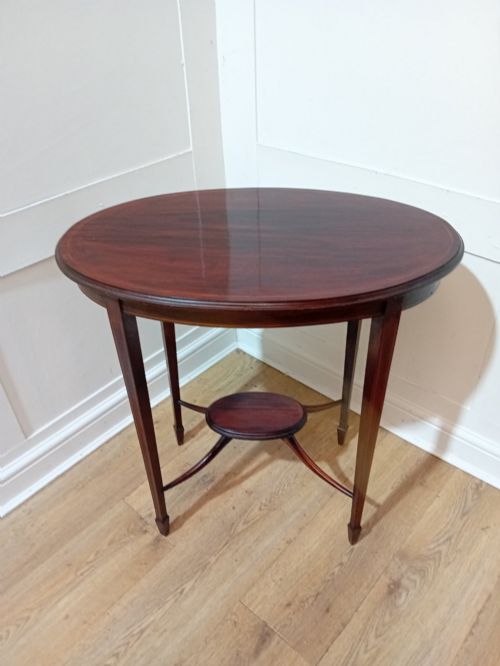
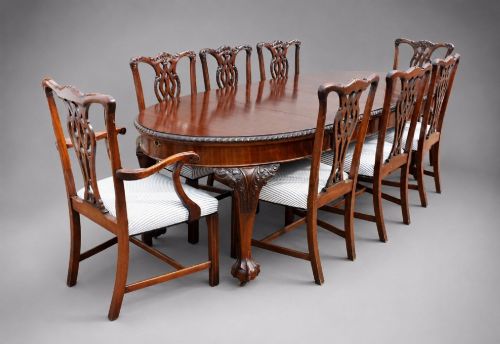
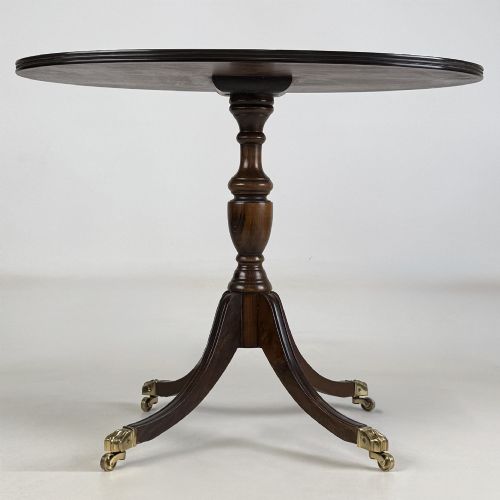
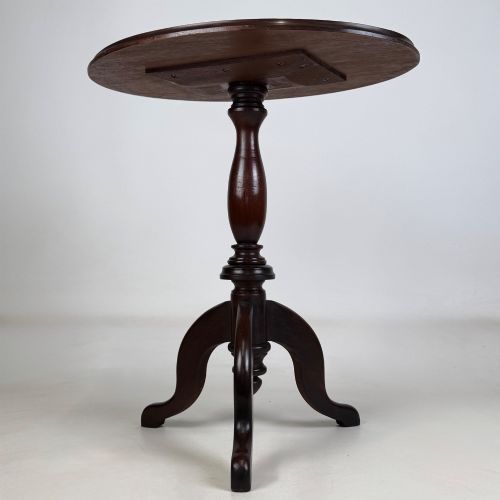
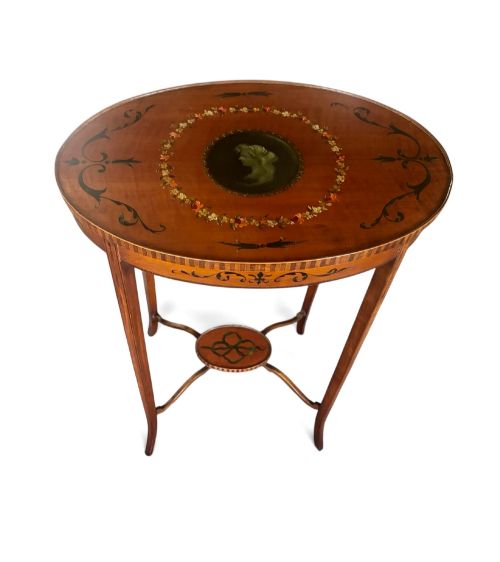
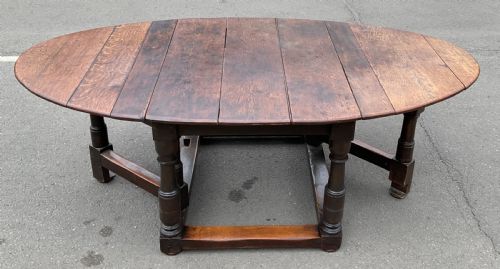
An antique style oval table encompasses a range of domestic forms from dining tables to occasional tables, side tables, and coffee tables. The pieces span periods from the eighteenth century through the Victorian era, the Edwardian period, and into the nineteen-twenties and nineteen-thirties.
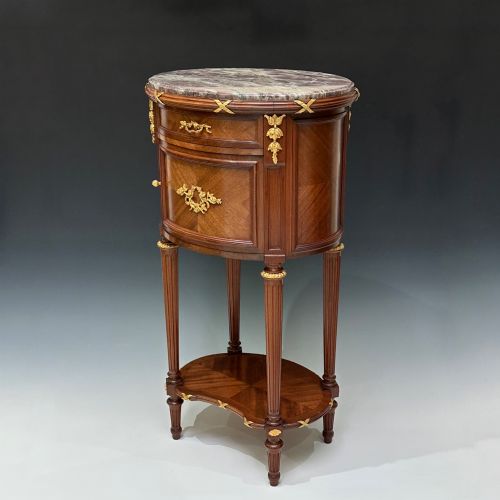
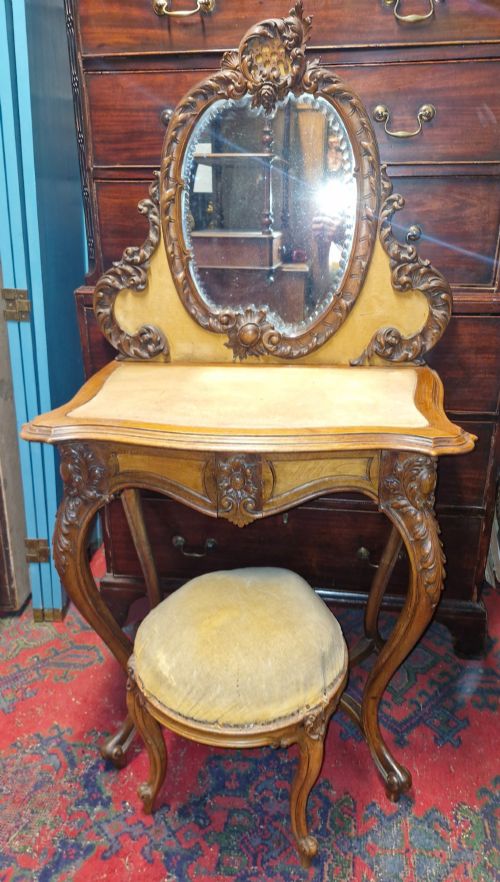
Makers and manufacturers drew upon historical idioms, producing pieces in Sheraton Revival, Regency Revival, Louis XV Style, and Rococo Revival. Buyers most frequently encounter Edwardian and twentieth-century interpretations alongside nineteenth-century examples.
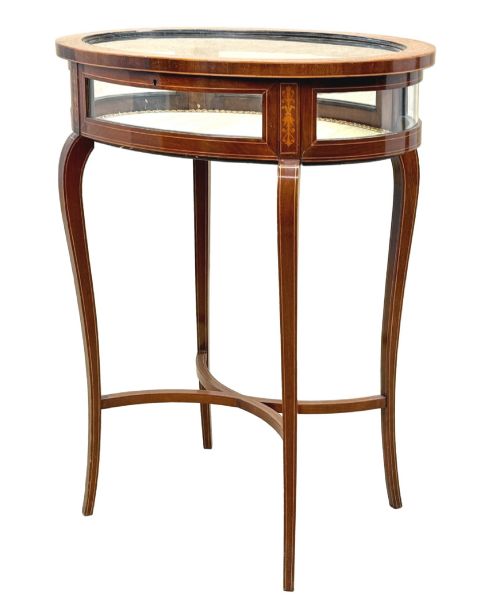
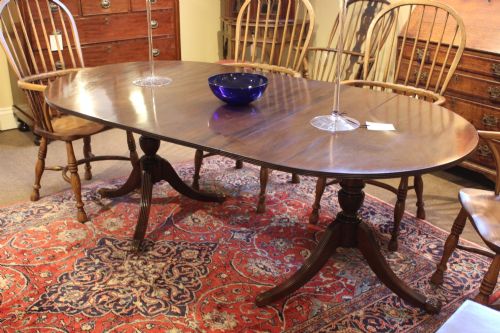
Function varied by room, from large pillar dining tables seating multiple diners down to small lamp tables, bijouterie display tables, and etageres designed for the drawing room.
Craftsmanship and Proportion
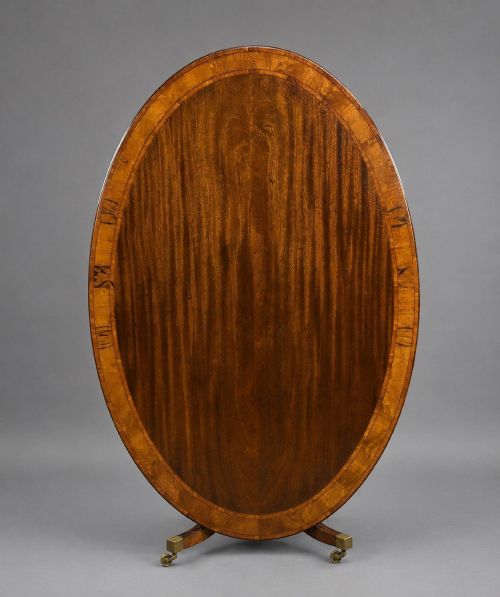
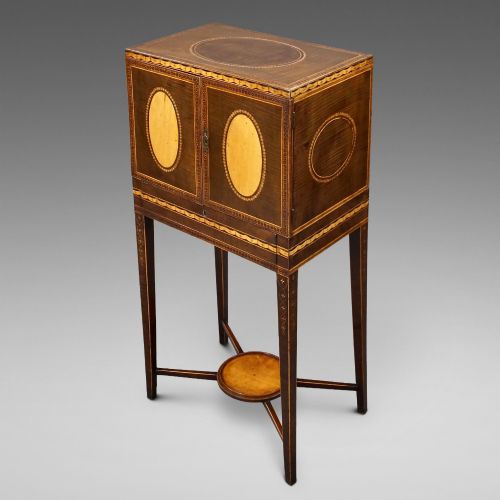
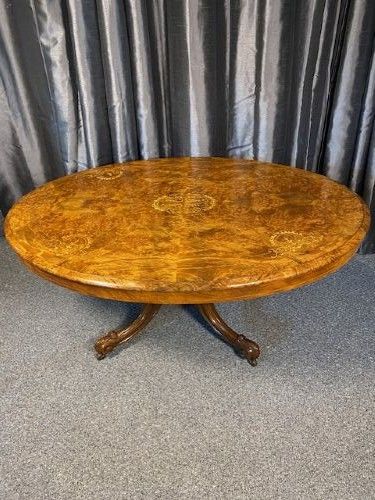
The distinction between standard commercial output and superior craftsmanship lies in the selection of timber figures, such as burr walnut or figured mahogany, and the precision of inlaid crossbanding. Fine examples demonstrate crisp carving on legs and edges, whereas lesser pieces rely on simpler turned supports.
Structural integrity depends on the stability of pillar bases or gateleg mechanisms, where tighter joints and heavier gauge brass fittings separate robust dining pieces from lighter occasional furniture.
Listings feature woods ranging from standard mahogany and oak to burr walnut, satinwood, and kingwood.
François Linke
The Antique Style Oval Table Glossary
- Crossbanding
- A strip of veneer applied to the border of a table top with the grain running perpendicular to the centre, creating a contrasting frame.
- Marquetry
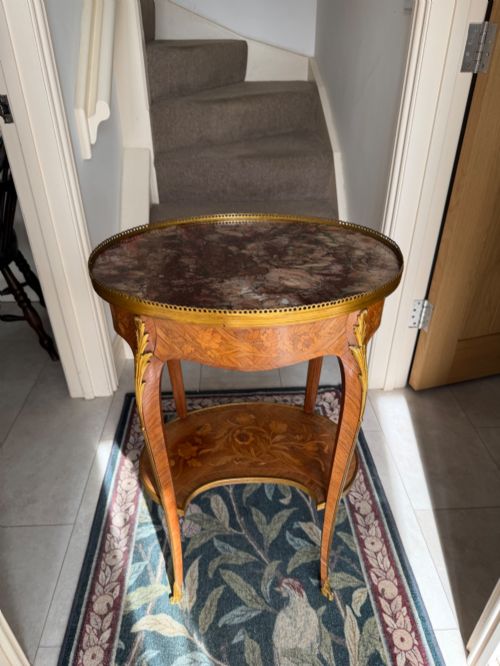
- Formed by fitting decorative pieces of wood, shell, or ivory into a veneered surface to create pictorial or floral designs.
- Ormolu
- Gilded bronze mounts applied to furniture, frequently seen on French revival tables from the nineteenth and early twentieth centuries.
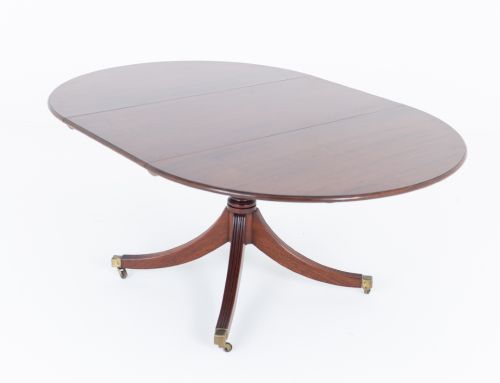
- Pillar table
- A table supported by a central column or pillars rising from a tripod base or platform feet, rather than four corner legs.
- Bijouterie table
- A glass topped display table designed to showcase small decorative objects, jewellery, and curiosities inside a glazed compartment.
Antique Style Oval Table: Frequently Asked Questions
How do I seat guests around an oval dining table?
Oval dining tables lack sharp corners, which allows more flexibility when fitting chairs along the curved perimeter.
Many extending versions accommodate extra leaves supported by central pillars, making them practical for larger dinner parties.
Where should I place an occasional oval table?
These smaller pieces work well beside armchairs or sofas where their curved edges soften the straight lines of a room.
Lamp tables and etageres also fit into corners or hallways without obstructing walkways.
How can I tell Edwardian pieces from Victorian ones?
Victorian tables often feature heavier proportions, darker finishes, and dense carving reflecting nineteenth-century revivals.
Edwardian and later pieces frequently employ lighter satinwood, painted floral decorations, and more delicate Sheraton revival influences.
What is the difference between a side table and a coffee table?
Side tables stand at a standard height for lamps and decorative items against a wall or beside seating.
Coffee tables sit lower to the ground, designed specifically to sit centrally in front of a sofa or main seating group.