

Antique Style Corner Cabinet
An antique style corner cabinet turns wasted room angles into display space with timber and glass.
Antique Style Corner Cabinet
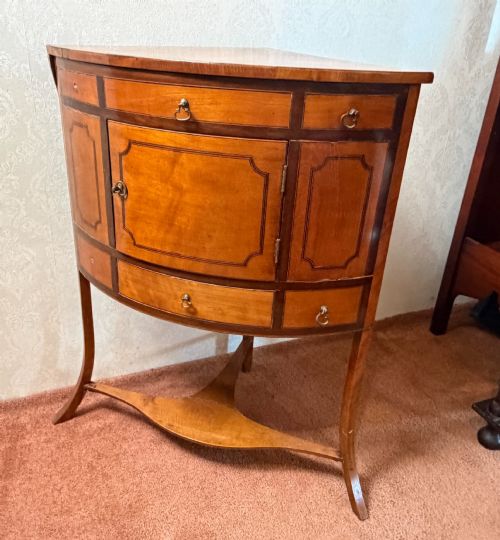
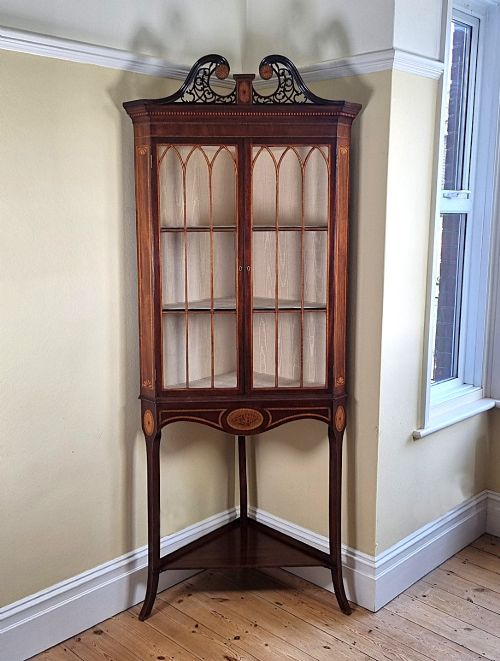
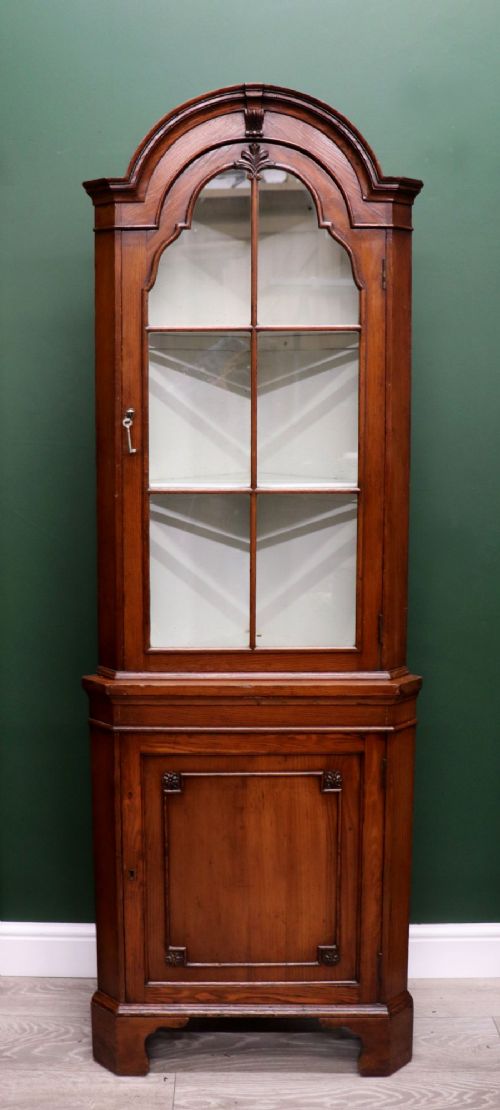
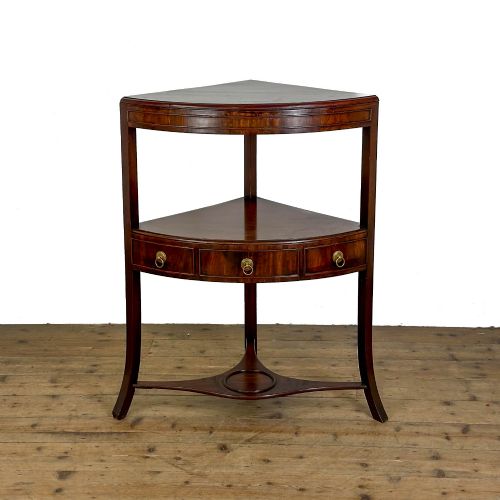
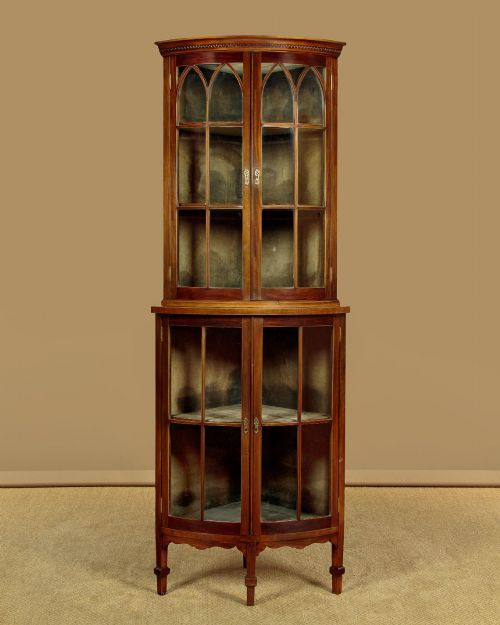
When you search for an antique style corner cabinet, you find fitted storage designed to sit flush against wall junctions in dining rooms and parlours. These pieces span centuries from the Georgian era through the Edwardian period and into the nineteen thirties, taking forms that range from hanging cupboards to large floor standing display units.
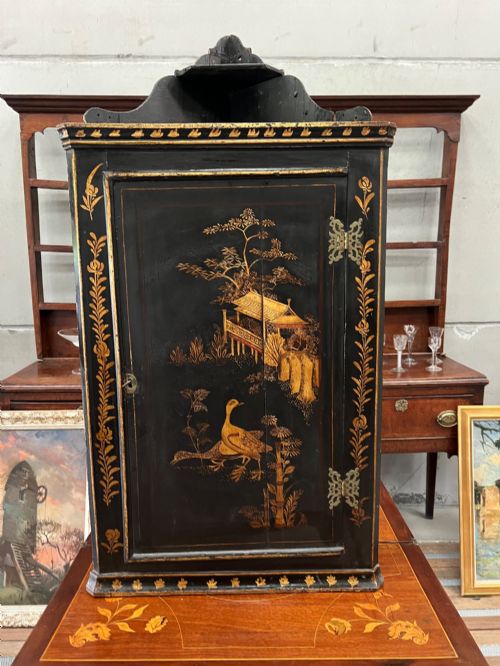
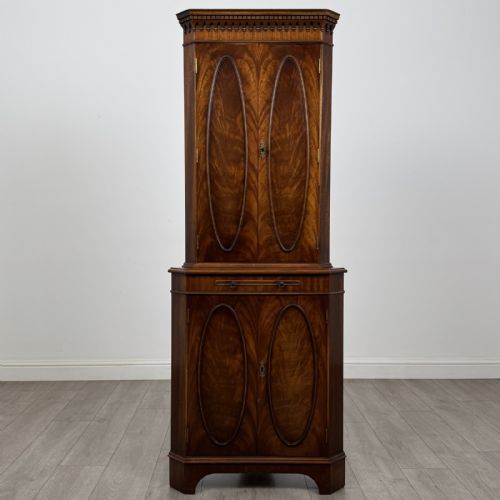
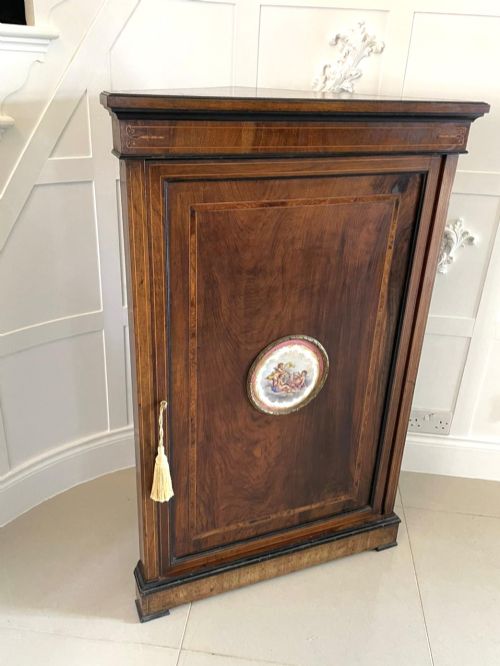
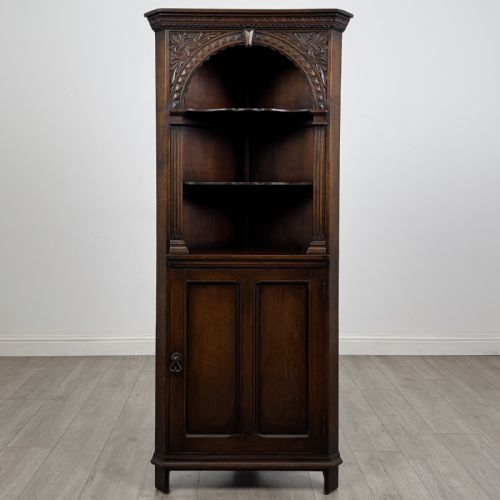
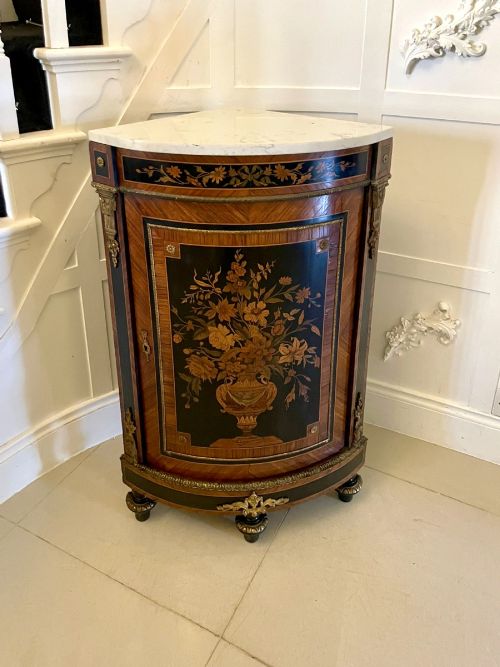
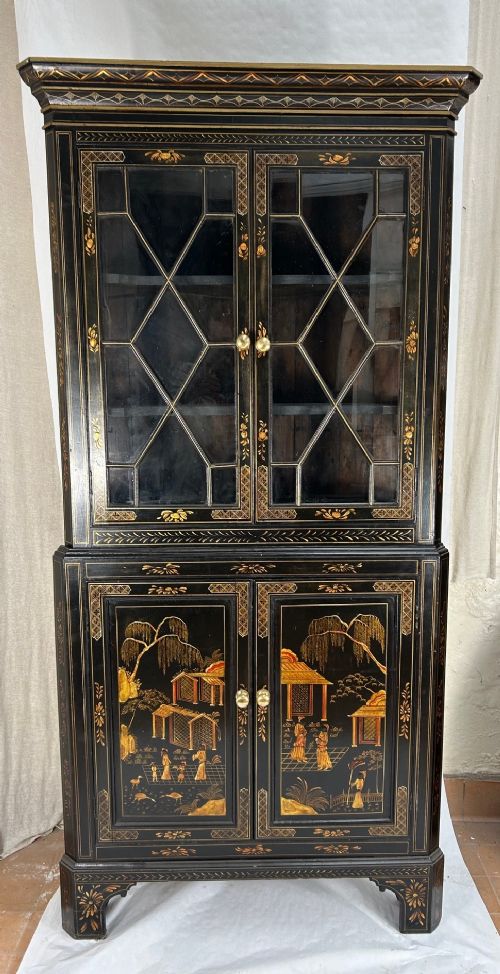
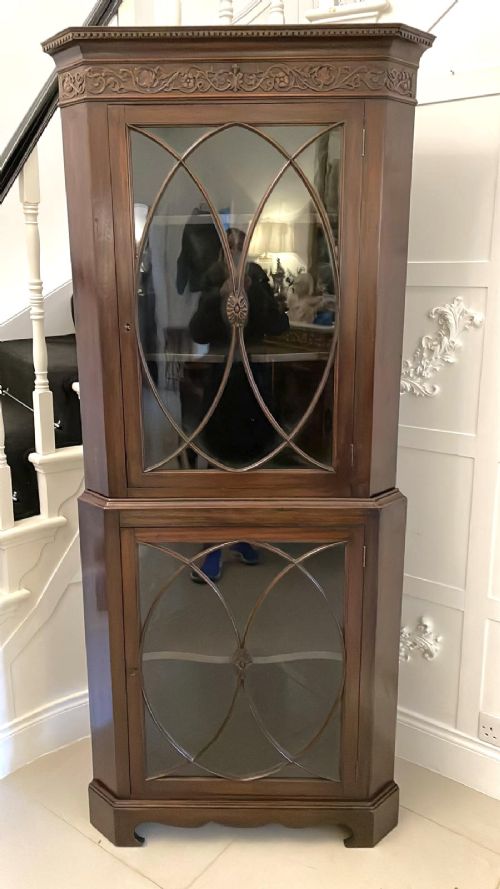
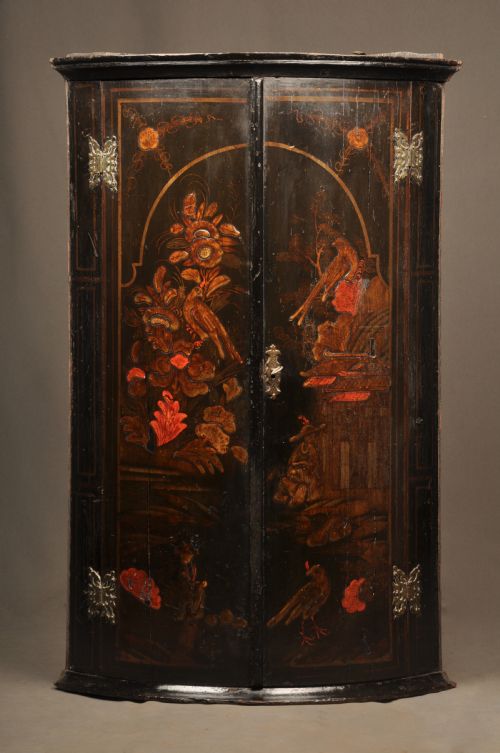
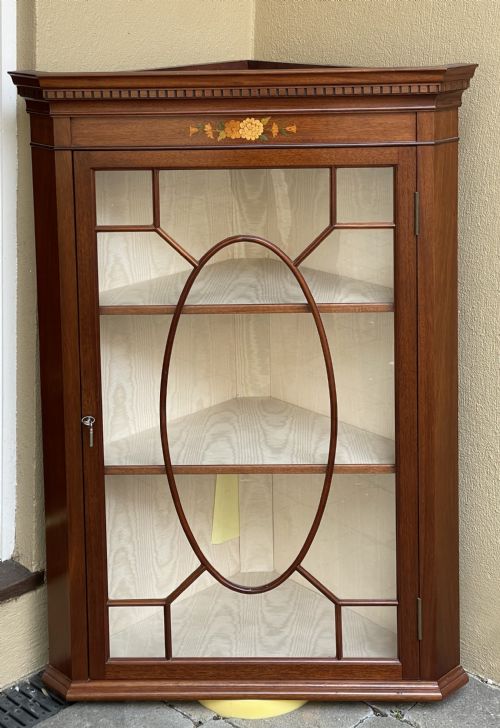
You will encounter mahogany most frequently on this page, often shaped with a bow front or fitted with glazed doors. Alongside mahogany, the selection includes japanned and lacquered surfaces in black or red, satinwood, walnut, and oak.
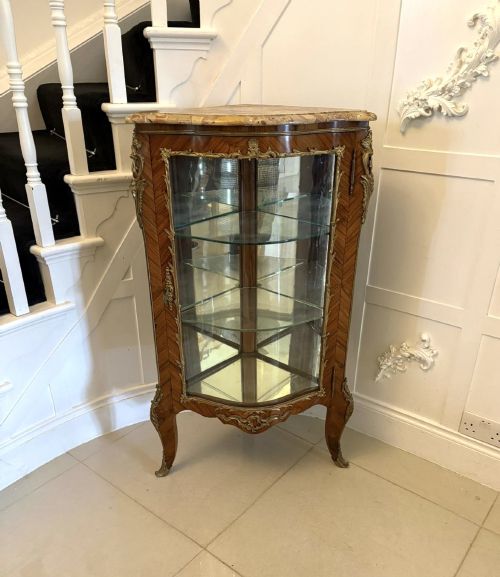
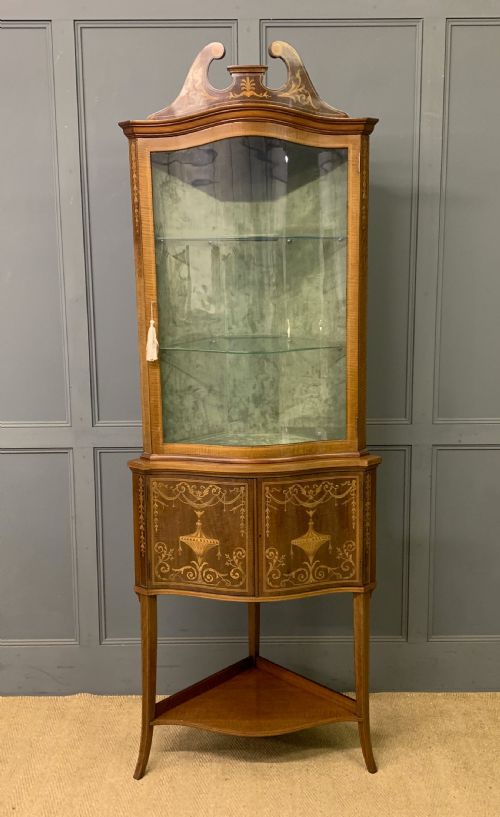
Makers adapted these forms across revival styles including Sheraton, Louis XVI, and Chinoiserie. Some pieces stand on legs or stands while others fix directly to the wall as hanging cabinets.
How they were made
Cabinet makers built these units using solid and veneered timbers such as mahogany, walnut, satinwood, and oak, often shaping the carcasses to fit right angles precisely. Glazed doors utilised timber framing like astragal bars to hold individual glass panes.
Surface decoration involved intricate techniques including marquetry inlay, japanned Chinoiserie scenes, and hand-applied lacquer. French pieces incorporated marble tops and cast brass or ormolu mounts to finish the design.
Hardware such as brass hinges, locks, and handles secured the doors while adding metallic contrast to the polished wood and dark lacquer.
Antique Style Corner Cabinet Retail Price Guide 2026
Typical asking prices for style corner cabinet among the pieces listed under this phrase on Sellingantiques today, from the lower quarter to the upper quarter. They describe what is for sale here now, not the wider market.
Some corner units hide small secret drawers behind fitted shelves for stashing quiet valuables out of sight.
What varies in quality
Quality rests in the precision of the timber matching and the crispness of any inlaid marquetry or carved detail. Superior examples show careful grain alignment across curved bow fronts and tight joinery at the wall corners.
The finish dictates much of the character, distinguishing hand-applied polish or deep lacquer work from simpler surfaces. Original glass panes, sturdy brass mounts, and well-fitted doors separate standard utility cupboards from finer reception room display pieces.
The Antique Style Corner Cabinet Glossary
- Bow front
- A convex curved cabinet front that projects outward. This shape softens the hard lines of a room corner.
- Astragal glazed
- Glass doors divided into smaller panes by narrow wooden mouldings. These strips support the glass while creating a decorative grid.
- Japanned
- European imitation of East Asian lacquerwork using layered resin and painted decoration. It often depicts figures and landscapes in gold on dark backgrounds.
- Marquetry
- Fitted pieces of contrasting wood veneer arranged to form decorative patterns. Craftsmen apply these designs to cabinet doors and cornices.
- Ormolu
- Gilt bronze mounts used as decorative trim on furniture. These metallic elements accent marble tops and door frames.
Antique Style Corner Cabinet: Frequently Asked Questions
How do I choose the right size corner cabinet?
Measure the height of your wall space and check whether you need a hanging model or a floor-standing unit. Floor-standing cabinets offer more storage while hanging versions free up floor space below.
Consider the door swing and whether you want glass panels to display items or solid timber doors to keep contents hidden.
Were these cabinets made for specific rooms?
These cabinets served primarily in dining rooms, parlours, and hallways to hold china, glassware, and books. Their triangular footprint utilised unused corner space efficiently in smaller Georgian and Victorian rooms.
Some variations included washstands designed specifically for bedrooms with basins and marble tops.
How do I care for mahogany and lacquered surfaces?
Dust regularly with a soft, dry cloth and avoid placing wooden furniture in direct sunlight or near heat sources. Excessive temperature changes can cause timber to split and veneers to lift.
Apply a traditional wax polish occasionally to nourish mahogany, but keep moisture away from lacquered and japanned finishes.
What is the difference between Georgian and revival styles?
Original Georgian pieces date from the eighteenth century and feature period construction methods and native timber patination. Revival pieces were manufactured later, such as during the Edwardian era or the nineteen thirties, copying earlier aesthetics.
Revival furniture often utilises different secondary woods and modern hardware while maintaining the classic proportions.