


Antique Study Lighting
Antique study lighting brings together functional brass lamps and wooden desks designed to illuminate workspaces across the nineteenth and twentieth centuries.
Antique Study Lighting
When you search for antique study lighting, you encounter brass desk lamps, reading lamps, and articulated bankers lamps alongside the writing desks, bureaux, and pedestal tables they illuminate. The pieces span the Victorian, Edwardian, and Art Deco periods, drawing from English and French workshops.
You are most likely to meet adjustable brass reading lamps from the nineteen-twenties alongside oak and satin birch writing desks. These functional desk accessories and writing furniture pieces reflect the working habits of domestic and professional studies from eighteen-seventy to nineteen-thirty.
Materials and construction
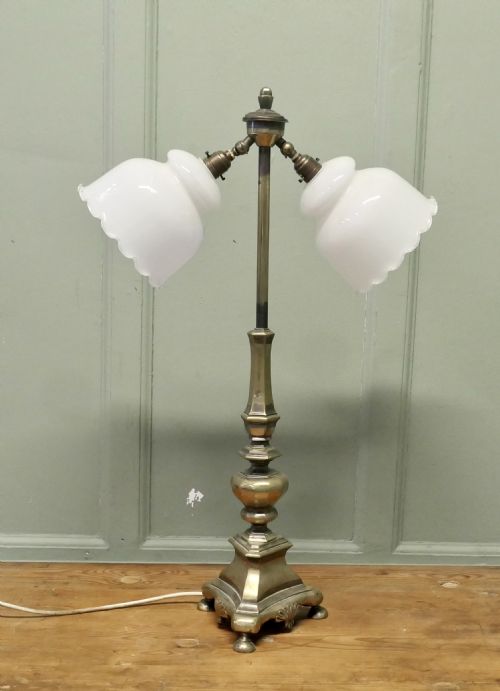
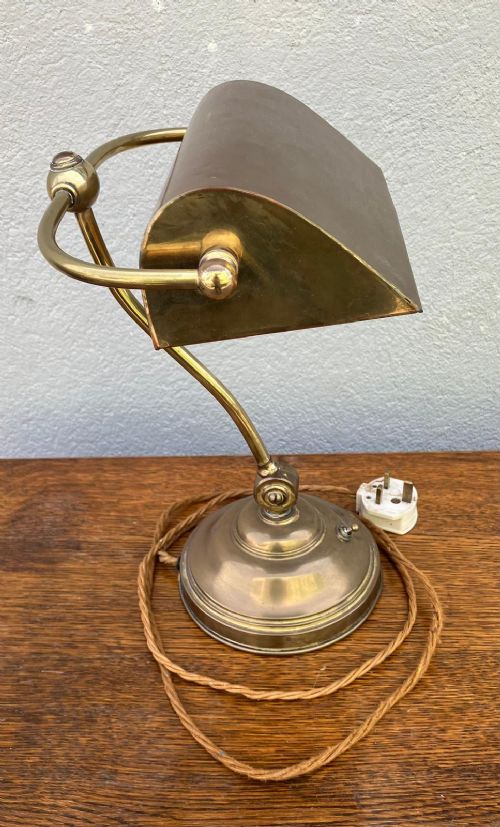
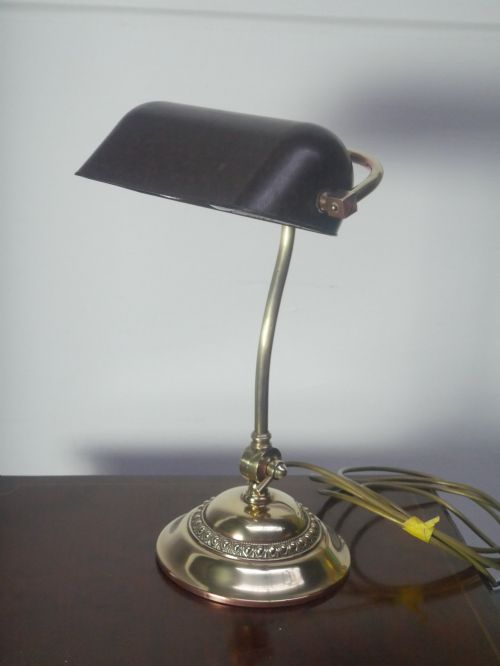
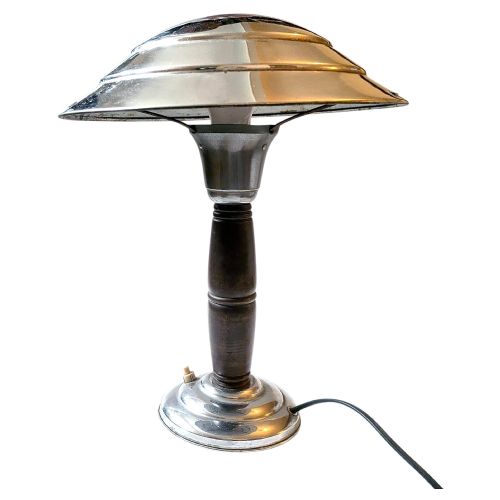
The lamps rely heavily on cast and spun brass, sometimes finished with chrome plating, nickel, or painted toleware, paired with glass shades or bakelite elements. Metal components frequently feature adjustable swan necks, flexible joints, or gimbal mounts to direct the beam.
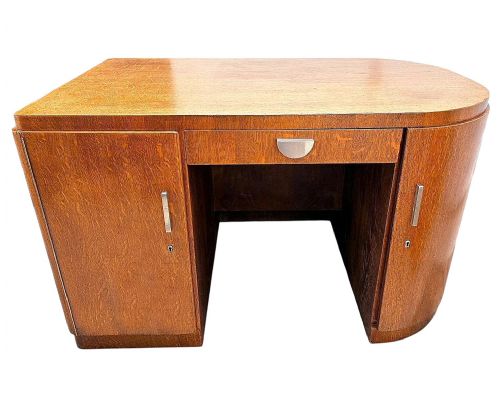
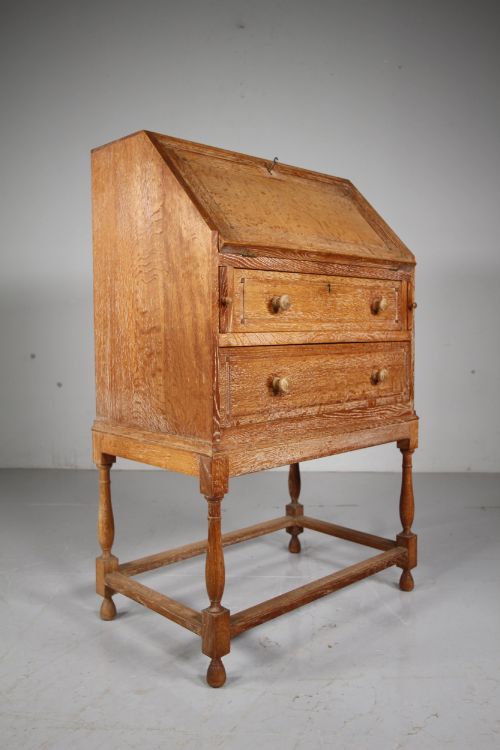
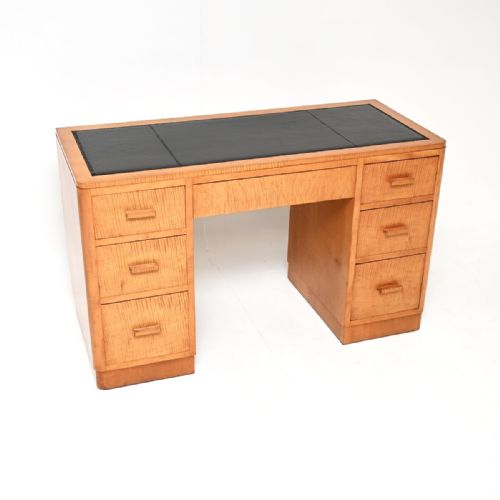
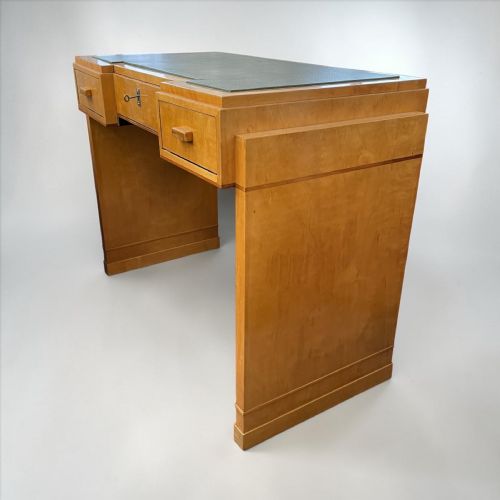
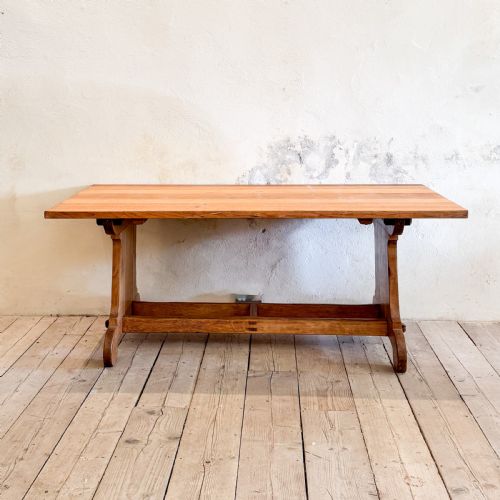
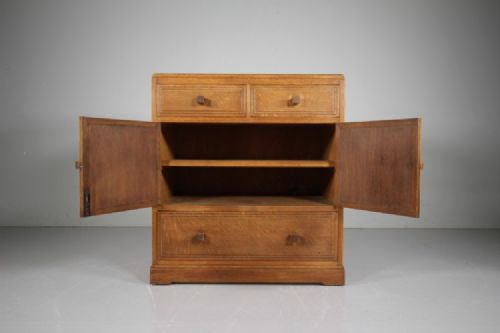
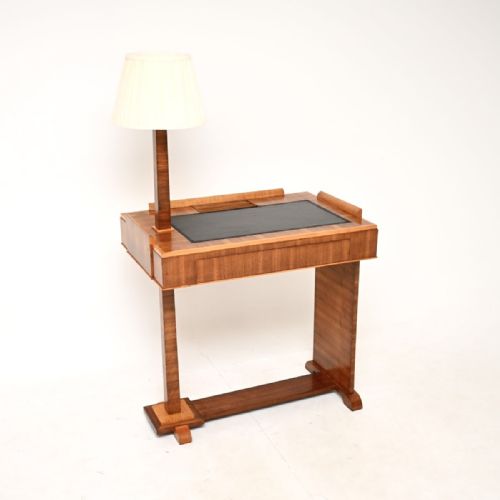
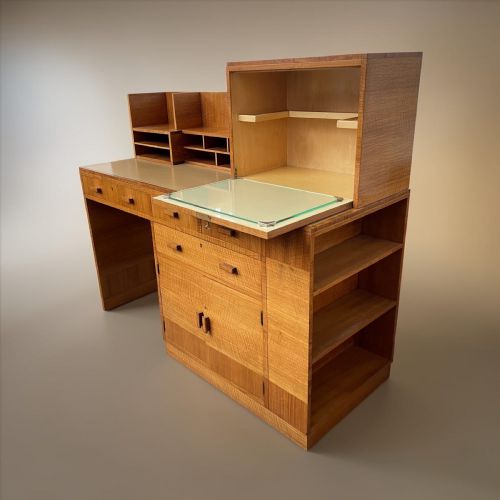
The associated desks and tables utilise solid or veneered oak, satin birch, walnut, and ash, often incorporating leather writing surfaces. Joinery techniques range from traditional drawer construction to integrated metal fittings designed to hold electrical wiring or movable lamp arms.
A French artist captured a moment of study with a canvas titled Reading on the Seafront, proving that a good lamp deserves a coastal view.
Distinctions in standard
Quality reveals itself in the weight of the metal castings, the smoothness of adjustable joints, and the retention of original shades, whether shell-shaped glass, brass, or bakelite. Heavier gauge brass and robust articulating mechanisms separate standard utilitarian pieces from finer examples.
For wooden furniture elements, the selection of timber veneers such as satin birch or walnut, combined with maker labels or documented attributions, distinguishes workshop production from standard commercial output.
Heal and Son·Wild and Wessel·Deighton and Dunthorne·Bryn Mawr·Eileen Grey
The Antique Study Lighting Glossary
- Bankers lamp
- A traditional task lamp typically featuring a heavy brass base and a green or neutral glass shade. These pieces are designed to cast focused light across a workspace.
- Gimbal light
- A pivoted ring mounting that allows a lamp or fixture to remain level despite movement. These nautical designs appear in brass and nickel-plated finishes.
- Toleware
- Enamelled and painted metalware produced in France and England during the nineteenth century. It frequently appears on desk lamp shades and bases.
- Articulated
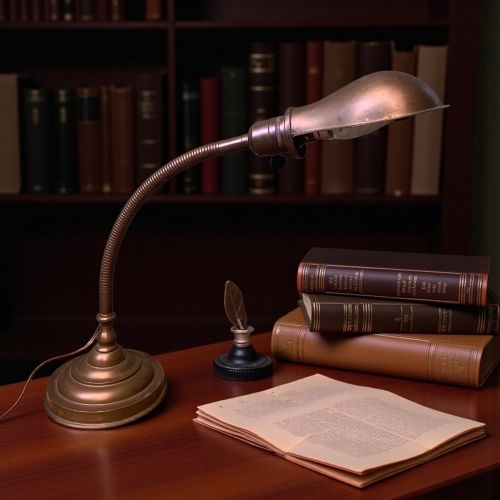
- Constructed with movable joints that allow the user to adjust the angle and reach of the light. This mechanism is common in brass reading lamps from the early twentieth century.
- Pedestal desk
- A heavy writing table supported by two vertical pedestals containing drawers. Examples in the evidence utilise oak, satin birch, and walnut.
Antique Study Lighting: Frequently Asked Questions
How do I date an antique brass desk lamp?
Dating relies on manufacturing techniques, switch types, wiring methods, and stylistic markers such as Art Deco geometric lines or Victorian ornamentation.
Makers' stamps, patents, and labels stamped into the metalwork or switches also provide precise periods of origin.
Were these lamps originally electric?
Many surviving desk lamps from the late nineteenth century used oil or gas before being converted to electricity during later decades.
Twentieth-century examples, particularly from the nineteen-twenties onward, were built to accommodate electrical cords and standard bulb fittings.
What is a bankers lamp?
A bankers lamp is a traditional desk light featuring a heavy metal base, an adjustable brass stem, and an elongated glass shade.
They were designed to provide glare-free illumination for reading ledgers and paperwork in offices and libraries.
How do I match a lamp to an antique desk?
Matching a lamp involves comparing the period and metal finish, such as unpolished brass, nickel, or toleware, with the hardware and timber of the writing table.
Proportion is also important, ensuring the height of the reading lamp complements the surface area of the desk or bureau.