





Antique Stream Artwork
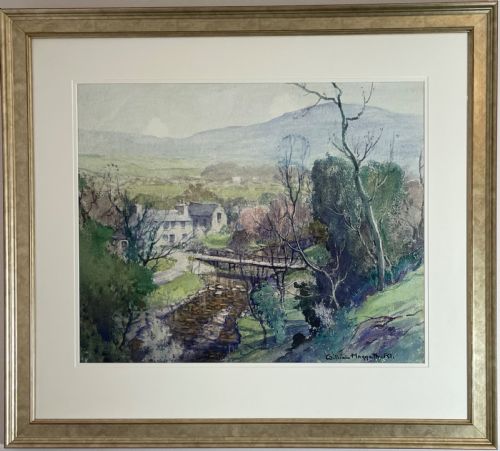
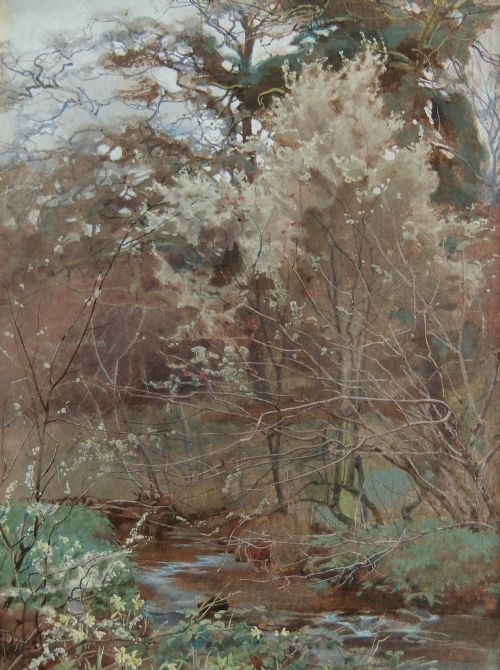
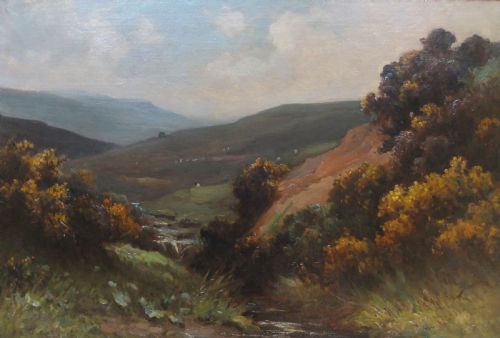
Antique stream artwork captures natural watercourses through 19th-century and early 20th-century painting traditions, bringing pastoral British and European landscapes indoors.
Antique Stream Artwork
When you search for antique stream artwork, you encounter painted watercourses, rural rivers, and mountain brooks captured across the nineteenth and twentieth centuries. These pieces record pastoral scenes, Highland cattle watering spots, and English country house settings through traditional landscape painting.
The versions most likely to appear on this page include nineteenth-century Victorian oil paintings on canvas and wood panel, alongside early twentieth-century watercolours. Artists render these waterways through established styles such as British Impressionism, realism, and pastoral romanticism.
Subjects range from Scottish glens and Yorkshire pastures to rural cottages beside water and children fishing by streams. The geographical scope spans British and Irish countryside views alongside continental European mountain streams.
Materials and Construction
Painters utilised oil paint on canvas or wood panel, applying pigment to create textured surfaces for woodland areas, sunset skies, and flowing water. Alternatively, artists worked with watercolour pigment on paper to achieve lighter, translucent effects for rural views and hill landscapes.
Framing often involves traditional wooden structures finished with gesso and giltwood ornamentation. These surrounds support the preservation of paper watercolours and canvas paintings across Victorian and post-war periods.
Listings feature canvas, oil paint, paper, watercolour pigment, wood, giltwood, and gesso across Victorian, British Impressionism, and Realist styles.
Factors That Distinguish Quality
Execution and handling of light separate standard landscape records from superior artistic works. The articulation of moving water, atmospheric light at sunset, and naturalistic animal integration demonstrate the painter's technical control.
Provenance and signature attribution elevate specific pieces within the range. Works bearing documented signatures from established Royal Academicians or regional painters carry distinct attribution value compared to unsigned or anonymous school paintings.
William George Tennick·John Grenville Fennell·Ernest Higgins Rigg·William Hoggatt·Robert Watson·David Watts·Sidney James Beer·Harry Sylvester Stannard·Alfred W Parsons·Alfred Banner·Noel Harry Leaver·Frederick Richard Lee·William Sidney Cooper·Robert Lesley Howey·Owen Bowen·George F Wetherbee·Henry John Sylvester Stannard·Benjamin Callow·William Greaves·Thomas Creswick·John Pedder·Clarence Roe
The Antique Stream Artwork Glossary
- Giltwood
- Wood carved and coated with gold leaf or a gold-coloured finish. This material is frequently found on traditional picture frames housing nineteenth-century oils.
- Gesso
- A plaster-like mixture applied to wooden frames as a base for moulding and gilding. It provides the smooth foundation for decorative frame detailing.
- Wood Panel
- A rigid wooden support used by painters instead of stretched canvas. Artists applied oil paint directly to this prepared flat surface during the nineteenth century.
- Watercolour Pigment
- Finely ground colour suspended in a water-soluble binder for application on paper. This medium produces translucent washes characteristic of early twentieth-century topographical views.
- British Impressionism
- A painting approach focusing on light and spontaneous brushwork applied to domestic landscapes. Practitioners of this style captured outdoor rural scenes with loose application.
Antique Stream Artwork: Frequently Asked Questions
What periods do these stream artworks cover?
The inventory spans the nineteenth century through to the mid-twentieth century, including Victorian pieces alongside 1910, 1920, 1940, and 1960 examples.
Most items date from the late Victorian era and the Edwardian decades, reflecting the popularity of pastoral landscape painting during those periods.
How are watercolours protected in these frames?
Watercolours on paper utilise protective glazing and paper mounts to shield the pigment from moisture and direct handling.
The underlying paper remains secured within traditional wooden frames that often feature decorative gilt or gesso surface treatments.
What subjects typically accompany the streams?
Common companion subjects include Highland cattle, rural thatched cottages, children fishing, and woodland areas at sunset.
Artists frequently integrated livestock and figures to establish scale and narrative interest within the rural topography.
Are these paintings signed by the artists?
Many examples feature original signatures or attribution to named nineteenth and twentieth-century painters.
Signed works provide direct connection to known regional and academic artists working across Britain and Europe.