





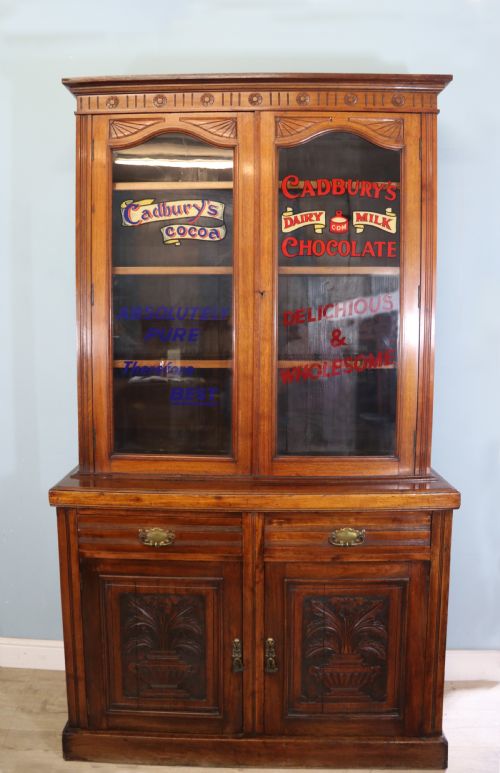

Antique Store Cabinet
An antique store cabinet brings commercial history into domestic rooms, offering glazed display and practical storage shaped by nineteenth and twentieth century trade.
Antique Store Cabinet
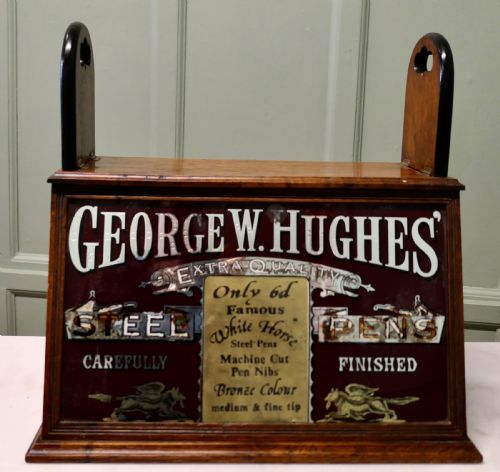
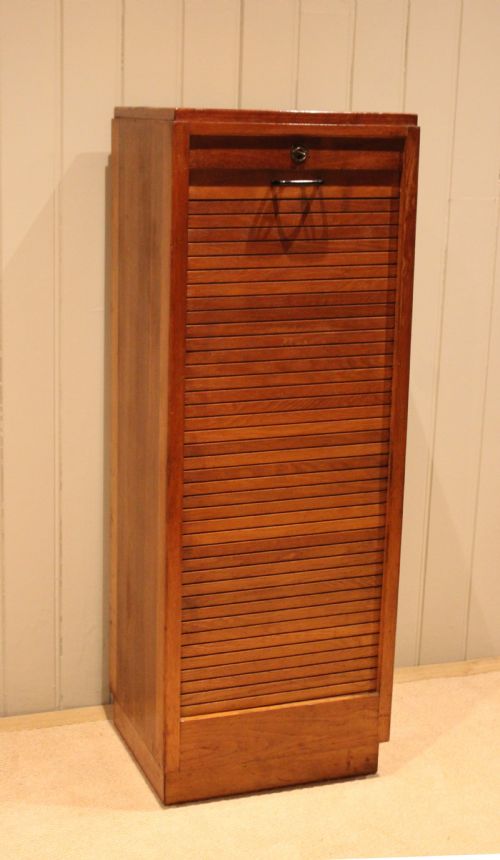
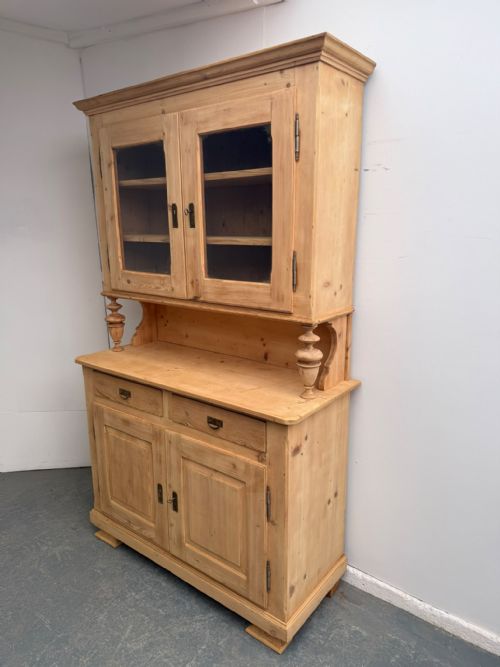
An antique store cabinet encompasses retail fixtures, haberdashery chests, shop counters, and stationery cupboards originating from nineteenth and early twentieth century commerce. Buyers searching for an antique store cabinet encounter utilitarian pieces designed originally for display and organisation in shops, offices, and apothecaries.
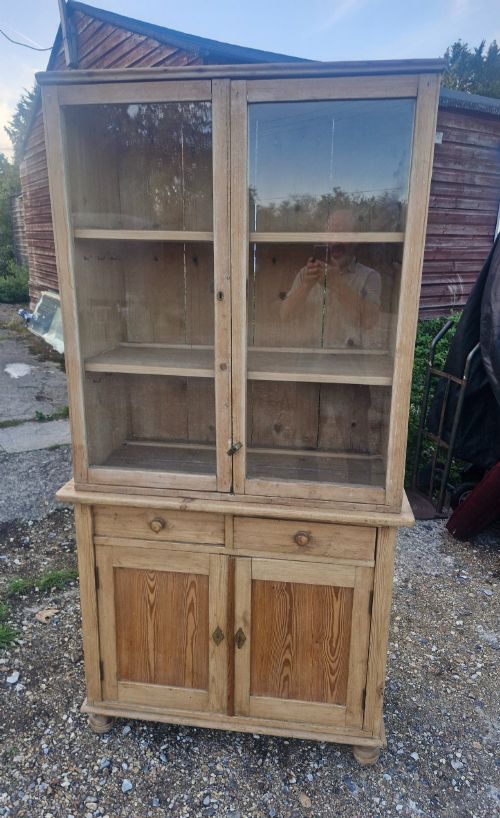
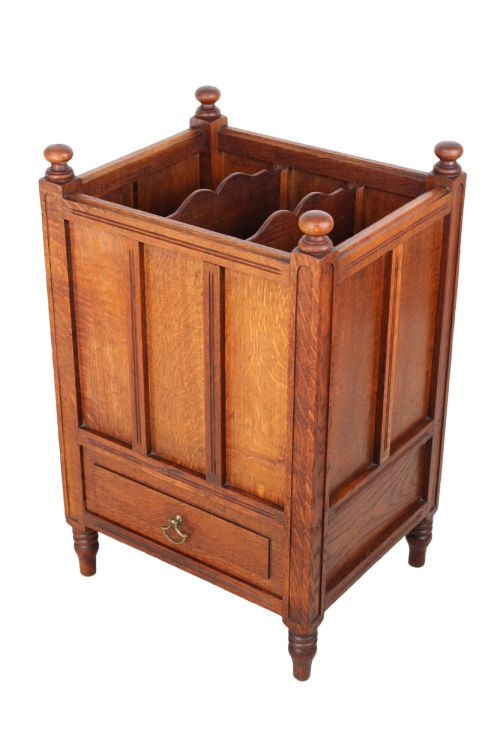
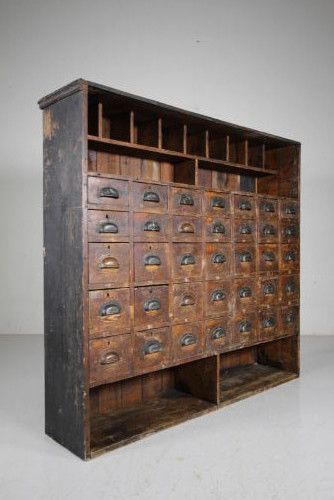
The selection here draws predominantly from Victorian and Edwardian periods, alongside items from the 1920s, 1930s, and 1940s. Forms range from large banks of drawers and glazed display units to smaller desktop stationery boxes and kitchen cupboards.
Materials and Construction
These items utilise timber varieties suited to heavy daily use, notably oak, mahogany, walnut, fruitwood, and pine. Structural integrity often relies on brass and iron hardware, with glass panels fitted to display counters and haberdashery fronts.
Makers constructed these fixtures for commercial endurance, employing robust joinery alongside practical mechanisms such as tambour fronts and adjustable feet. Original painted surfaces, polished wood finishes, and branded advertising details frequently survive on these utilitarian pieces.
Antique Store Cabinet Retail Price Guide 2026
Typical asking prices for store cabinet among the pieces listed under this phrase on Sellingantiques today, from the lower quarter to the upper quarter. They describe what is for sale here now, not the wider market.
Commercial forms on record include haberdashery chests, apothecary boxes, shop counters, and stationery cabinets.
Distinctions in Grade and Origin
The sophistication of the internal mechanism, from tambour doors to banks of fitted drawers, separates standard commercial utility from finer retail display furniture. Timber selection and secondary wood use also define the tier of the piece.
Mackenzie's Biscuits·Saml. Elliott & Sons·Breitling·Cadbury's Cocoa·Quincy Showcase Works·Shannon
The Antique Store Cabinet Glossary
- Haberdashery cabinet
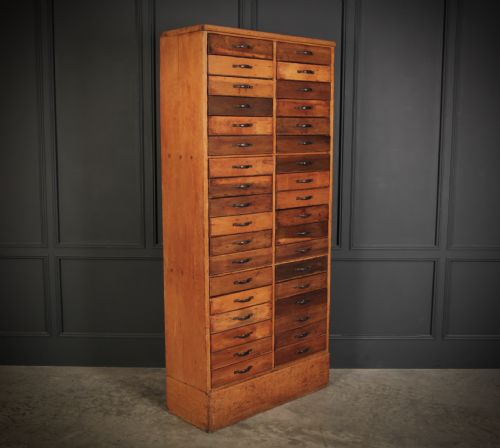
- A multi-drawer storage unit utilised in drapery and cloth shops. These pieces feature shallow drawers, sometimes with glass fronts, designed to sort small textiles and accessories.
- Tambour front
- A flexible door constructed from narrow slats of wood glued to a canvas backing. This mechanism slides along tracks to enclose a cabinet without requiring clearance for swinging doors.
- Shop counter
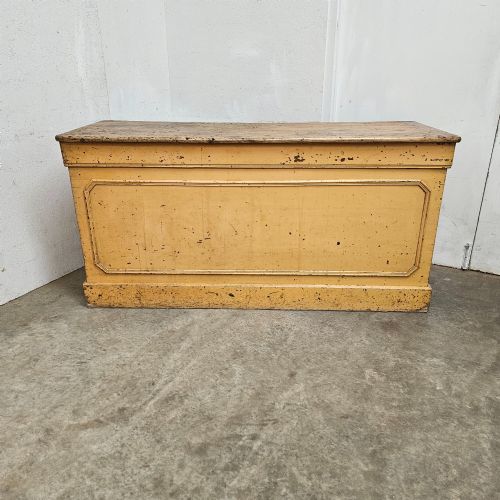
- A heavy timber retail fixture often incorporating glazed display sections on the customer side and shelving or drawers on the assistant side.
- Stationery box
- A desk accessory or small cabinet designed to hold writing paper and envelopes. These compact pieces frequently include fitted internal compartments and sloping lids.
- Purdonium
- A specialised cabinet designed to store coal near a fireplace. These units typically incorporate a metal lining and a hinged front or shovel compartment.
Antique Store Cabinet: Frequently Asked Questions
What is an antique store cabinet?
An antique store cabinet is a piece of commercial furniture built for retail or office environments during the nineteenth and early twentieth centuries. These items include haberdashery chests, display counters, and stationers' cupboards designed to showcase and organise goods.
Today, these fixtures serve domestic interiors as storage cupboards, bookcase units, or kitchen furniture, bringing utilitarian history into modern homes.
How do I identify a shop counter?
A shop counter is characterised by a sturdy timber top intended for serving customers, combined with functional storage on the reverse side. Many examples feature glazed display panels facing the shop floor to exhibit wares.
Original details such as adjustable feet, branding, and back-facing drawers help distinguish genuine commercial counters from domestic sideboards.
What woods were used in these cabinets?
Cabinet makers utilised durable hardwoods and softwoods depending on the intended commercial application. Oak, mahogany, walnut, and fruitwood frequently appear in display counters and haberdashery chests.
Pine and other mixed woods were commonly employed for larger kitchen cupboards, banks of drawers, and internal framing.
Where can I use a haberdashery cabinet?
A haberdashery cabinet adapts easily to domestic spaces due to its numerous shallow drawers. They function well in studies for stationery, in bedrooms for accessories, or in kitchens for cutlery.
Their glazed or open wooden compartments allow collections to be displayed while keeping items sorted and protected.