


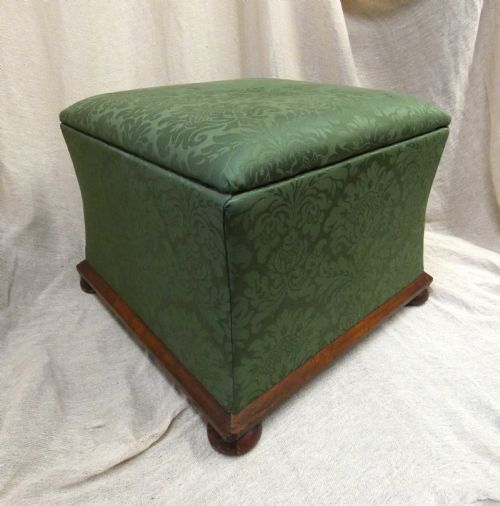


Antique Stool with Storage
An antique stool with storage offers clever concealed space beneath a hinged seat, combining practical utility with period craftsmanship.
Antique Stool with Storage
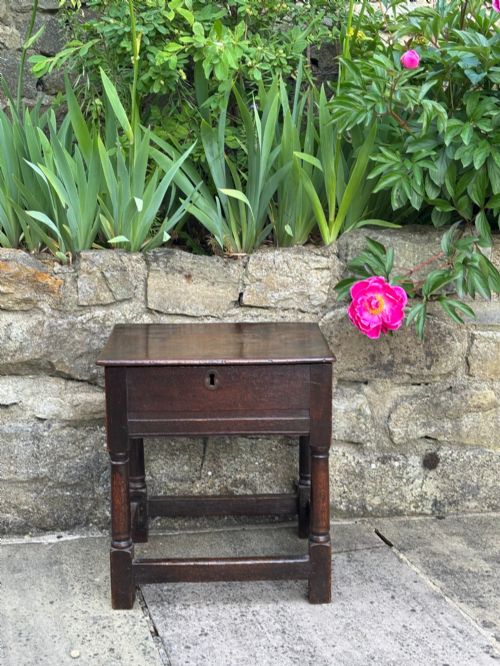
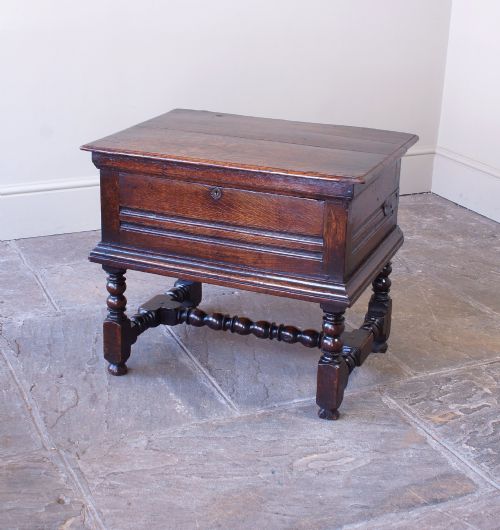
When you search for an antique stool with storage, you encounter a practical seating form designed to hold sheet music, textiles, or small household items within a concealed compartment beneath the lid. The selection spans several distinct eras, from Regency and Victorian iterations through to Edwardian and Art Deco examples.
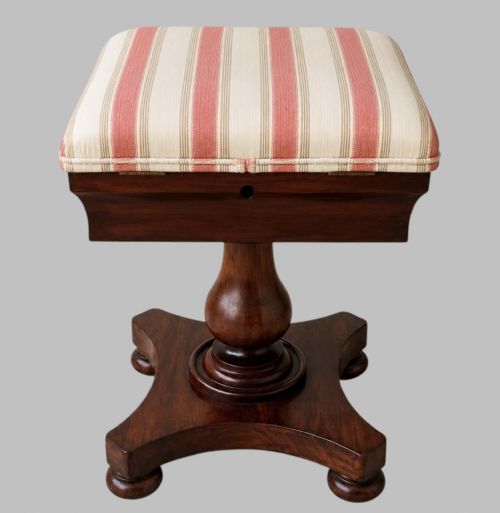
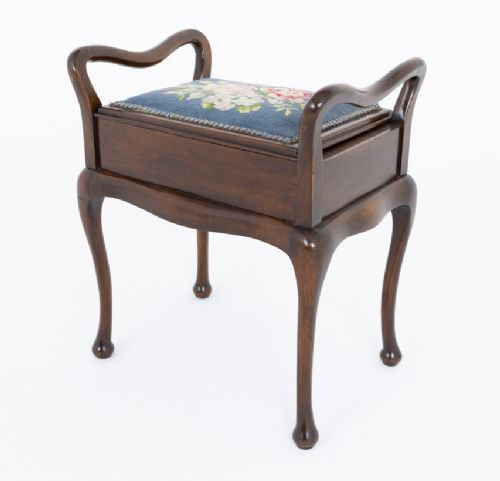
The most common forms on this page are piano stools and ottomans, particularly Edwardian mahogany pieces and Victorian mahogany or golden oak variants featuring lift-up or hinged seats. Alongside these, you find specialised pieces such as dressing stools and library steps incorporating compartments.
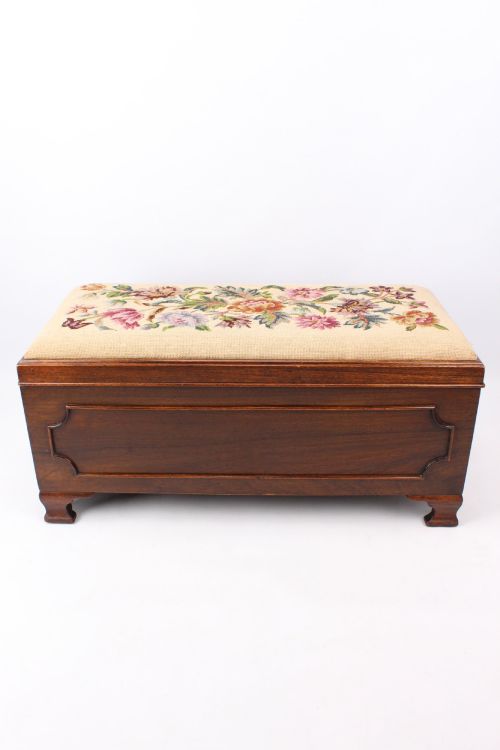
Makers from the nineteenth and early twentieth centuries utilised native and imported timbers, dressing the internal compartments simply while finishing the exterior seats in various textiles, needlework, and upholstery fabrics.
How they were made
Carpenters and cabinet makers constructed the frames primarily from solid hardwoods such as mahogany, oak, walnut, and rosewood, employing traditional joinery to ensure the box seat could withstand daily lifting and sitting. Many pieces incorporate turned legs, inlaid details, or carved elements reflective of their respective periods, from Gothic Revival to Arts and Crafts styles.
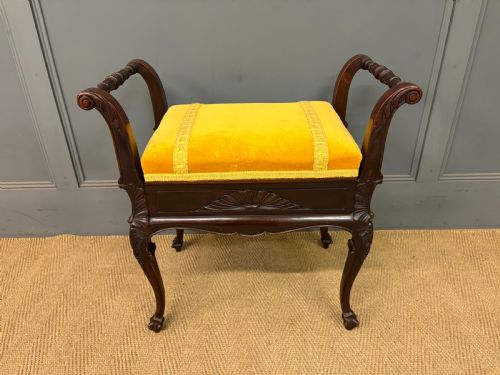
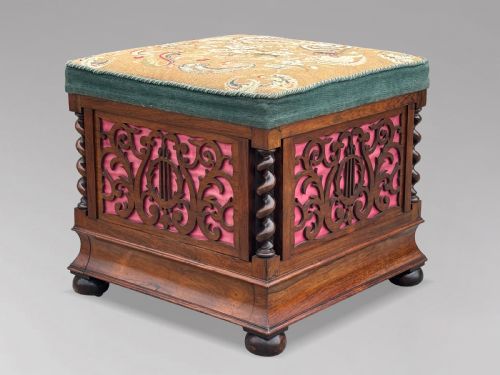
The seats themselves rely on textile coverings including wool, velvet, tapestry, and gros-point needlework, often over a padded foundation secured to a hinged lid that grants access to the internal storage space.
Several Victorian piano stools still harbour decades-old sheet music fragments rattling silently inside their secret wooden compartments.
What varies in quality
The distinction between standard examples and finer pieces rests upon the choice of timber and the sophistication of the cabinet work, such as select mahogany grains or detailed boxwood inlay. Superior pieces display crisp carving, such as lion's paw feet, and robust hinge mechanisms that operate smoothly within the box seat frame.
Upholstery contributes heavily to the character of the piece, with period needlework or tapestry retaining its integrity elevating the overall standard above plain modern replacement fabric.
The Antique Stool with Storage Glossary
- Ottoman
- A low, upholstered seat or box without a back or arms, featuring a hinged top that opens to reveal storage space inside. These versatile items served primarily in nineteenth-century drawing rooms and reception spaces.
- Gros-point
- A heavy, counted-thread embroidery stitch worked on canvas, commonly utilised for durable decorative seat covers on Victorian and Edwardian stools. It creates a firm, textured surface that withstands frequent use.
- Duet piano stool
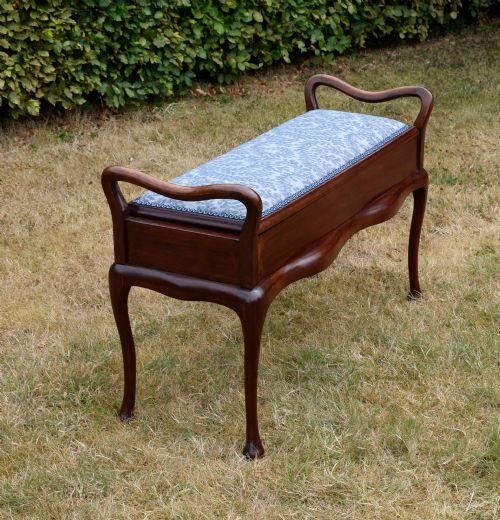
- An extended seating form designed for two people playing piano side by side, typically incorporating a lengthy hinged compartment beneath the seat for storing sheet music folios.
- Aesthetic movement
- A late nineteenth-century design style emphasising visual and decorative beauty over narrative or moral themes, often producing ebonised wooden furniture with restrained, elegant lines.
- Sheraton revival
- A late Victorian and Edwardian style inspired by the furniture designs of eighteenth-century cabinet maker Thomas Sheraton, frequently featuring mahogany construction with delicate floral inlay.
Antique Stool with Storage: Frequently Asked Questions
What were piano stools with storage used for?
These seats provided practical storage for sheet music rolls and folios directly beside the instrument, keeping the music room tidy while offering an adjustable or fixed seat for the player.
The hinged top allowed quick access to scores during practice sessions without requiring separate cabinetry.
How do I identify a Victorian stool?
Victorian pieces typically employ dense timbers like mahogany, rosewood, or golden oak, often featuring turned legs, heavy box seat construction, and traditional tapestry or needlework upholstery.
Design motifs span from plain functional boxes to elaborate Gothic Revival or Aesthetic movement details depending on the decade of manufacture.
Are Edwardian storage stools different from Victorian ones?
Edwardian examples generally lean towards lighter mahogany frames, frequently enhanced with inlaid stringing or Edwardian Sheraton Revival motifs, alongside music or piano stool specific forms.
They maintain the practical lift-up seat mechanism while reflecting a shift towards more slender proportions and brighter polished wood finishes.
How do I care for the upholstery?
Protect antique textile, wool, and velvet seats by keeping them away from direct sunlight and gently vacuuming with a soft brush attachment to remove dust.
Original needlework and tapestry require particular care to prevent thread snagging and preserve the historic fabric.