

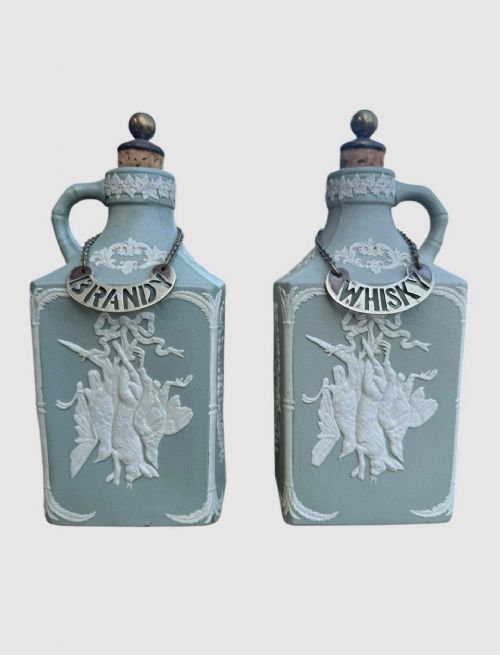


Antique Stoneware Bottles
These antique stoneware bottles are heavy, salt-glazed vessels built to hold spirits, wine, and oils across centuries.
Antique Stoneware Bottles
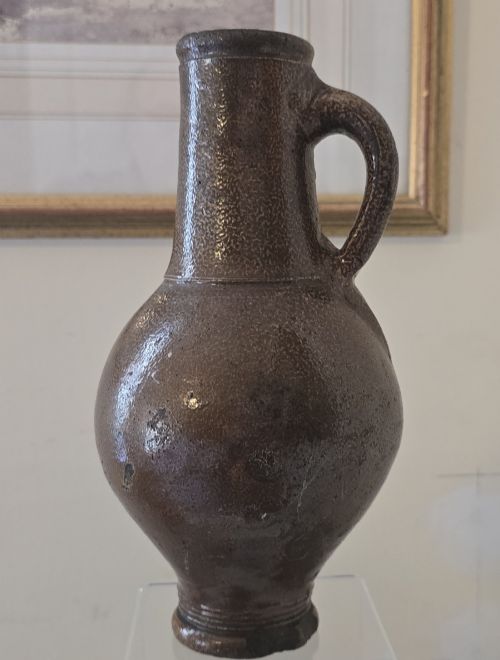
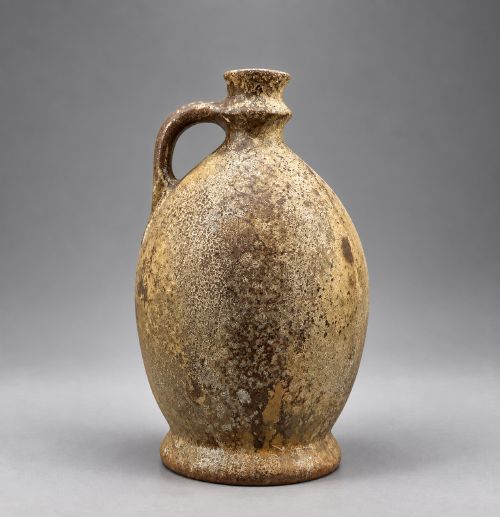
When you search for antique stoneware bottles, you encounter durable vessels spanning from the sixteenth century to the twentieth century. These items take the form of flagons, whisky flasks, spirit decanters, and utility jugs utilised for everyday storage.
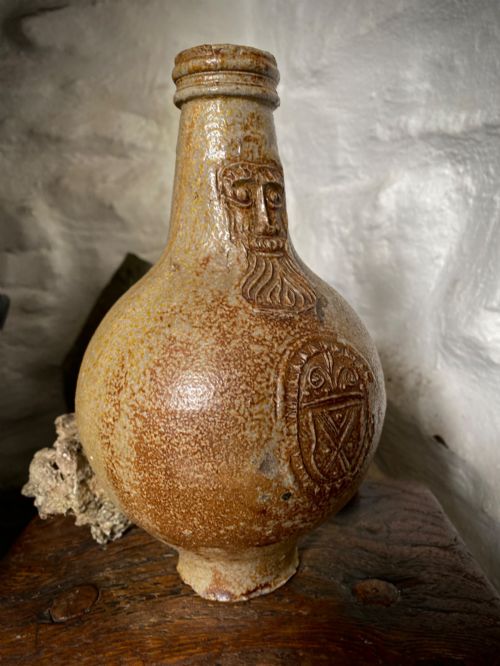
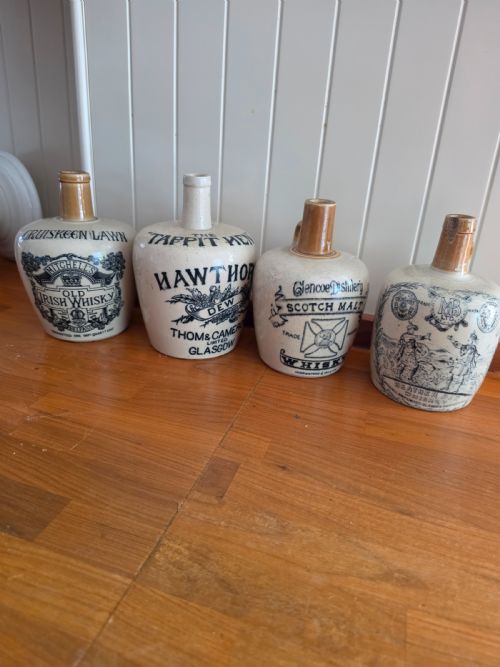
The nineteenth century provides the highest volume of advertising flasks and brown-glazed spirit containers on this page. Earlier examples include sixteenth-century German Bartmann jugs and seventeenth-century London salt-glazed pieces.
Makers such as Doulton and John Dwight represent the fine ceramic production found alongside utilitarian drink containers. Collectors acquire these items for their robust forms, earthy glazes, and functional history.
How they were made
Potters shaped dense clay on the wheel and fired it at high temperatures to ensure impermeability. This vitrification process made the material completely suitable for containing liquids without absorbing them.
Many pieces received a salt glaze, achieved by throwing common salt into the kiln during the peak of the burn. The sodium reacted with the silica in the clay to produce an orange-peel texture across the surface.
Certain vessels feature applied enamel decoration, moulded motifs, or incised detailing applied prior to the final kiln run. Cork stoppers frequently sealed the contents, preserving spirits and oils over long voyages.
Antique Stoneware Bottles Retail Price Guide 2026
Typical asking prices for stoneware bottles among the pieces listed under this phrase on Sellingantiques today, from the lower quarter to the upper quarter. They describe what is for sale here now, not the wider market.
Some nineteenth-century whisky flasks feature golfing motifs to appeal to sporting gentlemen.
What varies in quality
The standard of an antique stoneware bottle rests upon the crispness of its moulded decoration and the evenness of its salt glaze. Superior examples display sharp relief on figural motifs and uniform surface specking.
Early German jugs and pieces by named potteries command greater attention due to their historical significance and skilled potting. The balance of the form and the clarity of any applied stamp or inscription dictate the desirability of each vessel.
John Dwight Fulham Pottery·Royal Doulton Kingsware·Doulton Lambeth·Royal Lancastrian
The Antique Stoneware Bottles Glossary
- Salt glaze
- A vitreous coating formed by throwing salt into the kiln at high temperature, leaving a pitted, orange-peel texture on the clay body.
- Bartmann jug
- A German stoneware vessel featuring a bearded mask on the neck, produced widely from the sixteenth century onwards.
- Flagon
- A large vessel with a handle and sometimes a spout, designed for holding liquids such as wine, beer, or whisky.
- Vitrification
- The high-temperature transformation of clay into a dense, glass-like substance that holds liquids securely without seepage.
- Jasper
- A fine-grained stoneware developed by English potteries, notable for its matte finish and contrasting decorative reliefs.
Antique Stoneware Bottles: Frequently Asked Questions
Can these bottles still hold liquids safely?
While the vitrified clay remains waterproof, old interior residues and degrading cork can contaminate liquids. Most collectors display these vessels as decorative objects rather than functional containers.
If you choose to use one for serving, inspect the interior carefully for historic sediment. Ensure any stopper you use is clean and odourless.
How do I date a salt-glazed bottle?
Examine the manufacturing technique, the form of the handle, and any maker stamps or applied motifs. Early sixteenth and seventeenth-century pieces display distinctive grey-brown tones and heavy salt texturing.
Nineteenth-century advertising flasks often feature moulded lettering and sharper corporate stamps. Comparing the shape to documented examples from known potteries helps narrow the production era.
What is a Bartmann jug?
A Bartmann jug is a distinctive stoneware container originating in Germany, featuring a moulded bearded mask on the neck. These vessels were imported in large quantities to Britain during the sixteenth and seventeenth centuries.
They were commonly used for storing and pouring wine or ale. The grimacing face was originally intended to ward off evil spirits.