

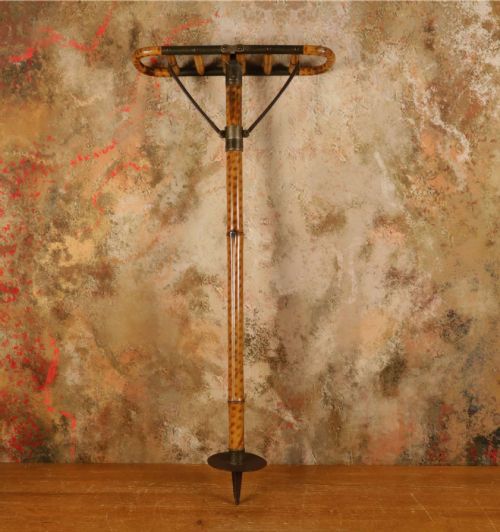
Antique Stick Chair
An antique stick chair brings tactile warmth and utilitarian honesty into a room through its exposed grain and organic timber construction.
Antique Stick Chair
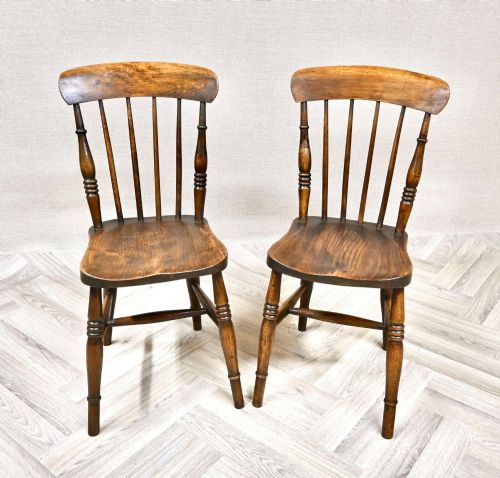
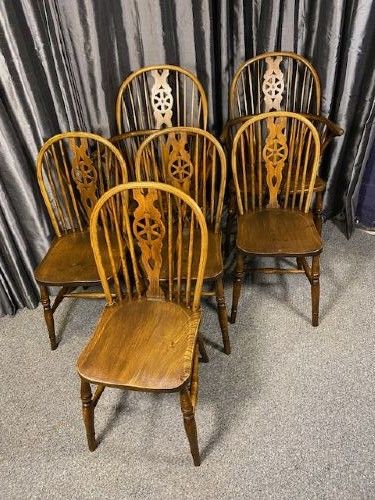
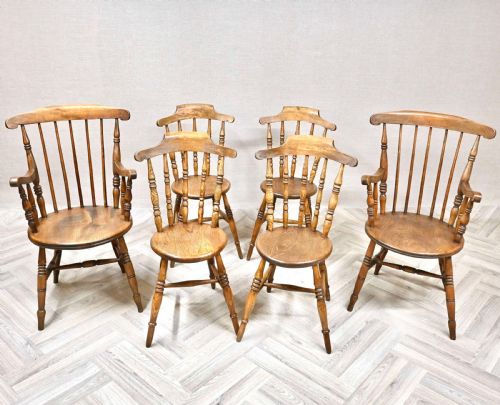
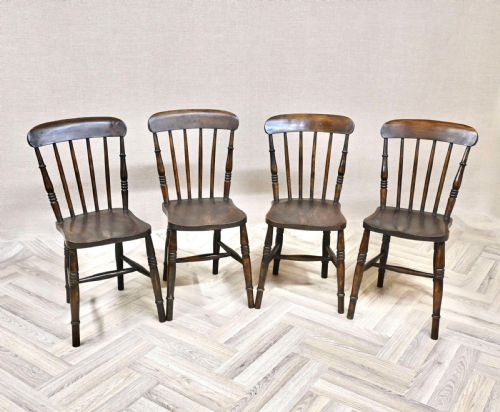
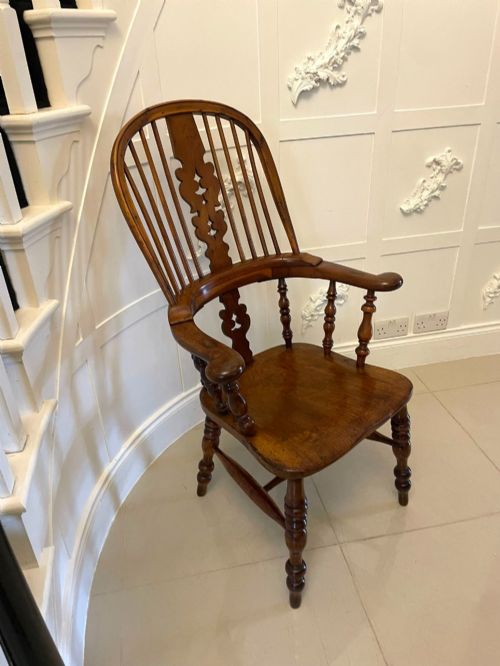
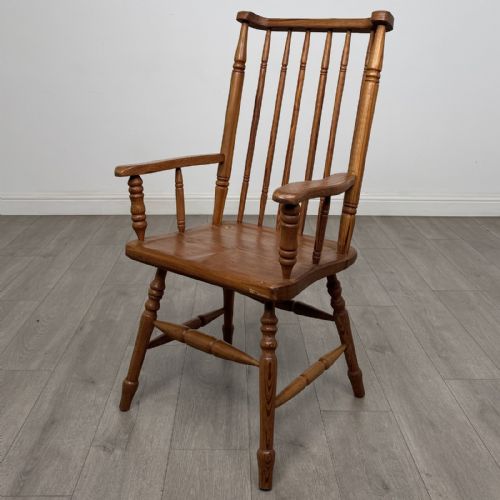
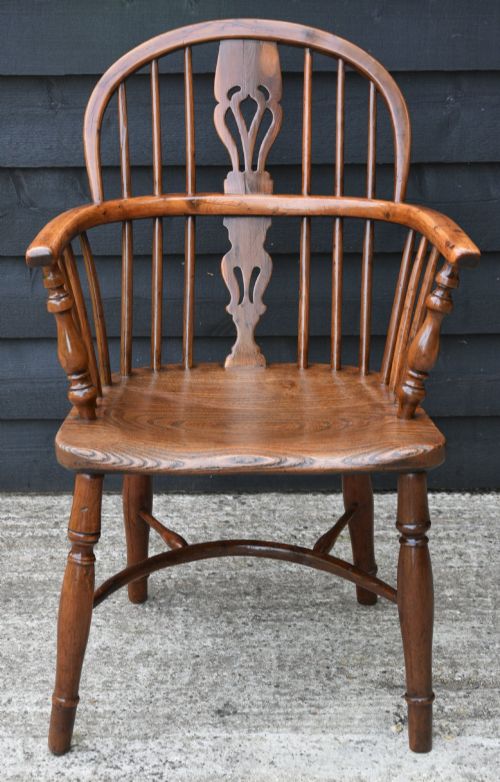
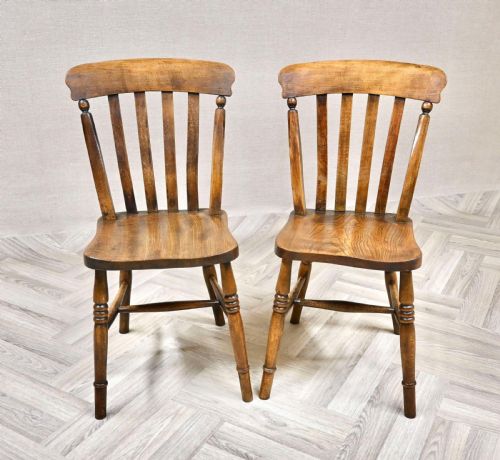
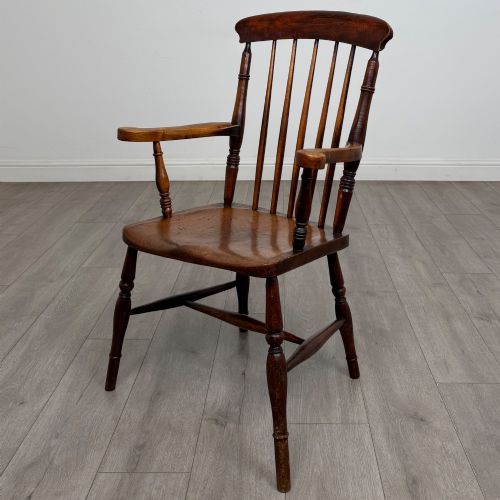
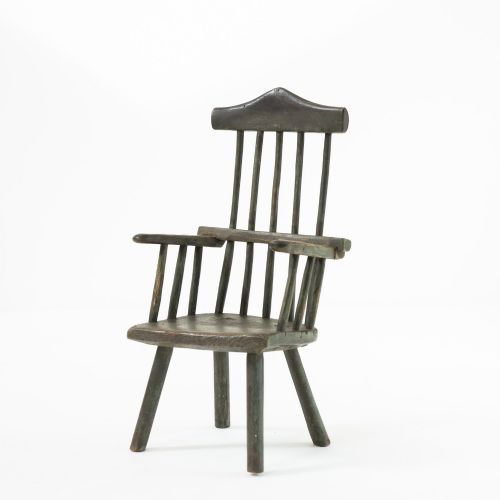
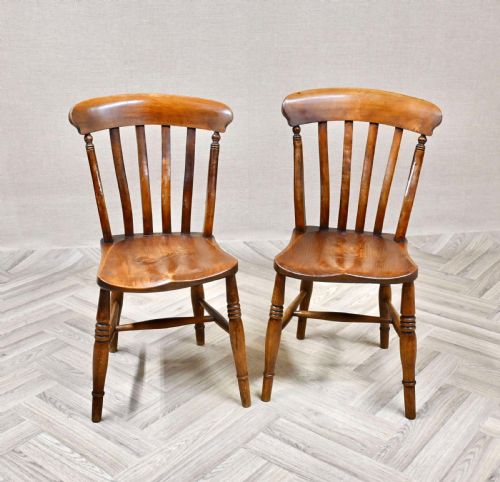
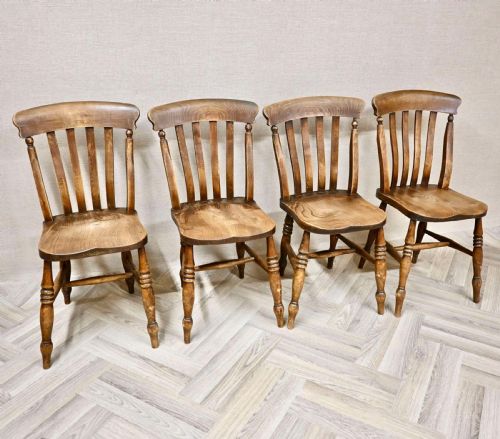
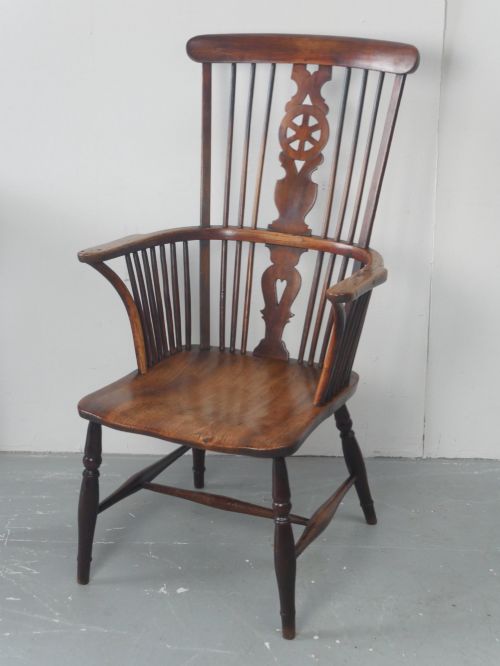
An antique stick chair encompasses vernacular seating forms where turned or cleft spindles form the back, often associated with regional traditions such as High Wycombe, the Thames Valley, and the West Country. Buyers exploring this category encounter sturdy kitchen chairs, low-slung children's variants, and expansive Windsor armchairs designed for farmhouse hearths.
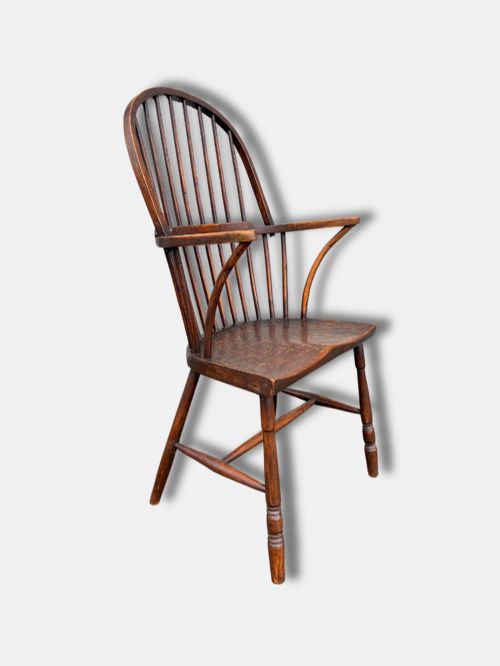
The prevailing examples on this page date from the eighteenth and nineteenth centuries, spanning Georgian vernacular periods through to Victorian and Edwardian domestic production. Forms range from simple hoop backs and comb backs to lathbacks and panel-backed seating.
Makers utilised local hardwoods to construct these seats, resulting in robust domestic items that served everyday functions in country houses and rural kitchens. Regional variations demonstrate distinct turning patterns and back configurations unique to British chair-making centres.
Materials and construction methods
Makers constructed these chairs by combining woods with specific mechanical properties, typically pairing tough ash or elm seats with bendable yew, beech, or fruitwood for the spindles and bows. Elm provided a stable, splitting-resistant solid plank for the saddle seat, while ash offered straight-grained tensile strength for legs and stretchers.
Green woodworking techniques allowed craftsmen to shape unseasoned timber, letting the components lock together tightly as the wood dried around the tenons. Seats were deeply sculpted using an adze and scorper to create an ergonomic hollow, while steam-bending enabled the creation of continuous hoop backs and armbows.
Antique Stick Chair Retail Price Guide 2026
Typical asking prices for stick chair among the pieces listed under this phrase on Sellingantiques today, from the lower quarter to the upper quarter. They describe what is for sale here now, not the wider market.
Listings span the eighteenth, nineteenth, and early twentieth centuries, featuring regional timbers including elm, ash, yew, beech, and fruitwood.
Distinctions in quality
Quality in an antique stick chair rests upon the harmony of its proportions, the balance of the spindle spacing, and the integrity of the timber selection. Superior examples display figured yew grain in the armbow or deep, expressive adze marks on the saddle seat rather than flat, machine-sawn planks.
The fluidity of the spindle turnings and the crispness of the wedge joints reveal the competence of the regional maker. Pieces that retain an original pigmented surface or early brown paint hold greater visual coherence than stripped examples.
The Antique Stick Chair Glossary
- Windsor chair
- A timber chair built with a heavy solid wooden seat into which the legs and back spindles are directly inserted. This construction method provides exceptional rigidity without requiring traditional frame bracing.
- Comb back
- A Windsor chair variation featuring a high, vertical row of spindles topped by a horizontal headboard resembling a hair comb. These designs often date from the eighteenth century and offer elevated back support.
- Hoop back
- A continuous wooden bow steam-bent to form the arms and backrest of an armchair. The curved member distributes weight evenly down into the main seat plank.
- Crinoline stretcher
- A bent metal or wooden bow connecting the legs of a chair to provide lateral stability. It takes its name from the hooped undergarments fashionable during the nineteenth century.
- Vernacular
- Objects designed by traditional craftsmen for local utility rather than adherence to formal academic design rules. These pieces reflect regional materials and practical domestic requirements.
Antique Stick Chair: Frequently Asked Questions
What defines a stick chair?
A stick chair is a piece of vernacular seating where individual wooden spindles or sticks are tenoned directly into a solid wooden seat. This construction method relies on simplicity and structural utility.
Such chairs evolved to serve everyday domestic and agricultural purposes across British households, prioritising functional durability over courtly ornamentation.
How do I date an antique stick chair?
Dating relies on observing tool marks, timber combinations, and the evolution of structural forms like comb backs or hoop backs. Eighteenth-century examples often utilise ash and elm with wider saddle seats.
Later nineteenth-century versions introduce steam-bent components and standardised factory turnings, particularly from regional centres like High Wycombe.
Where were these chairs originally used?
These seats belonged in farmhouses, country cottages, and provincial kitchens where durable utility was paramount. They gathered around large dining tables or stood beside open hearths.
Their robust construction made them suitable for daily domestic labour and informal family gatherings.
How should I care for a wooden stick chair?
Maintain these chairs by keeping them away from direct heat sources and sudden humidity shifts that can cause timber to split. Apply a microcrystalline wax periodically to nourish dry wood.
Avoid aggressive chemical cleaners and protect the historical surface patina from moisture damage.