
Antique Sterling Watch Chain
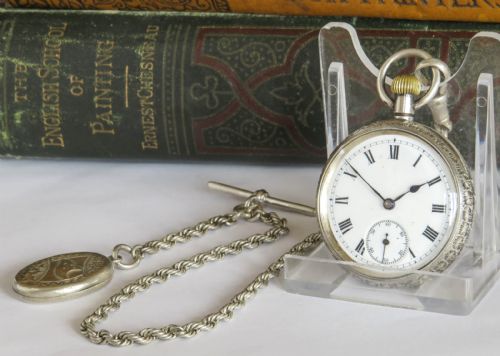
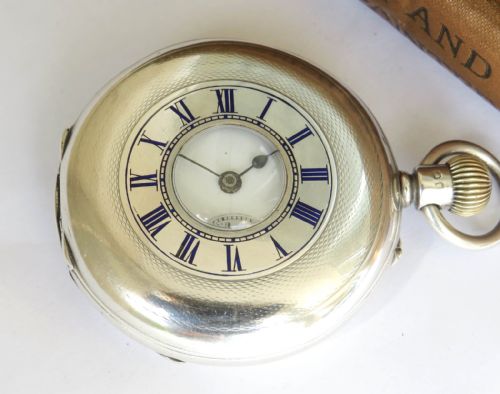
An antique sterling watch chain is a functional piece of Victorian and Edwardian tailoring jewellery designed to secure a pocket watch.
Antique Sterling Watch Chain
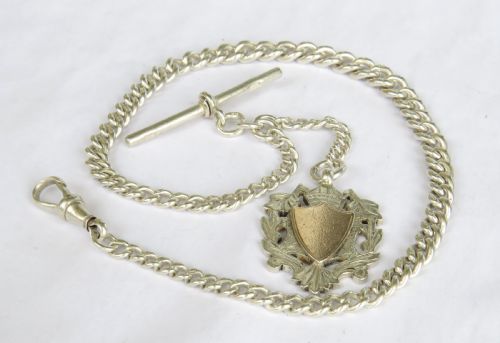
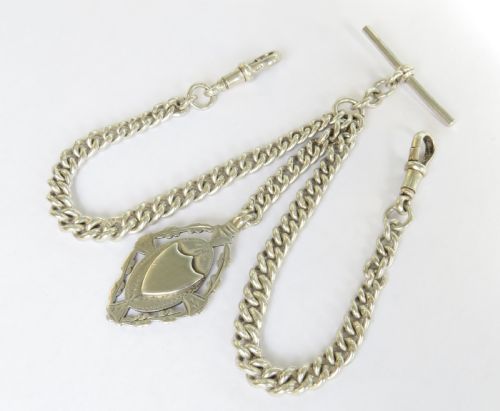
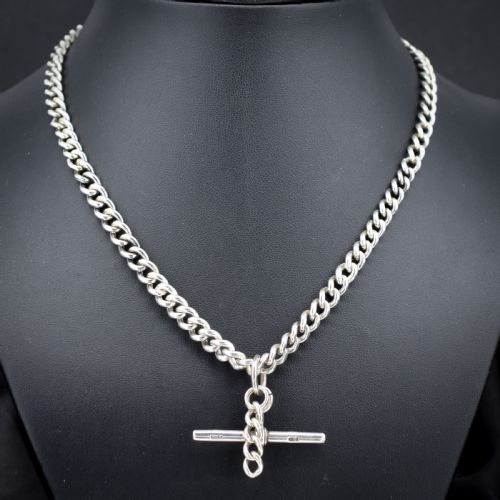
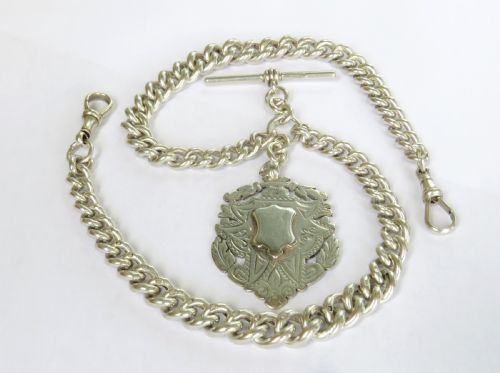
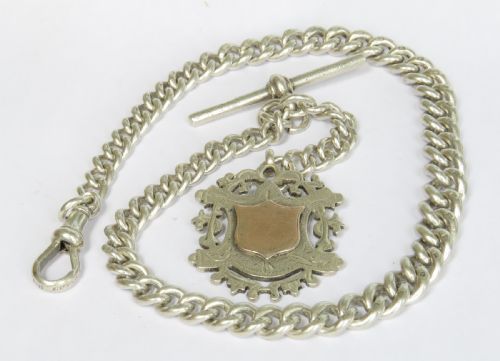
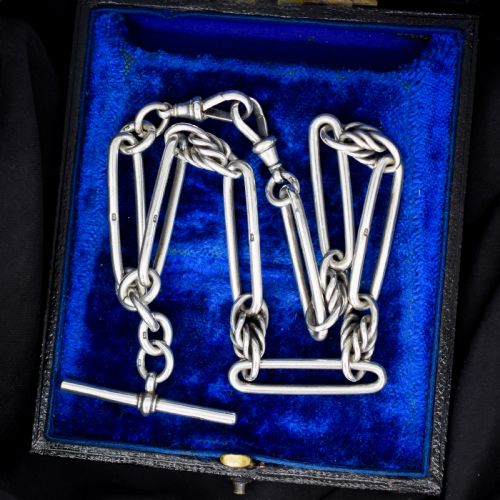
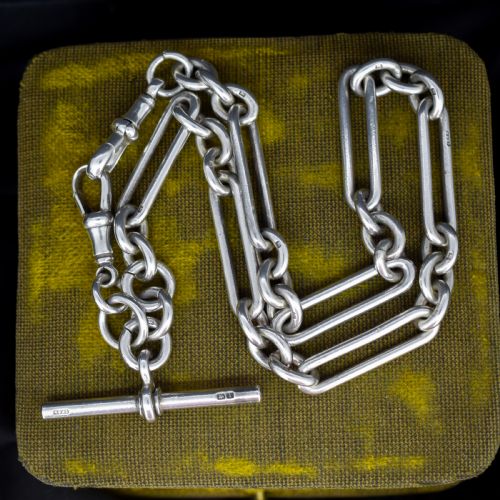
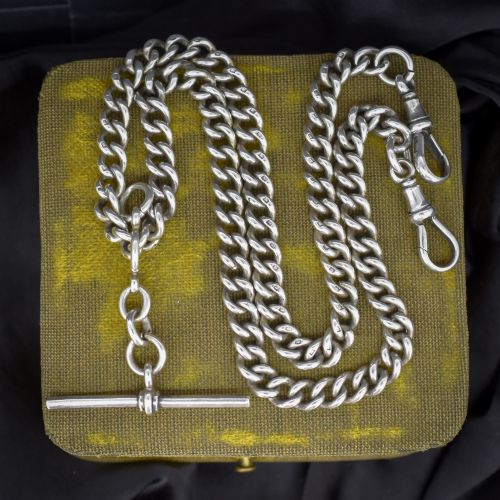
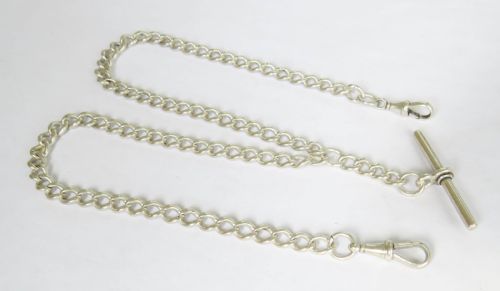
An antique sterling watch chain links practical timekeeping with the intricate metalwork of the nineteenth and early twentieth centuries. When you search for an antique sterling watch chain, you meet robust pocket watch albert chains, delicate albertinas, and substantial curb link necklaces fitted with dog clips and t-bars.
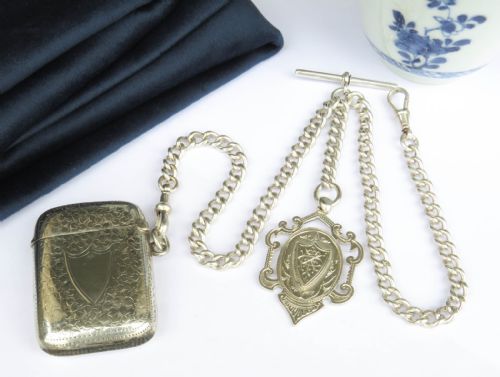
The pieces on this page span the Victorian, Edwardian, Art Deco, and George V periods, originating primarily from English workshops alongside Continental examples. They appear as single or double strands, frequently accompanied by fob medals, match vesta cases, or swivel seals.
How they were made
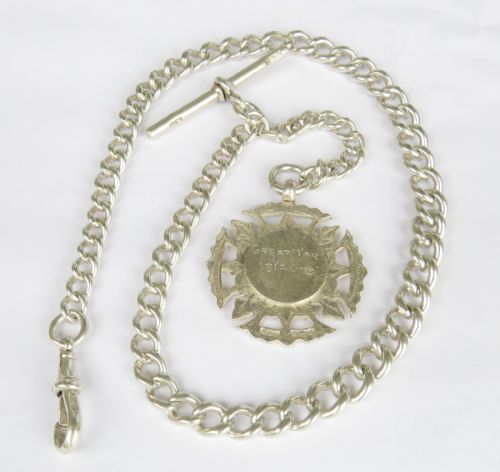
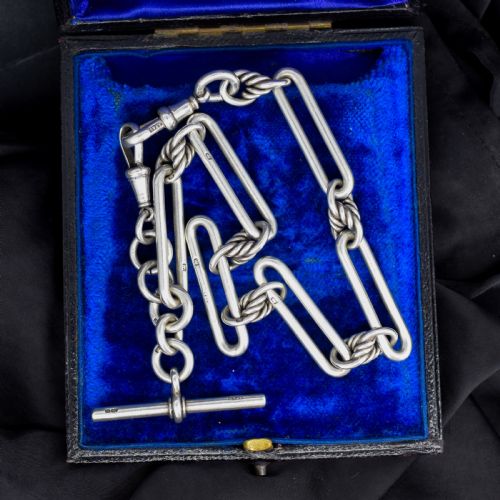
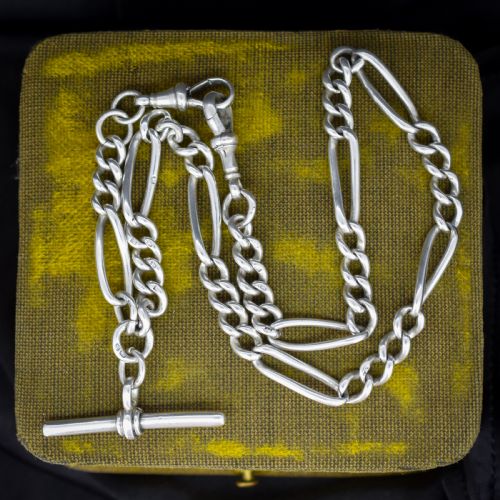
Silversmiths constructed these chains predominantly from solid sterling silver, shaping wire into uniform curb links, fancy trombone patterns, or twisted love knots by hand and machine. Many links carry full hallmarks, including town marks, date letters, and sterling standards, which record the year and place of assay.
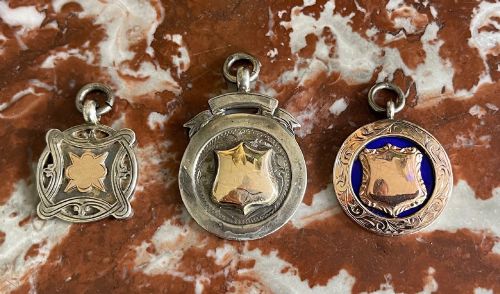
Makers integrated functional components such as spring-loaded dog clips, swivel connectors, and crossbars to anchor the chain through a waistcoat buttonhole. Occasional highlights feature applied gold accents, enamel decoration, or inset semi-precious stones like bloodstone within the attached fobs.
Listings span the nineteenth century through the 1930s, featuring sterling silver alongside occasional gold accents, enamel, and glass.
What varies in quality
Substantial weight and gauge dictate the presence and durability of an antique sterling watch chain, separating everyday utilitarian pieces from heavier, prestige presentation examples. The density of the silver links and the integrity of individual loop connections determine how the metal withstands daily wear.
The completeness of the original components heavily influences the piece, particularly the retention of matching silver hallmarks across the links, t-bar, and dog clips. Finer examples retain crisp detailing on fancy links, crisp engraving on accompanying fobs, and fully operational spring clips.
Crisford & Norris
The Antique Sterling Watch Chain Glossary
- Albert chain
- A pocket watch chain named after Prince Albert, designed to stretch across a waistcoat from a buttonhole to a watch pocket.
- T-bar
- The crossbar fastened to the centre of an albert chain that slips through a waistcoat buttonhole to secure the jewellery.
- Dog clip
- A spring-loaded swivel hook attached to the end of a watch chain for fastening to a pocket watch or fob.
- Albertina
- A delicate variation of the watch chain, often multi-stranded and traditionally worn as a bracelet by women.
- Vesta case
- A small pocket container for holding matches, frequently suspended from a watch chain as a fob accessory.
Antique Sterling Watch Chain: Frequently Asked Questions
How do I wear an antique watch chain?
These chains fit modern neckwear styles or traditional waistcoat configurations depending on the length and presence of a t-bar. Single and double albert lengths drape easily over clothing when secured through a buttonhole or around the neck.
Heavier curb link chains function well as standalone necklaces, while shorter lengths accommodate pendants and historic seals with ease.
How can I tell the date of a silver chain?
Assay office hallmarks stamped onto individual links provide the most reliable indication of age and origin. Birmingham, London, and other regional offices stamped specific date letters alongside the lion passant sterling standard.
Stylistic cues like trombone links and love knots also point toward specific decades within the Victorian and Edwardian eras.
What are watch fobs and how were they used?
Fobs are decorative or functional ornaments attached to the end of a watch chain, including wax seals, match cases, and engraved shields. Victorians used swivel seals for stamping correspondence, while sporting fobs marked club memberships and achievements.
These items added weight to keep the chain anchored and offered personal expression through heraldic or sporting motifs.