




Antique Sterling Toast Holder
An antique sterling toast holder brings breakfast elegance to the table, offering a structured way to keep crisp slices warm.
Antique Sterling Toast Holder
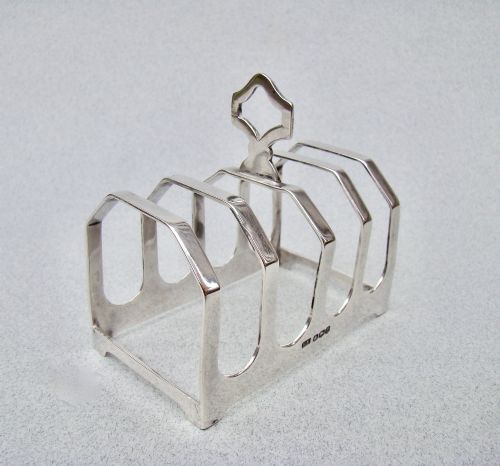
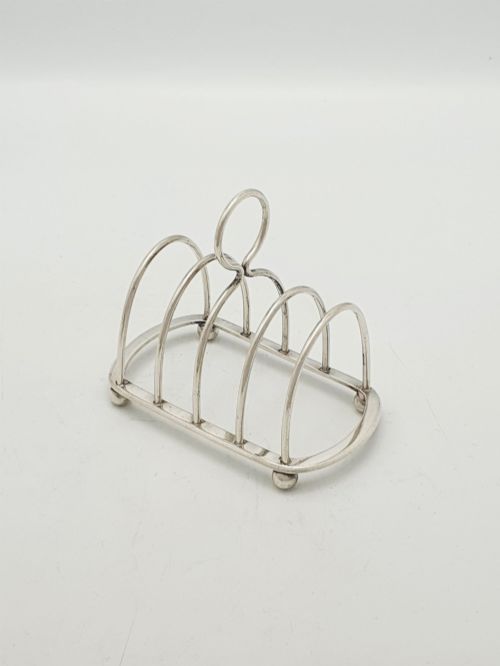
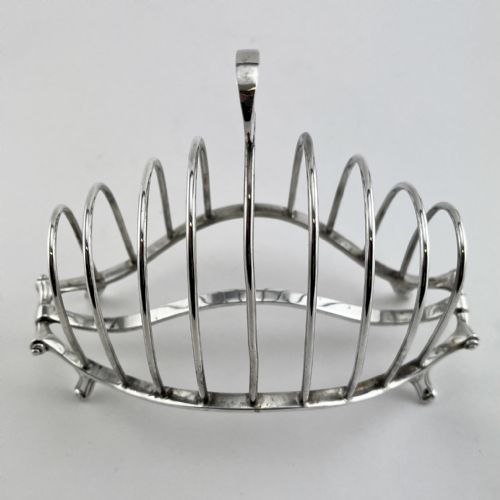
An antique sterling toast holder is a specialised piece of tableware designed to hold multiple slices of toast upright at the breakfast table. The selection spans the nineteenth century through to the mid twentieth century, covering Victorian, Edwardian, George V, and Art Deco periods.
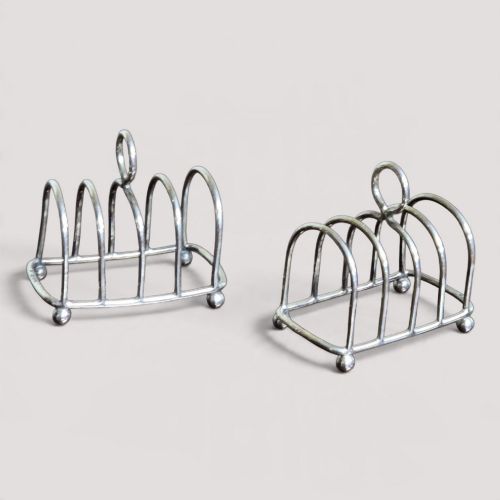
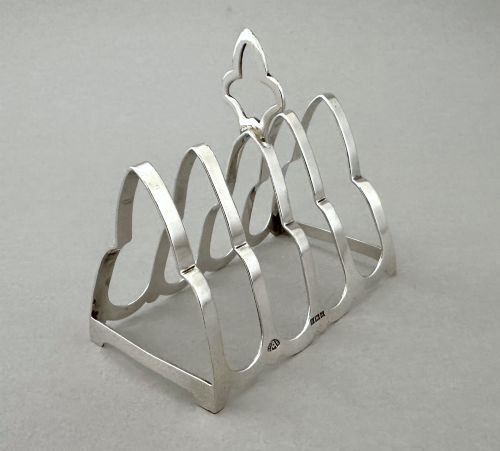
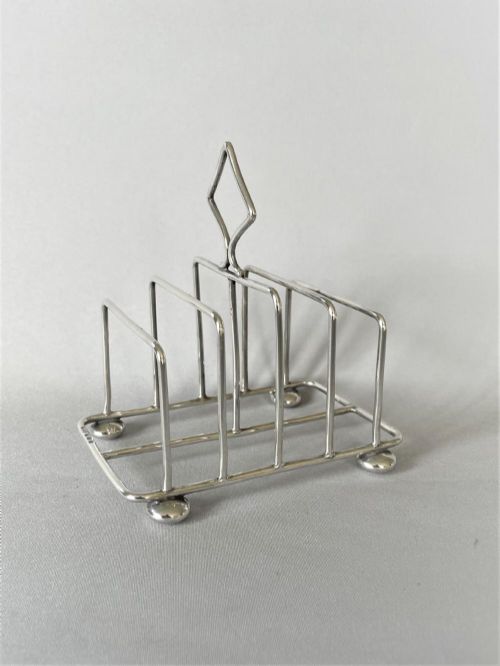
Most examples found here take the form of metal racks with four or six slice capacities, designed to allow air circulation so the toast remains crisp. Forms range from traditional arched frames to novelty equestrian designs and wishbone shapes.
Makers utilised solid sterling silver, crafting pieces in major British assay centres including London and Sheffield. These items served as functional dining accessories that reflected the refined domestic habits of their respective eras.
How they were made
Silversmiths constructed these pieces primarily from solid sterling silver, shaping individual wire or strapwork dividers and mounting them upon a stable base or feet. The structural framework required precise soldering to ensure the upright bars remained rigid and evenly spaced.
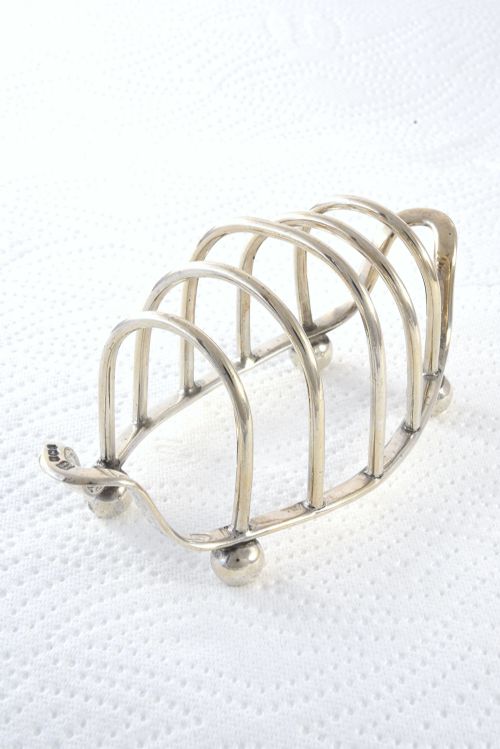
Makers applied hallmarks to record the standard of the metal, the assay office, and the year of production, providing a clear record of origin. Finished items often featured loop handles at the centre for safe transport from the kitchen to the dining table.
Antique Sterling Toast Holder Retail Price Guide 2026
Typical asking prices for sterling toast holder among the pieces listed under this phrase on Sellingantiques today, from the lower quarter to the upper quarter. They describe what is for sale here now, not the wider market.
Listings feature sterling silver pieces spanning the nineteenth century through the 1950s, encompassing Victorian, Edwardian, George V, and Art Deco styles.
What varies in quality
Quality in an antique sterling toast holder is evident in the weight of the silver used and the crispness of the form. Heavier gauges of metal prevent the upright dividers from bending easily under daily use.
Refinement of design separates standard utilitarian examples from superior pieces, particularly where makers invested greater artistry into handles, bases, or novelty motifs such as horseshoes and wishbones. The clarity of the maker marks and hallmarks also contributes to the desirability of a piece.
Mappin and Webb·Roberts and Belk
The Antique Sterling Toast Holder Glossary
- Sterling silver
- A standard alloy consisting of ninety-two point five percent silver and seven point five percent other metals, typically copper. This composition provides the durability required for functional tableware.
- Hallmark
- An official stamp applied by an assay office to indicate the purity of the metal, the maker, and the year of manufacture. These marks serve as a reliable guide to a piece's history.
- Assay office
- A statutory body that tested and certified the purity of precious metals before they were sold to the public. Major British offices include London and Sheffield.
- Novelty
- A descriptor for items designed in whimsical or unconventional shapes, such as equestrian equipment or wishbones, rather than standard geometric patterns.
Antique Sterling Toast Holder: Frequently Asked Questions
What is an antique sterling toast holder?
An antique sterling toast holder is a small silver table accessory designed to hold slices of toast upright. This arrangement prevented the hot bread from sweating and becoming soggy before consumption.
Such pieces became staple items on British breakfast tables from the Georgian era onwards, reflecting the formal domestic routines of middle and upper class households.
How many slices do they hold?
Most examples found on the market accommodate four or six slices of toast. The spacing of the wire dividers determines how thickly cut the bread can be.
Larger households utilised six slice versions, while smaller examples suited intimate morning gatherings or individual service.
How do I date a silver toast rack?
Dating relies primarily on the stamped hallmarks applied to the silver by assay offices such as those in London or Sheffield. Each operating year corresponds to a specific date letter.
Stylistic indicators, including Victorian ornamentation or Art Deco geometric lines, offer a secondary visual guide to the period of manufacture.
How should I clean my toast holder?
Sterling silver requires gentle cleaning with a specialist silver cloth to remove natural tarnishing without abrading the metal. Harsh chemical dips should be avoided to preserve the original surface detail and hallmarks.
Regular, light polishing maintains the reflective lustre of the silver without damaging the structure.