



Antique Sterling Sugar Spoon
An antique sterling sugar spoon brings the formal elegance of tea service and dining tables from past centuries directly into the modern home.
Antique Sterling Sugar Spoon
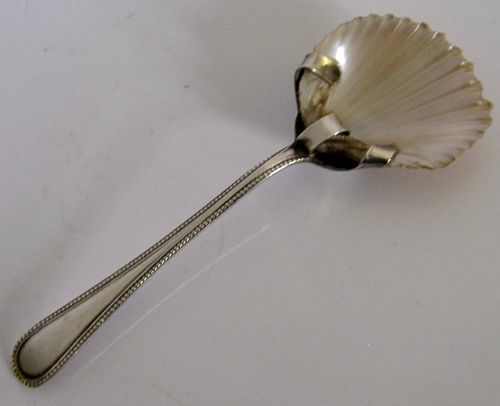
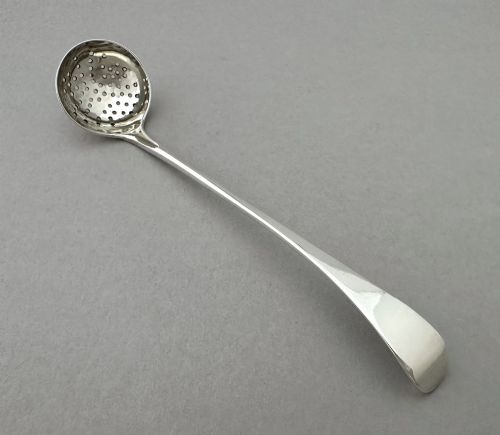
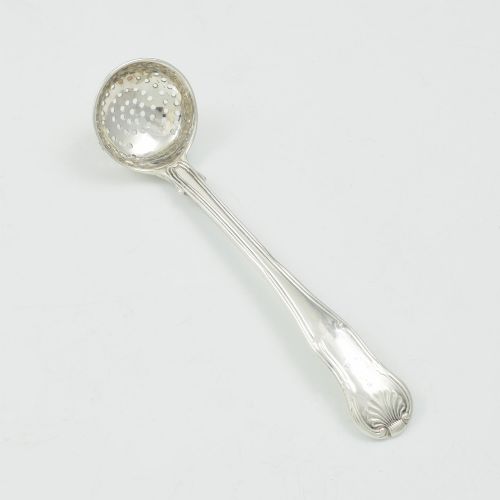
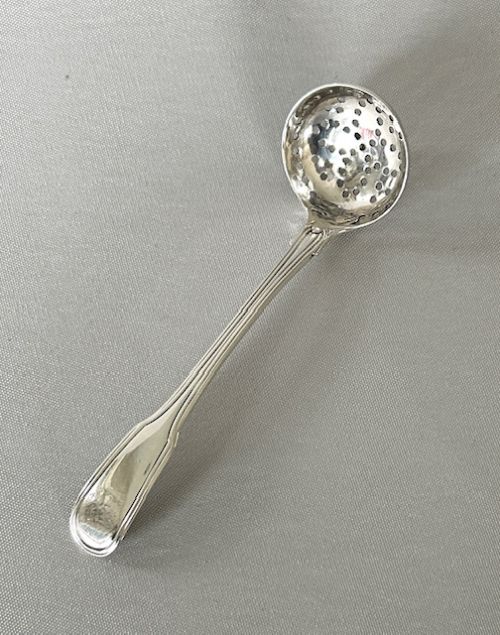
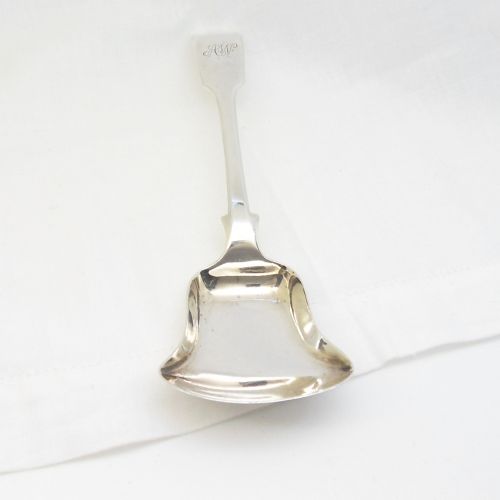
When searching for an antique sterling sugar spoon, a buyer is looking at small, specialised items of flatware designed for dispensing loose sugar or sugar lumps into cups and bowls. These utensils frequently appear as sifter spoons with pierced bowls for sprinkling, or as small shovel and shell forms suited for caddies and basins.
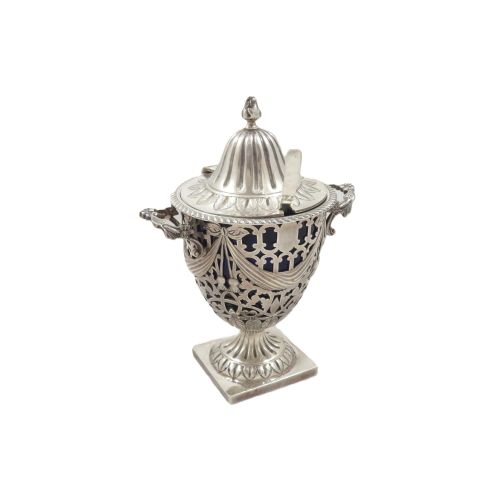
The versions most likely met on this page range from Georgian examples with feather edges and Onslow patterns to Victorian and Edwardian iterations featuring cast grapevines, oyster shells, and floral motifs. Many instances arrive paired alongside sugar bowls, tongs, or cased sets.
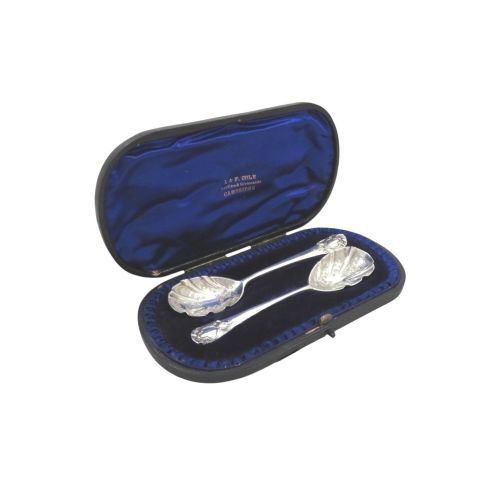
Originating predominantly from British silversmithing centres such as London, Birmingham, Chester, Exeter, and Newcastle, these pieces span from the late eighteenth century through the twentieth century. Collectors encounter them as solitary serving implements or housed within fitted presentation boxes lined with velvet and silk.
How they were made
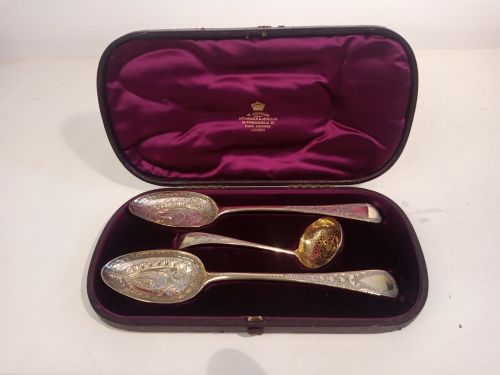
The primary material underpinning these objects is sterling silver, occasionally complemented by silver-gilt finishes where the bowl receives a thin layer of gold wash. Manufacturing techniques combined traditional hand-hammering and forging with detailed piercing and chasing, particularly for the intricate fretwork found in sifter bowls.
Makers utilised cast and stamped elements, soldering decorative handles onto pierced or scalloped bowls shaped like shells, leaves, or flowers. Hallmarks stamped directly into the metal recorded the assay office, standard, and date letter, providing an authoritative record of origin.
Antique Sterling Sugar Spoon Retail Price Guide 2026
Typical asking prices for sterling sugar spoon among the pieces listed under this phrase on Sellingantiques today, from the lower quarter to the upper quarter. They describe what is for sale here now, not the wider market.
Listings feature sterling silver sugar spoons spanning the Georgian, Victorian, and Edwardian periods, alongside cased sets with tongs.
What varies in quality
The distinction between tiers rests upon the crispness of the chasing, the weight of the solid silver used in construction, and the complexity of the handle design. Pieces featuring fully cast figural motifs or detailed botanical work demonstrate superior craftsmanship compared to plain stamped alternatives.
Preservation of the original piercing in sifter spoons and the clarity of maker marks and town hallmarks heavily influence desirability. Complete sets retaining their original velvet-lined leatherette cases occupy a different tier from loose, solitary spoons.
John Walton·Bateman·Taylor & Perry·A B Savory & Sons·William Smily·George Fox·Robert Stebbings·Georg Jensen
The Antique Sterling Sugar Spoon Glossary
- Sifter spoon
- A spoon featuring a pierced bowl designed to dust powdered or castor sugar over food or beverages. The perforations often form geometric or floral patterns.
- Caddy spoon
- A short-handled spoon utilised for measuring loose tea from a caddy into a teapot. They frequently exhibit scallop shell or shovel forms.
- Hallmark
- A series of official marks stamped onto precious metals indicating the maker, purity standard, assay office, and year of manufacture. British silver relies on these for dating.
- Silver-gilt
- Sterling silver that has been coated with a thin layer of gold, sometimes called vermeil. This technique protected the silver from tarnishing in contact with certain foods.
- Onslow pattern
- A distinct eighteenth-century handle design featuring a scrolled terminal that curls back over the shaft. It is frequently seen on Georgian serving pieces.
Antique Sterling Sugar Spoon: Frequently Asked Questions
What is a sugar sifter spoon?
A sugar sifter spoon is a specialised serving implement equipped with a perforated bowl designed to sprinkle fine sugar over desserts or drinks.
These utensils became popular during the Georgian period alongside the rise of refined dining and tea habits.
How do I read silver hallmarks?
Silver hallmarks consist of stamped symbols that indicate the purity standard, the assay office where the piece was tested, and the exact year of manufacture.
Additional stamps often reveal the maker or sponsor mark, allowing collectors to trace the origin of the item.
Were these spoons used with tea?
Many of these spoons were utilised during formal tea and dessert services to handle lump or loose sugar alongside matching bowls and tongs.
They frequently appear in fitted presentation cases accompanied by tea strainers, caddy spoons, or sugar baskets.
How should I clean antique silver?
Antique silver requires gentle cleaning using non-abrasive cloths and specialised silver polishes designed to preserve the historical patina.
Avoiding harsh chemical dips ensures that delicate chasing, hallmarks, and silver-gilt finishes remain intact over time.