





Antique Sterling Breakfast Rack
An antique sterling breakfast rack brings elegance to the morning table, holding crisp toast cleanly upright.
Antique Sterling Breakfast Rack
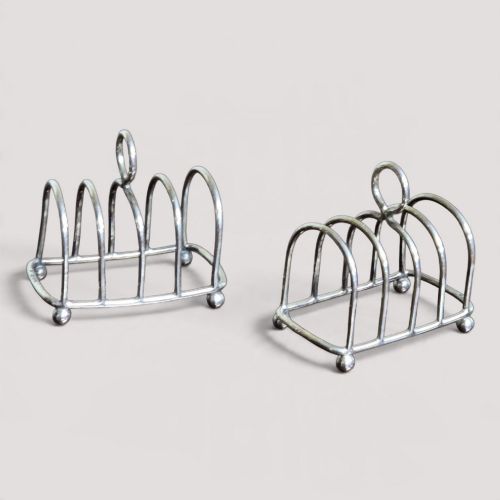
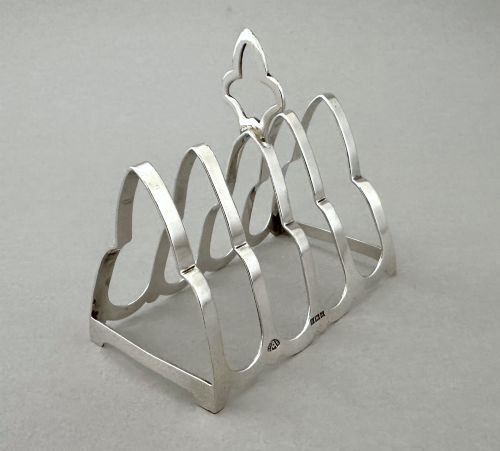
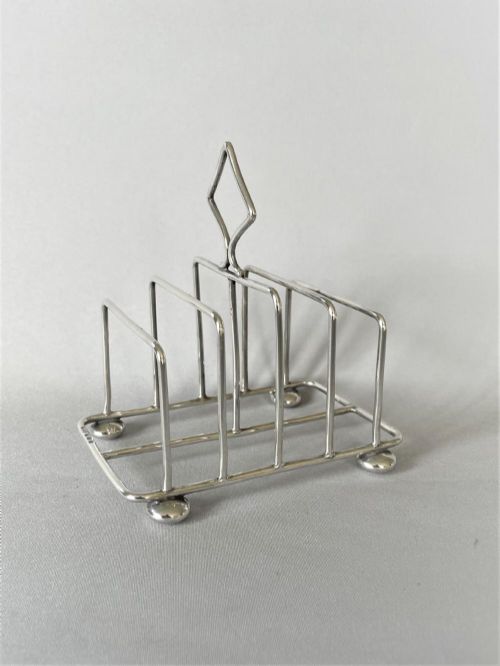
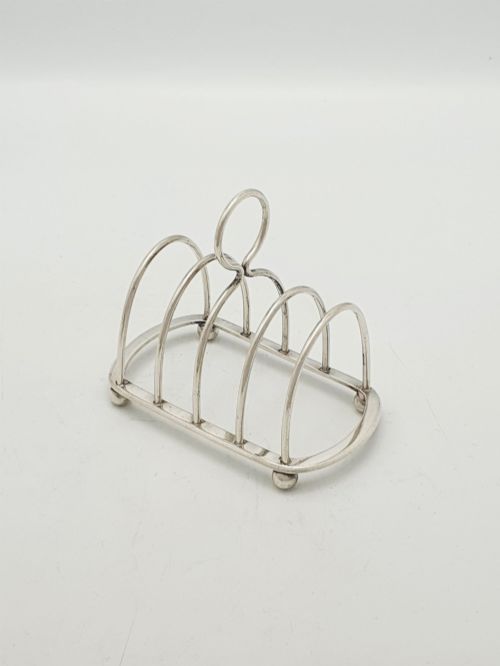
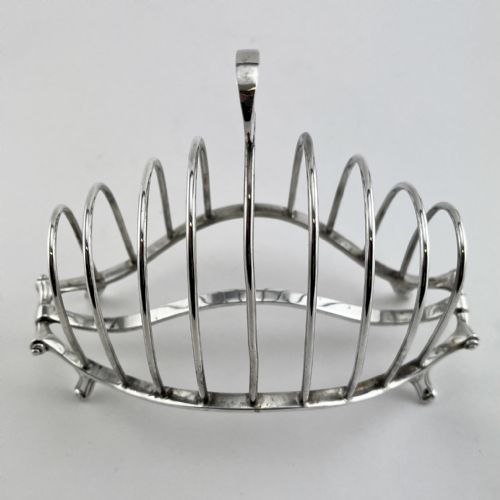
An antique sterling breakfast rack is a table accessory designed to keep slices of toast crisp by allowing air to circulate between them. These pieces take various forms, from simple arched wire divisions to novelty equestrian shapes and wishbone frames.
The versions most commonly met on this page span the Georgian, Victorian, and Edwardian eras, alongside later pieces from the 1920s and 1930s. Makers produced them primarily in sterling silver, though silver plate and silver gilt examples also appear.
Tableware of this kind serves both a practical function at the breakfast table and a decorative role during formal dining. Collectors encounter them as single four-slice or six-slice units, and occasionally as matching pairs.
How they were made
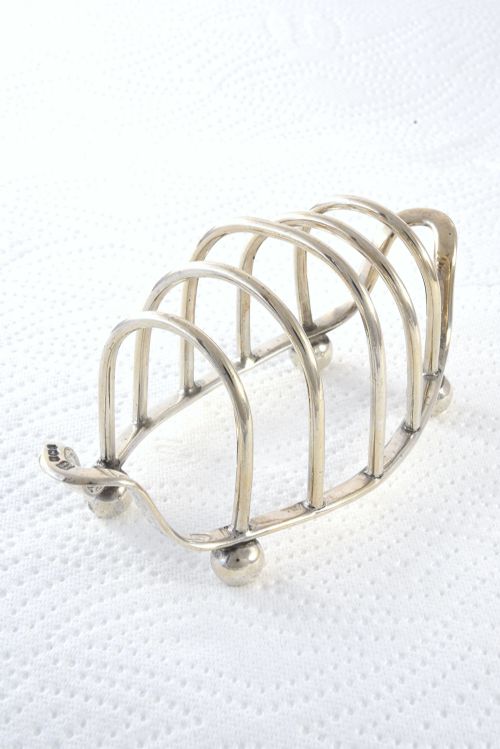
Silversmiths constructed these pieces using sterling silver wire and sheet metal, shaping individual arches and soldering them to a sturdy base plate or feet. Assay office marks stamped into the metal recorded the sterling standard and the year of manufacture.
More elaborate designs, such as Victorian novelty pieces or wishbone frames, required specialised casting and hand-finishing techniques. Artisans polished the silver to a bright finish, ensuring smooth edges that would not damage the toast.
Antique Sterling Breakfast Rack Retail Price Guide 2026
Typical asking prices for sterling breakfast rack among the pieces listed under this phrase on Sellingantiques today, from the lower quarter to the upper quarter. They describe what is for sale here now, not the wider market.
Equestrian themed breakfast racks turn morning toast into a jumping event.
What varies in quality
Quality in an antique sterling breakfast rack rests on the weight of the metal and the precision of the construction. Finer pieces display crisp hallmarks, substantial gauge silver, and balanced proportions across the arches.
Design complexity also separates standard items from the upper tier, with novelty forms and matched pairs commanding greater attention. The integrity of the soldered joints and the crispness of any engraved decoration indicate the level of craftsmanship involved.
Mappin and Webb·Roberts and Belk
The Antique Sterling Breakfast Rack Glossary
- Sterling silver
- A silver alloy containing 92.5 percent pure silver and 7.5 percent other metals, usually copper, chosen for durability.
- Hallmark
- A series of official marks stamped on precious metals by an assay office, indicating the purity, maker, and year.
- Slice
- A designated partition within the rack designed to hold a single piece of toast upright.
- Cruet set
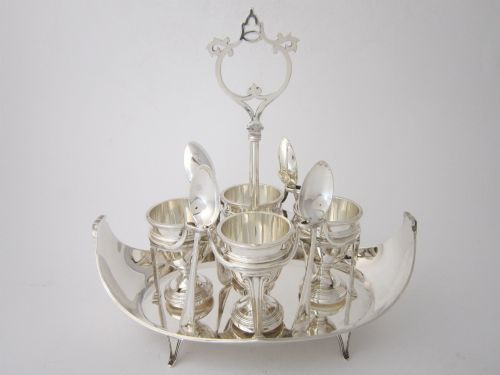
- A matched collection of tableware containers designed to hold condiments, sometimes incorporating related breakfast items like egg holders.
- Silver gilt
- Sterling silver that has been coated with a thin layer of gold on the surface for decorative effect.
Antique Sterling Breakfast Rack: Frequently Asked Questions
What is an antique sterling breakfast rack?
An antique sterling breakfast rack is a silver table accessory designed to hold toast slices upright. This prevents the warm bread from becoming soggy by allowing steam to escape between the pieces.
Such items were staples of formal breakfast dining across the nineteenth and twentieth centuries. They remain practical additions to the modern morning table.
How do I date a silver toast rack?
Dating a piece relies heavily on the hallmarks stamped directly into the silver. These official marks usually include a date letter corresponding to a specific assay office and year.
Stylistic cues also help narrow down the period, ranging from plain Georgian wirework to elaborate Victorian novelty designs and clean Art Deco lines.
Are these racks suitable for daily use?
Sterling silver pieces are robust enough for regular use provided they receive proper care. Hand washing with mild soap and soft cloths preserves the metal without causing damage.
Using them daily brings historic craftsmanship into modern routines rather than leaving the items confined to a display cabinet.
What styles are available?
The selection includes traditional arched wire designs from the Georgian and Victorian periods, alongside Edwardian interpretations. Novelty forms shaped like wishbones or equestrian equipment also appear among the offerings.
Collectors can find single four-slice or six-slice configurations, as well as matching pairs from the twentieth century.