


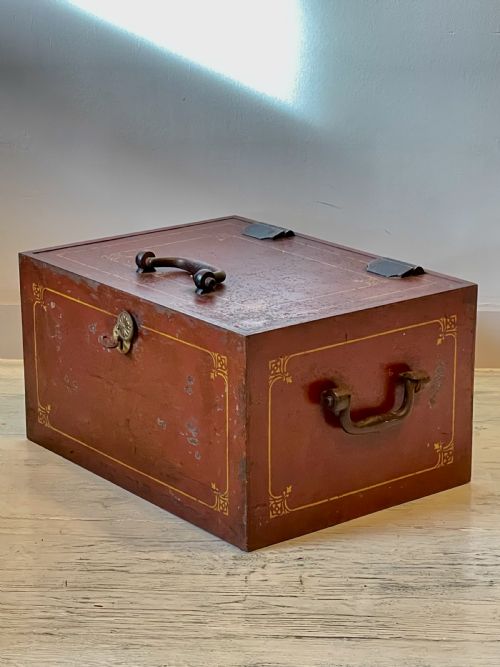


Antique Steel Box
An antique steel box is a robust container built for security and utility, offering enduring metal craftsmanship from past centuries.
Antique Steel Box
When you search for an antique steel box, you encounter a diverse array of utilitarian and decorative containers spanning the seventeenth century through to the mid-twentieth century. The selection ranges from heavy strongboxes and deed boxes to delicate inlaid caskets and engraved pocket snuff boxes.
The pieces often combine steel with other durable or decorative elements such as oak, brass, and velvet. You frequently meet utilitarian storage pieces like fall-front deed boxes alongside more ornate caskets featuring rivetted designs or brass embellishments.
How they were made
Makers constructed these containers using robust sheets of iron and steel, frequently integrating complex internal locks and secure mechanisms. Many examples combine the primary metal structure with wooden carcases made from walnut, oak, or mahogany.
Surface decoration involved techniques such as engraving, beating, and riveting. Finer decorative pieces utilised cut steel mounts and brass embellishments to enhance their visual appeal.
Gentlemen in the eighteenth century proudly carried engraved steel snuff boxes bearing their own names and specific presentation dates.
What varies in quality
The standard of workmanship is visible in the complexity and preservation of the locking mechanisms, from intricate original steel locks to heavy safe doors. Superior pieces often retain their original operational keys and working keeps.
Artistry in surface treatment distinguishes finer items, such as precise hand-engraving on snuff boxes or careful riveting on Arts and Crafts caskets, contrasted against plain utilitarian storage trunks.
J. Robinson·Milners
The Antique Steel Box Glossary
- Deed box
- A secure metal container used historically for storing legal documents and important papers. These often feature fall-front panels and robust locking mechanisms.
- Strongbox
- A heavily reinforced metal box designed for maximum security against theft or fire. They frequently incorporate complex internal locking systems.
- Cut steel
- Small facets of steel riveted to a backing material to catch the light, popular in decorative mounts during the Georgian and Regency periods.
- Snuff box
- A small pocket-sized container used for holding powdered tobacco. Examples from the eighteenth century are often finely engraved with dates and owners' names.
- Casket
- A decorative box used for holding valuables, jewellery, or keepsakes. They often showcase finer artistic materials like enamel or satinwood.
Antique Steel Box: Frequently Asked Questions
What were antique steel boxes used for?
These containers served varied purposes ranging from securing legal documents and money to storing personal items like snuff, jewellery, and letters. Strongboxes and deed boxes protected valuables in offices and homes.
Smaller items like snuff boxes and pocket containers were carried daily by gentlemen, while decorative caskets sat on dressing tables or desks.
How do I secure and clean a steel box?
Maintenance requires keeping the metal dry and free from moisture to prevent rust, applying light protective oils where appropriate. Original locks should be handled with care to preserve their complex internal mechanisms.
Avoid abrasive cleaners that might damage delicate engravings, cut steel mounts, or patinated surfaces.
How can I tell the period of a steel box?
Dating relies on construction methods, lock complexity, and decorative styles associated with specific eras such as the 17th-century oak and steel combinations or later Victorian industrial techniques. Engraved dates and maker signatures occasionally provide direct evidence.
Accessory materials like brass embellishments, velvet linings, and exterior woodwork also help place a piece within its historical context.
Are keys usually included with these boxes?
Many surviving examples retain their original operational keys and internal keeps, particularly heavier deed boxes and safes. However, due to the passage of centuries, some pieces survive without working keys.
The presence of an original complex lock and matching key significantly enhances the completeness of a piece.