
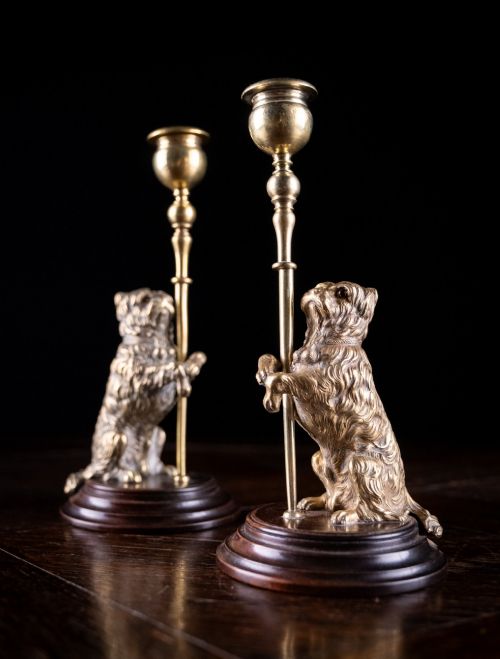
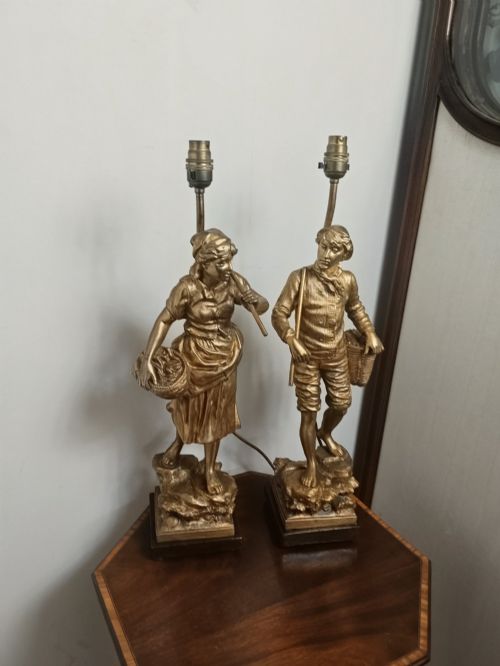
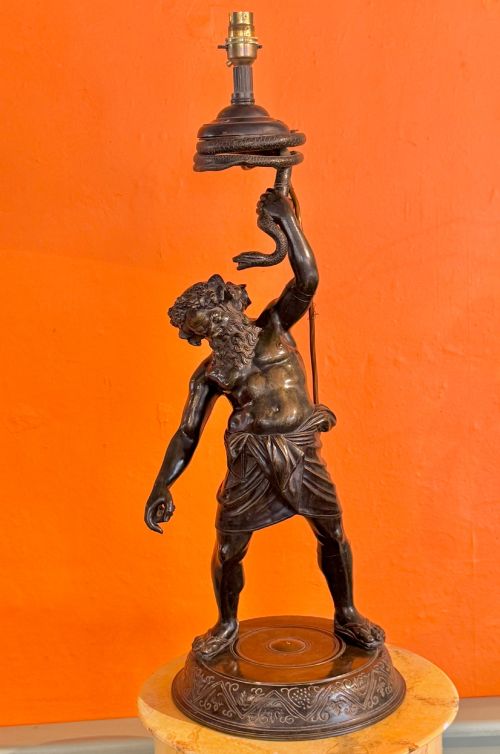
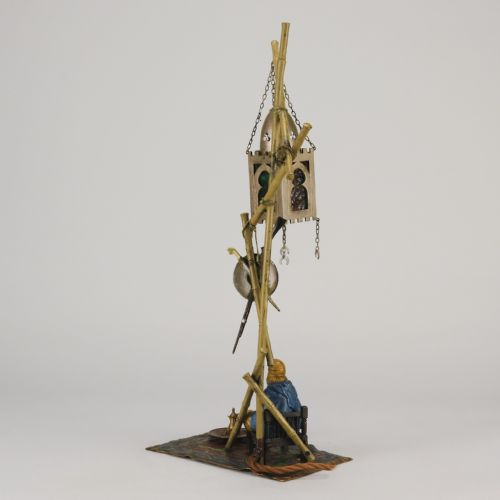




Antique Statue Table Light
These antique statue table lights combine sculptural figures with functional illumination, offering a focal point of period craftsmanship for your interior.
Antique Statue Table Light
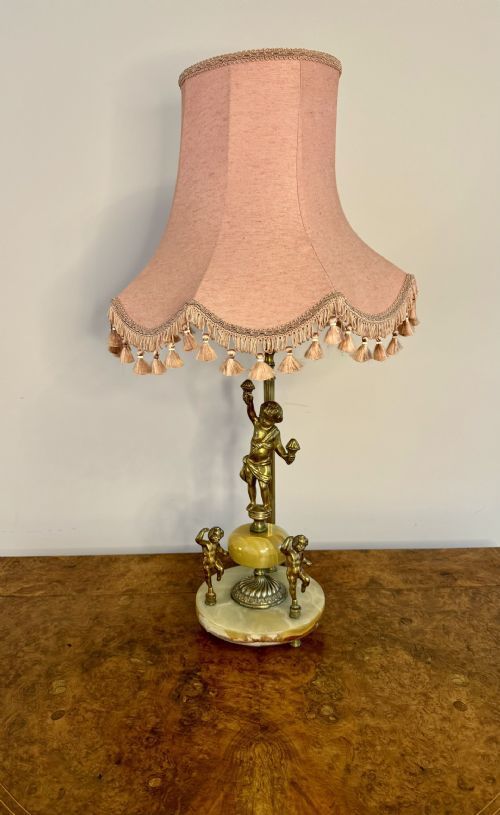
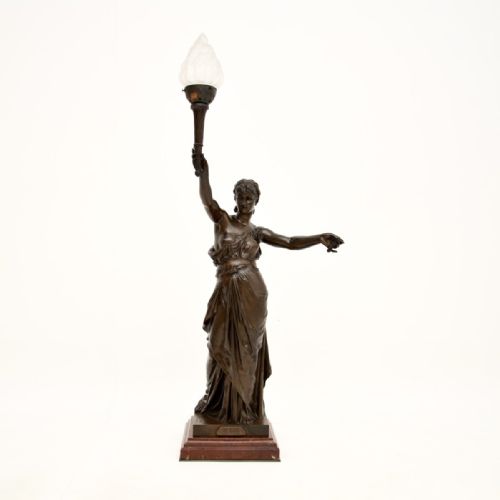
An antique statue table light integrates a figural bronze, spelter, or brass sculpture with a lamp or candlestick fitting, often taking the form of classical deities, allegorical figures, animals, or human portraits. These pieces function both as decorative statuary and as functional domestic lighting, drawing on centuries of sculptural tradition adapted for interior spaces.
The selections encountered here span the nineteenth century through the Art Deco era, encompassing Regency, Victorian, Edwardian, and French styling. Common forms range from converted bronze statuettes and Grand Tour subjects to dedicated spelter lampbases and figural candlesticks fitted for modern illumination.
Originating predominantly from British, French, and Continental workshops, these lamps reflect prevailing aesthetic movements including Neoclassicism, Orientalism, and Art Nouveau. The figures frequently depict historical, mythological, or genre subjects mounted on marble or metal plinths.
Materials and Techniques
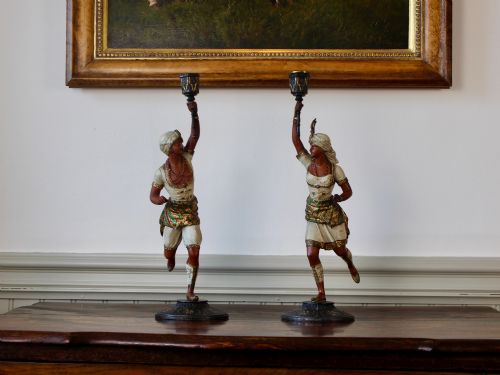
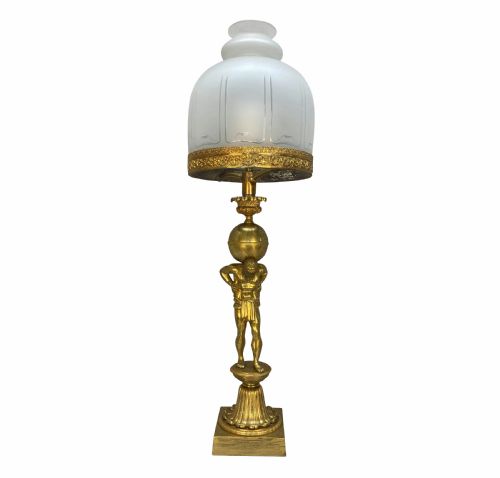
Foundry casting forms the backbone of these pieces, utilising bronze, brass, or softer metal alloys such as spelter to shape complex figures and bases. Skilled artisans frequently applied cold-painted finishes, gilding, or ormolu to the metal surfaces to enhance detail and depth.
Natural stones such as marble and onyx frequently serve as solid plinths or bases, providing stability and visual contrast to the metallic figures above. Many of these lighting fixtures incorporate glass components, including frosted or coloured shades, alongside fabric elements to diffuse the light.
Listings feature periods spanning from the Regency era through the 1930s Art Deco movement.
Distinctions in Quality
The artistry of the casting and the crispness of the chisel work define the upper echelon of these figural pieces, where facial expressions, drapery, and anatomical details remain sharp and well-defined. Lesser examples cast in spelter often display softer contours and obscured details resulting from worn moulds or mass-production techniques.
The choice and integrity of foundational materials distinguish higher-grade creations, such as heavy solid bronze figures mounted on substantial marble plinths, compared to lighter alloy castings with applied patinas. Furthermore, the harmonious integration of the sculptural figure with the lighting mechanism indicates thoughtful design rather than a simple later conversion.
E Rousseau·G Amodio Naples·Franz Bergman·Emile Picault·Jean-Jules Cambos·H Moreau·P Sega·Henri Honore Ple·Adrien Gaudez
The Antique Statue Table Light Glossary
- Spelter
- A zinc-lead alloy used as an economical alternative to bronze for sculptural casting. It typically accepts patination and cold-painted finishes well.
- Cold-Painted
- A technique where paint is applied to a metal sculpture without the application of heat. This finish is common on Viennese bronzes and figural lamps.
- Grand Tour
- A cultural phenomenon of the eighteenth and nineteenth centuries where travellers collected classical antiquities and bronzes in Italy. These souvenirs heavily influenced later nineteenth-century sculptural lighting.
- Ormolu
- Gilded bronze achieved through a mercury amalgamation process or modern electroplating, imparting a rich gold-coloured surface finish. It appears frequently on French neoclassical mounts and bases.
- Patina
- The surface sheen or colour acquired by metal through age, wear, or chemical treatment. Collectors value original patination for its historical authenticity.
Antique Statue Table Light: Frequently Asked Questions
Are these lamps originally wired for electricity?
Most pieces originating from the nineteenth century or earlier periods were originally created as oil lamps, candlesticks, or solid statues rather than electric lamps. Many items have been subsequently converted to table lights by routing a cord through the figure or base.
Some later twentieth-century pieces, including Art Deco designs, were manufactured specifically with internal wiring for illumination. Checking the fitting and cord entry points helps determine whether the lighting mechanism is original to the piece or a later adaptation.
How do I care for cold-painted metal figures?
Cold-painted surfaces are delicate because the paint sits on the metal without being kiln-fired. Dusting should be performed gently with a dry, soft brush to avoid lifting the original pigments.
Moisture, chemical cleaners, and direct sunlight should be avoided entirely to preserve the fragile painted details and prevent flaking or fading of the colour.
What is a Grand Tour lamp?
Grand Tour lamps draw inspiration from ancient Roman and Greek antiquities encountered by travellers touring cultural sites in Italy during the nineteenth century. These pieces often depict mythological figures, ruins, or classical statues.
They serve as tangible reflections of nineteenth-century classical education and taste, cast in bronze and frequently mounted on marble bases for display in European homes.