

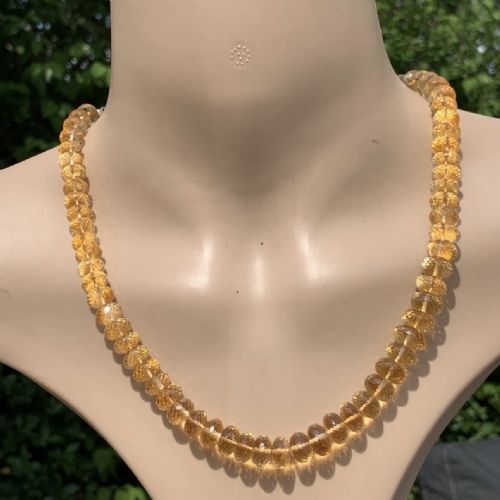


Antique Statement Necklace
An antique statement necklace commands the room through scale and presence, bringing together period gems and precious metals to anchor an outfit.
Antique Statement Necklace
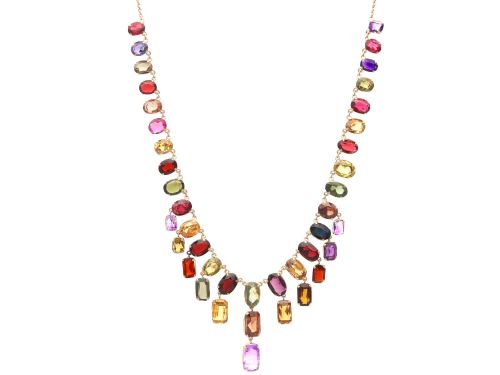
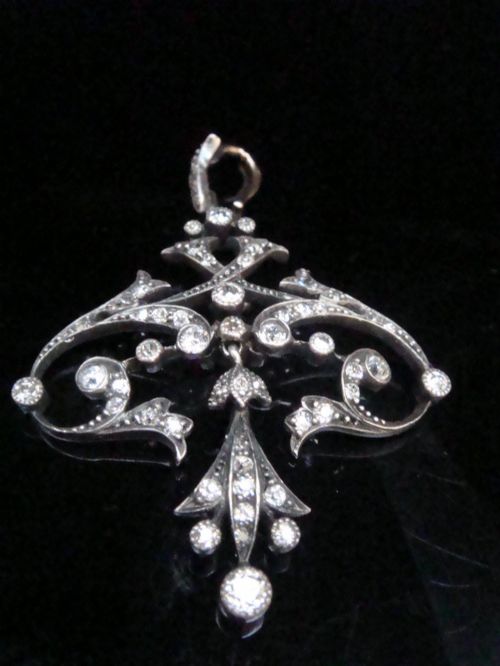
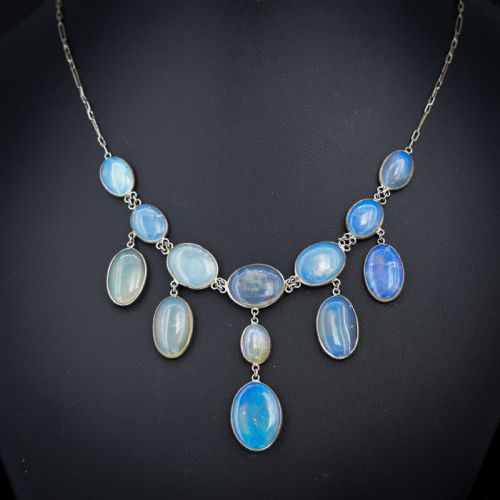
When buyers search for an antique statement necklace, they encounter substantial neckwear designed to draw the eye, spanning Victorian, Edwardian, and Art Deco periods.
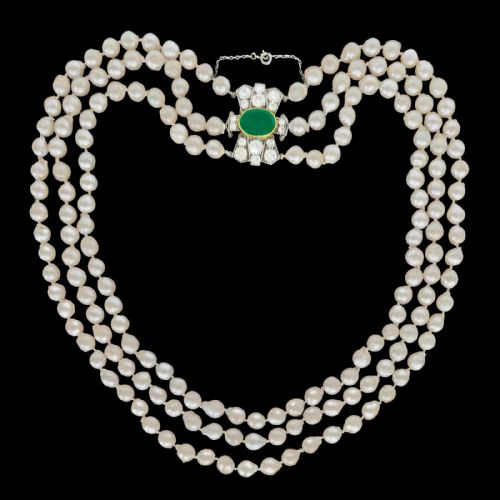
The pieces appearing on this page range from elaborate diamond and platinum fringe creations to multi-strand pearl arrangements fastened with gemstone clasps.
Early examples feature large amethysts and rubies set in yellow gold, while later 20th-century variants introduce materials like bakelite, amber, and coral alongside white gold and silver.
Materials and construction methods
Goldsmiths and silversmiths utilised 18ct gold, 15ct gold, platinum, and silver as the foundational metals to house substantial precious stones.
Gemstones including diamonds, pearls, emeralds, rubies, amethysts, opals, and turquoise matrix were integrated into intricate settings, festoons, and lavaliere pendants.
Makers employed secure clasp mechanisms, often featuring secondary gems, alongside specialised link structures to support heavy multi-strand pearl and bead formations.
Even a strict boardroom meeting brightens considerably when interrupted by a twenty-four carat amethyst swinging from an 18th-century gold chain.
Distinguishing quality across periods
The upper tier of these pieces relies on the proportional balance of significant carat weights, such as multi-carat amethysts or diamonds, paired with meticulous metalwork.
Design cohesion separates masterworks from simpler items, particularly in how fringe drops, festoons, and clasps integrate into the main body of the necklace.
The Antique Statement Necklace Glossary
- Fringe necklace
- A necklace style featuring hanging drops or tassels suspended across the front of the neck. These pieces often showcase graduated stones that catch the light with movement.
- Lavaliere
- A pendant necklace featuring a central drop suspended from a smaller motif or chain. This form gained particular prominence during the Edwardian era.
- Riviere
- A necklace composed of a continuous line of gemstones of identical or graduated size, usually individually bezel or prong set. They sit closely around the collarbone.
- Parure
- A matched set of jewellery, commonly including a necklace, earrings, and a ring or brooch, designed to be worn together. These matched suites demonstrate complete period aesthetics.
Antique Statement Necklace: Frequently Asked Questions
How do I wear a statement necklace?
These substantial pieces demand simple necklines that allow the metalwork and gemstones to sit unobstructed against the skin or fabric.
Pairing them with understated clothing ensures the focus remains entirely on the proportions and period details of the necklace itself.
What periods do these necklaces span?
The selection encompasses 19th-century Victorian and Edwardian craftsmanship alongside later Art Deco and mid-century designs.
Each era brings distinct metal choices and gemstone cuts that distinguish early gold work from later platinum and white gold pieces.
Are pearls common in these designs?
Multiple strand pearl configurations appear frequently, often enhanced by elaborate clasps containing diamonds, emeralds, or jadeite.
These strands range from triple configurations to six-strand arrangements, secured by decorative gemstone fasteners.
How are heavy gemstone pendants supported?
Makers utilised robust chains fashioned from 18ct yellow gold, platinum, or silver to distribute the weight of substantial centre stones safely.
Construction techniques matched the tensile strength of the metal to the total carat weight of the suspended gems.