



Antique Staffordshire Whippet
These antique staffordshire whippet figures are charming ceramic animals capturing Victorian domestic life, prized by collectors for their character and regional pottery heritage.
Antique Staffordshire Whippet
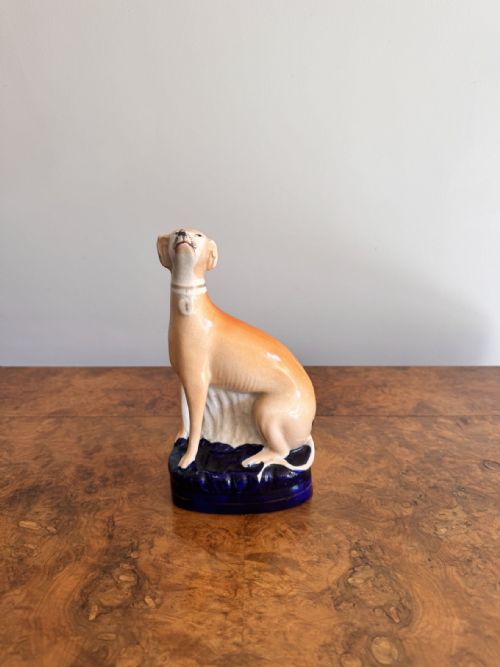
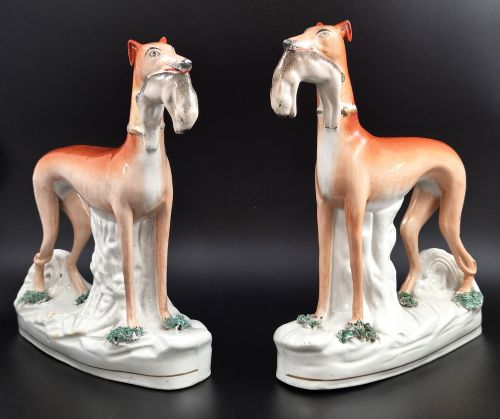
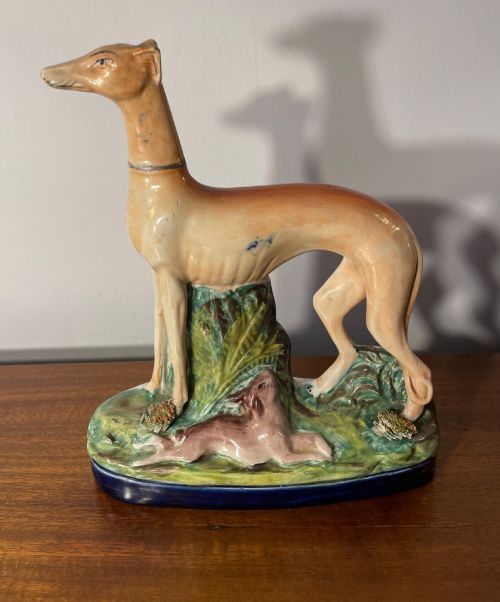
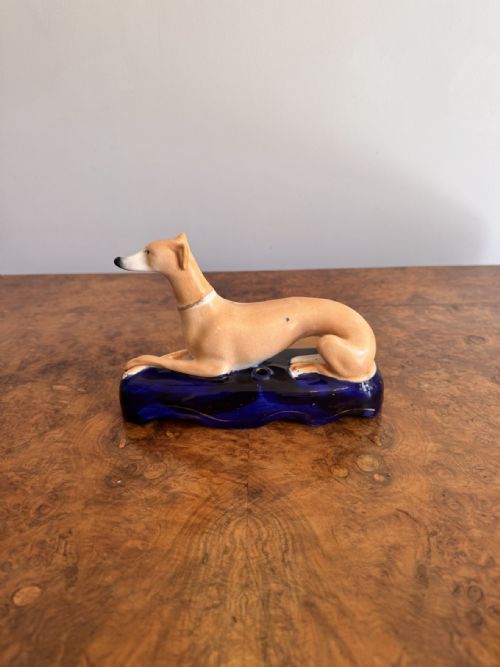
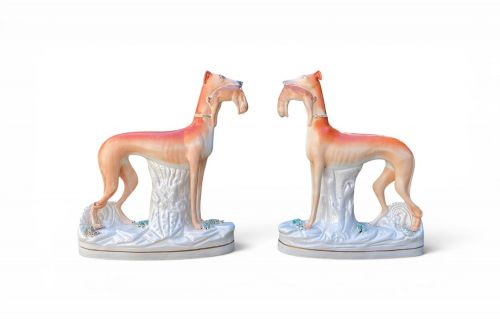
When you search for antique staffordshire whippet pieces, you encounter decorative figures, pottery figurines, and inkwells modelled as greyhounds or hounds with hares. These charming ceramics hail primarily from the Victorian period, spanning the nineteenth century.
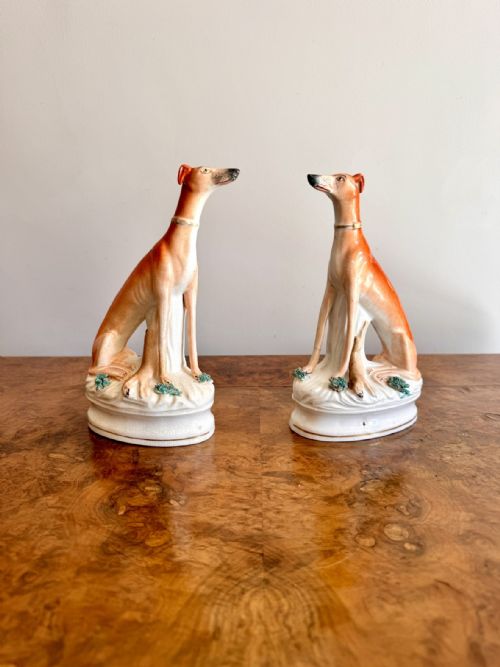
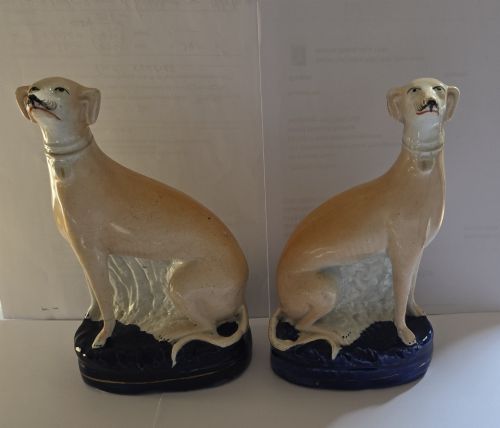
The most common examples on this page are matched pairs of seated whippets or greyhounds, often depicted alongside hares or serving practical functions like quill holders. They reflect the nineteenth century taste for animal subjects in domestic interiors.
Moulded in Staffordshire potteries, these figures range from standard mantel ornaments to larger, more imposing hounds and hunting groups. They capture the era's fascination with sporting dogs and country pursuits.
Quality differences
Quality in these earthenware figures rests on the crispness of the moulding and the delicacy of the hand painting. Finer examples display sharper facial details and more careful application of enamel paint.
The presence of functional elements like inkwells or quill holders, alongside scale and whether pieces survive as an original matched pair, distinguishes standard mantel ornaments from more desirable works.
Antique Staffordshire Whippet Retail Price Guide 2026
Typical asking prices for staffordshire whippet among the pieces listed under this phrase on Sellingantiques today, from the lower quarter to the upper quarter. They describe what is for sale here now, not the wider market.
Many of these stern Victorian guard dogs spent their centuries keeping a watchful, glassy eye over quiet sitting rooms.
Thomas Parr
The Antique Staffordshire Whippet Glossary
- Earthenware
- A porous pottery body fired at lower temperatures than stoneware or porcelain. It forms the standard base material for the vast majority of nineteenth century Staffordshire figures.
- Lead glaze
- A glossy coating applied to ceramic wares before firing to seal the porous earthenware beneath. It gives these figures their characteristic sheen.
- Enamel paint
- Coloured decoration applied over the fired glaze and fixed with a lower temperature second firing. It provides the vibrant coats and facial markings seen on the hounds.
- Quill holder
- A desk accessory featuring a hollow or channel designed to hold writing feathers. Several Staffordshire dog models incorporate this practical function.
- Figurine
- A small, three dimensional sculpted figure modelled in clay. These decorative ornaments were designed specifically for display on mantelpieces and side tables.
Antique Staffordshire Whippet: Frequently Asked Questions
What were Staffordshire whippet figures used for?
These ceramic figures served primarily as decorative ornaments for Victorian mantelpieces, adding a touch of domestic charm to parlours. Some variations also incorporated practical uses, such as inkwells or quill holders for writing desks.
Collectors appreciate both the purely ornamental pairs and the functional desk pieces for their snapshot of nineteenth century daily life.
How do I date an antique Staffordshire whippet?
Dating relies on examining the characteristics of the earthenware body, the style of the glaze, and the hand painted enamel details. Victorian pieces often exhibit specific modelling traits and palette choices typical of nineteenth century Staffordshire potteries.
Comparing the base construction and any applied gold leaf details against known period examples helps narrow down the decade of manufacture.
Are Staffordshire whippets always found in pairs?
Many of the figures survive as matched pairs, particularly those depicting seated hounds flanking a hare or gazing outward from opposite ends of a mantelpiece. However, single figures and individual desk accessories also appear.
Pairs demand attention for symmetry, though solo figures often showcase equal craftsmanship in their moulding and enamel work.
How should I display these ceramic dogs?
Display these glazed earthenware figures on stable surfaces away from direct sunlight to protect the enamel paint and gold leaf accents. Mantelpieces, shelves, and enclosed cabinets provide safe environments for nineteenth century pottery.
Keeping them clear of high traffic areas prevents accidental knocks to protruding ears or tails.